
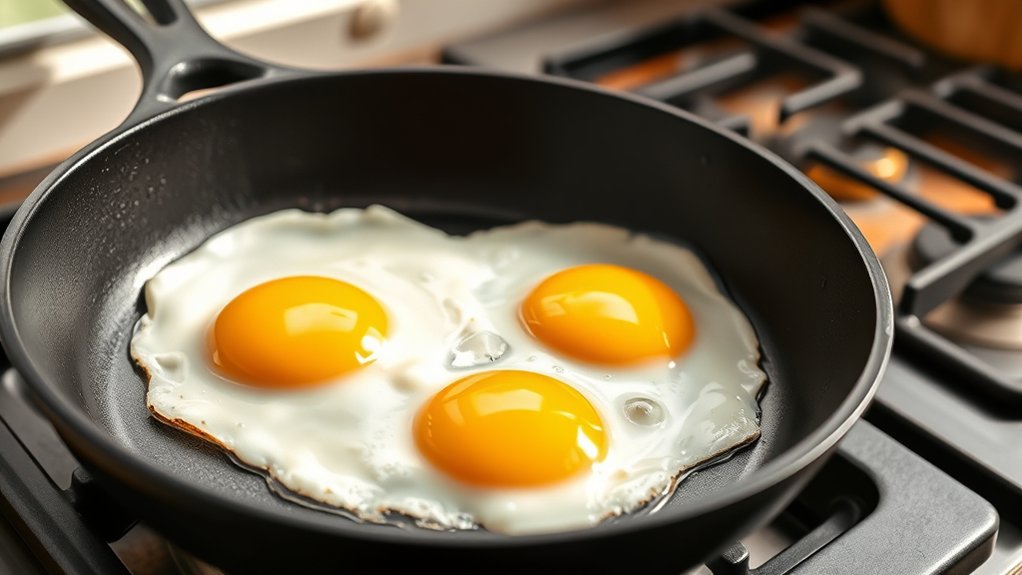
You can definitely cook eggs on a cast iron skillet if you prepare it right.
Make sure your skillet is clean, well-seasoned, and preheated with a thin layer of oil to create a nonstick surface.
Using moderate heat and enough fat prevents eggs from sticking.
While cast iron works well for frying or scrambling, delicate egg dishes may stick if the pan isn’t perfectly seasoned.
Curious about perfect techniques and cleaning tips?
Keep exploring to get the full scoop.
Key Takeaways
- Eggs can be cooked on a cast iron skillet if it is clean, well-seasoned, and preheated properly to prevent sticking.
- Use enough cooking oil or butter to create a barrier between the eggs and the skillet’s surface.
- Moderate heat and avoiding overcrowding help maintain even cooking and reduce egg sticking.
- Cast iron is ideal for fried and scrambled eggs but less suited for delicate dishes needing quick temperature changes.
- Clean the skillet gently after cooking, dry immediately, and apply a thin oil layer to maintain seasoning.
How to Prepare Your Cast Iron Skillet for Eggs
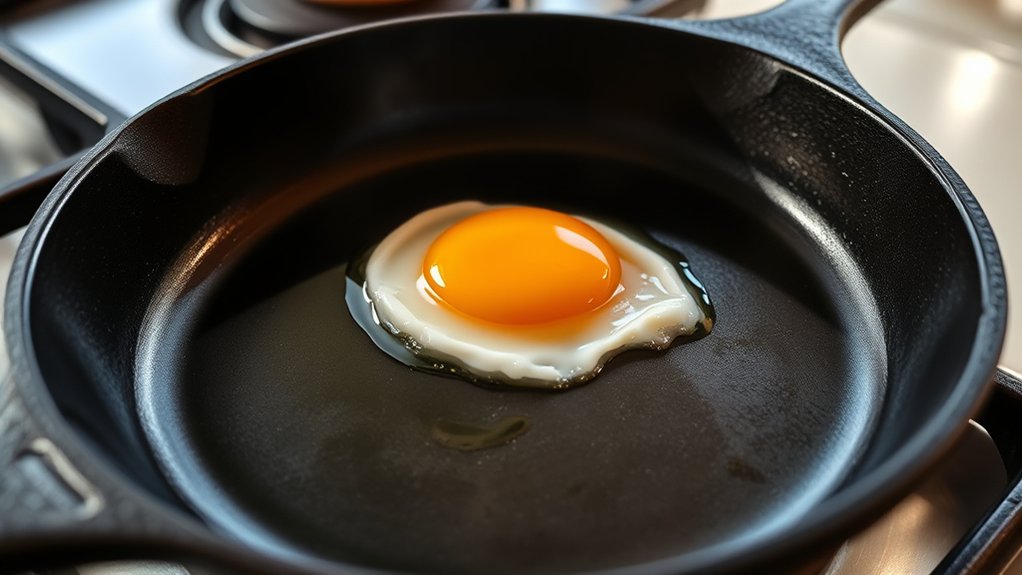
To prepare your cast iron skillet for cooking eggs, start by confirming it’s clean and well-seasoned, as this prevents sticking and enhances flavor. Begin skillet maintenance by washing it with warm water and a brush. Avoid soap to preserve seasoning. Dry it thoroughly to prevent rust.
Apply a thin layer of cooking oil, like flaxseed or vegetable oil, and heat the skillet on medium for about 10 minutes. This reinforces the non-stick surface vital for egg preparation. Before adding eggs, preheat the skillet to distribute heat evenly, reducing hotspots that cause sticking or uneven cooking.
Proper skillet maintenance guarantees your eggs slide out effortlessly, making your cooking experience smoother and more enjoyable while maintaining the skillet’s durability and seasoning longevity.
Easy Ways to Cook Eggs in Cast Iron: Fry, Scramble, and Omelets
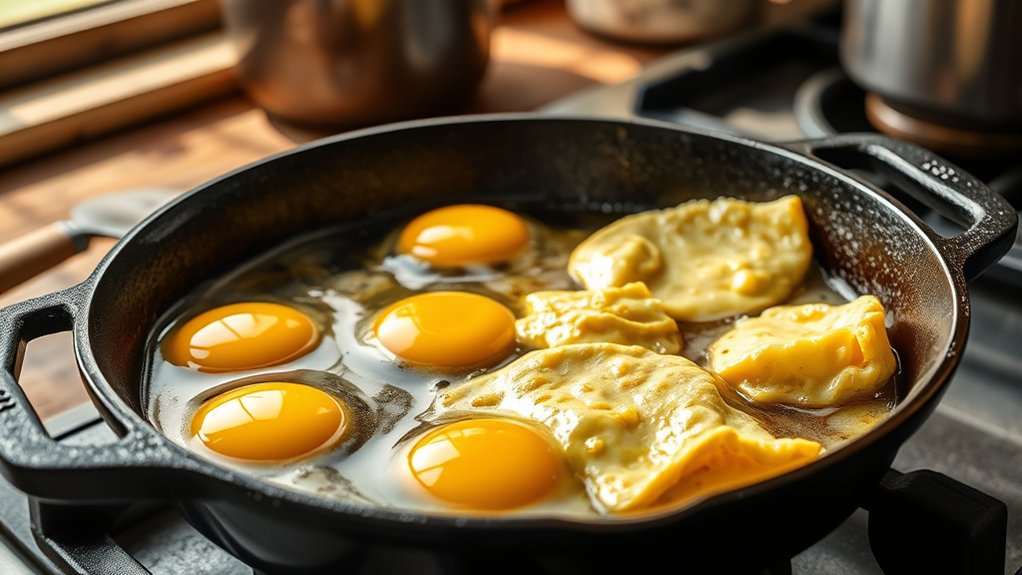
Once your cast iron skillet is properly seasoned and preheated, you’re ready to cook eggs using a variety of methods that highlight the pan’s even heat retention and natural non-stick qualities. Master these easy techniques to get perfect eggs every time:
With a seasoned, preheated cast iron skillet, cook eggs perfectly using its heat retention and natural non-stick surface.
For frying techniques, add a small amount of oil or butter, then crack eggs gently, cooking until whites set and yolks reach your preferred doneness.
Scrambled variations benefit from low, steady heat and continuous stirring to achieve creamy, fluffy texture without sticking.
When making omelets, pour beaten eggs evenly, let them set partially, then fold with your choice of fillings.
Use moderate heat and avoid overcrowding to maintain control over cooking speed and texture.
These approaches maximize your skillet’s advantages for versatile, delicious egg dishes.
Why Eggs Stick to Cast Iron and How Seasoning Helps
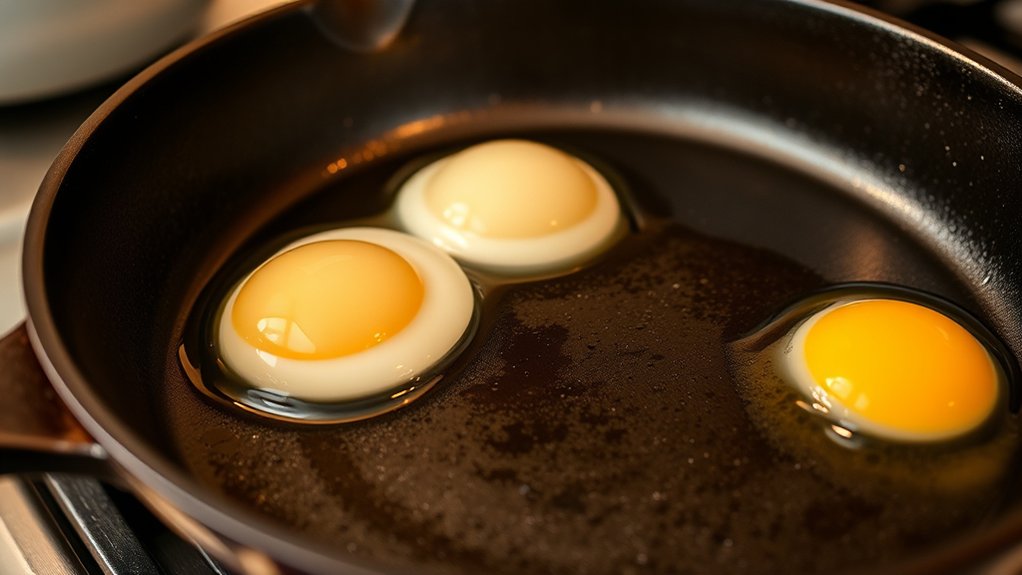
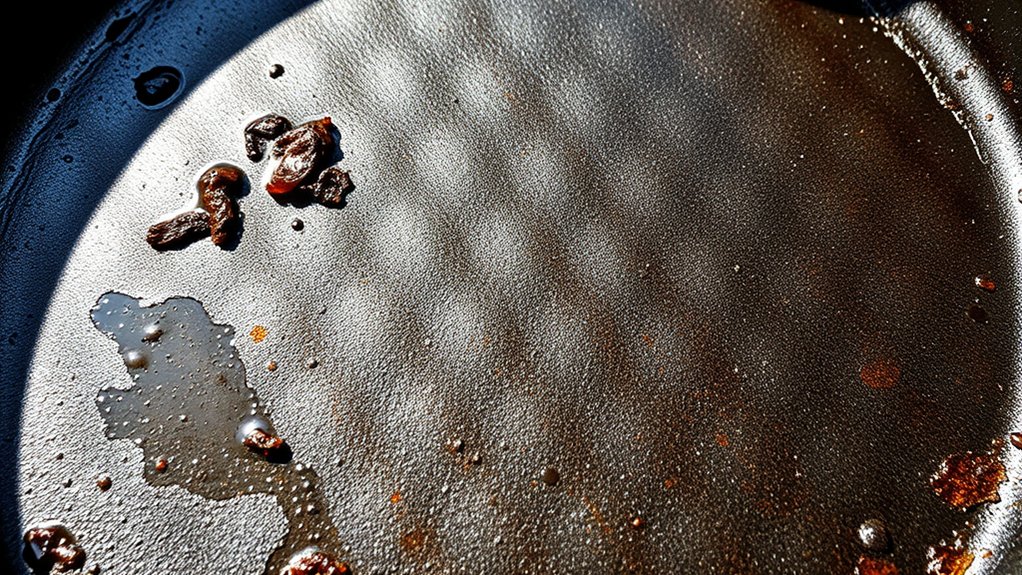
Although cast iron skillets offer excellent heat retention, eggs often stick because the pan’s seasoning layer isn’t fully developed or properly maintained. Egg proteins bond tightly to exposed iron surfaces, causing sticking.
The seasoning process creates a polymerized oil layer that fills microscopic pores, providing a slick, nonstick surface. Without this protective barrier, egg proteins adhere directly to the metal.
| Factor | Effect on Sticking | Role of Seasoning Process |
|---|---|---|
| Freshly seasoned pan | Minimal sticking | Creates polymerized oil layer |
| Poorly maintained pan | Increased sticking | Oil layer deteriorates |
| High cooking temperature | Egg proteins bond faster | Seasoning reduces bonding |
| Insufficient oil | Eggs contact metal directly | Oil aids seasoning effectiveness |
| Frequent seasoning | Enhances nonstick surface | Builds durable protective layer |
Proper seasoning is essential to prevent eggs from sticking by minimizing direct contact between egg proteins and the iron surface.
Tips to Prevent Sticking and Clean Your Cast Iron After Eggs
Understanding how seasoning impacts egg sticking lays the groundwork for practical steps you can take while cooking. To master egg cooking techniques on cast iron, focus on prevention and proper cast iron maintenance.
First, preheat your skillet thoroughly to create an even cooking surface. Use enough fat like butter or oil to form a barrier between eggs and metal. Avoid overcrowding the pan to guarantee consistent heat distribution.
After cooking, clean your skillet correctly to preserve its seasoning layer and prevent rust.
- Scrape off residue gently with a plastic scraper or coarse salt scrub
- Rinse with warm water without soap to protect seasoning
- Dry immediately and apply a thin oil coat to maintain the surface
- Store in a dry place to prevent moisture buildup
These practices keep your skillet reliable for flawless eggs every time.
When to Avoid Using Cast Iron for Cooking Eggs
While cast iron skillets excel at cooking eggs under many conditions, you should avoid using them when cooking delicate egg dishes that require rapid temperature changes or non-stick surfaces, such as soft scrambled eggs or omelets with intricate folds. Cast iron’s heat retention can cause uneven cooking and sticking, challenging precise control over texture.
In these cases, nonstick alternatives like Teflon or ceramic pans offer superior results, allowing gentle cooking and easy release. Additionally, if your cast iron is not well-seasoned, eggs are more likely to stick, complicating cleanup. Certain cooking techniques that demand quick temperature shifts or very low heat are better suited to these nonstick pans.
Frequently Asked Questions
Can I Use Non-Stick Spray on a Cast Iron Skillet?
You can use non-stick spray on cast iron, but it’s better to rely on seasoning and proper cooking techniques as non-stick alternatives. These methods build a natural, durable surface that improves with each use.
Does Cooking Eggs in Cast Iron Add Iron to My Diet?
As you crack eggs sizzling in your cast iron skillet, tiny iron particles can leach into your food, enhancing iron absorption. This subtle boost offers dietary benefits, especially if your iron intake needs a natural, tasty lift.
How Long Does It Take to Season a Cast Iron Skillet?
Seasoning time usually takes about an hour per coat, including heating and cooling. You can use methods like oven baking with oil or stovetop seasoning.
Multiple coats improve durability and non-stick performance.
Can I Cook Eggs in a Cast Iron Skillet on Induction Stoves?
You’re in luck. Cast iron skillets work great on induction stoves, thanks to induction compatibility.
Just master egg cooking techniques like preheating and proper seasoning, and your eggs will slide right off, no sweat!
Is Cast Iron Safe for People With Iron Overload Conditions?
You shouldn’t rely on cast iron cookware if you have iron overload conditions, as it increases iron absorption.
For cooking safety, consult your doctor to avoid excess iron intake from your diet or cookware.
Conclusion
Cooking eggs on a cast iron skillet can be a game-changer once you master seasoning and heat control. Did you know a well-seasoned cast iron pan can reduce sticking by up to 90%? That’s why prepping your skillet properly is key to perfect eggs every time.
With the right care, you’ll enjoy easy frying, scrambling, or omelets without frustration. Just remember to avoid acidic ingredients and clean your skillet gently to keep it in top shape.
In conclusion, cooking eggs on a cast iron skillet is totally doable and rewarding when you follow these tips.

Leave a Reply