
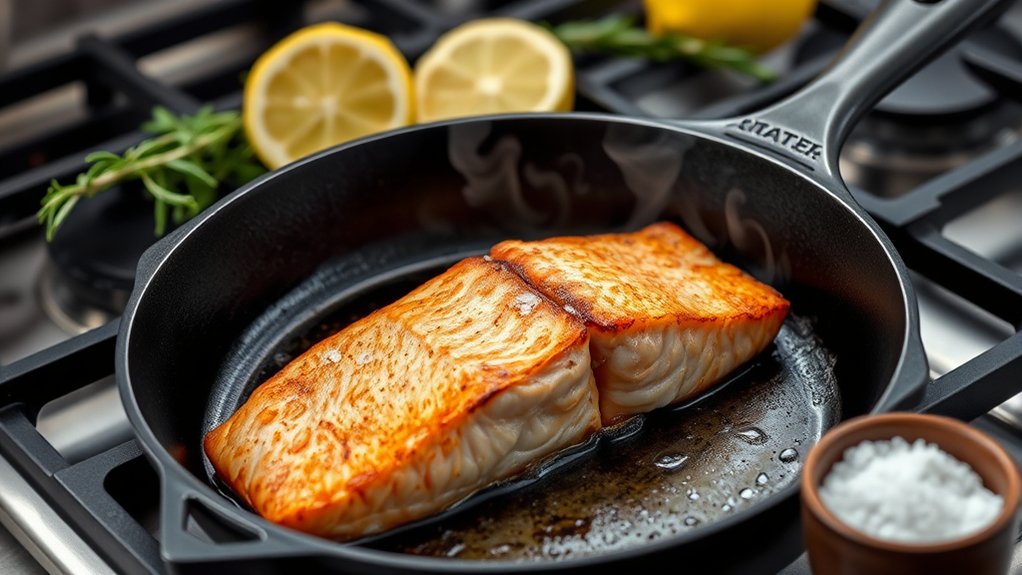
You can definitely cook fish in a cast iron skillet and get great results.
Start by preheating the skillet over medium-high heat and seasoning your fish well. Use an oil with a high smoke point to prevent sticking and place the fish skin-side down, letting it sear undisturbed to develop a crispy crust.
Firm fish like salmon or cod work best.
Mastering these steps guarantees tender, flavorful fish every time. Explore further to refine your technique.
Key Takeaways
- Yes, cast iron skillets are excellent for cooking fish due to their superior heat retention and even heat distribution.
- Use firm fish types like salmon, cod, or tuna that hold up well to high heat and searing.
- Properly preheat and season the skillet with high smoke point oil to prevent the fish from sticking.
- Cook fish skin-side down undisturbed on medium-high heat to develop a crispy crust and lock in moisture.
- Remove fish when it reaches an internal temperature of 145°F for safe, perfectly cooked results.
Cooking Fish in a Cast Iron Skillet: What You Need to Know
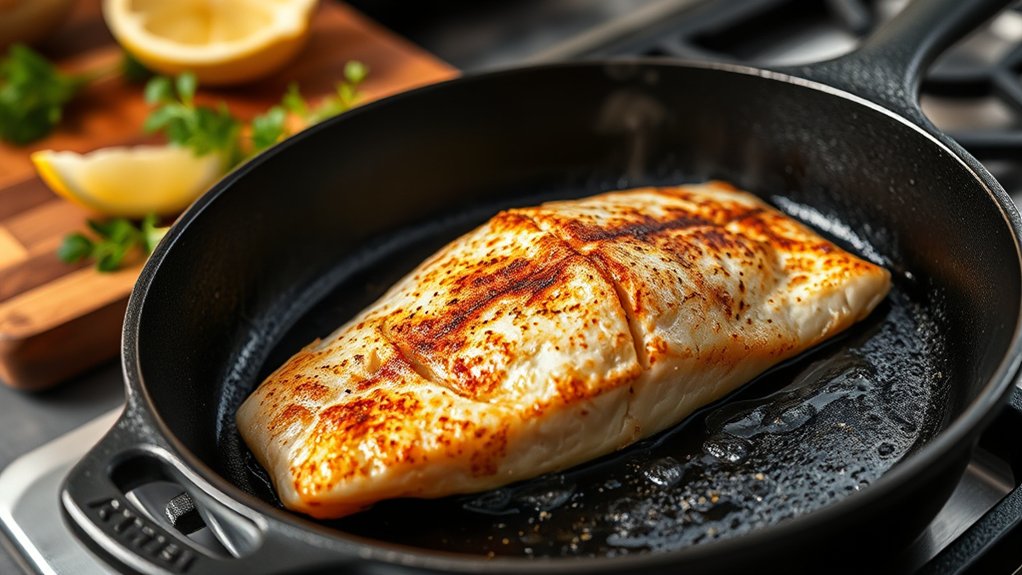
When you cook fish in a cast iron skillet, you need to guarantee the pan is properly preheated and well-seasoned to prevent sticking and achieve an even sear. Cast iron advantages include excellent heat retention and distribution, which are essential for precise fish cooking techniques.
Start by heating the skillet over medium-high heat until it’s hot but not smoking. Add a small amount of oil with a high smoke point, then gently place the fish skin-side down. Avoid moving the fish prematurely; let it develop a crust for easy release.
The skillet’s even heat promotes uniform cooking, helping you avoid hot spots that can cause uneven doneness. Mastering these fundamentals guarantees your fish cooks perfectly every time in cast iron.
Best Fish Types for Cast Iron Cooking
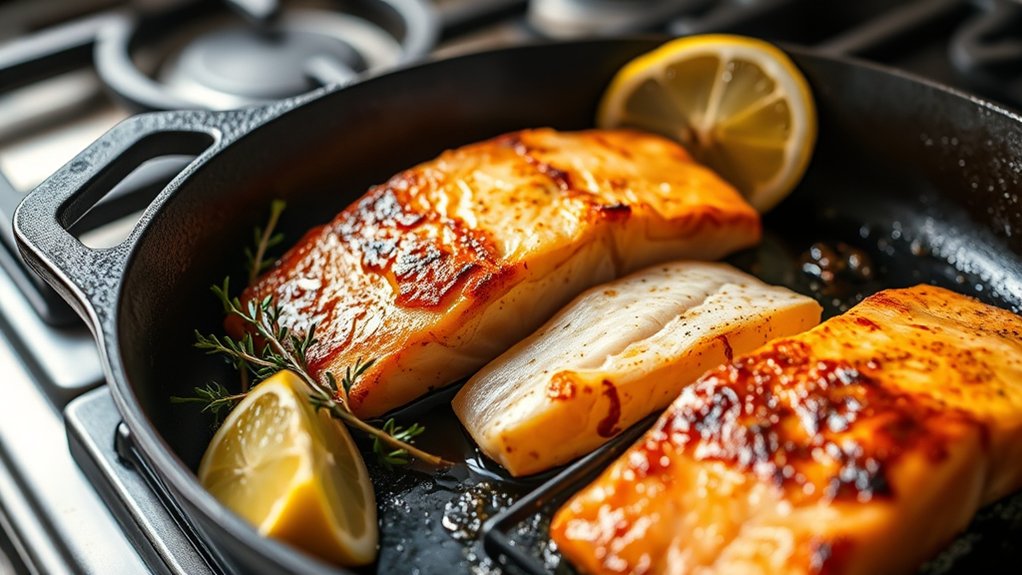
When cooking fish in a cast iron skillet, choosing the right type is essential. You’ll want to focus on firm varieties like salmon and cod that hold up well to high heat.
However, delicate options like sole require gentler handling to prevent breaking apart.
Firm Fish Varieties
Selecting the right fish is essential for mastering cast iron cooking, and firm fish varieties stand out as the best choice. Their dense texture holds up well to high heat and searing, allowing you to apply various cooking techniques without the fish falling apart.
Here are four firm fish varieties ideal for cast iron skillets:
- Salmon – Its thick flesh sears beautifully, locking in moisture.
- Swordfish – Dense and meaty, it withstands strong heat perfectly.
- Tuna – Firm, steak-like cuts are excellent for quick searing.
- Mahi-Mahi – Its hearty texture resists flaking, ideal for pan-frying.
Using these firm fish options guarantees even cooking and a delicious crust, maximizing your cast iron skillet’s potential.
Delicate Fish Options
Although delicate fish require more careful handling, you can still achieve excellent results in a cast iron skillet by choosing the right types and using proper techniques. Fish with delicate flavor profiles like sole, flounder, and rainbow trout respond well to gentle searing and lower heat settings.
To preserve their texture, preheat your skillet moderately and use a thin layer of oil to create a non-stick surface. Employ cooking techniques such as cooking skin-side down first and flipping carefully only once. Avoid high heat, which can cause these tender fish to break apart or stick to the pan.
Preparing Your Cast Iron Skillet for Fish
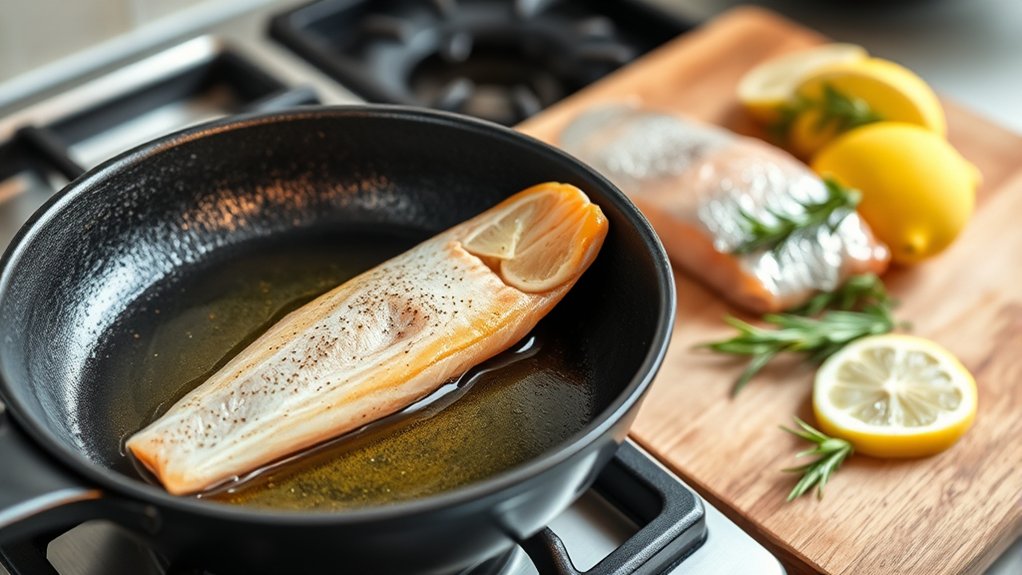
To prepare your cast iron skillet for cooking fish, start by making sure it’s clean and well-seasoned to prevent sticking. Proper pre seasoning techniques create a natural non-stick surface vital for delicate fish. Follow these steps:
- Thoroughly clean your skillet with hot water and a stiff brush, avoiding soap to preserve seasoning.
- Dry it completely to prevent rust.
- Apply a thin, even layer of a high smoke point oil like grapeseed or avocado oil. Oil selection is important for maintaining seasoning during high-heat cooking.
- Heat the skillet on medium for 10 minutes to polymerize the oil, reinforcing the seasoning layer.
This preparation guarantees your skillet performs efficiently, delivering a beautifully seared fish without sticking or tearing.
Step-by-Step Guide to Cooking Fish in Cast Iron
Five essential steps will guide you through cooking fish perfectly in your cast iron skillet. First, preheat the skillet over medium-high heat to guarantee even cooking and ideal flavor enhancement.
Next, season your fish with salt, pepper, and any preferred herbs or spices to boost the flavor profile. Third, add a suitable fat, like oil or butter, to prevent sticking and aid in browning.
Season fish with salt, pepper, herbs, then add oil or butter to prevent sticking and enhance browning.
Carefully place the fish skin-side down, employing proper cooking techniques to avoid tearing. Cook undisturbed until the edges turn opaque, then flip gently to cook the other side briefly.
Finally, remove the fish once it reaches an internal temperature of 145°F, confirming it’s cooked through but tender. These precise steps maximize taste and texture when using your cast iron skillet.
Tips for Crispy Skin and Perfect Fish Texture
Mastering the cooking process sets the foundation, but achieving crispy skin and flawless texture requires specific attention to detail. Use these crispy techniques and texture tips to elevate your fish:
- Pat dry thoroughly: Moisture prevents crisping, so dry the skin completely before seasoning.
- Preheat your cast iron skillet: Confirm it’s hot before adding oil; this prevents sticking and promotes a golden crust.
- Press the fish down gently: When you place the fish skin-side down, apply light pressure for 10-15 seconds to confirm even contact with the pan.
- Avoid flipping too soon: Let the skin crisp naturally; flip only when it releases easily from the pan to preserve texture.
Following these steps guarantees you get a perfectly crispy skin and tender, flaky interior every time.
Cleaning and Maintaining Cast Iron After Cooking Fish
After cooking fish, you’ll want to remove any lingering odors to keep your cast iron fresh. Start by gently scrubbing with hot water and a stiff brush, avoiding soap that can strip seasoning.
Then, apply a thin layer of oil and heat the skillet to maintain its non-stick surface and prevent rust.
Removing Fish Odors
How do you effectively eliminate fish odors from your cast iron skillet without compromising its seasoning? Proper odor removal is crucial to preserve your pan’s performance. Follow these steps:
- Rinse the skillet with hot water immediately after cooking to remove residual oils causing fish odor.
- Use a gentle scrubber with coarse salt as an abrasive to lift stuck particles without stripping seasoning.
- Wipe the interior with a cloth dampened in a mixture of equal parts water and white vinegar; vinegar neutralizes lingering odors.
- Thoroughly dry the skillet on the stovetop over low heat to prevent rust, then apply a thin layer of oil to maintain seasoning integrity.
This method guarantees effective fish odor removal while protecting your cast iron’s seasoned surface.
Re-Seasoning Tips
Although cleaning removes most residues, you’ll need to re-season your cast iron skillet regularly to maintain its non-stick surface and prevent rust, especially after cooking fish. The re-seasoning frequency depends on how often you use the skillet and the foods you cook.
After fish, aim to re-season every few uses to counteract any oil breakdown or lingering odors. Start by thoroughly drying the skillet to prevent rust. Apply a thin, even layer of high-smoke-point oil like flaxseed or grapeseed using a cloth.
Heat it in the oven at 450°F for an hour to polymerize the oil, creating a durable, smooth coating. These seasoning techniques protect the pan and enhance future cooking performance, ensuring your cast iron remains reliable and odor-free.
Frequently Asked Questions
Can I Use Cast Iron to Bake Fish in the Oven?
Yes, you can use cast iron to bake fish. Preheat the oven to 400°F, season your fish thoroughly, then bake in the cast iron skillet for 12-15 minutes. This ensures even cooking and a flavorful, crispy finish.
Does Cast Iron Affect the Flavor of the Fish?
You’ll find cast iron’s seasoning benefits subtly enhance your fish’s flavor, like a gentle whisper of history in each bite. Its seasoned surface creates a delicious crust, methodically locking in moisture and elevating taste without overpowering.
Is It Safe to Cook Fish in Cast Iron During Pregnancy?
Yes, it’s safe to cook fish in cast iron during pregnancy if you follow fish safety and pregnancy guidelines. Make certain the fish is fresh, cooked thoroughly, and avoid cross-contamination to protect you and your baby’s health.
Can I Cook Frozen Fish Directly in a Cast Iron Skillet?
You can cook frozen fish directly in a cast iron skillet, but it’s best to use proper cooking methods. Start on low heat to thaw, then increase temperature for even cooking. This prevents sticking and ensures thorough doneness.
How Long Does Cast Iron Take to Heat for Cooking Fish?
You’ll need about 5 minutes of heating time over medium heat for proper temperature control.
Guarantee the skillet’s evenly hot before adding fish to achieve a perfect sear without sticking or burning.
Conclusion
You can definitely cook fish in a cast iron skillet, and when you do it right, the results speak for themselves. Choosing the right fish, properly prepping your skillet, and mastering the cooking steps will guarantee a crispy skin and tender texture every time.
Keep your skillet well-maintained, and it’ll serve you like a trusty sidekick in the kitchen. With practice, you’ll have the whole process down pat—no fishy business involved.
In conclusion, cooking fish in a cast iron skillet is a reliable and delicious method that rewards your effort with perfectly cooked fish every time.



Leave a Reply