
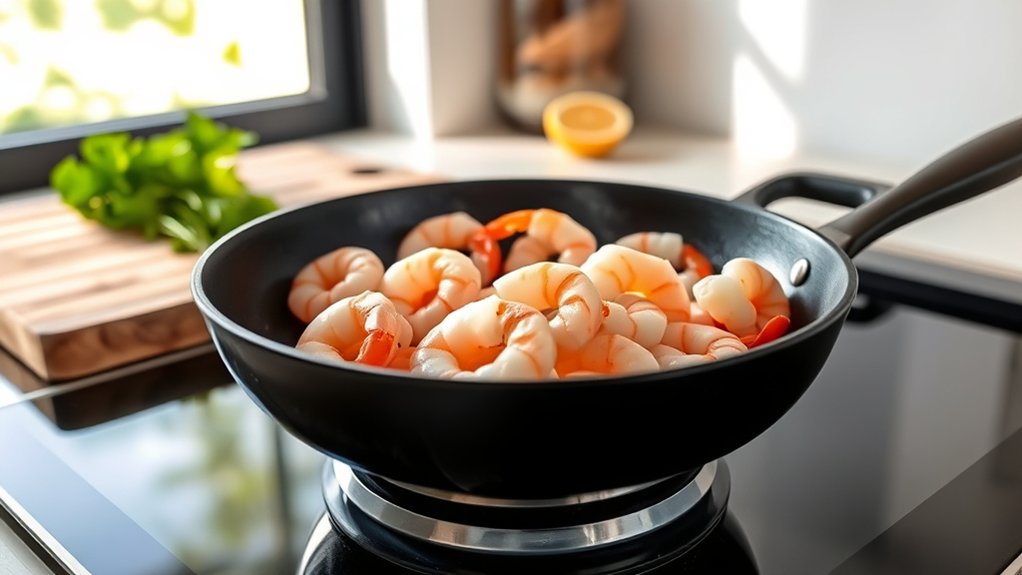
Yes, you can cook frozen shrimp in a skillet directly without thawing, saving time and effort.
Start by rinsing and patting the shrimp dry to reduce moisture.
Use medium-high heat and a bit of oil, cooking shrimp in a single layer for 2-3 minutes per side until pink and opaque.
Avoid overcrowding and watch closely to prevent rubberiness.
Season simply or with herbs and spices for great flavor.
Keep going to uncover step-by-step tips and seasoning ideas.
Key Takeaways
- Yes, you can cook frozen shrimp directly in a hot skillet without thawing, saving time and effort.
- Use medium-high heat and a small amount of oil, spreading shrimp in a single layer for even cooking.
- Rinse frozen shrimp under cold water and pat dry to reduce excess moisture for better searing.
- Cook shrimp 2-3 minutes per side until pink and opaque, avoiding overcooking to prevent rubberiness.
- Season with garlic, citrus zest, and herbs for enhanced flavor, and adjust heat to ensure even cooking.
Can You Cook Frozen Shrimp in a Skillet Without Thawing?
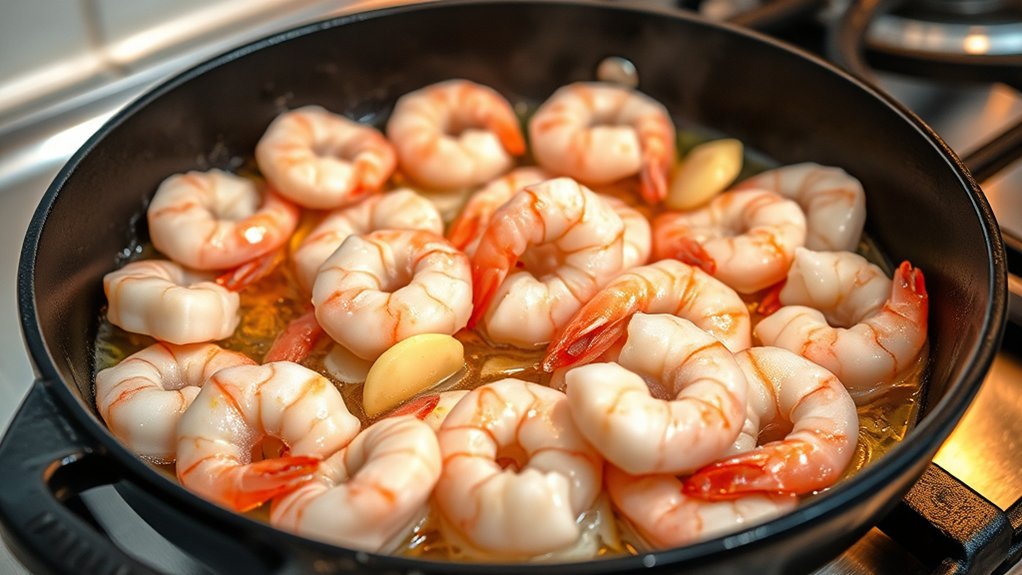
Wondering if you can cook frozen shrimp in a skillet without thawing? Yes, you can. Cooking frozen shrimp directly in a skillet is a practical and efficient approach, especially when you’re short on time.
This method involves carefully adjusting heat to guarantee shrimp cook evenly without becoming rubbery. Unlike some cooking methods that require pre-thawing, skillet cooking allows you to start from frozen, saving time and reducing preparation steps.
However, you’ll need to manage moisture released during cooking, as frozen shrimp tend to release water, which can hinder proper searing. Using a hot skillet and moderate heat helps evaporate excess moisture quickly, promoting a better texture.
Understanding these nuances guarantees your frozen shrimp come out flavorful and perfectly cooked every time.
How to Cook Frozen Shrimp in a Skillet Step-by-Step
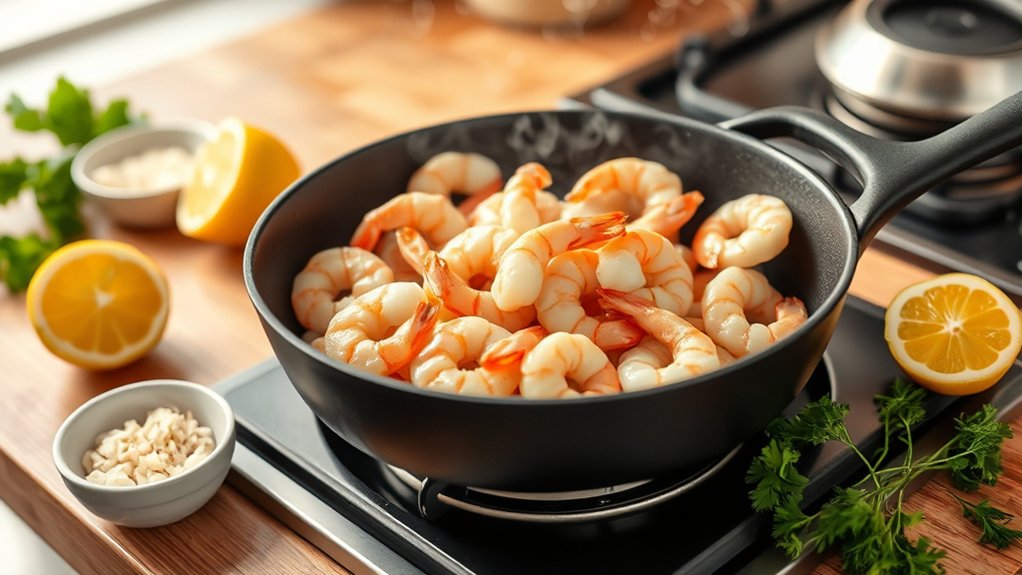
You’ll start by properly rinsing and drying the frozen shrimp to guarantee even cooking. Then, you’ll master key techniques like sautéing over medium-high heat while avoiding overcrowding the pan.
Follow these steps closely to achieve perfectly cooked shrimp with ideal texture and flavor.
Preparing Frozen Shrimp
Although frozen shrimp might seem challenging to cook directly from the freezer, you can prepare them quickly and safely in a skillet with the right technique. Begin by confirming your frozen shrimp storage method has kept them at a consistent temperature below 0°F to maintain freshness and prevent bacteria growth.
For shrimp cooking safety, always rinse the shrimp under cold water to remove ice crystals and any residue. Pat them dry thoroughly to avoid excess moisture that hinders searing.
| Step | Detail |
|---|---|
| Thawing (optional) | Quick cold water thaw if preferred |
| Rinsing | Remove ice crystals, maintain quality |
| Drying | Pat shrimp dry for better cooking results |
| Inspecting | Check for freshness and shell integrity |
Proper preparation confirms even cooking and food safety.
Cooking Techniques and Tips
When cooking frozen shrimp in a skillet, precise temperature control and timing are essential to achieve a tender texture and ideal flavor. Start by heating your skillet over medium-high heat and adding a small amount of oil. Use direct sautéing methods, placing shrimp in a single layer without overcrowding to guarantee even cooking.
Cook shrimp for about 2-3 minutes per side, flipping once they turn pink and opaque. To maximize flavor enhancements, season shrimp with salt, pepper, garlic, or paprika before and during cooking. Adding a splash of lemon juice or a pat of butter near the end intensifies the taste.
Avoid overcooking, as shrimp quickly become rubbery. Following these techniques guarantees perfectly cooked shrimp with rich, balanced flavors every time.
How to Avoid Overcooking Frozen Shrimp in a Skillet
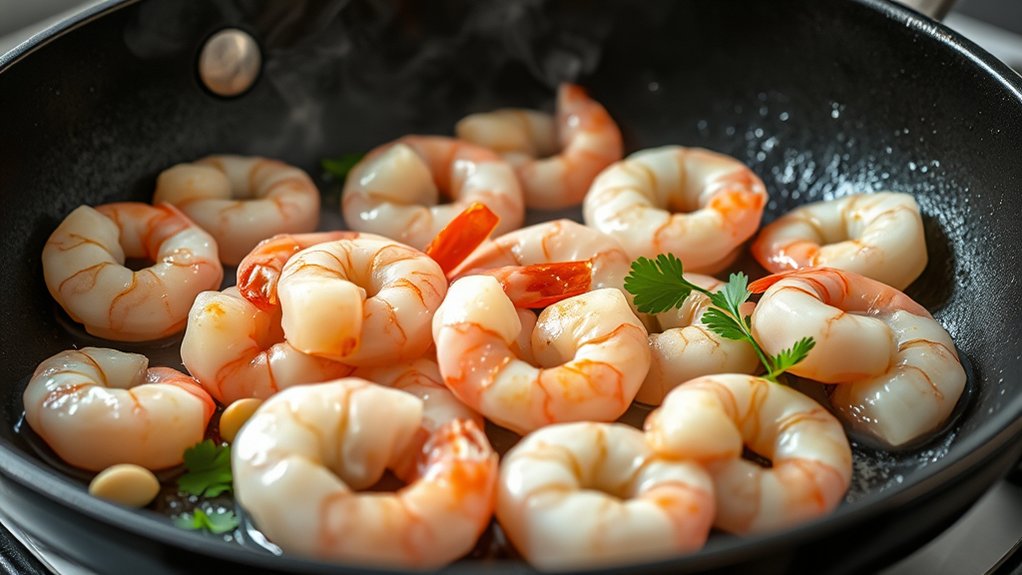
To avoid overcooking frozen shrimp, keep a close eye on the cooking time and never exceed a few minutes per side. Use medium heat to guarantee even cooking without toughening the shrimp.
Regularly check the shrimp’s texture. They should be opaque and firm but still tender before you remove them from the skillet.
Monitor Cooking Time
You’ll want to keep a close eye on the cooking time to confirm your frozen shrimp turns out tender and flavorful. Since shrimp cook quickly, the cooking duration typically ranges from 4 to 6 minutes. Start timing as soon as the shrimp hit the skillet.
Avoid guessing; use a timer to maintain precision. Watch for the shrimp to turn opaque and pink with firm texture. These are clear signs they’re done.
If you notice uneven cooking, make immediate heat adjustment by lowering or raising the temperature slightly to control the pace. Overcooking shrinks shrimp and makes them rubbery, so don’t let them sit too long.
Use Medium Heat
Maintaining control over cooking temperature plays an essential role in preventing frozen shrimp from becoming rubbery or overdone. To achieve ideal results, always cook shrimp on medium heat. This skillet temperature allows the shrimp to cook evenly and thoroughly without seizing up or drying out.
Avoid high heat, which can cause the exterior to char while leaving the interior undercooked. Conversely, low heat prolongs cooking time, affecting texture and flavor.
Preheat your skillet to medium heat before adding shrimp, ensuring consistent temperature throughout cooking. Adjust the heat slightly as needed to maintain that medium range, especially when adding frozen shrimp that can lower skillet temperature temporarily.
Check Shrimp Texture
Texture serves as the key indicator for perfectly cooked shrimp, signaling when to remove them from the skillet. As you cook, pay close attention to the firmness of the shrimp.
High shrimp quality and freshness mean the shrimp will shift from translucent and slightly soft to opaque and firm quickly. Avoid waiting until they feel rubbery or tough, which indicates overcooking.
Use a fork to gently press a shrimp; it should spring back without resistance. If it feels mushy, it’s undercooked; if too hard, you’ve gone too far.
What Seasonings and Sauces Go Best With Skillet Shrimp?
Although skillet shrimp cooks quickly, choosing the right seasonings and sauces can elevate its flavor dramatically. Start with a base of garlic butter to infuse rich aroma and a silky texture.
Add a touch of citrus zest, lemon or lime works best, to brighten the dish and cut through the shrimp’s natural sweetness. Incorporate freshly ground black pepper and a pinch of red pepper flakes for subtle heat without overwhelming the delicate seafood flavor.
Fresh herbs like parsley or cilantro complement this perfectly, adding freshness. For sauces, a simple white wine reduction or a light soy-ginger glaze enhances the shrimp without overpowering it.
Quick and Easy Skillet Shrimp Recipes to Try Tonight
When you’re pressed for time but crave a flavorful meal, quick and easy skillet shrimp recipes deliver satisfying results without fuss. Start with a garlic butter shrimp stir fry: sauté frozen shrimp directly in melted garlic butter over medium-high heat, then toss in vibrant vegetables like bell peppers and snap peas.
Season with salt, pepper, and a squeeze of lemon for brightness. Alternatively, you can make garlic butter shrimp by cooking shrimp in a skillet with plenty of garlic and butter until opaque and tender.
For a twist, add chili flakes or fresh herbs to elevate the flavor. These recipes take under 15 minutes, preserve shrimp’s natural sweetness, and require minimal prep. With these methods, you’ll enjoy restaurant-quality shrimp dishes right at home, fast and effortlessly.
How to Troubleshoot Common Problems When Cooking Frozen Shrimp?
If you find your frozen shrimp turning rubbery or unevenly cooked, it’s important to adjust your technique promptly. Rubberiness often results from overcooking, so closely monitor cooking times. Shrimp typically need just 3-5 minutes per side when cooked from frozen.
To fix uneven cooking, make sure your skillet is preheated evenly and avoid overcrowding, which causes inconsistent heat distribution. If shrimp stick to the pan, add a small amount of oil and wait for it to shimmer before adding shrimp.
For the best shrimp texture, thaw shrimp partially under cold water before cooking or cook directly from frozen but reduce cooking times slightly. Finally, rely on visual cues: shrimp should turn pink and opaque, curling into a loose “C” shape without tightening into an “O,” which indicates overcooking.
Frequently Asked Questions
Is It Safe to Eat Shrimp Cooked From Frozen?
Yes, it’s safe to eat shrimp cooked from frozen if you use proper cooking techniques and follow safety precautions. Ensure the shrimp reach an internal temperature of 145°F to eliminate harmful bacteria and avoid foodborne illness.
How Long Can Cooked Shrimp Be Stored in the Refrigerator?
You shouldn’t keep cooked shrimp longer than 3-4 days; beyond that, shrimp freshness plummets like a meteor.
For ideal shrimp storage, refrigerate promptly in an airtight container to maintain safety and flavor.
Can I Reheat Shrimp After Cooking in a Skillet?
Yes, you can reheat shrimp after cooking in a skillet. Use gentle reheating techniques like low heat or steaming to prevent overcooking.
Guarantee proper shrimp storage in the fridge to maintain freshness before reheating.
What Are the Nutritional Benefits of Shrimp?
Shrimp’s spectacular protein content supports strong muscles, while its heart-healthy omega-3s help reduce risks of cardiovascular issues. You’ll find it low in calories yet loaded with essential nutrients, making it a smart, savory choice.
Can I Cook Other Frozen Seafood the Same Way as Shrimp?
Yes, you can cook frozen fish and other seafood varieties similarly by thawing them properly and using a skillet. Adjust cooking times based on thickness to guarantee even cooking and maintain their texture and flavor.
Conclusion
Now that you know how to cook frozen shrimp in a skillet without thawing, you might think you’re ready to plunge in—but wait. The secret to perfect shrimp lies not just in timing, but in mastering seasoning and heat control. Skip those, and you risk rubbery bites.
Ready to transform your dinner? Follow these steps carefully, and you’ll access skillet shrimp that’s juicy, flavorful, and impressively fast. Are you prepared to make every bite count when you cook frozen shrimp in a skillet?

Leave a Reply