
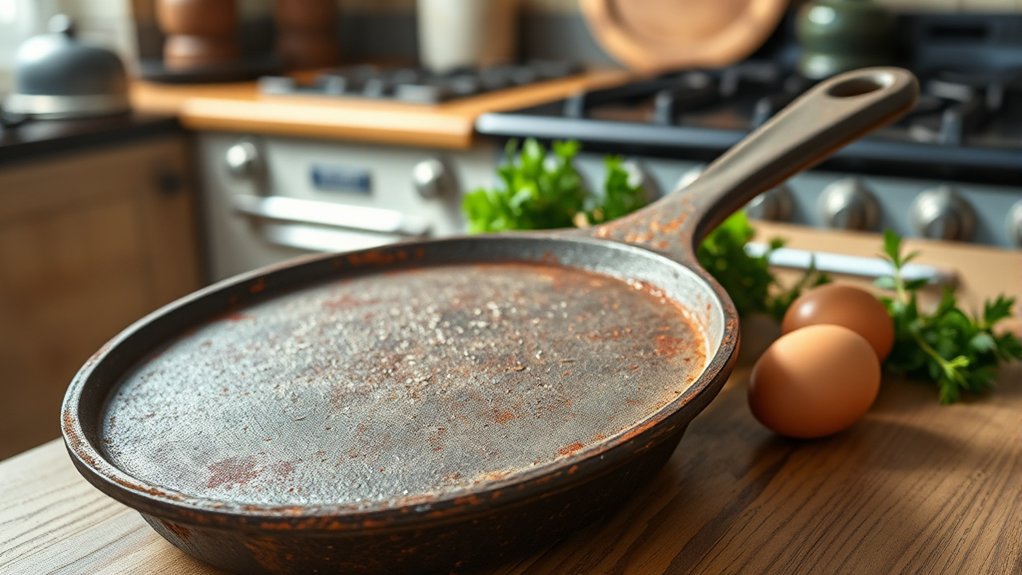
You can cook in a rusty cast iron skillet, but only after you remove the rust thoroughly.
Scrub the rust away using steel wool or a stiff brush and wash with mild soap and hot water. Then dry it immediately to prevent more rust from forming.
Afterward, re-season the skillet by applying a thin layer of oil and baking it at high heat. This process restores its non-stick surface and guarantees safe cooking.
If you want to know how to maintain your skillet and when to replace it, keep exploring these steps.
Key Takeaways
- Minor surface rust can be cleaned and the skillet re-seasoned to make it safe for cooking again.
- Rust affects cooking quality by causing uneven heating and food sticking.
- Thorough rust removal involves scrubbing, washing, drying, and re-seasoning with oil.
- Avoid cooking in skillets with deep pitting, cracks, or severe corrosion as they are unsafe.
- Regular maintenance, drying, and oiling prevent rust and ensure skillet longevity and safety.
Can You Safely Cook With a Rusty Cast Iron Skillet?
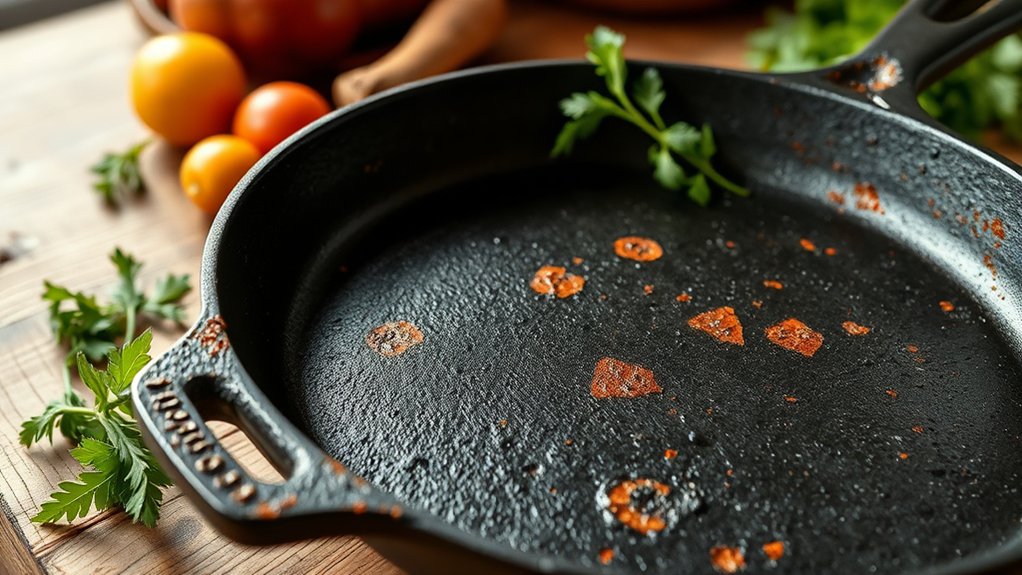
Although a rusty cast iron skillet may seem unsafe at first glance, you can cook with it once you properly clean and restore the surface. Prioritize rusty cookware safety by thoroughly scrubbing off rust using a stiff brush or steel wool combined with mild soap and hot water.
After removing rust, immediately dry the skillet completely to prevent further oxidation. Next, re-season the pan by applying a thin layer of vegetable oil and baking it at high heat; this re-establishes a protective, non-stick surface critical for cast iron hygiene.
Regular maintenance, including proper drying and seasoning, guarantees your skillet remains safe and hygienic for cooking. By following these steps, you eliminate potential health risks associated with rust and restore the skillet’s cooking functionality reliably and securely.
What Rust Does to Your Cast Iron Skillet’s Cooking and Durability
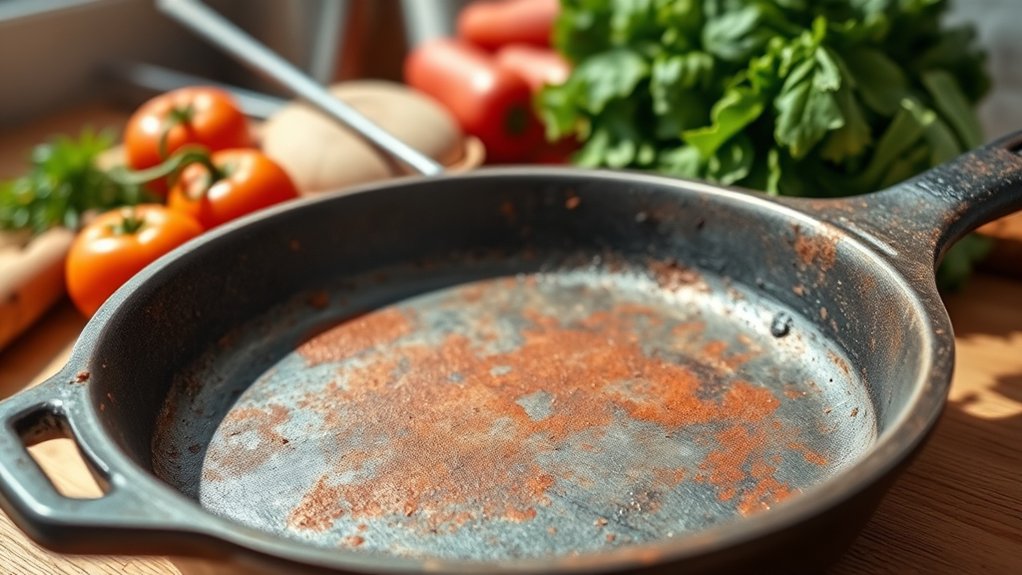
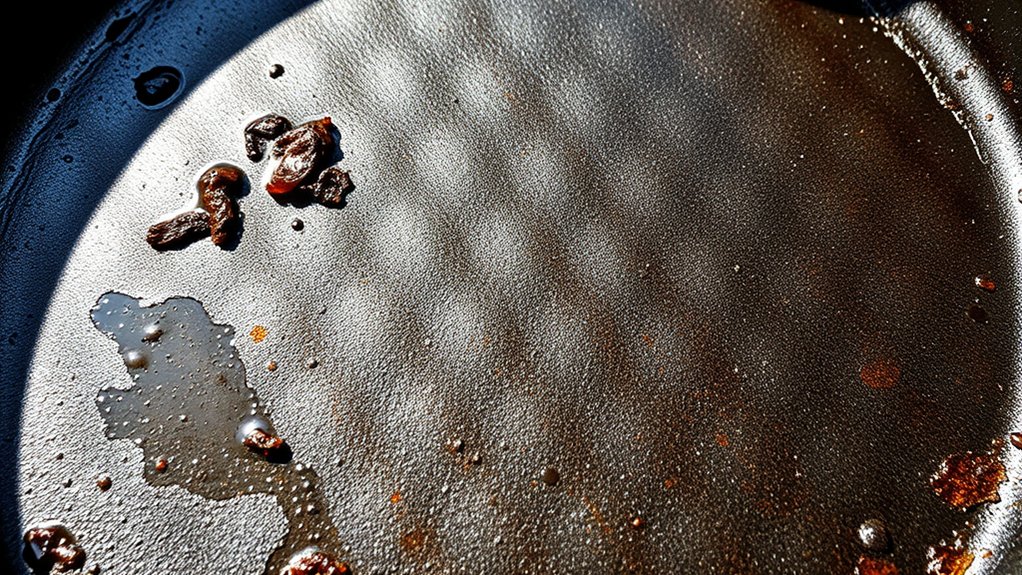
When rust forms on your cast iron skillet, it compromises both its cooking performance and structural integrity. The rust impact manifests as uneven heating, which directly lowers cooking quality by causing hot spots and food sticking.
Rust flakes can also mix with your food, posing health risks and altering flavors. Over time, corrosion weakens the skillet’s surface, making it more prone to chipping and further degradation. This deterioration reduces the pan’s lifespan and reliability.
Additionally, rust disrupts the non-stick seasoning layer essential for ideal cooking. If left unchecked, rust will progressively erode the metal, undermining durability and making the skillet unsafe for regular use. Understanding the rust impact helps you appreciate why maintaining a clean, rust-free surface is vital for preserving both cooking quality and cookware longevity.
How to Remove Rust and Restore Your Cast Iron Skillet
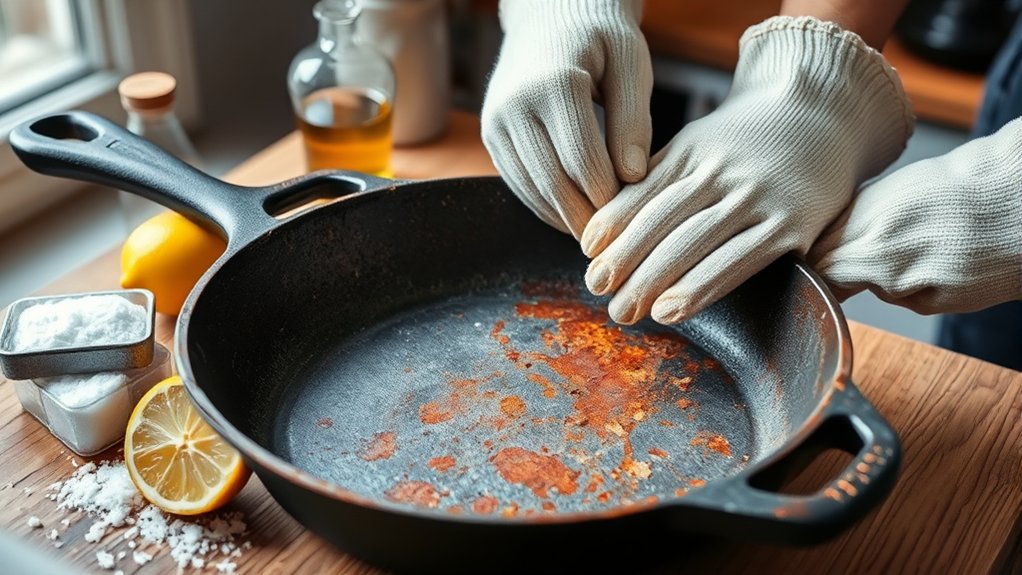
Because rust can severely compromise your cast iron skillet, you need to act promptly to remove it and restore the pan’s surface. Start by scrubbing the skillet with steel wool or a stiff brush under warm water to eliminate loose rust.
For stubborn spots, apply a paste of baking soda and water or soak the pan briefly in a vinegar-water solution, but avoid prolonged exposure to prevent damage. Once rust is removed, wash thoroughly, dry immediately, and heat the skillet on the stove to evaporate moisture.
Finally, re-season the pan by applying a thin layer of oil and baking it at 350°F for an hour. Using these rust removal techniques guarantees effective cast iron care, restoring your skillet’s durable, non-stick surface and extending its lifespan.
How to Prevent Rust and Maintain Your Cast Iron Skillet
To keep your cast iron skillet rust-free and in prime condition, you must adopt consistent maintenance habits that protect its seasoned surface. Proper seasoning techniques create a durable, non-stick layer that repels moisture and prevents rust. Equally important is proper storage to avoid exposure to humidity.
Follow these essential steps to maintain your skillet:
- Clean immediately after use with minimal water and a stiff brush
- Dry thoroughly using heat or a towel to eliminate moisture
- Apply a thin coat of oil after each cleaning to reinforce seasoning
- Store in a dry place, preferably with a paper towel between stacked pans
- Avoid prolonged soaking or dishwasher use, which strip seasoning
When to Replace a Rusty Cast Iron Skillet Instead of Restoring It
If you notice deep pitting, flaking, or structural cracks in your cast iron skillet, it’s time to contemplate replacement rather than restoration. These signs indicate serious damage that compromises the skillet’s integrity and safety.
While cast iron is durable, its skillet lifespan isn’t indefinite, especially if neglected or heavily rusted. Minor surface rust can be restored, but when corrosion penetrates the metal or causes deformation, cooking performance and safety decline.
Additionally, if the skillet warps or the handle weakens, these are clear signs replacement is necessary. Investing time and effort into restoring a skillet beyond its functional limits won’t yield reliable results.
Prioritize safety and efficiency by recognizing these limits and replacing your cast iron when restoration can’t assure dependable use.
Frequently Asked Questions
Can Rust Affect the Flavor of Food Cooked in Cast Iron?
Yes, rust flavor can leach into your food, affecting taste and safety. You should prioritize rust prevention by seasoning and drying your cast iron thoroughly to maintain flavor integrity and guarantee safe, enjoyable cooking every time.
Is It Safe to Eat Food Cooked in a Rusted Pan?
You shouldn’t eat food cooked in a rusty pan; rust removal is essential for food safety. Thoroughly scrub and re-season the skillet to prevent contamination and maintain a safe cooking surface before using it again.
How Often Should I Season a Cast Iron Skillet?
You should season your cast iron skillet every few uses to maintain ideal seasoning. If food sticks or the surface looks dull, it’s time to reapply oil and bake it, ensuring long-lasting, non-stick performance.
Can Vinegar Damage My Cast Iron Skillet?
Yes, vinegar effects can damage your cast iron skillet by breaking down its seasoning and promoting rust. Use vinegar cautiously in cast iron care. Limit exposure time and thoroughly reseason afterward to maintain your skillet’s protective coating.
What Tools Are Best for Cleaning Cast Iron Without Rust?
You might think harsh scrubbing ruins your cast iron, but using stiff cleaning brushes and non-abrasive scrubbing pads actually preserves the seasoning while removing residue.
Stick to these tools for effective, rust-free cleaning every time.
Conclusion
You might think a rusty cast iron skillet is doomed, but don’t rush to toss it yet. With the right steps, that rust can vanish, restoring your skillet’s strength and cooking power.
However, be cautious—some damage runs too deep to fix. Before you cook, inspect carefully. If the rust is severe and pitting is present, replacement might be your safest bet.
Otherwise, your skillet can rise from rust and serve you well again. So yes, you can cook in a rusty cast iron skillet, but only after proper restoration and inspection.


Leave a Reply