
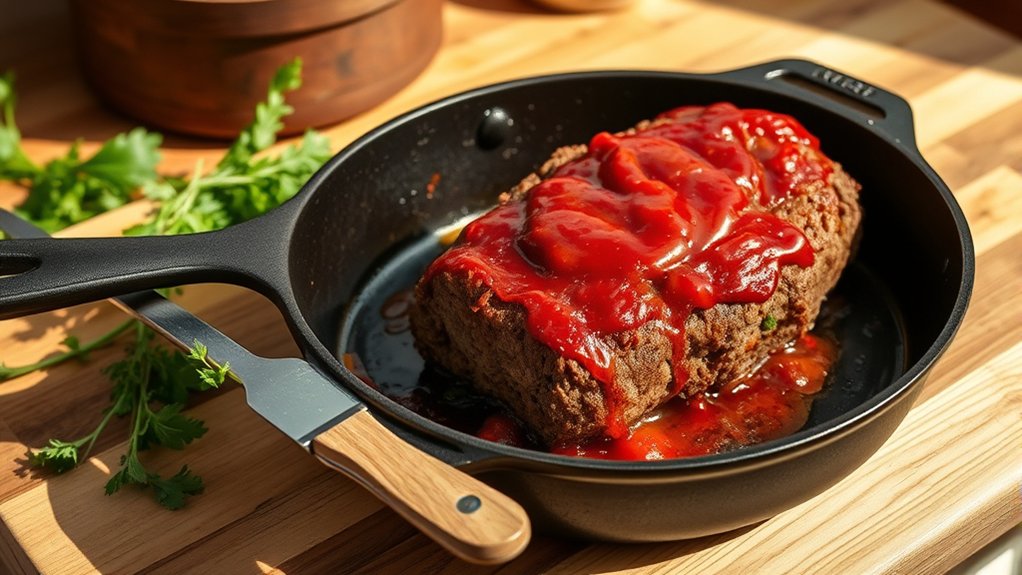
Yes, you can definitely cook meatloaf in a cast iron skillet.
Cooking meatloaf in a cast iron skillet allows for even heat retention, giving you a juicy interior and a perfectly browned crust.
Preheat your skillet on the stove, shape your meatloaf to fit, and use a flavorful glaze for caramelization.
Just be sure to use oven mitts when moving the skillet to the oven.
With proper preparation and care, your cast iron will enhance both the cooking and flavor of your meatloaf.
Uncover how to master every step for the best results.
Key Takeaways
- Yes, cast iron skillets are excellent for cooking meatloaf due to their even heat distribution and superior heat retention.
- Preheat the skillet on the stove before adding the meatloaf to ensure a perfectly browned crust and even cooking.
- Shape the meatloaf to fit the skillet comfortably, avoiding overcrowding to maintain proper cooking and moisture balance.
- Use a glaze like ketchup or barbecue sauce on the meatloaf for added flavor and caramelization in the skillet.
- After cooking, clean and season the cast iron skillet properly to preserve its non-stick surface and durability.
Can You Cook Meatloaf in a Cast Iron Skillet? Yes, Here’s How
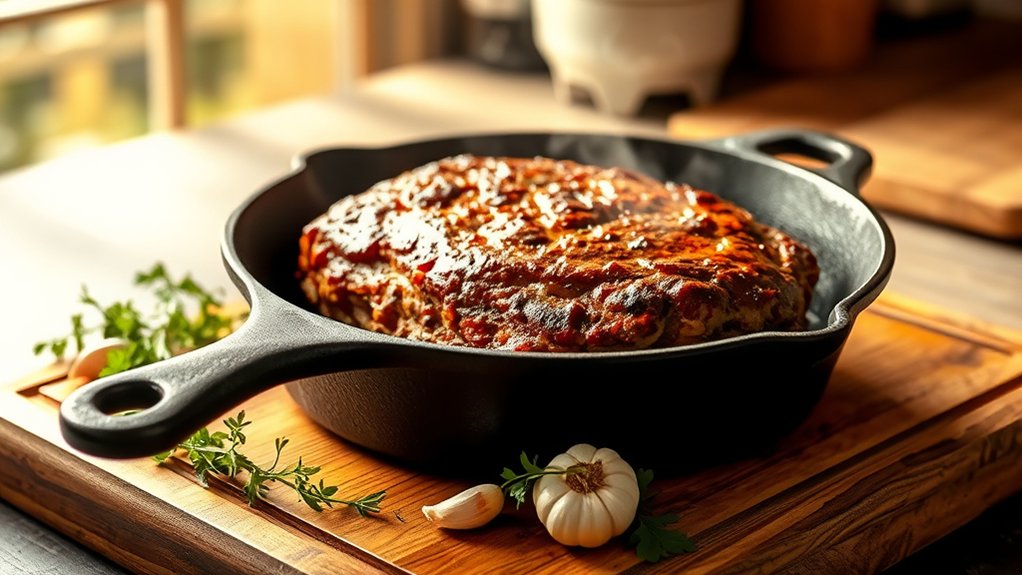
Although you might typically use a loaf pan, cooking meatloaf in a cast iron skillet offers superior heat retention and even cooking. You can easily prepare various meatloaf variations in your skillet, from classic beef blends to turkey or vegetarian options.
To get started, preheat your skillet on the stove before transferring it to the oven for consistent heat distribution. When shaping your meatloaf, make sure it fits comfortably within the skillet’s surface for ideal cooking.
Remember skillet safety by using oven mitts and placing the hot skillet on a heat-resistant surface after baking. Avoid sudden temperature changes to prevent warping or damage.
Following these steps allows you to cook meatloaf efficiently while experimenting with different recipes, all while maintaining your skillet’s integrity and performance.
Benefits of Cooking Meatloaf in a Cast Iron Skillet
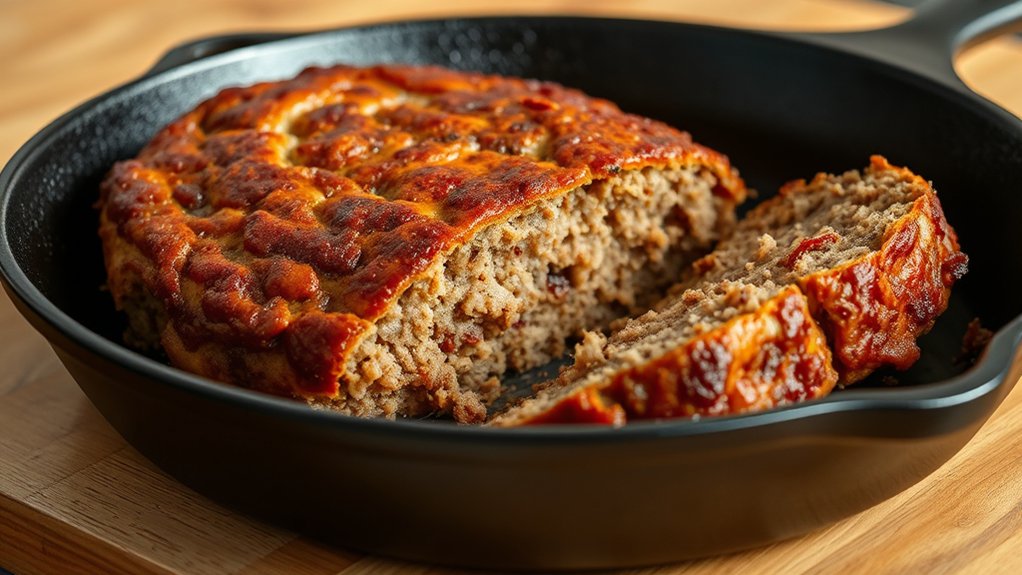
When you cook meatloaf in a cast iron skillet, you benefit from its exceptional heat retention and even cooking surface, which helps achieve a perfectly browned crust and juicy interior. These cast iron advantages guarantee consistent heat distribution, preventing hot spots that can cause uneven cooking.
The skillet’s ability to maintain high temperatures enhances the Maillard reaction, intensifying meatloaf flavors and creating a savory, caramelized exterior. Additionally, cast iron’s natural seasoning adds subtle complexity to your dish without overpowering the meatloaf’s taste.
Its versatility allows you to transfer the skillet from stovetop to oven seamlessly, simplifying your cooking process. By using a cast iron skillet, you not only improve texture and flavor but also gain durability and ease of maintenance in your kitchen tools.
How to Prepare Meatloaf for Cast Iron Cooking
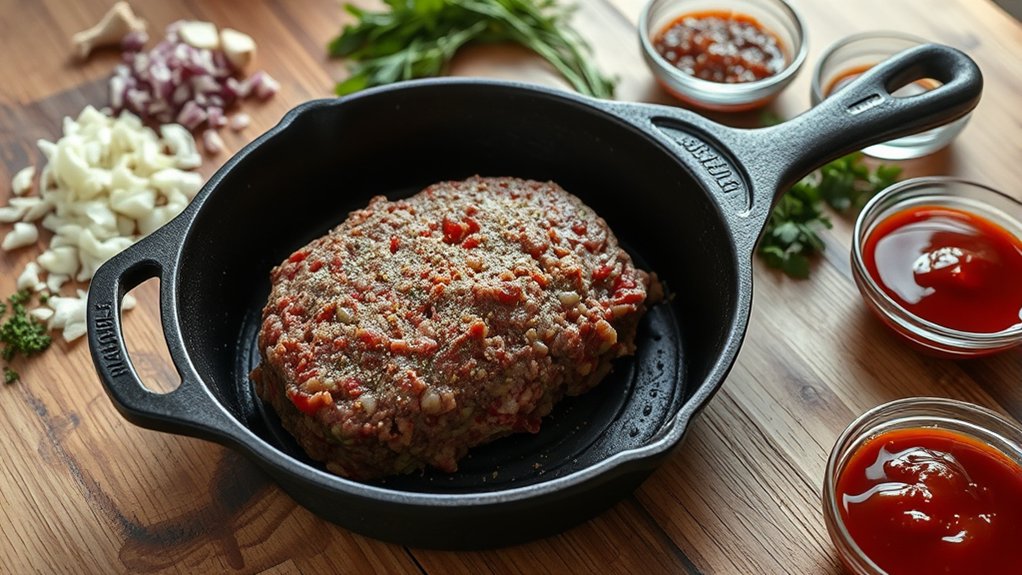
To prepare your meatloaf for cast iron cooking, start by selecting quality ingredients that balance flavor and moisture. Next, properly season and preheat your skillet to guarantee even cooking and prevent sticking.
Finally, shape the meatloaf compactly to fit the skillet, promoting uniform browning and a perfect crust.
Choosing Meatloaf Ingredients
Since the quality of your meatloaf depends largely on its ingredients, selecting the right combination is vital for cast iron cooking. Start with beef options that balance flavor and fat content; 80/20 ground beef offers ideal juiciness without excessive grease.
You can also blend in ground pork or veal for added moisture and complexity. For seasoning suggestions, rely on classic aromatics like onions, garlic, salt, and black pepper. Incorporate herbs such as thyme or parsley to enhance depth without overwhelming the palate.
Don’t forget a binder like eggs and breadcrumbs to maintain structure during cooking. These choices guarantee your meatloaf holds together well and cooks evenly in your cast iron skillet, producing a moist, flavorful dish every time.
Preparing Skillet For Cooking
Preparing your cast iron skillet properly sets the foundation for a perfectly cooked meatloaf. Begin by verifying your skillet is clean and well-seasoned; this non-stick surface prevents sticking and promotes even browning.
If your skillet needs seasoning, apply a thin layer of vegetable oil and heat it in the oven at 375°F for an hour. Before cooking, preheat the skillet on the stove over medium heat to avoid thermal shock and guarantee consistent heat distribution.
Lightly grease the skillet with oil or butter to further prevent sticking. Properly maintaining cookware by drying it immediately after washing and applying a light oil coating will keep the seasoning intact.
Taking these steps ensures your meatloaf cooks evenly and releases easily, enhancing both texture and flavor.
Forming Meatloaf Shape
With your skillet heated and greased, focus shifts to shaping the meatloaf for ideal cooking. Start by loosely combining your ingredients to maintain a tender meatloaf texture. Avoid overmixing, which can toughen the meat and diminish the meatloaf flavors.
Form the mixture into a compact loaf that fits comfortably within the skillet, ensuring even thickness for uniform cooking. Press gently to eliminate air pockets, which helps the loaf hold its shape during cooking.
The shape should allow heat to circulate evenly, promoting a consistent crust without burning. Remember, a well-formed meatloaf enhances both texture and flavor, resulting in a juicy interior and a crisp exterior when cooked in cast iron. Accurate shaping is essential for best results.
Step-by-Step Meatloaf Cooking in Cast Iron (Plus Crust and Juiciness Tips)
You’ll start by properly seasoning and heating your cast iron skillet to guarantee even cooking and a perfect sear. Next, shape your meatloaf carefully to maintain its structure and promote uniform browning. Finally, use targeted techniques to develop a flavorful crust while locking in moisture for a juicy interior.
Preparing The Skillet
Before placing your meatloaf in the cast iron skillet, season and preheat the pan thoroughly to secure a perfect crust and even cooking. Proper skillet seasoning prevents sticking and enhances flavor, while effective heat management guarantees consistent results.
Follow these steps:
- Clean and dry your cast iron skillet completely to maintain the seasoning layer.
- Lightly oil the skillet with a high-smoke point oil, spreading evenly to support crust formation.
- Preheat the skillet over medium heat for 5–7 minutes until it reaches an even temperature but avoid overheating, which can scorch the meatloaf base.
Forming The Meatloaf
Once your skillet is properly seasoned and heated, focus on shaping the meatloaf to guarantee even cooking and a desirable texture. Start by combining your ingredients thoroughly, then form the mixture into a compact loaf that fits comfortably within your skillet.
Consider your skillet size carefully. Too large may cause spreading, too small may crowd the meatloaf, affecting cooking time and texture. For different meatloaf variations, adjust thickness accordingly; thinner loaves cook faster and develop a crisper exterior, while thicker loaves stay juicier inside.
Aim for a uniform shape with smooth edges to ensure consistent heat distribution. Avoid overpacking the meat, as this can lead to a dense, tough loaf. Properly formed meatloaf optimizes flavor and texture, setting the stage for a perfect cast iron skillet cook.
Achieving Juicy Crust
A perfectly cooked meatloaf owes much of its appeal to the balance between a juicy interior and a flavorful, caramelized crust. When using a cast iron skillet, achieving this balance requires attention to detail and technique.
Here are three essential tips for crust enhancement and juicy alternatives:
- Preheat the skillet: A hot cast iron surface sears the meatloaf exterior, locking in moisture and creating a crisp crust.
- Apply a glaze: Use a thin layer of ketchup, barbecue sauce, or a mixture of both to promote caramelization and add flavor.
- Choose fat content wisely: Incorporate ground beef with 15-20% fat or mix in juicy alternatives like finely chopped vegetables or soaked breadcrumbs to maintain moisture inside.
These steps guarantee your meatloaf delivers both a succulent interior and a satisfying crust.
How to Transfer Meatloaf From Stove to Oven Safely
Transferring your meatloaf from the stove to the oven requires careful handling to prevent spills and burns. Prioritize stove safety by using oven mitts and confirming your cast iron skillet’s handle is secure and clear of obstructions. When ready for oven transfer, keep a firm grip on both the handle and the skillet’s side.
| Step | Action |
|---|---|
| 1. Prepare mitts | Use thick, dry oven mitts |
| 2. Secure grip | Hold skillet handle and side |
| 3. Clear path | Confirm no obstacles to oven |
| 4. Transfer swiftly | Move skillet gently but quickly |
Following these steps confirms a safe, smooth oven transfer, maintaining control and minimizing risk during this critical phase of cooking meatloaf.
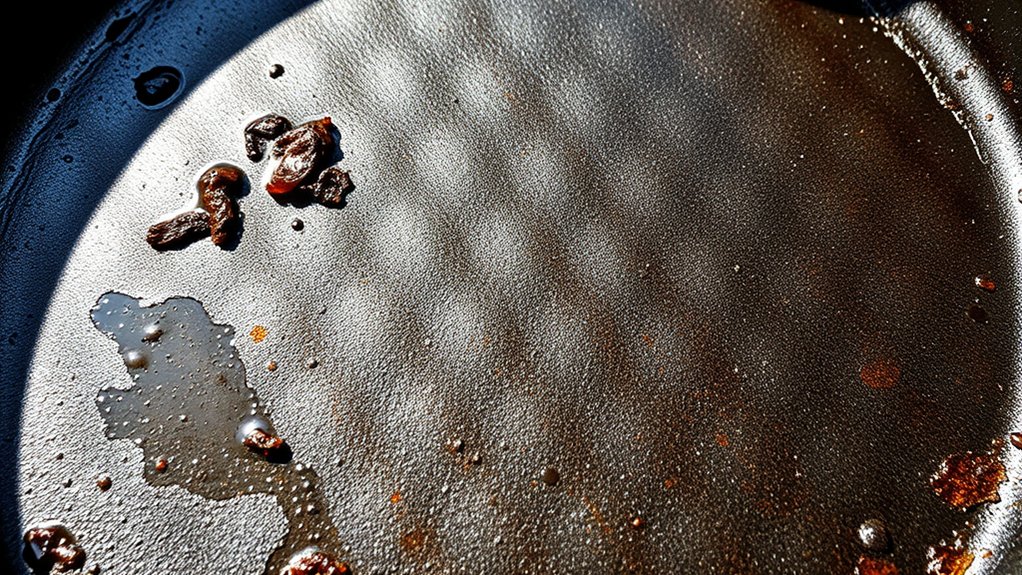
Cleaning Your Cast Iron Skillet After Cooking Meatloaf
Three essential steps guarantee your cast iron skillet stays in top condition after cooking meatloaf. Proper cleaning techniques and seasoning tips maintain its non-stick surface and prevent rust.
- Clean Immediately: After the skillet cools slightly, rinse it with hot water. Avoid soap to preserve seasoning. Use a stiff brush or scraper to remove stuck-on bits.
- Dry Thoroughly: Pat the skillet dry with a towel and heat it on the stove for a few minutes to evaporate moisture.
- Re-season Lightly: Apply a thin layer of vegetable oil to the skillet’s surface while it’s warm. Wipe off excess oil to avoid a sticky residue.
Following these steps guarantees your cast iron skillet remains durable and ready for your next meatloaf.
Frequently Asked Questions
Can I Use a Non-Stick Skillet Instead of Cast Iron for Meatloaf?
You can use a non-stick skillet for meatloaf, enjoying non stick advantages like easy cleanup and less oil. However, skillet alternatives like cast iron offer better heat retention and browning, enhancing texture and flavor.
What Meat Blend Is Best for a Tender Meatloaf?
If you want your meatloaf as tender as a love song, use the best meat combinations: 80% ground beef, 10% pork, 10% veal. These meatloaf texture tips guarantee juiciness and a perfect crumb every time.
How Long Does Meatloaf Need to Rest Before Slicing?
You should let your meatloaf rest for about 10 to 15 minutes. This resting period helps juices redistribute, improving the meatloaf texture and making it easier to slice without crumbling or losing moisture.
Can I Freeze Cooked Meatloaf for Later Use?
Absolutely, you can freeze cooked meatloaf for later use. Use proper freezing techniques by wrapping it tightly to prevent freezer burn and storing it in airtight containers. This guarantees ideal meatloaf storage, preserving flavor and texture for future meals.
What Side Dishes Pair Well With Meatloaf?
You’ll find mashed potatoes and green beans complement meatloaf perfectly, offering creamy and crisp textures. Consider adding roasted carrots or a fresh salad to balance flavors.
These sides make your meal hearty and satisfying.
Conclusion
Absolutely, cooking meatloaf in your cast iron skillet will transform your dinner into a masterpiece that even top chefs envy. The skillet locks in juicy flavors and creates a crust so perfect, it’s borderline magical.
Once you master this method, you’ll never want to go back to regular pans. Just follow the steps, and you’ll wield your cast iron like a culinary wizard, delivering mouthwatering meatloaf every single time.
In conclusion, yes, you can cook meatloaf in a cast iron skillet, and doing so elevates the dish to a whole new level of deliciousness.


Leave a Reply