
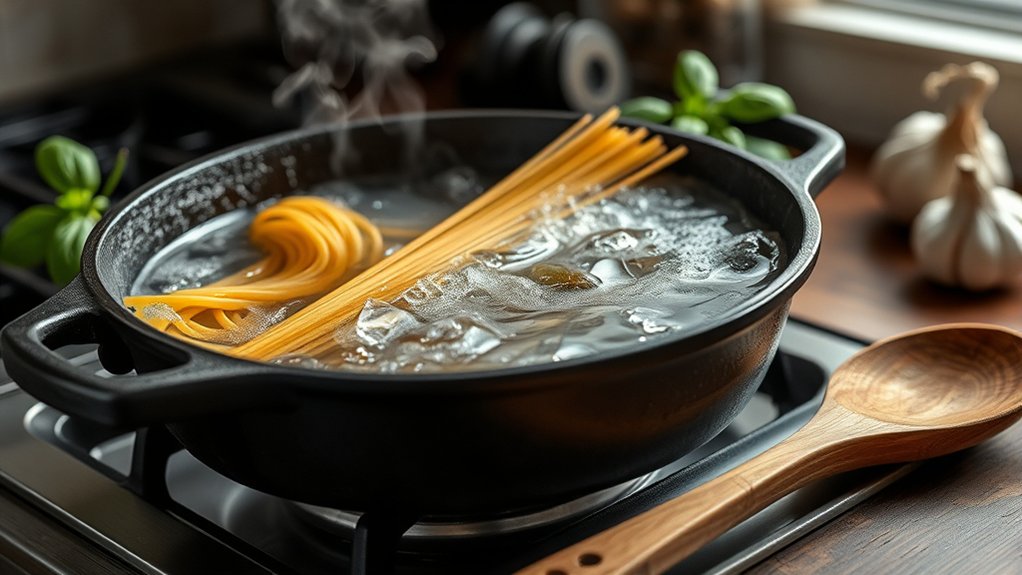
You can cook pasta in a cast iron skillet safely if you manage heat and water carefully.
Cooking pasta in a cast iron skillet requires attention to temperature and moisture to protect the skillet’s seasoning. Use medium heat to avoid damaging the seasoning, and keep enough water to cover the pasta, stirring often to prevent sticking.
Make sure your skillet is well-seasoned and avoid sudden temperature changes.
While a skillet works for small portions or finishing pasta in sauce, larger batches cook better in pots.
Keep going for practical tips and step-by-step guidance.
Key Takeaways
- Cooking pasta in a cast iron skillet is safe if the skillet is well-seasoned and temperature changes are gradual.
- Use medium heat and add enough water or broth to cover pasta by about an inch for even cooking.
- Stir pasta frequently to prevent sticking and clumping during simmering in the skillet.
- A cast iron skillet is ideal for small pasta amounts or finishing pasta in sauce, not for boiling large quantities.
- Proper skillet maintenance and seasoning are crucial to avoid rust and ensure non-stick cooking when boiling pasta.
Is It Safe to Cook Pasta in a Cast Iron Skillet?
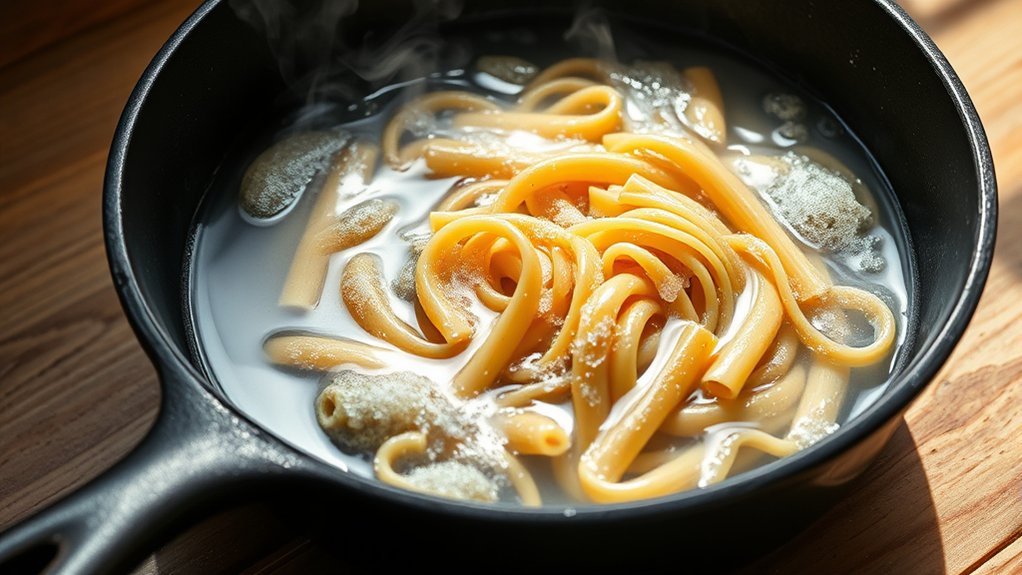
How safe is it to cook pasta in a cast iron skillet? You’ll find it’s generally safe, provided you follow key safety precautions and maintain proper cast iron care.
Cast iron skillets are durable and can handle boiling water, but sudden temperature changes may cause cracking, so avoid pouring cold water into a hot skillet. Also, verify your skillet is well-seasoned; this prevents rust and sticking, making cooking and cleaning safer and easier.
When cooking pasta, monitor the water level to prevent the skillet from drying out, which can damage the seasoning. Finally, be mindful of the skillet’s weight and handle hot surfaces carefully to avoid burns.
How to Cook Pasta in a Cast Iron Skillet Step-by-Step
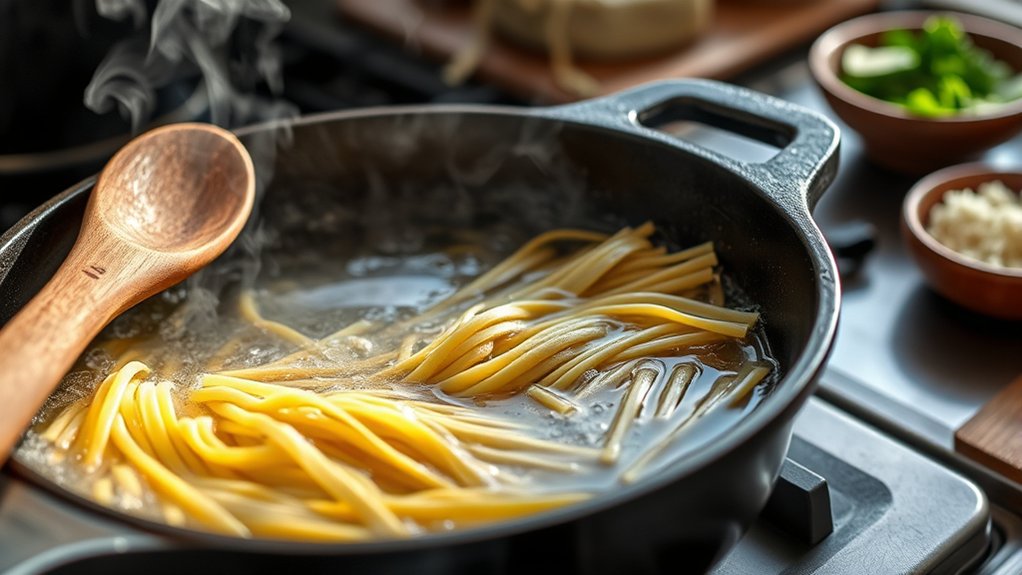
Cooking pasta in a cast iron skillet involves a few essential steps to guarantee even cooking and prevent damage to your pan. First, choose the right pasta types—short shapes like penne or rigatoni work best, as they cook evenly in the skillet’s shallow surface.
Next, preheat your skillet over medium heat, then add water or broth to cover the pasta by about an inch. Bring the liquid to a gentle boil, then add your pasta, stirring occasionally to prevent clumping.
Preheat your skillet, add water to cover pasta, bring to a gentle boil, then stir occasionally to prevent clumping.
Thanks to the skillet benefits, excellent heat retention and distribution, you’ll achieve a consistent simmer without hot spots. Cook until the pasta reaches your desired tenderness, usually 8 to 12 minutes.
Finally, drain any excess liquid or incorporate it into your sauce for enhanced flavor.
Tips to Prevent Sticking and Maintain Your Cast Iron Skillet
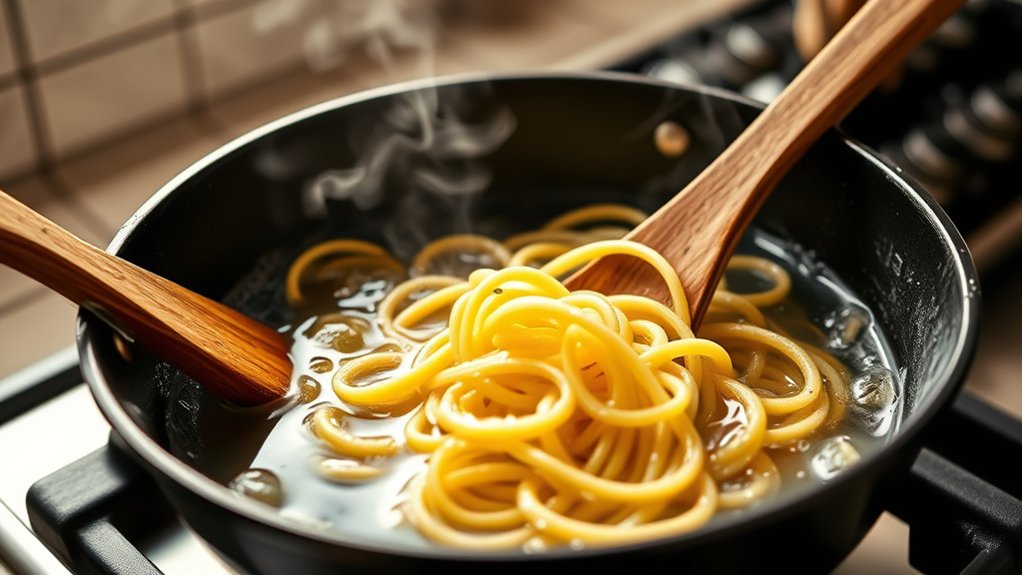
Although cast iron skillets are incredibly durable, preventing pasta from sticking requires careful attention to heat control and seasoning. To keep your skillet in top shape and guarantee ideal cooking results, follow these tips:
- Maintain Proper Skillet Seasoning: Regularly oil and heat your skillet to build a non-stick surface that reduces pasta adhesion, especially with starchier pasta types.
- Control Heat Levels: Use medium heat to avoid burning the skillet’s seasoning and to cook pasta evenly without sticking.
- Stir Frequently: Stir pasta often during cooking to prevent clumping and sticking, particularly with thicker pasta types like rigatoni or penne.
When Should You Choose a Pot Instead of a Skillet for Pasta?
When do you need to opt for a pot instead of a cast iron skillet to cook pasta? Choosing the right cookware depends largely on the pasta cooking techniques you plan to use.
If you’re boiling a large amount of pasta, a deep pot is vital to guarantee even cooking and prevent overcrowding. A pot allows you to fully submerge pasta in plenty of water, which is important for proper starch release and texture.
Additionally, if you want to rinse or strain the pasta easily, a pot with a built-in strainer or a separate colander works best. On the other hand, a skillet suits recipes where pasta finishes cooking in sauce or requires sautéing.
Frequently Asked Questions
Can I Cook Pasta Sauces Directly in a Cast Iron Skillet?
Yes, you can cook pasta sauces directly in a cast iron skillet. Just monitor sauce consistency carefully to avoid burning, and maintain your skillet seasoning by avoiding overly acidic sauces or deglaze gently to preserve its surface.
Does Cooking Pasta in Cast Iron Affect Its Flavor?
Yes, cooking pasta in cast iron can subtly affect its flavor. Your skillet’s seasoning may impart a unique taste, and the cast iron’s flavor absorption can enhance or alter the pasta’s profile depending on prior use and maintenance.
How Do I Clean Pasta Residue From a Cast Iron Skillet?
Picture stubborn pasta residue clinging stubbornly. Use hot water and a stiff brush for residue removal. Avoid soap.
For tough spots, sprinkle coarse salt, scrub gently, then rinse. Dry thoroughly, then re-season to maintain your cast iron.
Can I Use Cast Iron Skillets for Gluten-Free Pasta?
Yes, you can cook gluten-free pasta in your cast iron skillet. The cast iron benefits include even heating and excellent heat retention, which help cook gluten-free options thoroughly without sticking when properly seasoned and preheated.
Will Acidic Pasta Sauces Damage My Cast Iron Skillet?
Yes, acidic ingredients can strip your skillet’s seasoning if used frequently. To protect it, don’t cook acidic pasta sauces often.
Always re-season and dry your cast iron skillet thoroughly after cleaning to maintain skillet care.
Conclusion
Cooking pasta in a cast iron skillet is not only safe but can enhance flavor with proper technique. Did you know cast iron retains heat 20% longer than stainless steel, giving you more consistent cooking? Just remember to use enough water, stir frequently, and season your skillet well to prevent sticking.
While a pot is better for large batches, your skillet can handle quick, flavorful pasta meals easily and efficiently. With the right approach, cooking pasta in a cast iron skillet can be a convenient and tasty option in your kitchen.

Leave a Reply