
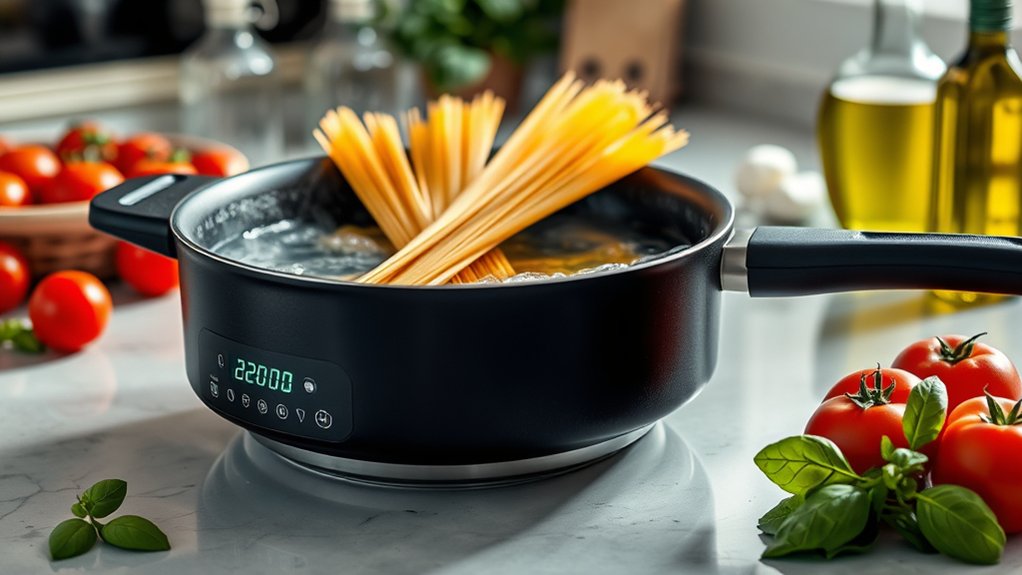
Yes, you can cook pasta in an electric skillet. Its consistent and even heat lets you boil water and cook pasta efficiently, just like a stove pot.
Using an electric skillet also helps you control temperature precisely, preventing sticking and overeating.
Short pasta shapes work best for even cooking, and stirring often keeps the pasta from clumping.
With proper water amount, salt, and stirring, you’ll get great results.
Keep going to uncover detailed steps and helpful tips for perfect pasta every time.
Key Takeaways
- Yes, pasta can be cooked in an electric skillet using its consistent, adjustable heat for even simmering and boiling.
- Fill the skillet with enough water to cover the pasta, bring it to a boil, then add salt and pasta for best results.
- Stir frequently to prevent sticking and clumping, and monitor cooking time closely to achieve the desired doneness.
- Short, compact pasta shapes like penne or rotini work best for even cooking in the skillet’s surface area.
- Avoid overcrowding and ensure water is boiling before adding pasta to prevent uneven cooking and mushiness.
Can You Cook Pasta in an Electric Skillet?
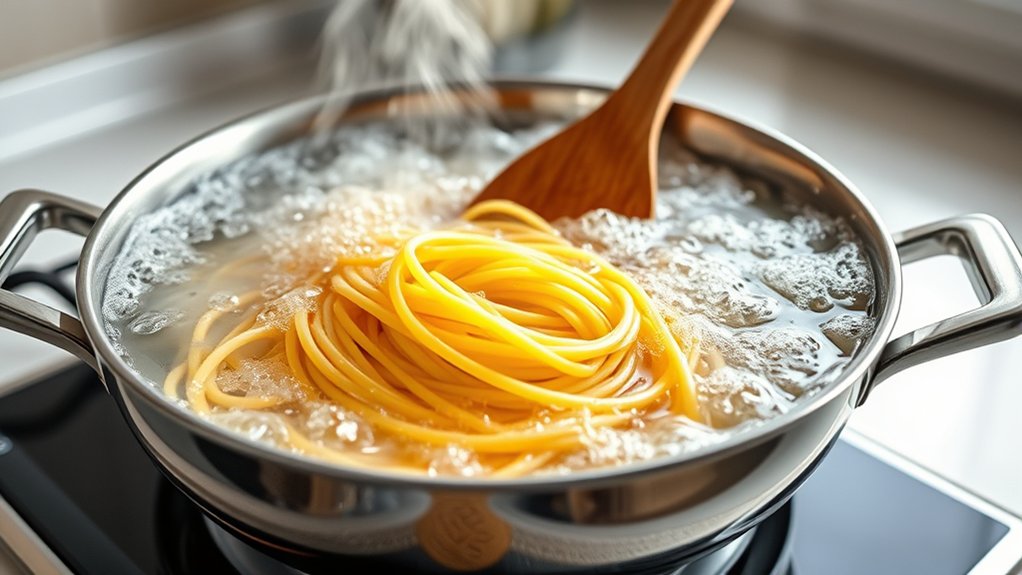
Wondering if you can cook pasta in an electric skillet? Yes, you can, and it offers distinct advantages over traditional pasta cooking methods. An electric skillet provides consistent, adjustable heat, allowing you to maintain a steady simmer essential for properly cooking pasta.
Unlike stovetop pots, electric skillets often have a larger surface area, making it easier to stir and monitor the pasta as it cooks. This control minimizes the risk of overcooking or sticking.
Additionally, electric skillets are portable and energy-efficient, so you can cook pasta anywhere with an outlet, not just near a stove. While it may differ from boiling in a pot, using an electric skillet streamlines the process and expands your cooking options, making it a practical tool for pasta preparation.
How an Electric Skillet Heats Water for Pasta
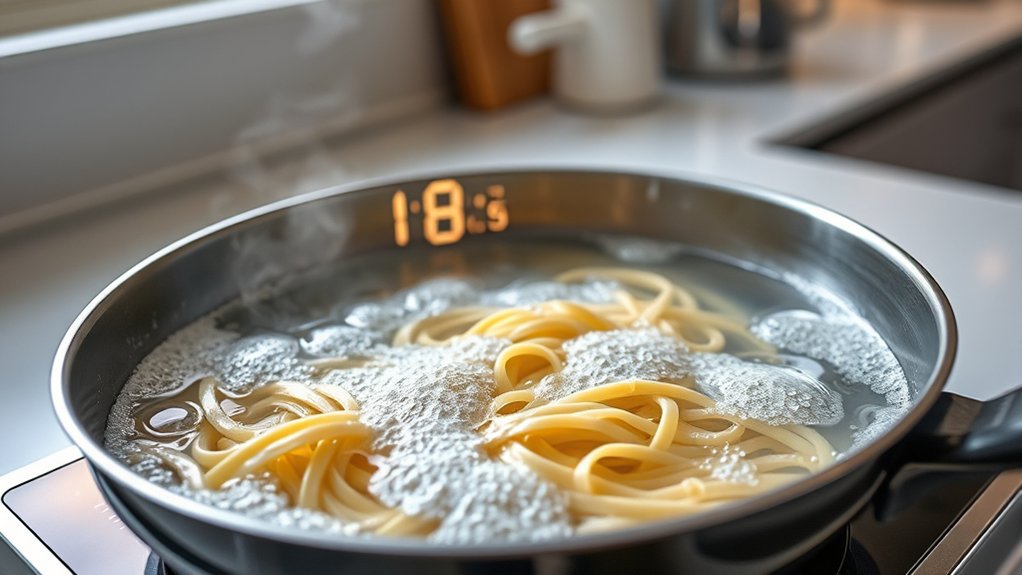
Although an electric skillet heats water differently than a traditional stovetop pot, it still achieves a consistent temperature ideal for cooking pasta. The heating element beneath the skillet’s flat surface distributes heat evenly, maintaining precise water temperature control.
You can expect reliable heating efficiency, as the skillet quickly brings water to a boil and sustains it without significant fluctuations. Unlike stovetop pots, the electric skillet’s built-in thermostat monitors and adjusts the heat output automatically, preventing overheating or undercooking.
This precise regulation guarantees your pasta cooks evenly and thoroughly. By managing water temperature effectively, the electric skillet provides a convenient alternative for boiling water, matching the performance you’d expect from conventional methods while offering consistent results.
Which Types of Pasta Work Best in an Electric Skillet
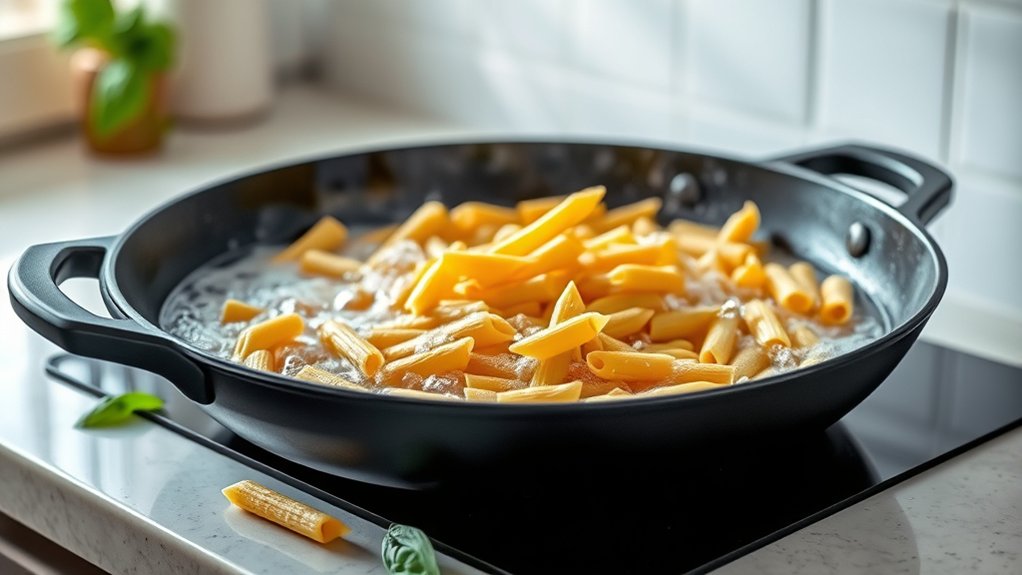
You’ll find that short pasta varieties cook most efficiently in an electric skillet due to their size and even heat exposure. Fresh pasta requires gentler handling and shorter cooking times compared to dried pasta, which holds up better in this setup.
Additionally, choosing pasta shapes that allow water to circulate freely guarantees even cooking throughout.
Short Pasta Varieties
When cooking pasta in an electric skillet, choosing short pasta varieties guarantees even cooking and easy handling. Short pasta, such as penne, fusilli, and rigatoni, cooks uniformly in the skillet’s shallow depth, preventing uneven textures.
These shapes also hold pasta sauces well, enhancing flavor integration. Their compact size simplifies stirring and reduces the risk of sticking or clumping, which can be an issue with long strands. You’ll find that short pasta adapts perfectly to the electric skillet’s temperature control, allowing you to achieve al dente results consistently.
Additionally, short pasta varieties require less water, making the cooking process quicker and more energy-efficient. For best results, pair your short pasta with thicker pasta sauces that cling to the ridges and curves, maximizing taste and texture in each bite.
Fresh vs. Dried Pasta
Short pasta varieties work well in electric skillets, but choosing between fresh and dried pasta can further impact your cooking results. Fresh pasta cooks faster due to its higher moisture content, making it ideal if you want quick, tender noodles. It requires careful temperature control to avoid overcooking or sticking.
Dried pasta, on the other hand, is denser and takes longer to cook, but it holds up better during simmering. When using dried pasta, you’ll need to add sufficient liquid to the skillet and allow it to cook evenly, stirring occasionally. Both types work, but your choice depends on your timing and texture preferences.
Mastering these differences guarantees you get perfectly cooked pasta every time in your electric skillet.
Pasta Shape Considerations
Several pasta shapes excel in electric skillet cooking due to their size and ability to cook evenly in limited liquid. You’ll find that smaller, compact pasta shapes like penne, fusilli, and farfalle work best because they fit comfortably in the skillet without overcrowding. These pasta shapes allow heat to distribute uniformly, preventing uneven cooking or sticking.
Meanwhile, thin, delicate shapes such as angel hair or long strands like spaghetti can be tricky since they require more water and space to avoid clumping. When choosing pasta shapes, consider how their structure interacts with your skillet’s surface and the specific cooking techniques involved, such as simmering or sautéing. Adapting your approach to pasta shapes guarantees ideal texture and flavor when cooking pasta in an electric skillet.
Step-by-Step Guide to Cooking Pasta in Your Electric Skillet
Mastering five clear steps will help you cook pasta perfectly in your electric skillet every time. First, fill the skillet with enough water to cover the pasta and bring it to a rolling boil. Second, add salt to enhance flavor and then carefully add your pasta.
Third, stir occasionally to prevent sticking and maintain an even temperature. Fourth, monitor the cooking time closely, referring to the pasta package for guidance, adjusting as needed due to the electric skillet’s heat distribution.
Finally, once the pasta reaches your desired doneness, drain the water promptly using a colander or carefully tilt the skillet, then serve immediately. Following these precise steps guarantees effective pasta cooking in your electric skillet, delivering consistent, restaurant-quality results.
Tips for Perfect Pasta Texture in an Electric Skillet
Although cooking pasta in an electric skillet is straightforward, achieving the perfect texture requires attention to a few critical details. To guarantee ideal pasta texture, start by using plenty of water to allow the pasta to move freely, preventing clumping.
Maintain a consistent, rolling boil by adjusting the skillet’s temperature as needed. Stir the pasta frequently to avoid sticking. Follow precise cooking techniques: monitor the pasta closely and test it a minute or two before the package’s recommended time to avoid overcooking.
Once the pasta reaches al dente, drain immediately to stop the cooking process and preserve firmness. By applying these focused cooking techniques, you’ll consistently achieve pasta texture that’s tender yet firm, elevating your dishes cooked in an electric skillet.
Mistakes to Dodge When Cooking Pasta in Your Electric Skillet
When cooking pasta in your electric skillet, avoiding common mistakes can make the difference between a perfect dish and a disappointing one. Pay close attention to water boiling. You need a rolling boil before adding pasta. Also, resist the urge to overfill the skillet, which can hinder proper heat distribution and lead to pasta overcooking or sticking. Stir occasionally to prevent clumping and uneven cooking.
| Mistake | Effect | How to Avoid |
|---|---|---|
| Insufficient water | Pasta sticks, uneven cooking | Use enough water to cover pasta |
| Not boiling water | Mushy pasta, longer cooking | Wait for full boil before adding |
| Overcrowding skillet | Uneven cooking, overcooking | Cook in batches if needed |
| No stirring | Clumps, uneven texture | Stir gently every few minutes |
| Ignoring timing | Pasta overcooking | Follow package timing precisely |
Easy One-Pan Pasta Recipes for Your Electric Skillet
You’ll want to select pasta shapes that cook evenly in a skillet, like penne or fusilli. Gather essential ingredients such as broth, vegetables, and proteins that complement quick, one-pan cooking.
Follow specific tips to control heat and timing, ensuring your pasta turns out perfectly every time.
Choosing Pasta Types
Selecting the right pasta shape plays an essential role in mastering easy one-pan recipes for your electric skillet. You want pasta that cooks evenly within the skillet’s limited capacity and matches your desired pasta flavors.
Short, sturdy shapes like penne, rigatoni, or rotini hold sauces well and withstand a bit of stirring without breaking. They also have consistent cooking times, allowing you to time your recipe precisely.
Thin pasta, such as angel hair, cooks quickly but can clump or overcook, so use it cautiously. Remember, the pasta’s size and shape influence how it absorbs liquid and flavors during cooking.
Choose pasta that balances texture and taste while fitting your skillet’s cooking style for the best results in one-pan meals.
Essential Ingredients Needed
A handful of essential ingredients form the foundation of any successful one-pan pasta recipe in your electric skillet. You’ll need pasta, a flavorful pasta sauce, and the right seasoning options to elevate the dish.
Fresh or dried herbs, garlic, and onion powder add depth without overwhelming the skillet’s one-pan simplicity. Choose sauces like marinara, Alfredo, or pesto based on your preference and ease of preparation.
| Ingredient Type | Examples |
|---|---|
| Pasta | Penne, fusilli, spaghetti |
| Pasta Sauces | Marinara, Alfredo, pesto |
| Seasoning Options | Basil, oregano, garlic powder |
| Aromatics | Onion, garlic |
| Liquid Base | Water, broth |
This core list guarantees your dish cooks evenly and tastes balanced every time.
Cooking Tips And Tricks
When cooking pasta in an electric skillet, maintaining the right temperature guarantees even cooking and prevents sticking. Start by preheating your skillet to medium heat before adding water and pasta. Use skillet techniques like stirring frequently to avoid clumps and to distribute heat evenly.
Adding a pinch of salt enhances flavor and helps the pasta cook uniformly. For easy one-pan pasta recipes, combine ingredients such as vegetables, protein, and sauce directly in the skillet after the pasta has softened, reducing cleanup.
Monitor liquid levels closely. Adding hot water as needed ensures the pasta finishes cooking without drying out. By mastering these pasta cooking tips and skillet techniques, you streamline the process, achieving perfectly cooked pasta with minimal effort and maximum flavor every time.
Frequently Asked Questions
Can I Use an Electric Skillet to Boil Water for Other Foods?
Yes, you can use an electric skillet for boiling methods beyond pasta. Its precise temperature control enhances food versatility, letting you boil water effectively for soups, vegetables, or other dishes requiring boiling without needing a traditional stove.
How Energy-Efficient Is Cooking Pasta in an Electric Skillet?
You’ll find electric skillet efficiency quite good for cooking pasta, especially with shorter cooking times compared to stovetops. It uses less energy by heating evenly and quickly, reducing overall cooking time and energy consumption effectively.
Is It Safe to Leave an Electric Skillet Unattended While Cooking?
You shouldn’t leave an electric skillet unattended while cooking. Always follow safety precautions, like monitoring temperature and placement, to prevent hazards.
Unattended cooking increases risks of overheating or fire, so stay attentive for safe use.
Can I Use an Electric Skillet Outdoors or on a Camping Trip?
You can use an electric skillet for outdoor cooking or camping meals if you have a reliable power source. Just make certain it’s protected from weather and placed on a stable surface to cook efficiently and safely.
How Do I Clean My Electric Skillet After Cooking Pasta?
You’ll want to unplug and let your electric skillet cool, then use warm, soapy water and a soft sponge for cleaning. Avoid abrasives.
Follow these cleaning tips and maintenance practices to keep it in top shape.
Conclusion
You might not expect an electric skillet to double as a pasta cooker, but it heats water evenly enough to do just that—saving you time and dishes.
By choosing the right pasta and following simple steps, you’ll get perfectly cooked noodles every time.
So, the next time you reach for your pot, consider your electric skillet—it’s more versatile than you think and just waiting to prove it in your kitchen. Cooking pasta in an electric skillet is a convenient and efficient alternative to traditional methods.

Leave a Reply