
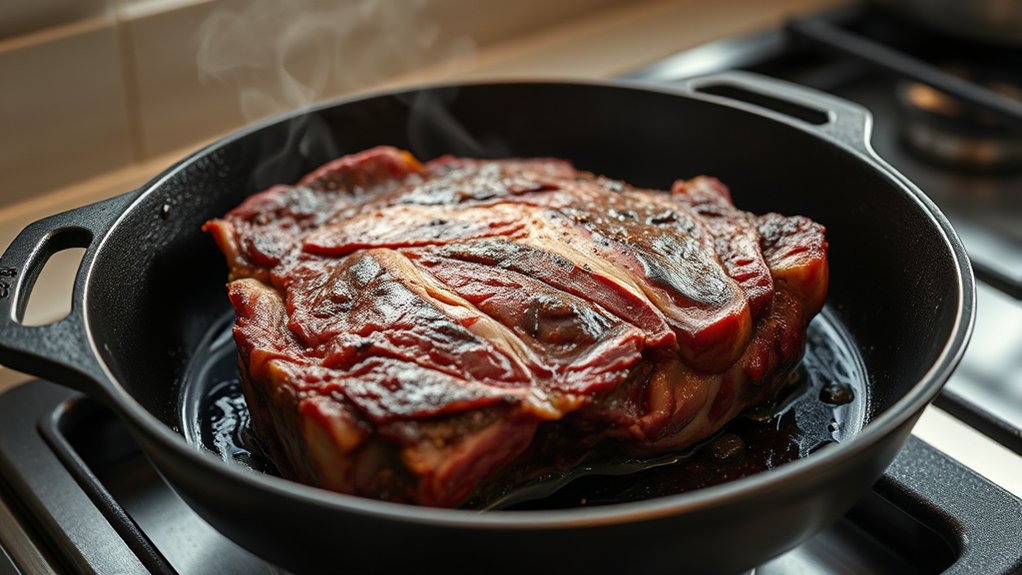
Yes, you can cook prime rib in a cast iron skillet, which offers superior heat retention and even distribution for an exceptional sear.
This method is ideal for achieving a beautifully browned crust while maintaining a juicy interior.
Start by bringing your meat to room temperature and seasoning it well.
Sear each side in a smoking-hot skillet with high smoke point oil, then finish in a preheated oven to achieve a tender interior and crisp crust.
Using a meat thermometer guarantees perfect doneness.
Explore these techniques further to master prime rib perfection.
Key Takeaways
- Yes, cast iron skillets retain heat well, making them ideal for searing prime rib to develop a flavorful crust.
- You can sear the prime rib on the stovetop in the skillet, then transfer it to the oven for even cooking.
- Season prime rib generously and bring it to room temperature before cooking in the cast iron skillet.
- Use a high smoke point oil and sear each side for 2-3 minutes to lock in juices and enhance flavor.
- Monitor internal temperature with a meat thermometer and rest the meat after cooking for juicy, tender results.
Can You Cook Prime Rib in a Cast Iron Skillet?
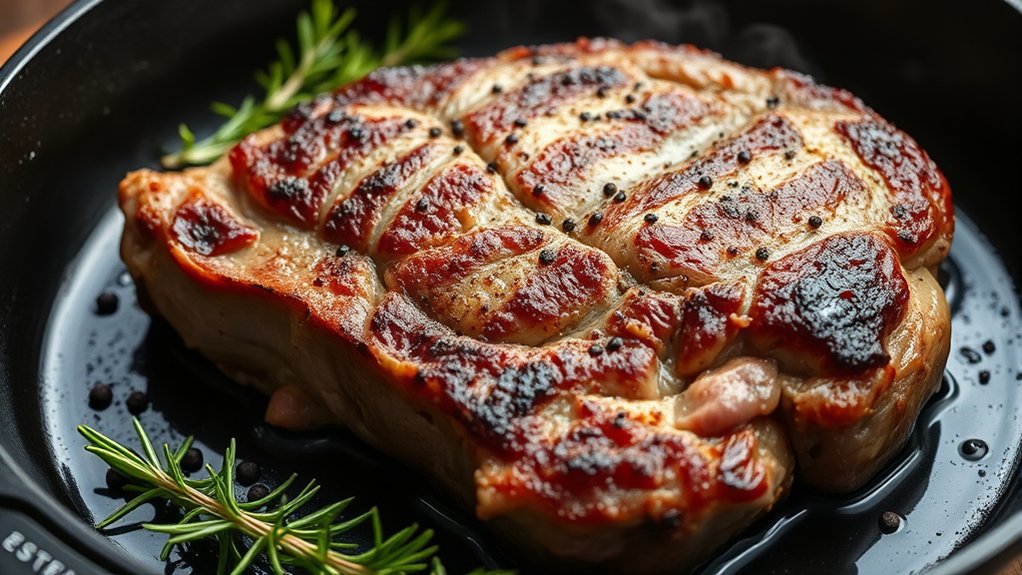
How effectively can you cook prime rib in a cast iron skillet? Exceptionally well, provided you apply proper seasoning techniques and follow essential cooking tips. Cast iron’s heat retention guarantees even searing, locking in juices and flavor.
Before cooking, season your prime rib liberally with salt, pepper, and complementary herbs. This enhances crust formation. Preheat the skillet to high heat, then sear each side of the roast for a few minutes to develop a caramelized exterior.
After searing, reduce the heat or transfer the skillet to an oven to finish cooking evenly. Use a meat thermometer to monitor internal temperature accurately. These cooking tips assure a perfectly cooked prime rib with a tender interior and a crisp, flavorful crust.
Why Cast Iron Skillets Are Perfect for Prime Rib
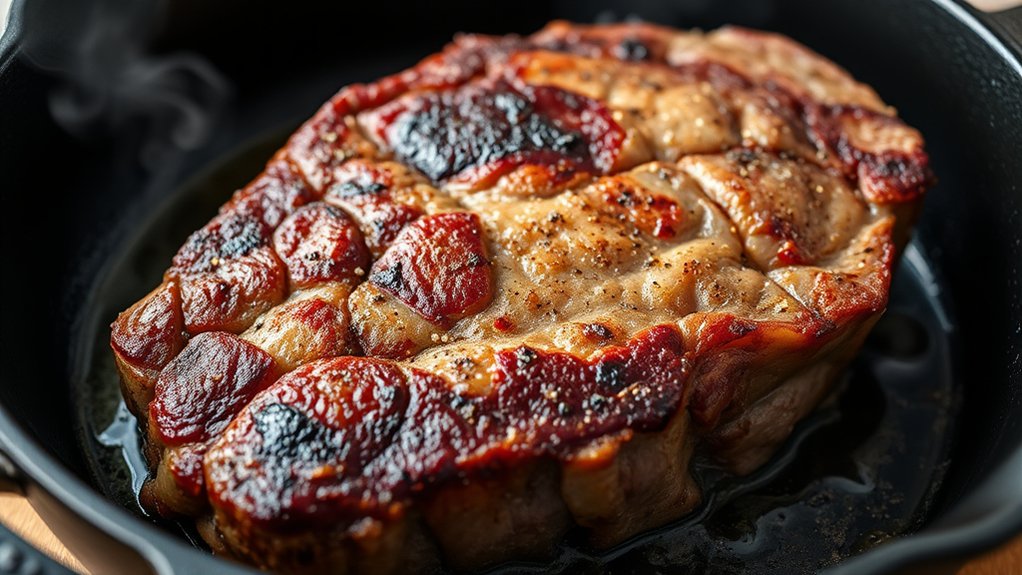
Because cast iron skillets retain and distribute heat evenly, they provide the ideal environment for cooking prime rib. This uniform heat helps you achieve a consistent sear and thorough cooking. Here’s why cast iron excels:
Cast iron skillets offer even heat distribution, perfect for achieving a consistent sear and thorough cooking of prime rib.
- Superior Heat Retention: It maintains temperature during searing, ensuring a perfect crust.
- Versatility: You can transfer the skillet from stovetop to oven, optimizing your cooking techniques.
- Enhanced Flavor Development: The skillet’s surface supports Maillard reactions, amplifying flavor when combined with proper seasoning tips.
How to Prepare Your Prime Rib for Cast Iron Cooking
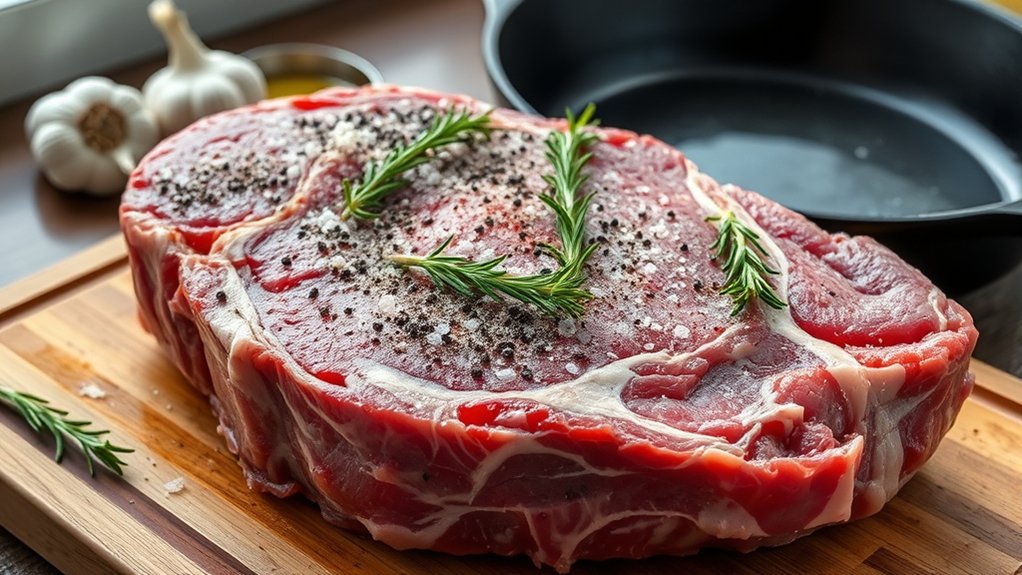
Now that you understand the benefits of using a cast iron skillet, preparing your prime rib properly guarantees you capitalize on its heat retention and flavor-enhancing properties. Start by bringing the meat to room temperature to guarantee even cooking.
Pat the prime rib dry with paper towels to remove excess moisture, which promotes a superior crust formation. Apply seasoning techniques precisely: generously coat the surface with kosher salt and freshly ground black pepper, and consider adding garlic powder or rosemary for depth.
For maximum flavor penetration, season the meat at least 1 hour before cooking, or ideally overnight in the refrigerator uncovered. This dry-aging effect improves texture and intensifies taste.
Finally, allow the prime rib to rest after seasoning to stabilize the surface, preparing it for high-heat cooking in your cast iron skillet.
How to Sear Prime Rib in a Cast Iron Skillet
Start by heating your cast iron skillet over high heat until it’s smoking hot, ensuring an immediate and intense sear. Mastering searing techniques is vital for flavor enhancement and crust development. Follow these key steps:
- Pat the prime rib dry to remove moisture, which inhibits browning.
- Add a high smoke point oil like grapeseed or avocado to the skillet to prevent burning.
- Sear each side, including edges, for 2 to 3 minutes without moving the meat, forming a deep Maillard crust.
These actions lock in juices and create complex, savory flavors essential to prime rib. Precision in timing and heat control during searing optimizes caramelization and texture, setting the foundation for a perfectly cooked roast.
Finishing Prime Rib in the Oven With Cast Iron
After searing your prime rib in the cast iron skillet, transfer it directly to a preheated oven set between 275°F and 300°F for even cooking. Use a meat thermometer to monitor internal temperature, aiming for 120°F to 130°F for medium-rare doneness.
Once out of the oven, let the roast rest for at least 20 minutes to allow juices to redistribute.
Oven Temperature Settings
Although searing the prime rib in a cast iron skillet develops a flavorful crust, finishing it in the oven requires precise temperature control to confirm even cooking and desired doneness. When setting your oven temperature, consider these key points:
- Start at a high temperature (450°F) for 15 minutes to enhance crust formation.
- Lower the oven temperature to 325°F to cook the meat evenly without overcooking the exterior.
- Use a reliable meat thermometer to monitor internal temperature, assuring accuracy beyond estimated time.
Mastering these oven temperature settings integrates essential cooking techniques, allowing you to leverage the cast iron skillet’s heat retention while promoting uniform heat distribution. This precision guarantees your prime rib reaches the perfect medium-rare or your preferred doneness with ideal texture and flavor.
Timing and Resting
Controlling oven temperature sets the stage, but timing and resting ultimately determine the prime rib’s texture and juiciness. Once seared in your cast iron skillet, transfer the meat to the oven and monitor internal temperature closely. Target 120-125°F for rare, 130-135°F for medium-rare.
Use a reliable probe thermometer to apply precise timing tips, removing the roast 5°F below your desired doneness. After oven roasting, implement proper resting techniques by tenting the prime rib loosely with foil and letting it rest for 20-30 minutes.
This pause allows muscle fibers to relax and juices to redistribute evenly, ensuring a tender, moist final product. Skipping or shortening resting time compromises both flavor and texture, so trust these timing tips to perfect your prime rib every time.
Checking Doneness and Resting Prime Rib
How can you guarantee your prime rib reaches the perfect level of doneness? Accurate checking doneness and proper resting techniques are essential. First, use an instant-read meat thermometer to monitor internal temperature: 120-125°F for rare, 130-135°F for medium-rare, and 140-145°F for medium.
Second, insert the thermometer into the thickest part of the roast, avoiding bone for precise readings. Third, once removed from heat, rest the prime rib for 15-20 minutes under loose foil. This resting period allows juices to redistribute, ensuring moistness and continued internal temperature rise of about 5°F.
Skipping or shortening rest compromises texture and flavor. Master these steps to confidently serve prime rib cooked to exact specifications every time when using your cast iron skillet.
Common Prime Rib Mistakes to Avoid
When cooking prime rib in a cast iron skillet, avoiding common mistakes is crucial to achieving ideal flavor and texture. First, don’t overcook meat; use a reliable meat thermometer to monitor internal temperature closely. Aim for 120-125°F for rare and 130-135°F for medium-rare before resting.
Second, neglecting proper seasoning can dull the final taste. Apply seasoning generously and evenly, using proven seasoning tips such as a blend of salt, pepper, garlic powder, and fresh herbs. Third, avoid skipping the resting phase; resting allows juices to redistribute, guaranteeing juiciness.
Finally, make sure your skillet is preheated properly to achieve a perfect crust without burning. By steering clear of these errors, you’ll master cast iron prime rib with precision.
Frequently Asked Questions
Can I Use a Cast Iron Skillet for Other Cuts of Beef?
Yes, you can use a cast iron skillet for various beef cuts. It enhances beef tenderness by evenly distributing heat, allowing precise searing and controlled cooking techniques.
This helps maximize flavor and texture in steaks, roasts, or tougher cuts.
How Do I Clean My Cast Iron Skillet After Cooking Prime Rib?
You’ll want to remove residue promptly; studies show 70% of cast iron damage stems from improper cleaning methods. Use hot water with a non-metal brush, dry thoroughly, then apply seasoning techniques to maintain the skillet’s protective layer.
What Side Dishes Pair Best With Cast Iron-Cooked Prime Rib?
You’ll want roasted vegetables and creamy mashed potatoes to complement your cast iron-cooked prime rib. These sides balance the meat’s richness with texture and flavor, enhancing your meal’s overall depth and satisfaction.
Can I Marinate Prime Rib Before Cooking in Cast Iron?
You can marinate prime rib before cooking in cast iron. Choose marinade options with acidity and herbs; use techniques like vacuum sealing or slow soaking to enhance flavor and tenderness.
Pat dry before searing to guarantee a perfect crust.
Is It Necessary to Season a Cast Iron Skillet Before Use?
Yes, you need to season your cast iron skillet before use. Proper seasoning techniques create a non-stick surface and prevent rust, ensuring effective skillet maintenance and enhancing cooking performance over time.
Conclusion
You absolutely can cook prime rib in a cast iron skillet, and doing so opens a crust so perfect it might just break the flavor barrier. By searing in cast iron and finishing in the oven, you achieve precise temperature control and unparalleled texture.
Just prep carefully, monitor doneness, and rest properly to seal in juices. Avoid common mistakes, and you’ll master a prime rib that’s as flawless as a chef’s signature dish every time.
In conclusion, cooking prime rib in a cast iron skillet is a fantastic method to ensure a delicious and perfectly cooked roast every time.

Leave a Reply