
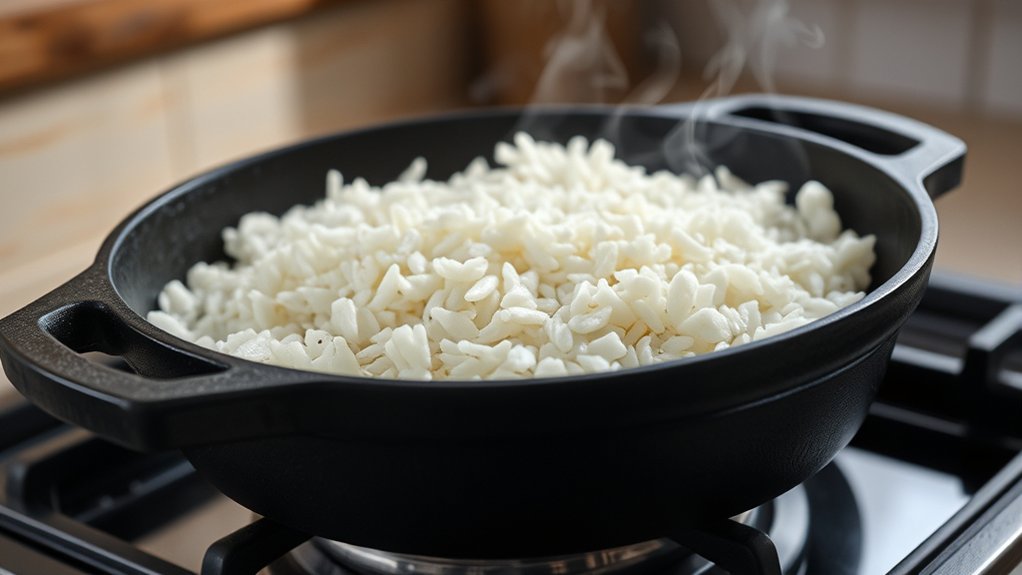
Yes, you can cook rice in a cast iron skillet, and it’s great for achieving a flavorful, evenly cooked dish with a crispy golden crust.
Cooking rice in a cast iron skillet allows for excellent heat distribution, which helps develop a delicious texture.
Just preheat your well-seasoned skillet, use a bit of oil, and choose the right rice type like basmati or jasmine.
Avoid stirring too much to let a crunchy layer form, and watch your water ratio carefully to prevent mushiness.
Keep following this approach, and you’ll master perfect cast iron rice every time.
With practice, you’ll enjoy the unique texture and taste that cast iron skillets bring to your rice dishes.
Key Takeaways
- Yes, you can cook rice in a well-seasoned cast iron skillet to prevent sticking.
- Rinse and optionally pre-soak rice to reduce starch and improve texture before cooking.
- Use medium heat with oil or butter to toast rice, then add water and simmer covered.
- Avoid excessive stirring to allow a crispy crust to form at the bottom.
- Choose rice varieties like basmati or jasmine for fluffy, separate grains when cooking in cast iron.
Step-by-Step Guide to Cooking Rice in Cast Iron
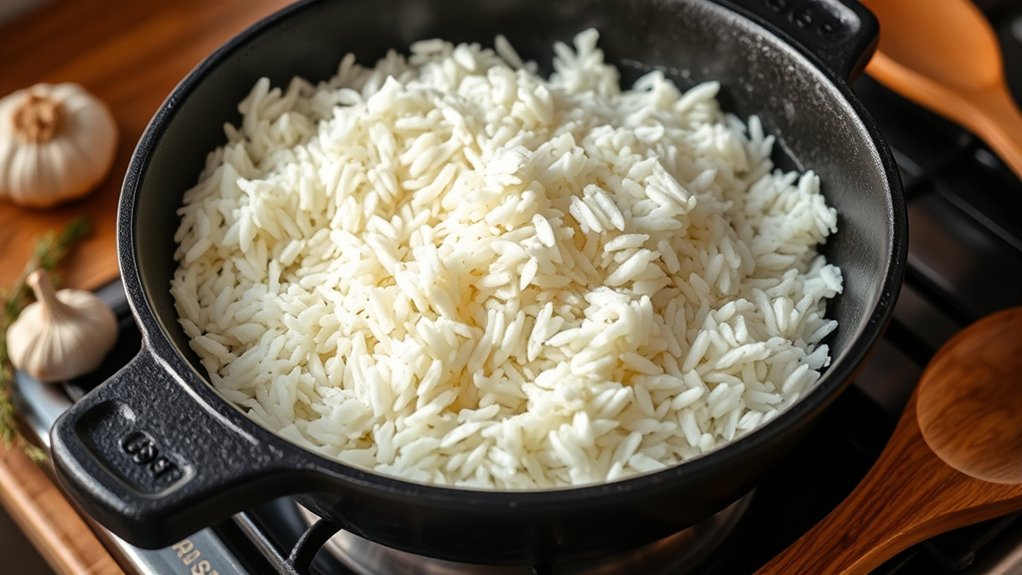
Before you start cooking, make certain your cast iron skillet is well-seasoned to prevent sticking and guarantee even heat distribution. Begin by rinsing your chosen rice variety under cold water to remove excess starch.
Ensure your cast iron skillet is well-seasoned and rinse rice under cold water to remove excess starch before cooking.
Heat the skillet over medium heat and add a small amount of oil or butter. Toast the rice briefly to enhance flavor. Next, pour in the correct water-to-rice ratio according to your rice variety, usually 1.5 to 2 cups water per cup of rice.
Bring it to a boil, then reduce heat to low and cover tightly. Let it simmer undisturbed, following the specific cooking times for your rice type.
Finally, remove from heat and let it rest with the lid on for 5-10 minutes before fluffing with a fork. This method guarantees even cooking and ideal texture.
Best Rice Types for Cast Iron Cooking
Choosing the right rice variety can greatly impact your results when cooking in a cast iron skillet. Long grain rice, such as basmati and jasmine rice, works well due to its firm texture and separate grains after cooking.
If you prefer a stickier texture, opt for short grain or sushi rice, which release more starch and hold together better. Parboiled rice is a practical choice too; its firmer grains resist overcooking and stick less.
Brown rice and wild rice require longer cooking times and more liquid, so adjust accordingly to avoid uneven results. Overall, jasmine rice and basmati rice offer reliable, fluffy outcomes, while short grain and sushi rice suit dishes needing a cohesive texture.
Selecting the right type guarantees your cast iron skillet produces perfectly cooked rice every time.
Tips to Prevent Rice From Sticking in Cast Iron
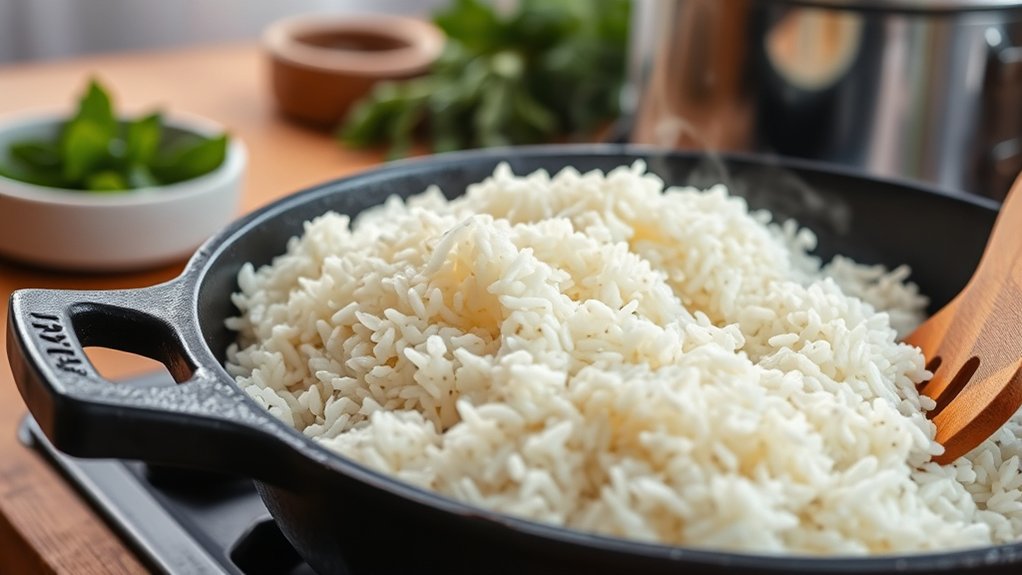
A well-seasoned cast iron skillet provides a natural non-stick surface, but you’ll still need to take specific steps to keep rice from clinging to the pan. First, consider pre soaking rice for 20-30 minutes; this reduces surface starch and promotes even cooking.
Next, choose the right oil selection. Use oils with a high smoke point like avocado or grapeseed to create a protective layer. Also, preheat your skillet thoroughly before adding oil and rice; this minimizes sticking by sealing the surface quickly.
Finally, avoid stirring rice excessively during cooking to prevent breaking grains and releasing starch, which causes sticking. Follow these steps, and your rice will cook evenly without sticking, making cleanup easier and preserving your skillet’s seasoning.
What Makes Cast Iron Rice So Crispy?
Three key factors contribute to the irresistible crispiness of rice cooked in a cast iron skillet. First, the even heat distribution of cast iron guarantees that the rice cooks uniformly, promoting the formation of a crispy texture at the bottom.
Second, the skillet’s excellent heat retention maintains a consistent temperature, allowing the rice to develop a flavorful crust without burning. Third, properly preheating the skillet and using the right amount of oil creates a non-stick surface that encourages the rice to crisp rather than stick.
When you combine these elements, you get rice with a golden, crunchy layer that contrasts beautifully with the tender grains above, elevating your dish’s texture and taste.
Common Rice Cooking Mistakes in Cast Iron
Achieving that perfect crispy layer can be tricky if you overlook common mistakes when cooking rice in cast iron. Avoid these pitfalls to prevent undercooked rice or overcooked rice:
- Using too high heat: This burns the rice or skillet, leading to uneven cooking.
- Skipping the pre-soak: Not soaking rice results in uneven texture and undercooked grains.
- Adding too much water: Excess liquid causes mushy, overcooked rice without a crisp crust.
- Stirring too often: Disturbs the crust formation and leads to sticky, inconsistent rice.
Cleaning Cast Iron After Cooking Rice
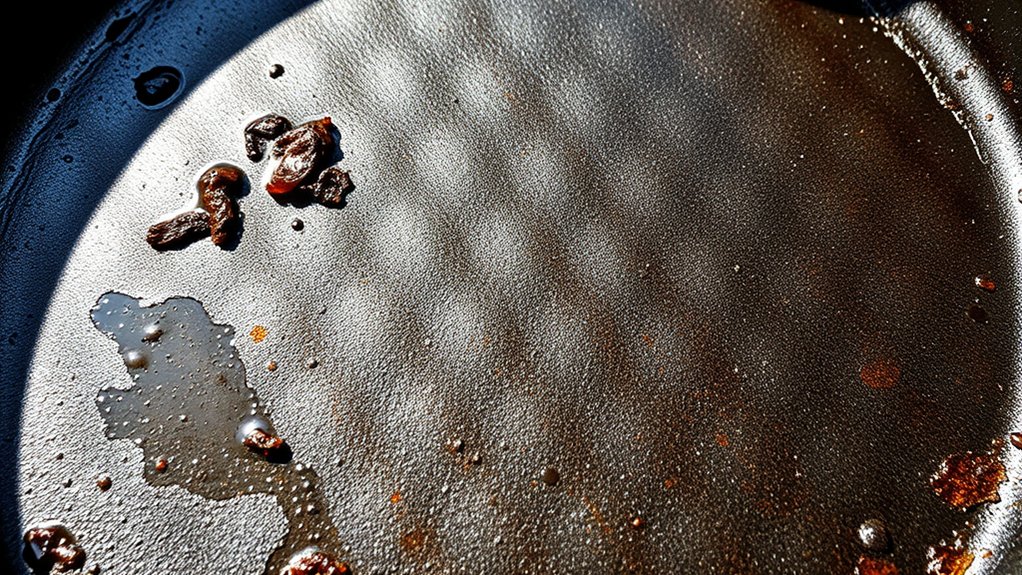
After cooking rice in your cast iron skillet, you’ll want to remove any stuck grains carefully to avoid damaging the seasoning. Use a gentle scraper or coarse salt with a soft cloth to lift residue without stripping the protective layer.
Then, rinse with warm water and dry thoroughly to maintain the skillet’s seasoning and prevent rust.
Removing Stuck Rice
Although rice can sometimes stick stubbornly to your cast iron skillet, you don’t have to worry about damaging your pan when cleaning it. Start by using gentle soaking techniques to loosen the residue. Fill the skillet with warm water and let it sit for 15-30 minutes.
For tougher stuck rice, add a splash of vinegar solution to help break down the starch. Then, use a non-abrasive scrubber to carefully remove the softened bits. Avoid harsh detergents or steel wool, which can strip seasoning.
Here’s a quick step-by-step:
- Soak skillet in warm water
- Add vinegar solution for stubborn residue
- Gently scrub with a nylon brush or sponge
- Rinse and dry thoroughly to prevent rust
This method preserves your cast iron while effectively removing stuck rice.
Maintaining Cast Iron Seasoning
When you finish cooking rice in your cast iron skillet, maintaining its seasoning is crucial to keep the surface non-stick and rust-free. Start by wiping the skillet with a paper towel to remove excess oil and rice residue. Avoid soap, as it can strip seasoning.
Rinse with warm water and use a soft brush if needed. Dry thoroughly to prevent rust. Apply a thin layer of oil to reinforce seasoning. These seasoning techniques are essential for durable cast iron care.
| Step | Action |
|---|---|
| 1. Remove residue | Wipe with paper towel |
| 2. Rinse | Use warm water without soap |
| 3. Scrub gently | Soft brush for stuck bits |
| 4. Dry | Thoroughly with towel or heat |
| 5. Oil | Thin layer for seasoning boost |
Frequently Asked Questions
Can I Cook Flavored Rice or Pilaf in a Cast Iron Skillet?
Yes, you can cook flavored rice or pilaf in a cast iron skillet. Just control heat carefully, sauté aromatics first, then add rice and liquid for even pilaf preparation, ensuring the skillet’s seasoning enhances flavor without sticking.
Is It Safe to Use Cast Iron for Rice if I’M Gluten-Intolerant?
You can safely cook rice in cast iron if you thoroughly clean it to avoid gluten residue. Cast iron gluten contamination isn’t common, but proper care guarantees safe cooking and prevents cross-contact for your sensitive diet.
How Does Cooking Rice in Cast Iron Affect Its Nutritional Value?
Cooking rice in cast iron doesn’t greatly affect nutrient retention. Its excellent heat distribution guarantees even cooking, preventing nutrient loss from burning or uneven heat, so you’ll preserve most vitamins and minerals during the process.
Can I Use a Cast Iron Skillet on an Induction Cooktop for Rice?
Yes, you can use a cast iron skillet on an induction cooktop because it’s induction compatible.
Just remember, cast iron offers excellent heat distribution, so monitor your rice closely to prevent burning or uneven cooking.
Does Cooking Rice in Cast Iron Impart Any Metallic Taste?
You won’t get a metallic flavor cooking rice in a well-seasoned cast iron skillet. The seasoning effects create a natural non-stick layer that prevents metallic taste, enhancing flavor and protecting the skillet from rust during cooking.
Conclusion
Cooking rice in cast iron is like painting on a well-seasoned canvas—each grain crisps beautifully without sticking when you follow the right steps.
Remember, choosing the right rice and controlling heat turns a simple skillet into your secret weapon for that perfect golden crust.
Just like a skilled artist cleans brushes after every masterpiece, you’ll keep your cast iron ready for the next culinary creation by cleaning it properly after cooking rice in cast iron.



Leave a Reply