
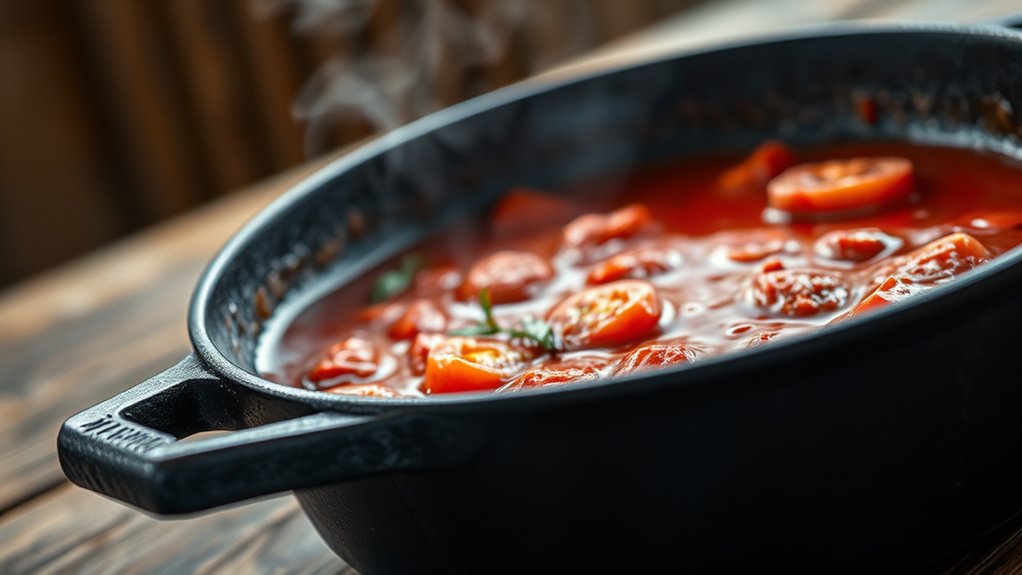
You can definitely cook tomato sauce in a cast iron skillet if it’s well-seasoned.
The acidity in tomatoes can react with bare iron, but a strong seasoning layer prevents that metallic taste and protects your pan.
Just preheat your skillet, stir often, and care for it properly afterward by cleaning gently and re-oiling.
This helps maintain both flavor and your cast iron’s integrity.
Keep exploring for tips on perfecting your sauce and skillet care.
Key Takeaways
- Yes, cooking tomato sauce in a well-seasoned cast iron skillet is safe and enhances flavor without damaging the pan.
- Proper seasoning prevents the acidic tomatoes from reacting with the iron and causing metallic taste in the sauce.
- Preheat the skillet on medium heat and stir frequently to avoid burning and ensure even cooking.
- After cooking, clean the skillet promptly with warm water and a non-abrasive brush to protect the seasoning.
- Regularly re-season the cast iron to maintain its protective layer and prevent dullness or uneven spots.
Can You Safely Cook Tomato Sauce in Cast Iron?
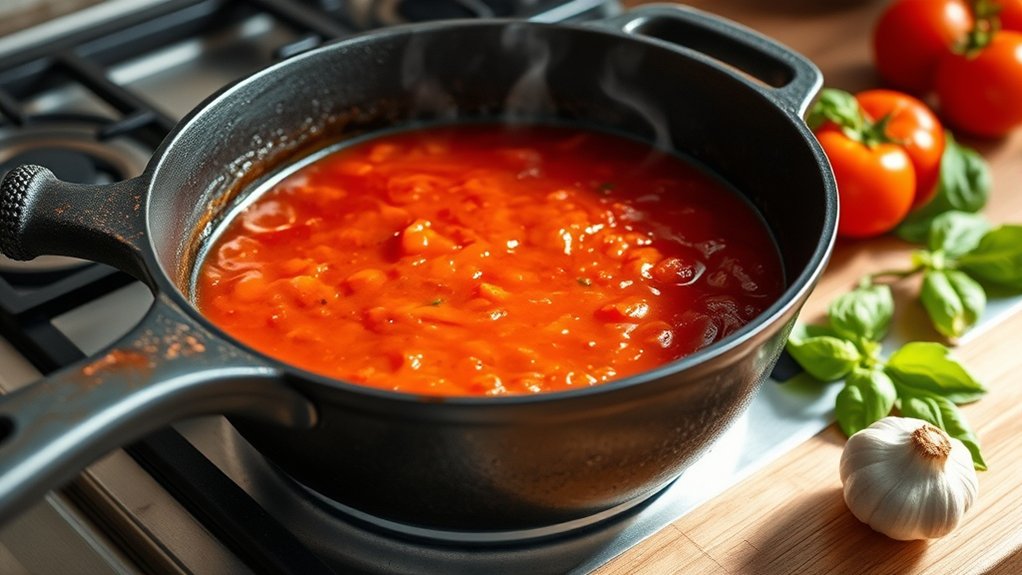
Wondering if you can safely cook tomato sauce in cast iron? Absolutely, you can! The key lies in your cast iron seasoning. Well-seasoned cast iron creates a natural, non-stick surface that resists acidic foods like tomatoes.
When you prepare tomato sauce recipes in your skillet, the seasoning acts as a protective barrier, preventing the sauce from reacting with the iron and imparting a metallic taste. Just make certain your pan has a strong, well-maintained layer of seasoning before cooking.
If your cast iron is properly cared for, it won’t just handle tomato sauce. It’ll enhance your cooking experience by distributing heat evenly. So go ahead and simmer that rich, tangy sauce confidently, knowing your cast iron skillet can take it without damage or flavor issues.
How Tomato Sauce Acidity Affects Cast Iron
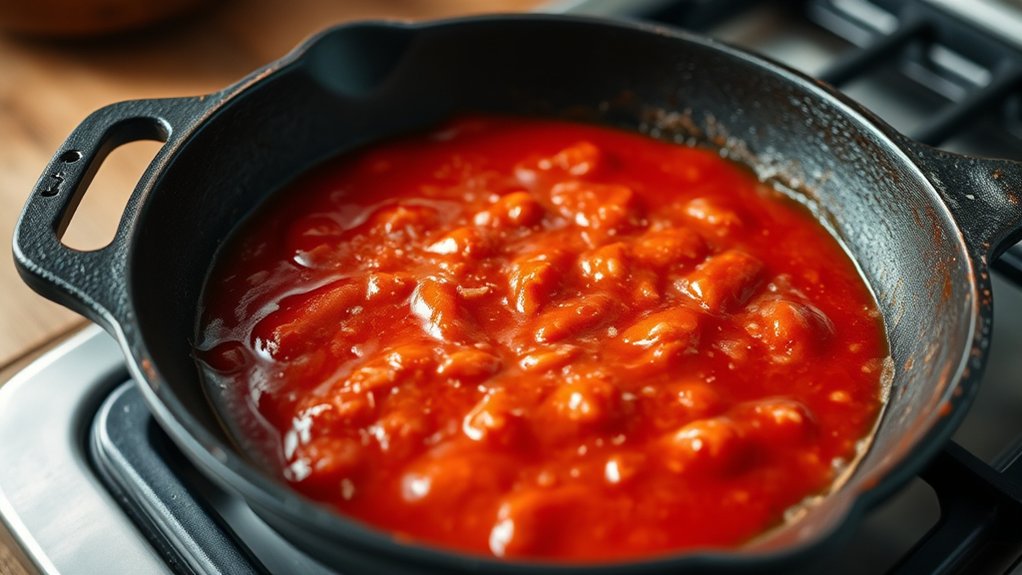
While a well-seasoned cast iron skillet can handle tomato sauce without causing damage, the natural acidity of tomatoes still plays a role in how your pan reacts. Tomato acidity, which comes from citric and malic acids, can interact with the cast iron surface, especially if the seasoning layer isn’t fully developed.
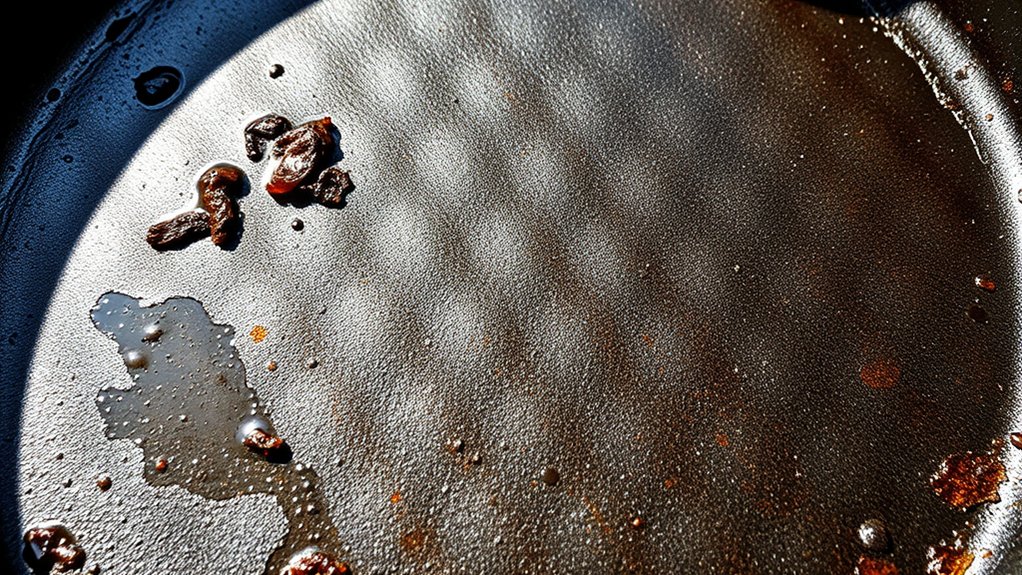
This interaction might cause slight breakdown of the seasoning, leaving your skillet more vulnerable to rust and affecting its non-stick quality. You might notice some dullness or uneven spots after cooking acidic sauces. However, this doesn’t mean cast iron can’t be used; it just means you should pay attention to maintaining your pan’s seasoning.
With proper care, you can enjoy cooking tomato-based dishes in cast iron without lasting harm from tomato acidity.
How to Prevent Metallic Flavors in Tomato Sauce
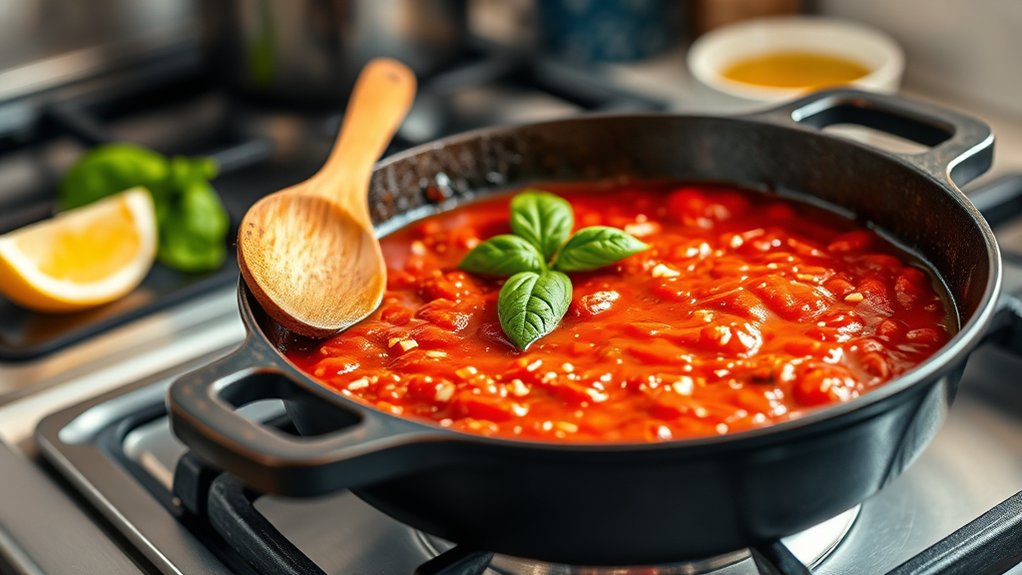
If your tomato sauce develops a metallic taste, it often means the cast iron seasoning has worn down or reacted with the acidity in the tomatoes. To prevent this, you’ll want to maintain a strong, well-developed seasoning layer, as it acts as a barrier that minimizes direct contact between the acidic sauce and the iron.
This seasoning impact is essential because it controls flavor absorption, keeping your sauce tasting pure and untainted. Regularly re-season your skillet and avoid cooking highly acidic foods for extended periods until the seasoning is robust.
Also, consider briefly simmering tomato sauce in a different pan before transferring it to cast iron; this limits the time the sauce spends in direct contact with the iron. These steps will help you enjoy rich tomato flavors without the unwanted metallic edge.
Best Practices for Cooking Tomato Sauce in Cast Iron
Maintaining a well-seasoned cast iron skillet sets the stage for cooking tomato sauce that’s rich and flavorful without any off-putting metallic notes. Start by preheating your skillet on medium heat, allowing the seasoning to evenly distribute.
As you add your tomatoes, stir gently and monitor the sauce thickness closely. Cast iron retains heat well, so your sauce will reduce faster than in other pans. To enhance flavor, consider sautéing garlic or onions first to build a savory base.
Stir frequently to prevent sticking, which can burn the sauce and affect taste. If the sauce thickens too much, add a splash of water or broth to achieve your desired consistency. By following these tips, you’ll maximize flavor enhancement while preserving your skillet’s seasoning for future use.
Maintaining Cast Iron After Cooking Tomato Sauce
After cooking tomato sauce, you’ll want to protect your cast iron from the sauce’s acidity to prevent damage. Cleaning it properly without stripping the seasoning is key to keeping your skillet in great shape.
Let’s explore how to care for your cast iron so it stays durable and ready for your next meal.
Preventing Acid Damage
While tomato sauce adds vibrant flavor to your dishes, its acidity can pose challenges for your cast iron skillet. Acidic ingredients like tomatoes can slowly break down the skillet’s protective coating, leading to rust or off-flavors.
To prevent acid damage, re-season your skillet regularly and avoid prolonged contact with tomato sauce.
| Step | Action | Reason |
|---|---|---|
| 1 | Cook sauce briefly | Limits acid exposure |
| 2 | Dry skillet promptly | Prevents rust |
| 3 | Apply thin oil layer | Restores protective coating |
| 4 | Heat skillet after oiling | Bonds oil to surface |
| 5 | Store in dry place | Avoids moisture accumulation |
Proper Cleaning Techniques
Because tomato sauce’s acidity can linger on your cast iron, you’ll want to clean your skillet carefully to preserve its seasoning and prevent damage. Start by rinsing the skillet with warm water immediately after cooking, avoiding soap whenever possible.
Use a non-abrasive brush or sponge to gently remove any stuck-on bits. For stubborn residue, sprinkle coarse salt and scrub lightly, then rinse thoroughly.
Dry your skillet completely with a towel or by warming it on the stove to prevent rust. Once dry, apply a thin layer of oil to maintain the seasoning.
These cleaning methods and maintenance tips will keep your cast iron skillet in top shape, ensuring it stays non-stick and ready for your next tomato sauce adventure.
When to Avoid Cast Iron for Tomato Sauce
Although cast iron skillets excel at developing rich flavors, you should avoid using them for tomato sauce when you’re short on time or want a perfectly smooth texture. Cast iron requires longer cooking to prevent acidic ingredients like tomatoes from reacting with the metal, which can impart a metallic taste.
If you’re using tomato sauce substitutes or mixing in other acidic ingredients, the skillet’s seasoning may break down, affecting both flavor and pan longevity. Additionally, if you need a quick meal or a sauce with a silky finish, cast iron might not deliver the results you expect.
In these cases, opting for different cookware can save time and preserve the pure taste of your sauce without compromising the texture or seasoning of your pan.
Alternative Cookware for Tomato Sauce
If cast iron isn’t the right fit for your tomato sauce, plenty of other cookware options can help you achieve the flavor and texture you want. Stainless steel pans, for example, provide excellent heat distribution and won’t react with the acidity of tomatoes, preserving your sauce’s pure taste.
They’re durable, easy to clean, and perfect for simmering sauces without worrying about seasoning or rust. Nonstick options are another great choice if you want hassle-free cooking and quick cleanup.
These pans prevent sticking and burning, allowing your sauce to cook evenly without constant stirring. While nonstick surfaces don’t develop the same depth of flavor as cast iron, they’re convenient and reliable for everyday use. Choosing the right cookware depends on your cooking style and how hands-on you want to be with your sauce.
Frequently Asked Questions
Can Cast Iron Skillets Be Used for Other Acidic Foods?
You can use cast iron skillets for acidic foods, but be cautious with cooking techniques. Prolonged exposure may affect seasoning and food safety, so limit cooking time and maintain proper care to protect your skillet and flavors.
Does Cooking Tomato Sauce in Cast Iron Enhance Its Flavor?
You’ll notice flavor enhancement when cooking tomato sauce in cast iron, thanks to its even heat and seasoning. This technique deepens the sauce’s richness, intensifying taste while adding subtle complexity through the skillet’s unique seasoning layers.
How Long Can Tomato Sauce Be Stored After Cooking in Cast Iron?
Like a cherished family recipe, your tomato sauce has a shelf life of about 3-4 days in the fridge. For best storage, cool it quickly, use airtight containers, and avoid metal lids that might react with acidity.
Can Enamel-Coated Cast Iron Be Used for Tomato Sauce?
Yes, you can use enamel-coated cast iron for tomato sauce. The enamel coating protects your skillet from tomato acidity, preventing reactions and preserving flavor.
You’ll enjoy rich, delicious sauce without worrying about damage or off-tastes.
Is Seasoning Cast Iron Necessary Before Cooking Tomato Sauce?
Seasoning strengthens your skillet, stopping stubborn acidic reactions from tomato sauce. Using smart seasoning techniques seals the surface, saving your cast iron from sour stains and sustaining superb, savory sauces that shine with every simmer and stir.
Conclusion
Cooking tomato sauce in your cast iron skillet is like painting on a well-seasoned canvas—vibrant flavors come alive, but too much acidity can wear down the masterpiece.
By treating your skillet gently and caring for it after each use, you keep your culinary artwork fresh and lasting. When the sauce’s tang is too bold, choose a different palette to preserve your pan’s charm.
With care, your cast iron becomes a trusted partner, turning every meal into a rich, flavorful story. In conclusion, you can cook tomato sauce in a cast iron skillet, but proper care is essential to maintain the pan’s seasoning and longevity.



Leave a Reply