
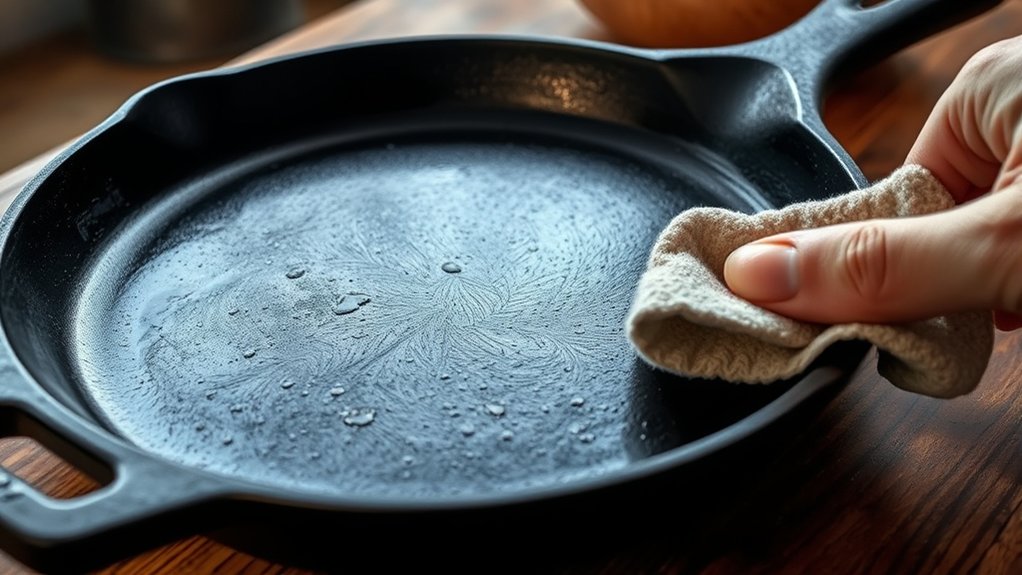
You can usually just wipe out your cast iron skillet after cooking dry, non-sticky foods like steak or roasted vegetables to preserve its seasoning.
Using a warm skillet and a clean, dry cloth or paper towel, gently remove residue without water or soap.
Avoid wiping out your cast iron skillet after sticky or acidic dishes, as these need washing to prevent buildup or damage.
Proper wiping helps maintain your skillet’s longevity and seasoning.
Interested in mastering cleaning and care techniques?
Key Takeaways
- You can wipe out a cast iron skillet after cooking dry or non-sticky foods to remove excess oil and residue.
- Use a warm skillet and a clean, dry cloth or paper towel for wiping without water or soap.
- Avoid wiping if food is sticky, sugary, or acidic; these require thorough washing to prevent buildup.
- After wiping, lightly oil the skillet to maintain and protect the seasoning layer.
- Over-wiping or abrasive scrubbing can damage seasoning and lead to rust, so balance and care are essential.
When Is It Okay to Just Wipe Out Your Cast Iron Skillet?
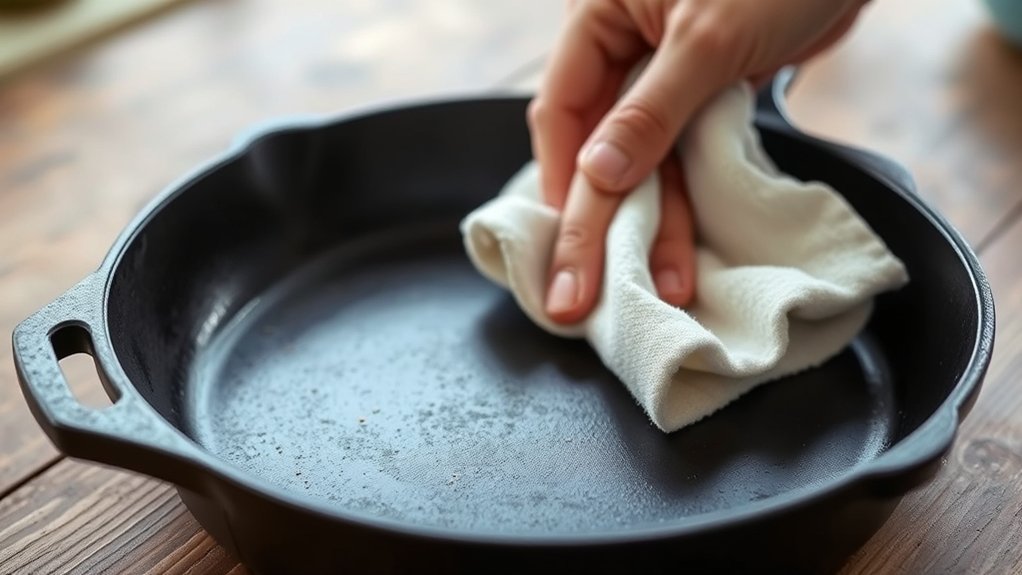
Although cast iron skillets require regular maintenance, you can simply wipe them out after cooking certain foods. If you’ve prepared dry or non-sticky items like steaks or roasted vegetables, wiping techniques alone often suffice.
The key is to remove excess oil and food residue promptly to prevent buildup without using water or soap. This approach preserves the skillet’s seasoning layer, essential for skillet maintenance.
Avoid wiping when dealing with sticky, sugary, or acidic foods, as they require thorough cleaning to prevent damage. By knowing when to use wiping techniques, you maintain your cast iron’s non-stick surface and longevity efficiently.
How to Properly Wipe Your Cast Iron Skillet
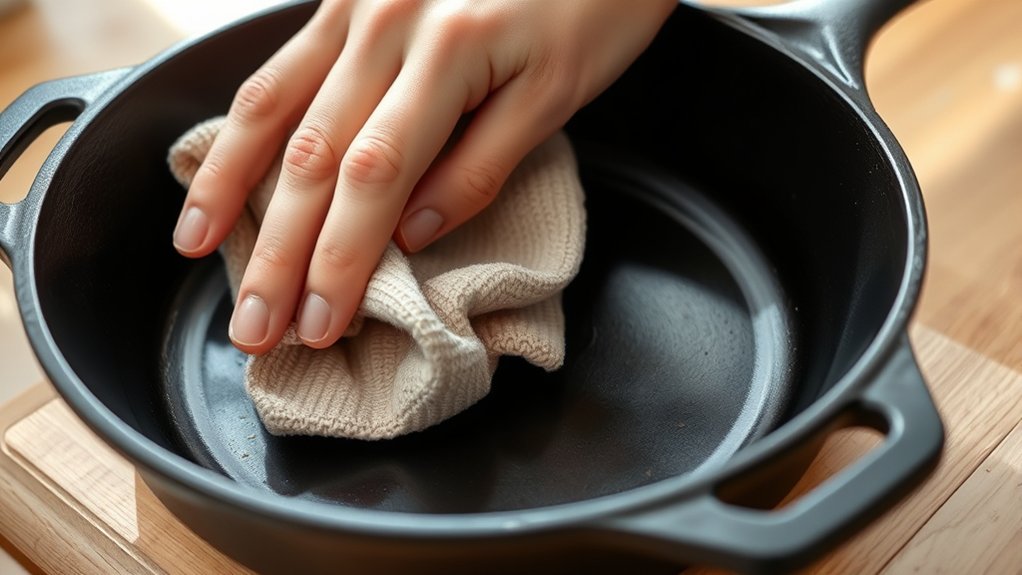
Before you start wiping your cast iron skillet, make certain it’s cool enough to handle safely but still warm enough to loosen any remaining food particles. Proper wiping techniques are essential for effective skillet maintenance.
Use a clean, dry cloth or paper towel to gently remove residue without damaging the seasoning.
| Step | Action |
|---|---|
| 1. Warm Skillet | Verify skillet is warm, not hot. |
| 2. Wipe Surface | Use a dry cloth to remove debris. |
| 3. Check for Residue | Inspect for stuck-on food. |
| 4. Repeat if Needed | Wipe again if particles remain. |
| 5. Apply Oil | Lightly oil the surface post-wipe. |
Following these steps helps preserve the skillet’s seasoning and prolongs its lifespan.
How Wiping Your Skillet Impacts Its Seasoning
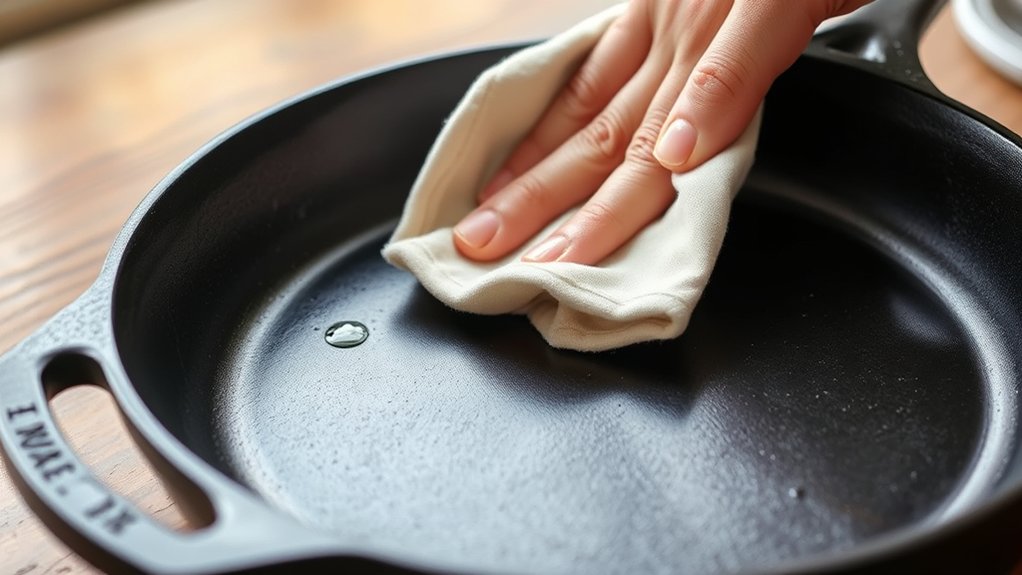
When you wipe your cast iron skillet correctly, you help preserve its seasoning by removing moisture and food residue without stripping the protective layer.
However, excessive or harsh wiping can damage the seasoning, leading to rust and uneven cooking surfaces. Understanding this balance guarantees your skillet stays well-seasoned and performs at its best over time.
Seasoning Integrity Preservation
Since the seasoning on your cast iron skillet forms a protective, non-stick layer, how you clean it directly affects its durability. Proper wiping preserves this layer by removing food residue without stripping the essential oils that create seasoning.
For effective seasoning maintenance, use a soft cloth or paper towel to gently wipe the skillet after cooking. Avoid abrasive scrubbing or harsh detergents, as they can erode the seasoning.
Regular skillet care includes lightly oiling the surface post-cleaning to reinforce the seasoning and prevent rust. By adopting careful wiping habits, you maintain the skillet’s non-stick properties and extend its lifespan.
Ultimately, thoughtful cleaning supports the seasoning’s integrity, ensuring your cast iron skillet performs efficiently for years.
Risks Of Excessive Wiping
Although wiping your cast iron skillet is essential for removing food residue, doing it excessively can wear down the seasoning layer. Each time you wipe aggressively or too often, you strip away the polymerized oils that create the non-stick, protective surface.
This excessive wiping increases the damage risk, leaving your skillet vulnerable to rust and food sticking. You want to avoid harsh scrubbing or over-wiping immediately after cooking; instead, use a gentle scrape or a damp cloth when necessary.
Maintaining the seasoning requires a balance. Wipe enough to clean but not so much that you compromise the skillet’s integrity. Remember, preserving the seasoning extends the life of your cast iron and enhances cooking performance over time.
When to Wash Your Cast Iron Skillet Instead of Wiping
If food residue sticks stubbornly to your cast iron skillet, you should wash it rather than just wiping it clean. Knowing when to wash is essential to maintain your skillet’s seasoning and prevent buildup.
Wiping methods work well for light grease or loose crumbs, but once food is stuck or greasy layers accumulate, washing becomes necessary. Avoid harsh detergents; use warm water and a soft brush or sponge to gently remove residues.
After washing, dry the skillet thoroughly and apply a thin layer of oil to protect the seasoning. Recognizing when to wash instead of relying solely on wiping methods guarantees your cast iron remains in prime condition without compromising its non-stick surface or longevity.
How to Clean Stuck-On Food From Cast Iron Skillets
When you encounter stubborn, stuck-on food in your cast iron skillet, simple washing might not be enough. To effectively remove stuck on food, start by pouring a small amount of coarse kosher salt into the skillet while it’s still warm.
Use a damp cloth or paper towel to scrub the surface with the salt, which acts as an abrasive without damaging the seasoning. If residues persist, gently add a bit of warm water and continue scrubbing. Avoid harsh detergents or soaking the skillet, as these can degrade the seasoning.
For tougher spots, boiling a little water in the skillet for a few minutes will loosen stuck on food, making it easier to scrape off with a non-metal spatula. These cleaning techniques preserve your skillet’s integrity while ensuring it’s food-safe and ready for the next use.
How to Re-Season Your Cast Iron Skillet
Before you re-season your cast iron skillet, make certain it’s thoroughly cleaned and completely dry to guarantee proper oil adhesion. Apply a thin, even layer of oil over the entire surface, including the handle and exterior, to build a strong, protective coating. This careful preparation sets the foundation for a durable, non-stick finish.
Cleaning Before Seasoning
Since proper cleaning lays the foundation for effective seasoning, you’ll need to remove all rust, old seasoning, and food residue from your cast iron skillet first. Start by scrubbing the skillet with a stiff brush or steel wool under hot water to eliminate stuck-on debris.
For stubborn rust or seasoning layers, use a mixture of coarse salt and a small amount of water as an abrasive cleaner. Avoid soap, which can strip the skillet’s surface unnecessarily. After cleaning, dry your skillet thoroughly to prevent new rust formation.
These cleaning techniques prepare the surface ideally for re-seasoning. Regular maintenance tips include prompt cleaning after use and avoiding prolonged moisture exposure. By following these steps, you guarantee your cast iron skillet remains durable, non-stick, and ready for seasoning application.
Applying Oil Evenly
A thin, even layer of oil is essential for properly re-seasoning your cast iron skillet. To achieve ideal oil application, pour a small amount of high-smoke-point oil like flaxseed or grapeseed onto the skillet’s surface.
Using a clean cloth or paper towel, spread the oil thoroughly to create an even coating over the entire interior and exterior. Avoid excess oil, as pooling can lead to sticky residues after baking.
This even coating guarantees the oil polymerizes uniformly during heating, building a durable, non-stick seasoning layer. Remember to cover every surface, including the handle and edges, to protect the skillet from rust.
Precise oil application is critical; it directly impacts the skillet’s longevity and cooking performance.
Frequently Asked Questions
Can I Use Soap on My Cast Iron Skillet?
You can use mild soap occasionally on your cast iron skillet, but avoid harsh detergents. For effective cleaning techniques, scrub gently and dry immediately.
Follow maintenance tips like regular oiling to preserve seasoning and prevent rust.
How Often Should I Season My Cast Iron Skillet?
You should season your cast iron skillet whenever food starts sticking or it looks dull. Regular seasoning frequency depends on use.
Maintenance tips include wiping it dry and applying a thin oil layer after each use to preserve seasoning.
Is It Safe to Cook Acidic Foods in Cast Iron?
You’ll find acidic food safety in cast iron a bit delicate; cooking tomatoes or citrus occasionally is fine, but frequent use can wear the seasoning.
Keep up cast iron maintenance to protect your skillet’s seasoned surface effectively.
Can Cast Iron Skillets Go in the Dishwasher?
You shouldn’t put cast iron skillets in the dishwasher, as it damages seasoning and causes rust.
For proper cast iron care, hand wash gently, dry thoroughly, and apply oil for skillet maintenance and longevity.
Why Does My Cast Iron Skillet Rust Sometimes?
Like a sword left to the elements, your cast iron rusts when moisture lingers. For rust prevention, dry thoroughly and season regularly.
Maintenance tips include avoiding soap and storing in a dry place to keep it pristine.
Conclusion
You can often just wipe out your cast iron skillet when cooking light, non-sticky foods, keeping its seasoning intact. But remember, don’t throw the baby out with the bathwater—if food’s stubborn or greasy, washing is necessary to maintain performance.
Regular wiping helps preserve that perfect non-stick surface, but occasional cleaning and re-seasoning guarantee your skillet stays in top shape. With proper care, your cast iron will serve you well for years to come.
In conclusion, while you can just wipe out cast iron skillet after some uses, combining wiping with occasional cleaning ensures the best results and longevity of your cookware.



Leave a Reply