
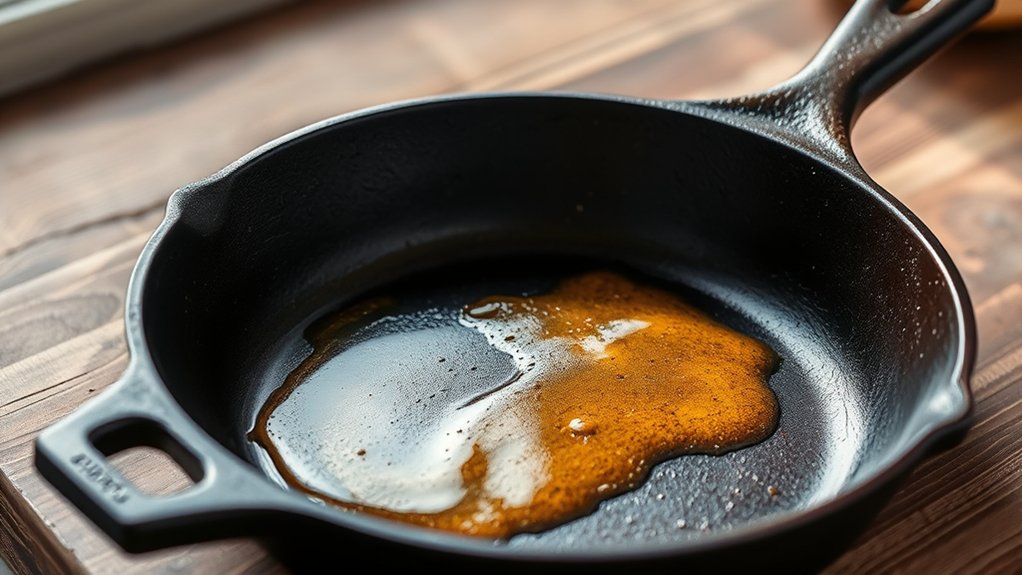
Can I leave bacon grease in my cast iron skillet? Yes, you can leave a thin layer of bacon grease in your skillet overnight to help protect and season the surface. This thin coating aids in maintaining the skillet’s seasoning and prevents rust.
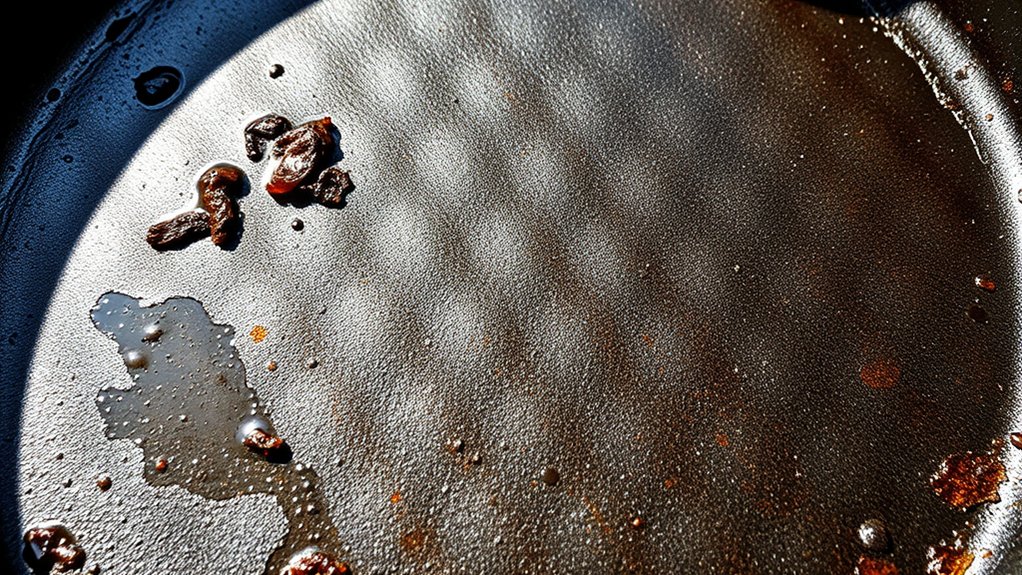
However, avoid letting too much grease build up. Thick or rancid grease can cause sticky residue and unpleasant odors that are difficult to clean.
Make sure to clean and re-season your skillet regularly to maintain its non-stick quality.
If you want to use bacon grease wisely and keep your cast iron in top shape, there are a few key tips to contemplate.
Key Takeaways
- A thin layer of bacon grease left overnight can protect seasoning and is generally safe if the skillet is stored properly.
- Large amounts of leftover grease increase spoilage risk and can cause rancid odors and sticky residue on the skillet.
- Excess grease can damage the skillet’s seasoning and attract bacteria, so it’s best to wipe out most grease after cooking.
- Regular cleaning with gentle methods and reapplying a thin oil layer maintains seasoning and prevents rust.
- For long-term storage, strain and store bacon grease separately in an airtight container to preserve freshness and skillet quality.
Benefits of Saving Bacon Grease in Your Cast Iron Skillet
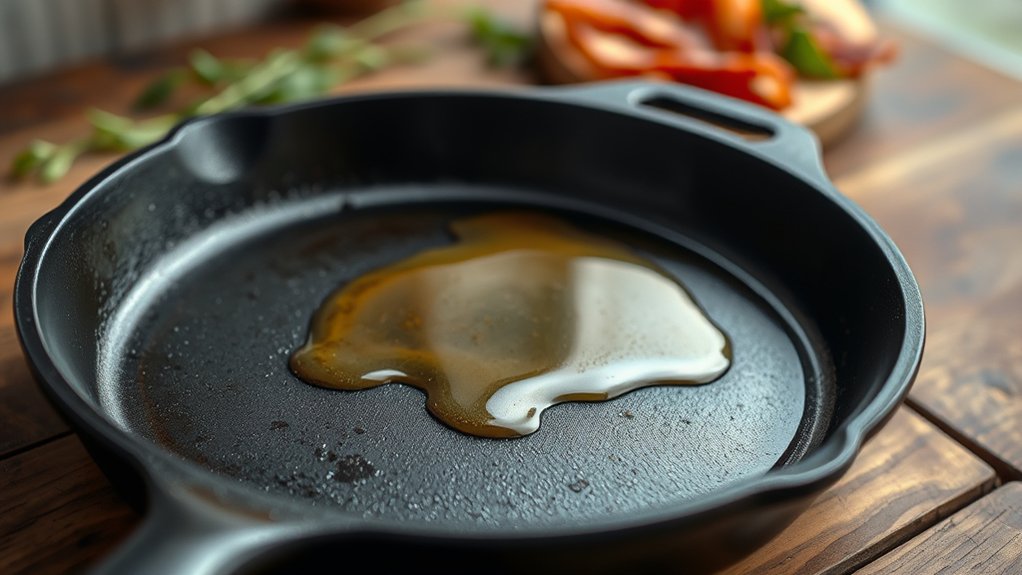
Although it might seem unconventional, saving bacon grease in your cast iron skillet offers several practical benefits. When you retain the grease, you preserve the rich bacon flavor that can enhance future dishes without needing additional seasoning.
This grease storage acts as a natural lubricant, helping to prevent food from sticking during cooking. However, you must be cautious with how long you leave the grease in the pan; extended storage without proper attention can lead to rancidity or unpleasant odors.
If you decide to keep the grease in the skillet, make sure to store the pan in a cool, dry place and clean it periodically. This approach balances convenience with maintaining the pan’s usability and flavor integrity.
How Bacon Grease Helps (Or Hurts) Your Cast Iron Seasoning
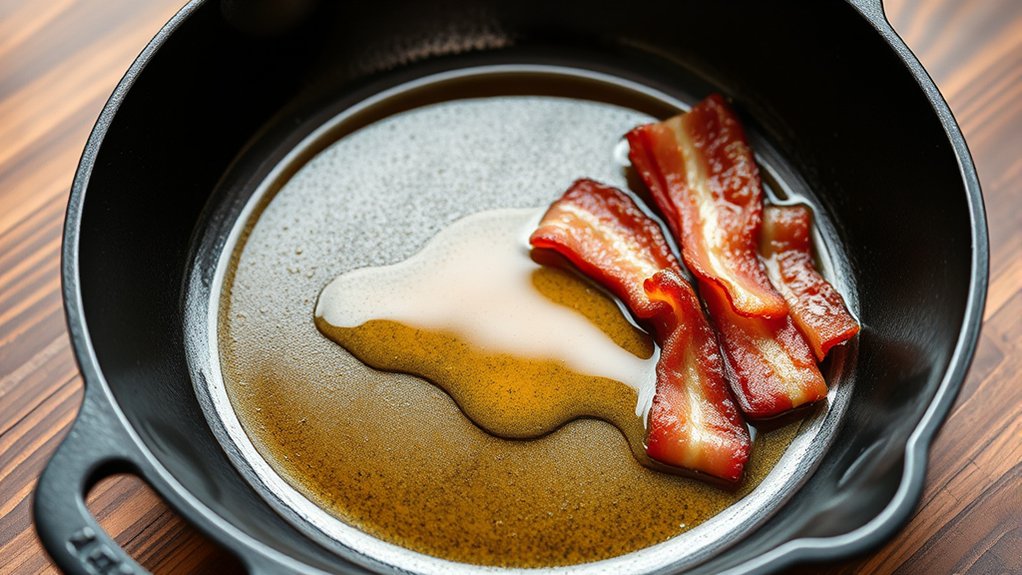
While bacon grease can contribute to seasoning your cast iron skillet by adding a layer of flavorful fat, it also carries risks that can damage the seasoning if not managed properly. The bacon benefits lie in the grease’s ability to polymerize on the skillet’s surface, enhancing its non-stick qualities and flavor depth.
However, grease effects can turn negative when excess bacon grease pools or becomes rancid, leading to sticky residue or uneven seasoning layers. If you leave too much grease, it may break down seasoning over time or attract bacteria.
To maintain your cast iron’s integrity, you should wipe out excess bacon grease after cooking and occasionally re-season the pan with a controlled amount of fat. This balance guarantees ideal seasoning without compromising your skillet’s lifespan.
Is It Safe to Leave Bacon Grease in Your Cast Iron Overnight?
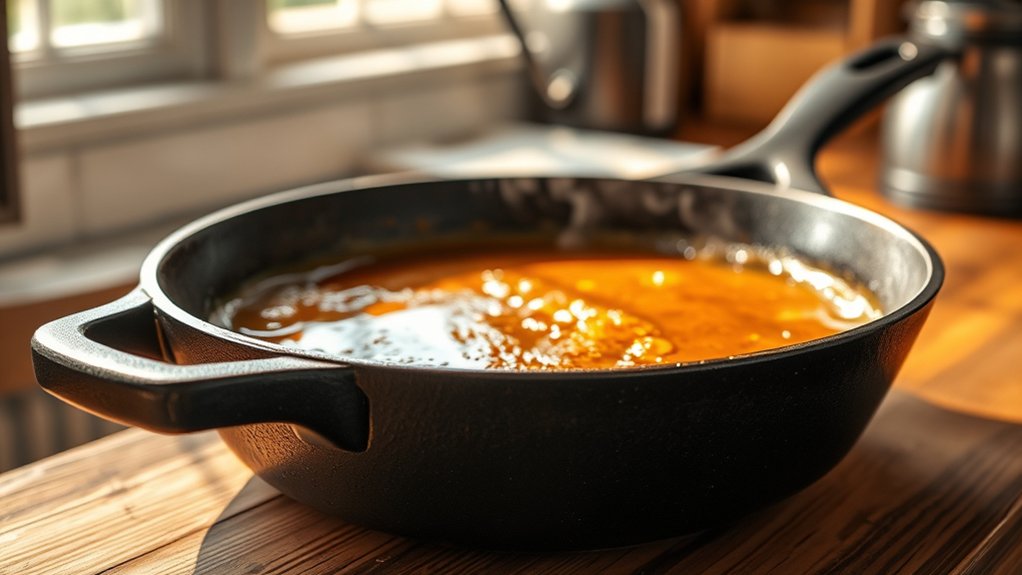
How long can you safely leave bacon grease in your cast iron skillet? For overnight storage, it’s generally safe to leave a thin layer of bacon grease in the skillet, provided your kitchen environment is clean and dry.
Bacon grease safety depends on preventing rancidity and bacterial growth. Since bacon grease solidifies at room temperature, it creates a protective barrier that can help preserve the seasoning. However, leaving large amounts of grease for extended periods may increase the risk of spoilage or unpleasant odors.
To minimize risks, guarantee the grease is fresh and the skillet is stored in a cool, dry place. Avoid leaving bacon grease in your cast iron for multiple days without refrigeration, as this compromises bacon grease safety and the skillet’s condition.
When and How to Clean Bacon Grease From Your Cast Iron
You should clean bacon grease from your cast iron skillet once it cools but before it hardens, to prevent buildup. Use gentle methods like wiping with a paper towel or rinsing with warm water and a soft brush to avoid stripping the seasoning.
Always dry thoroughly and apply a thin layer of oil to maintain the skillet’s protective coating.
Timing For Cleaning
Timing plays an essential role in maintaining your cast iron skillet when cooking with bacon grease. You need to balance cleaning frequency with the grease consistency to preserve seasoning and prevent buildup.
Follow these guidelines:
- Clean immediately if the grease is thick, sticky, or smells rancid to avoid damage.
- If the grease is liquid and fresh, you can leave it for short periods, like overnight, to enhance seasoning.
- For extended storage, remove the grease to prevent spoilage and maintain skillet quality.
Cleaning Methods Explained
Although leaving bacon grease can benefit your skillet’s seasoning, knowing when and how to clean it is essential to avoid buildup and rancidity. Use proper cleaning techniques to remove excess grease without stripping seasoning.
Pour leftover grease into a container for safe grease disposal; never down the drain. Wipe the skillet with a paper towel, then rinse with hot water and a soft brush. Avoid soap unless necessary. Dry thoroughly to prevent rust.
| Step | Action | Purpose |
|---|---|---|
| 1 | Pour grease into container | Safe grease disposal |
| 2 | Wipe skillet with paper towel | Remove excess grease |
| 3 | Rinse with hot water | Clean residue |
| 4 | Use soft brush if needed | Gentle scrubbing |
| 5 | Dry completely | Prevent rust |
Maintaining Seasoning Layer
Keeping the seasoning layer intact while managing bacon grease involves knowing when to leave it and when to clean it off. To maintain seasoning consistency and prevent excessive grease accumulation, follow these steps:
- After cooking, wipe out excess bacon grease with a paper towel to avoid sticky buildup.
- If grease pools or becomes rancid, clean your skillet gently with hot water and a non-abrasive brush. Avoid soap to preserve seasoning.
- Dry the skillet thoroughly and apply a thin coat of oil, then heat it briefly to reinforce the seasoning layer.
Best Ways to Store Leftover Bacon Grease
How should you store leftover bacon grease to maintain its quality and safety? Proper bacon grease storage starts with straining the grease through a fine mesh or cheesecloth to remove food particles that can cause spoilage.
Next, transfer the strained grease into a clean, airtight bacon grease container, preferably glass or metal, to prevent contamination and preserve freshness. Store the container in a cool, dark place like your pantry or refrigerator.
Transfer strained bacon grease to a clean, airtight glass or metal container and store in a cool, dark place.
While room temperature storage is acceptable short-term, refrigeration extends the grease’s shelf life and reduces the risk of rancidity. Always label your bacon grease container with the date stored and use it within three months.
Avoid leaving bacon grease in your cast iron skillet for extended periods, as it may degrade seasoning and attract moisture, risking spoilage.
How to Reuse Bacon Grease for Cooking and Seasoning
You can reuse bacon grease by storing it properly in a clean, airtight container to maintain its quality. It adds rich flavor when cooking vegetables or eggs, but be cautious not to overheat it to avoid burning.
Additionally, using bacon grease to season your cast iron skillet helps build a natural, non-stick surface over time.
Storing Bacon Grease Properly
Although it’s tempting to leave bacon grease in your cast iron skillet, properly storing it guarantees safety and preserves its flavor for future use. For effective bacon grease storage and cast iron maintenance, follow these steps:
- Strain the grease: After cooking, pour the warm grease through a fine mesh strainer or cheesecloth into a clean, heat-safe container to remove food particles.
- Choose the right container: Use a glass jar or metal container with a tight-fitting lid to prevent contamination and odor absorption.
- Refrigerate promptly: Store the container in the refrigerator to slow oxidation and extend shelf life, typically up to three months.
Proper storage prevents rancidity and protects your skillet’s seasoning, ensuring your bacon grease remains a versatile cooking and seasoning asset.
Cooking With Bacon Grease
When you save bacon grease properly, it becomes a valuable ingredient that adds rich flavor to many dishes. You can reuse bacon grease for sautéing vegetables, frying eggs, or enhancing meats, benefiting from its unique smoky taste.
The bacon grease benefits include adding depth without extra oils, making your cooking more flavorful and efficient. Before using, strain the grease to remove any bits, ensuring cleanliness and extending its usability.
Use moderate heat with careful cooking techniques to prevent burning the grease, which can impart bitterness. Store the strained bacon grease in a sealed container in the refrigerator for safety.
Seasoning Cast Iron Skillets
Beyond enhancing dishes, bacon grease serves as an excellent natural seasoning agent for cast iron skillets. When you reuse bacon grease, you apply effective seasoning techniques that contribute to the skillet’s non-stick surface and longevity.
To properly season your cast iron skillet with bacon grease, follow these steps:
- After cooking, wipe excess grease with a paper towel, leaving a thin layer.
- Heat the skillet on low for 10 minutes to allow the grease to polymerize and bond.
- Let it cool, then store in a dry place to prevent rust.
Maintaining Cast Iron After Cooking With Bacon Grease
Since bacon grease can leave a sticky residue, you should clean your cast iron skillet carefully after cooking. Start by wiping out excess grease with a paper towel. Use hot water and a stiff brush to remove any remaining bits; avoid soap which can strip seasoning.
If residue persists, scrub with coarse salt as a gentle abrasive. Dry the skillet thoroughly to prevent rust. After cleaning, apply a thin layer of oil to maintain seasoning.
For grease storage, strain the bacon fat into a heat-safe container to reuse it safely later. Proper grease storage helps reduce buildup in your skillet and keeps the fat fresh.
Frequently Asked Questions
Can Bacon Grease Cause Rust in My Cast Iron Skillet?
Bacon grease itself won’t cause rust, but leaving it too long without proper skillet maintenance might trap moisture, risking rust.
For rust prevention, always clean and season your cast iron skillet regularly after use.
Does Bacon Grease Affect the Flavor of Other Foods Cooked Later?
Yes, bacon grease can alter the flavor profile of foods cooked afterward. You’ll want to adjust your cooking techniques or clean the skillet thoroughly to avoid unintended smoky or salty tastes affecting delicate dishes.
How Long Does Bacon Grease Stay Good in a Cast Iron Skillet?
You should know bacon grease shelf life in your cast iron is about a week before it turns rancid. For proper cast iron maintenance, wipe excess grease after cooling to prevent buildup and preserve flavor quality.
Can I Use Bacon Grease in Non-Cast Iron Cookware?
Yes, you can use bacon grease in non-cast iron cookware, but since it lacks nonstick properties, be cautious. Proper bacon grease storage is essential to avoid spoilage and maintain flavor for future cooking.
Is Bacon Grease Healthier Than Other Cooking Oils?
Bacon grease isn’t inherently healthier than other cooking oils; while it offers bacon benefits like flavor and some nutrients, you should weigh cooking alternatives carefully due to its high saturated fat and sodium content. Use it cautiously.
Conclusion
Leaving bacon grease in your cast iron skillet can be like tucking in a cozy blanket—it offers a protective layer that nourishes your pan’s seasoning. However, don’t let this comforting cloak linger too long, as it might invite unwelcome guests like rancidity or sticky buildup.
Clean your skillet when needed, store leftover grease properly, and reuse it wisely.
With mindful care, your cast iron will stay well-dressed and ready for many flavorful meals ahead.
In conclusion, yes, you can leave bacon grease in your cast iron skillet, but be sure to manage it properly to maintain your pan’s seasoning and longevity.



Leave a Reply