
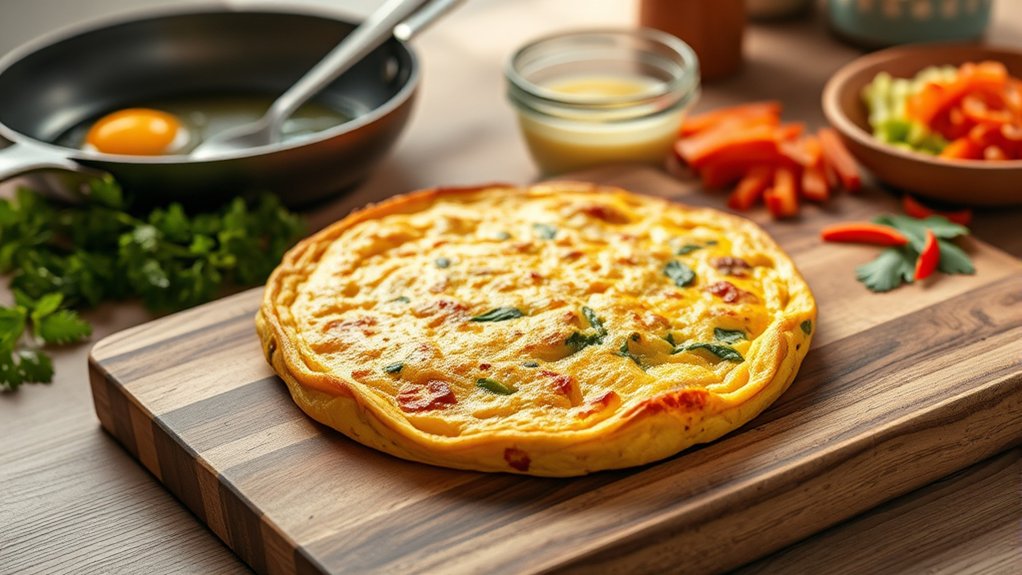
Yes, you can make a frittata without a cast iron skillet by using alternatives like nonstick, stainless steel, aluminum, or oven-safe ceramic pans.
These options work well to achieve a delicious frittata even if you don’t have cast iron.
Prioritize pans with even heat distribution and that are oven-safe to ensure your eggs cook uniformly without sticking or burning.
Preheat your pan and use moderate heat on the stove before transferring it to the oven.
Bake your frittata at 350°F for the best results.
Following these techniques will help you achieve a perfectly cooked frittata every time.
Explore how to master these methods for consistently great outcomes.
Key Takeaways
- You can use nonstick, stainless steel, ceramic, aluminum, or enameled pans as alternatives to cast iron for making frittatas.
- Preheat oven to 350°F (175°C) and use an oven-safe pan with a thick base for even cooking without hotspots.
- Start cooking eggs gently on the stovetop with oil or clarified butter to prevent sticking and burning.
- After sautéing, bake the frittata until the center is firm, usually 8-10 minutes, monitoring closely to avoid overcooking.
- Avoid metal utensils and clean pans gently to maintain surface quality and ensure easy cleanup without damage.
Can You Make a Frittata Without Cast Iron?
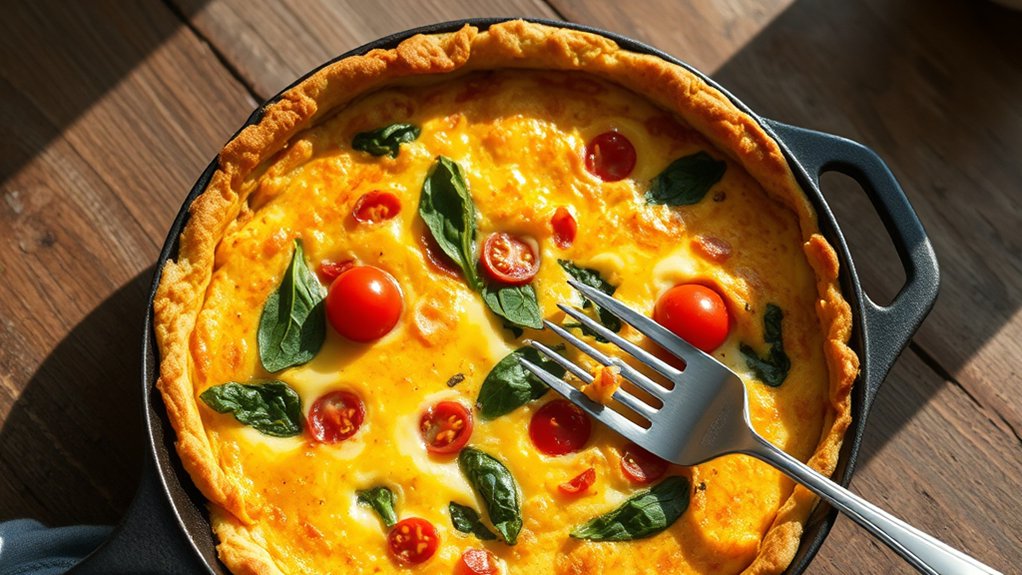
How can you make a frittata without a cast iron skillet? You’ll find several pan alternatives that work just as well, ensuring your frittata variations turn out perfectly.
Nonstick frying pans offer even heat distribution and easy release, making them a prime choice for cooking and flipping your frittata. Stainless steel pans, though less forgiving, can be used if preheated and well-oiled to prevent sticking.
Oven-safe ceramic or enameled pans also provide excellent heat retention and are suitable for finishing the frittata under the broiler. When selecting pan alternatives, prioritize even heating and oven compatibility to achieve the signature firm edges and tender center of classic frittata variations.
With the right pan, you can confidently prepare flavorful frittatas without relying on cast iron.
Why Cast Iron Skillets Work So Well for Frittatas
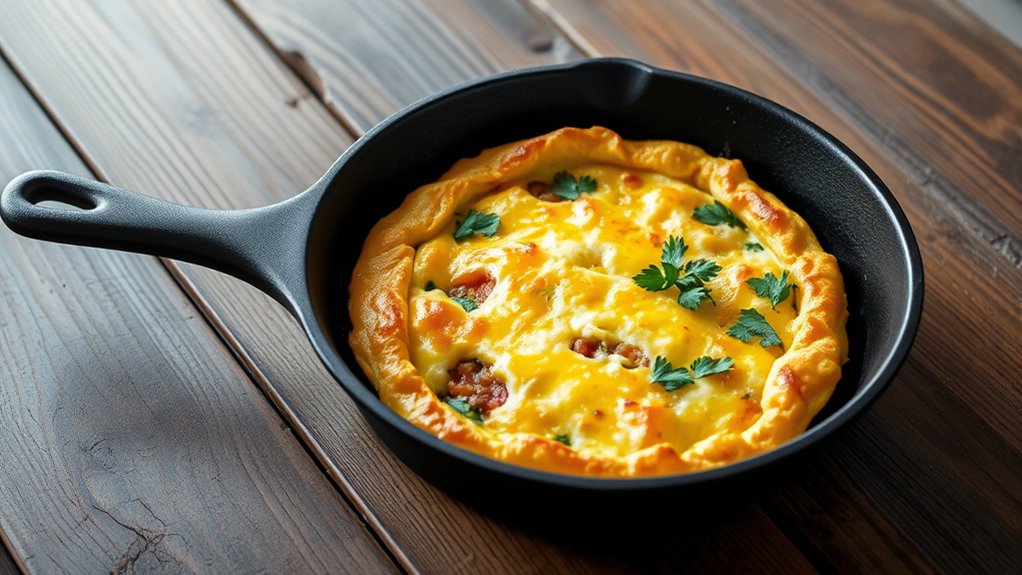
You’ll appreciate how cast iron skillets deliver even heat distribution, which guarantees your frittata cooks uniformly without hot spots. Their naturally developed nonstick surface prevents sticking, allowing you to slide the frittata out effortlessly.
These qualities make cast iron an ideal choice for achieving a perfectly textured and evenly cooked dish every time.
Even Heat Distribution
Although other pans can cook a frittata, cast iron skillets excel because they distribute heat evenly across their surface. This even heat distribution stems from cast iron’s superior heat retention, which allows you to employ precise cooking techniques without constant temperature adjustments.
As a result, your frittata cooks uniformly, preventing undercooked centers or burnt edges.
| Feature | Cast Iron Skillet | Other Pans |
|---|---|---|
| Heat Retention | Excellent, steady warmth | Varies, often less stable |
| Heat Distribution | Uniform across surface | Can have hot spots |
| Cooking Control | Precise, consistent | Requires frequent adjustment |
Using cast iron, you confidently manage heat, ensuring a perfectly cooked frittata every time.
Nonstick Surface Benefits
Because cast iron skillets develop a natural nonstick surface through seasoning, they prevent your frittata from sticking without relying on synthetic coatings. This nonstick durability improves with regular use, making cast iron an ideal choice for frittatas.
You’ll appreciate how this surface promotes even cooking while minimizing sticking, which simplifies flipping and serving. Additionally, the easy cleanup that follows is a major advantage.
Here are four key benefits of cast iron’s nonstick surface:
- Enhanced nonstick durability: Improves over time, resisting wear better than many nonstick pans.
- Chemical-free cooking: No synthetic coatings that can degrade or flake.
- Better heat retention: Supports consistent cooking without hotspots.
- Easy cleanup: Residue wipes away effortlessly when the skillet is properly seasoned.
This combination guarantees your frittata turns out perfectly every time.
Frittatas in Nonstick, Stainless Steel, and Aluminum Pans
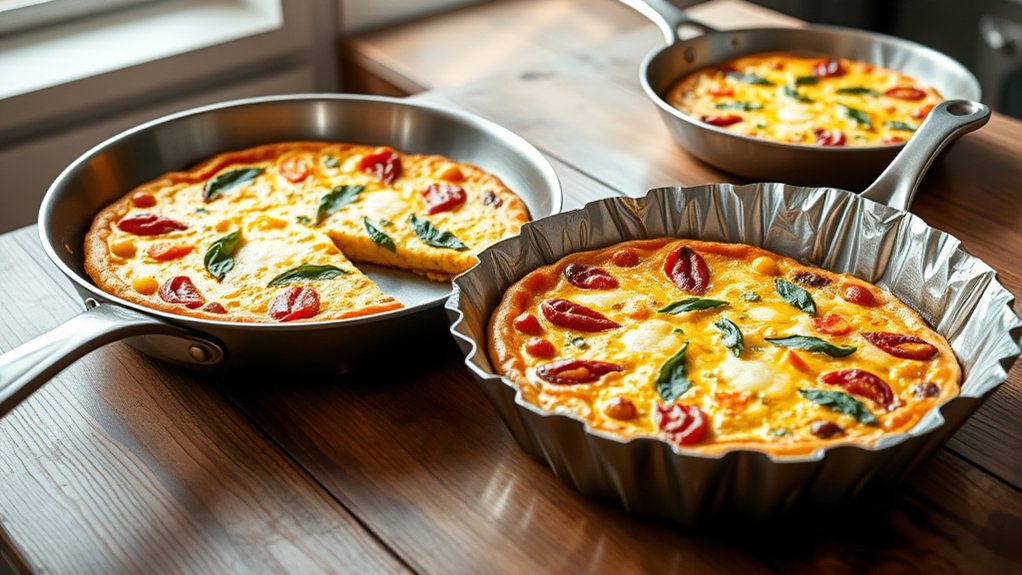
When using a nonstick pan, you’ll appreciate how easily the frittata releases and cooks evenly with minimal oil.
Stainless steel pans require careful temperature control to prevent sticking and uneven cooking, so stay attentive.
Aluminum pans offer excellent heat distribution, but you’ll need to monitor heat levels closely to avoid hotspots that can burn the edges.
Nonstick Pan Benefits
If you want a hassle-free cooking experience, using a nonstick pan for your frittata offers distinct advantages. Nonstick durability guarantees your pan maintains its surface integrity through frequent use, preventing food from sticking and simplifying cooking. Plus, easy cleanup means less time scrubbing afterward.
Consider these benefits:
- Even heat distribution helps cook your frittata uniformly without hotspots.
- Reduced need for oil or butter promotes healthier cooking.
- Lightweight design improves maneuverability compared to cast iron.
- Scratch-resistant coatings extend the pan’s lifespan when used correctly.
Choosing a high-quality nonstick pan allows you to prepare frittatas efficiently, minimizing sticking risks and cleanup effort while delivering consistent results every time.
Stainless Steel Challenges
While nonstick pans simplify frittata preparation with their easy release and cleanup, stainless steel presents a different set of challenges that demand more attention. When you cook with stainless steel, you must manage its high heat retention carefully to avoid uneven cooking or sticking.
Preheating the pan properly is crucial. Give it time to reach an even temperature before adding oil. Use enough fat to create a barrier between the eggs and the pan’s surface since stainless steel lacks a nonstick coating.
You’ll need to monitor heat closely; too high, and the frittata may brown or stick, too low, and it won’t set evenly. Mastering these nuances guarantees your frittata cooks through with a golden crust despite stainless steel’s demanding nature.
Aluminum Pan Heat Distribution
Aluminum pans excel at distributing heat evenly, making them a strong contender for cooking frittatas. Thanks to aluminum conductivity, these pans heat up quickly and maintain consistent temperature across the surface, reducing hot spots and ensuring your frittata cooks uniformly.
However, their heat retention isn’t as strong as cast iron’s, so you’ll need to monitor cooking times more closely.
Consider these factors when using aluminum pans:
- Rapid heat response allows precise temperature control.
- Even heat distribution prevents partial overcooking.
- Lower heat retention means quicker cooling once off the burner.
- Lightweight design enhances maneuverability but requires attentive heat management.
Using aluminum pans requires a balance of quick heating and careful timing to achieve a perfectly cooked frittata.
Using Glass or Ceramic Dishes for Oven-Baked Frittatas
Glass and ceramic dishes offer excellent alternatives for baking frittatas when you don’t have a cast iron skillet. Both materials provide even heat distribution, essential for cooking your frittata uniformly without hot spots.
Glass and ceramic dishes provide even heat, making them great cast iron alternatives for baking frittatas.
A glass dish retains heat well, allowing the frittata to cook gently and develop a tender texture. Meanwhile, a ceramic dish typically heats more slowly but maintains temperature consistently, reducing the risk of burning.
When selecting your dish, verify it’s oven-safe and appropriately sized to avoid uneven cooking or overflow. You can confidently use either a glass dish or ceramic dish, but remember to adjust cooking times slightly, as these materials respond differently to oven heat compared to cast iron.
This approach guarantees a perfectly baked, delicious frittata every time.
How to Bake a Frittata Without Cast Iron
If you don’t have a cast iron skillet, you can still bake a frittata perfectly by selecting the right alternative cookware and adjusting your technique. Choose an oven-safe pan that distributes heat evenly, such as stainless steel or nonstick skillets. Consider these steps for best results:
- Preheat your oven to 350°F (175°C) to guarantee even cooking.
- Use a skillet or baking dish with a thick base to prevent hotspots.
- Incorporate alternative ingredients like seasonal vegetables or cheeses to create diverse frittata variations.
- Start cooking the eggs gently on the stovetop before transferring to the oven for a uniform texture.
Tips to Prevent Sticking and Burning Without Cast Iron
Even with the right oven-safe pan, preventing sticking and burning requires careful preparation and attention to detail. First, apply a thin, even layer of high-smoke-point oil or clarified butter to your pan; this is one of the most effective sticking solutions.
Preheat the pan over medium heat before adding eggs to create a natural non-stick surface. Use moderate heat to avoid burning prevention issues. High temperatures cause rapid scorching and sticking. Stir gently during the initial cooking phase to distribute heat evenly.
When baking, place the pan on the middle oven rack to guarantee uniform heat exposure. Finally, avoid metal utensils that can scratch the pan’s surface, compromising its non-stick qualities. These precise steps guarantee your frittata releases effortlessly without burning or sticking.
How to Finish a Frittata Without Changing Pans
Although finishing a frittata without swapping pans can seem challenging, careful temperature control and timing make it straightforward. You can rely on oven safe alternatives like stainless steel or non-stick skillets instead of cast iron to complete your dish efficiently.
To finish your frittata without changing pans, follow these steps:
To finish your frittata without changing pans, simply sauté, add eggs, and bake directly in the skillet.
- Preheat your oven to 350°F (175°C) to guarantee even cooking.
- After sautéing ingredients, pour in eggs and cook over medium heat until edges set.
- Add your chosen frittata toppings, such as cheese or herbs.
- Transfer the skillet directly to the oven to bake until the center is firm, usually 8-10 minutes.
This method prevents transferring and keeps cleanup minimal while delivering a perfectly cooked frittata.
Frequently Asked Questions
What Are the Best Vegetables to Add in a Frittata?
You’ll want to use seasonal vegetables like spinach, bell peppers, and zucchini for vibrant, flavorful combinations. These veggies balance texture and taste, ensuring your frittata is both nutritious and delicious, enhancing every bite with freshness.
How Long Should a Frittata Cook in the Oven?
You should cook your frittata at 350°F (175°C) for about 20-25 minutes. Keep an eye on it; the frittata cooking time depends on thickness, but it’s done when the center’s set and golden.
Can I Add Cheese to a Frittata?
Adding cheese to a frittata is like a symphony enriching flavors. Use cheddar for sharpness, feta for tang, or mozzarella for creaminess.
Cheese types elevate frittata flavors, balancing eggs and veggies perfectly for a richer taste experience.
Is It Possible to Make a Frittata Ahead of Time?
Yes, you can prepare a frittata ahead. For ideal frittata storage, cool it completely, then refrigerate in an airtight container up to 3 days.
Reheat gently to maintain texture and flavor before serving.
How Do I Store Leftover Frittata Safely?
You should store leftover frittata in airtight containers, dividing it into portion sizes for easy reheating. Refrigerate promptly within two hours and consume within 3-4 days to maintain freshness and safety.
Conclusion
You don’t need a cast iron skillet to make a delicious frittata—it’s just one tool in your kitchen toolbox. Whether you choose nonstick, stainless steel, or even a glass dish, you can achieve a perfectly cooked frittata with the right techniques.
Think of your pan as the stage, and your frittata as the star—give it proper heat, patience, and care, and it’ll shine beautifully every time. With the right approach, making a frittata without a cast iron skillet is entirely possible and just as satisfying.

Leave a Reply