
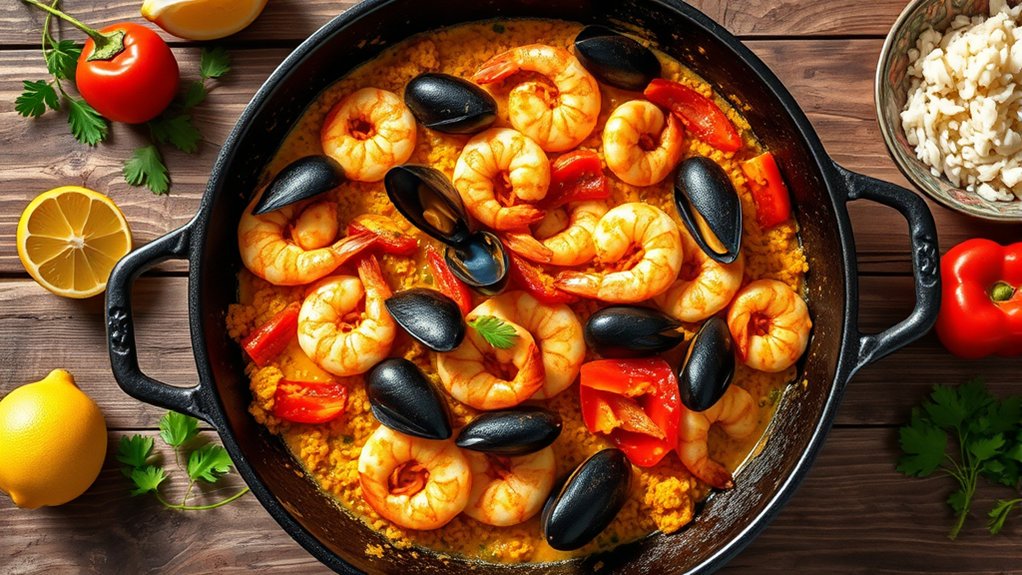
Yes, you can make paella in a cast iron skillet. Its excellent heat retention and even distribution create a steady cooking environment, crucial for authentic flavor and texture.
Just verify your skillet is well-seasoned and preheated gradually to avoid hot spots or warping.
Use quality ingredients like short-grain rice and manage heat carefully to develop that prized socarrat crust.
Follow precise steps and tips, and you’ll achieve a delicious paella right from your cast iron—explore how to perfect it further.
Key Takeaways
- Cast iron skillets retain and distribute heat evenly, making them suitable for paella’s slow simmering and flavor blending.
- Ensure your skillet is well-seasoned to create a natural non-stick surface for cooking paella without sticking.
- Preheat the skillet gradually and manage heat carefully to achieve consistent cooking and prevent hot spots.
- Use short-grain rice like bomba and arrange ingredients properly to ensure even absorption and authentic paella texture.
- To get the perfect socarrat, increase heat slightly as liquid reduces and avoid stirring once the rice absorbs most liquid.
Why Cast Iron Skillets Work for Making Paella
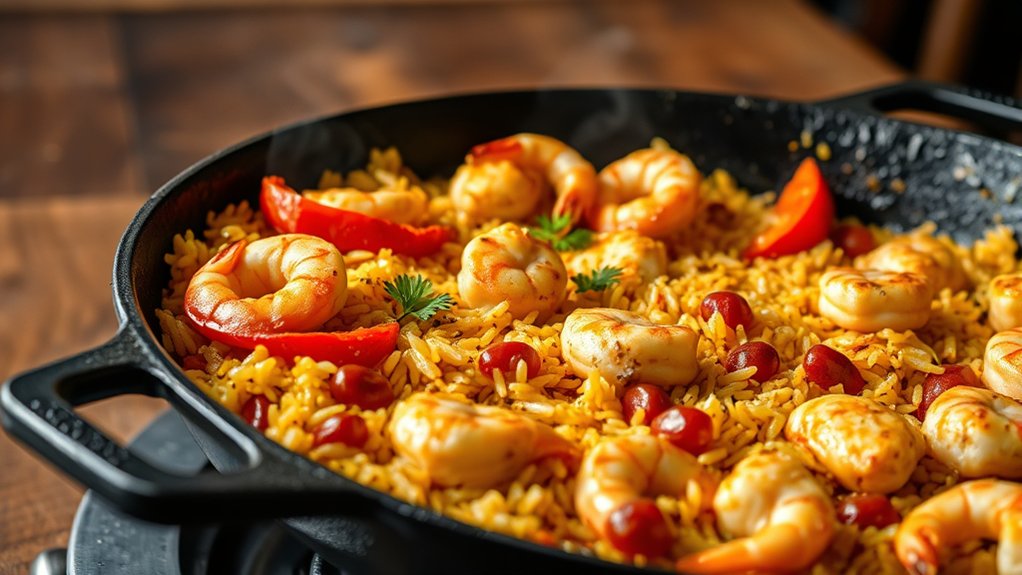
Although traditionally made in a paella pan, you can successfully use a cast iron skillet because it offers excellent heat retention and even distribution. These cast iron benefits guarantee your rice cooks uniformly, preventing hot spots that could burn the dish.
Understanding paella history, you’ll know the original pans were wide and shallow to allow rapid evaporation of liquid, vital for forming the socarrat crust. While cast iron skillets tend to be deeper, their superior heat control compensates effectively.
You’ll appreciate how the skillet’s material holds steady heat, fundamental for the slow simmering process paella requires. By using cast iron, you maintain authenticity in cooking technique while leveraging modern cookware advantages, blending tradition with practicality for a perfect paella.
Preparing Your Cast Iron Skillet for Paella
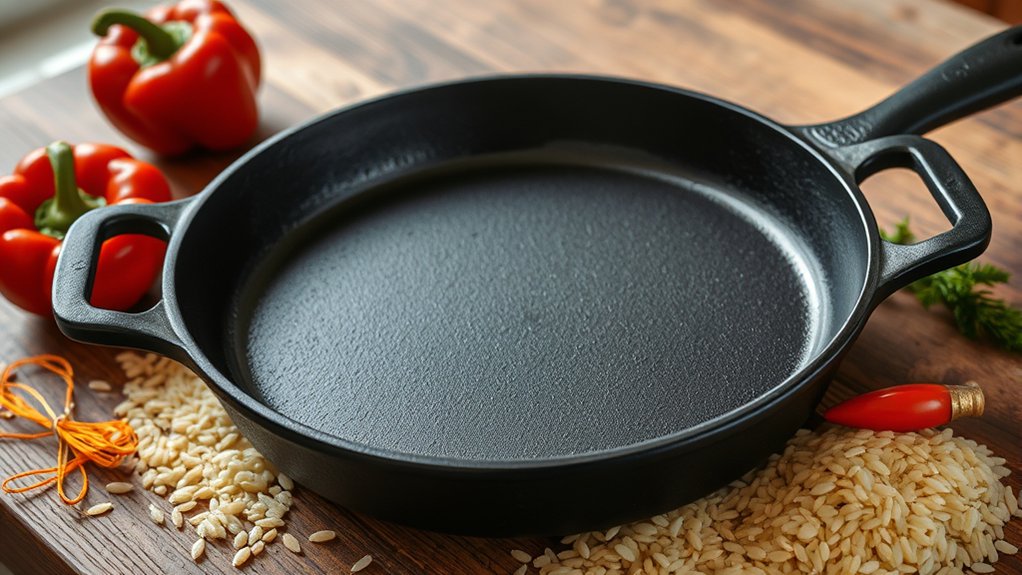
Before you start cooking paella, make certain your cast iron skillet is well-seasoned to create a natural non-stick surface. Heat the skillet gradually to guarantee even temperature distribution, which is key for cooking the rice properly.
Taking these steps will help prevent food from sticking and promote a perfect sear.
Seasoning Your Skillet
To prepare your cast iron skillet for paella, start by ensuring it is well-seasoned to create a natural non-stick surface. Proper seasoning techniques involve coating the skillet evenly with a thin layer of oil, such as flaxseed or vegetable oil, then heating it in the oven at around 450°F for an hour.
This process polymerizes the oil, bonding it to the skillet’s surface and enhancing durability. For skillet maintenance, clean your skillet promptly after use without harsh detergents, drying it thoroughly to prevent rust.
Regularly reapply oil after cleaning to preserve the seasoning layer. By following these precise seasoning techniques and maintenance steps, you’ll maintain a reliable, non-stick skillet ideal for cooking paella, ensuring even cooking and easy food release during preparation.
Achieving Even Heat
When you cook paella in a cast iron skillet, attaining even heat distribution is essential for perfect results. Start by preheating your skillet gradually over medium heat to avoid hotspots. Cast iron retains heat well, but uneven heating can cause burning or undercooked areas.
To aid in attaining uniformity, move the skillet occasionally on the burner or use a diffuser if your stove’s heat source is uneven. Employing heat distribution techniques like adjusting the flame size guarantees the entire surface maintains a consistent temperature.
Avoid sudden temperature changes, which can warp the skillet and disrupt heat flow. By methodically managing your heat source and allowing the skillet to warm evenly, you set a solid foundation for cooking paella with balanced flavor and texture throughout.
Preventing Food Sticking
Although cast iron skillets offer excellent heat retention, their seasoning plays an essential role in preventing food from sticking during paella preparation. To guarantee ideal non stick techniques, start by thoroughly preheating your skillet over medium heat before adding any oil.
Choose oils with high smoke points, such as grapeseed or refined avocado oil, for effective oil selection to create a slick cooking surface. Apply a thin, even layer of oil to the heated pan, allowing it to warm and polymerize slightly.
This process reinforces the skillet’s seasoning, reducing the risk of sticking. Avoid overcrowding the pan, which can lower the temperature and cause food to adhere. Following these steps methodically helps maintain your cast iron’s non stick properties, guaranteeing your paella cooks evenly without sticking.
Step-by-Step Paella in a Cast Iron Skillet
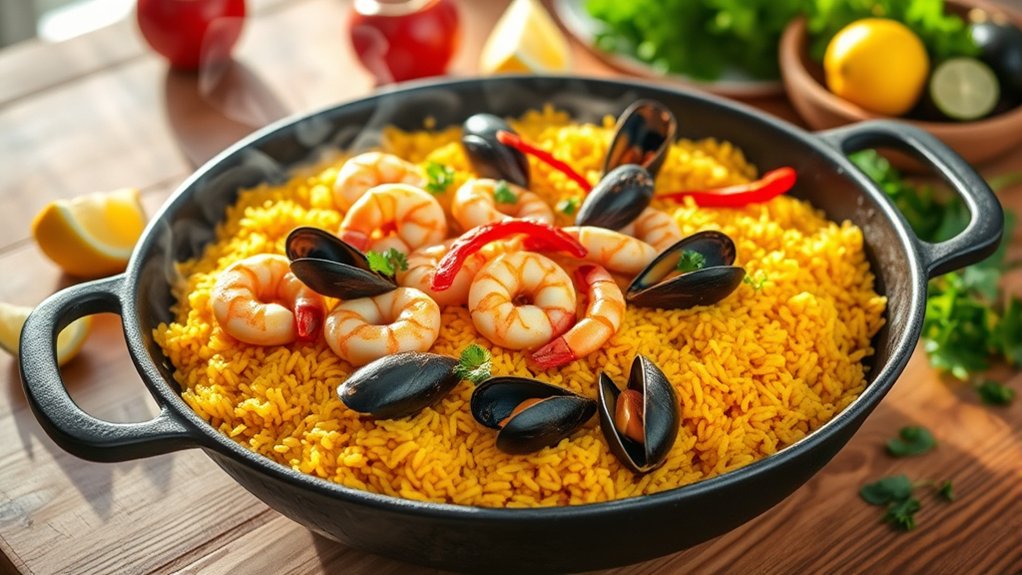
You’ll start by prepping your ingredients carefully to guarantee balanced cooking times and flavors.
Next, focus on cooking the rice evenly to achieve the perfect texture without stirring.
Finally, combine techniques that bring out authentic paella flavors, from toasting spices to layering ingredients methodically.
Preparing Ingredients Properly
Five key steps guarantee you prepare your ingredients properly for making paella in a cast iron skillet. First, focus on ingredient selection: choose fresh seafood, quality meats, and the right short-grain rice like bomba for authentic texture.
Next, perform ingredient prep meticulously: clean and devein shrimp, trim chicken pieces, and slice vegetables uniformly to guarantee even cooking. Third, measure spices and broth accurately to balance flavors.
Fourth, soak saffron threads in warm broth to release their color and aroma. Finally, organize ingredients within reach to streamline the cooking process.
Cooking Rice Evenly
With all your ingredients prepped and organized, the next focus is guaranteeing the rice cooks evenly in your cast iron skillet. Mastering this step requires attention to cooking techniques and selecting the right rice varieties, such as Bomba or Calasparra, known for absorbing liquid without becoming mushy.
To cook rice evenly:
- Spread the rice in an even, thin layer across the skillet’s surface.
- Use moderate heat to prevent burning or uneven cooking.
- Avoid stirring after adding broth to allow a crust (socarrat) to form.
- Maintain consistent liquid levels, adding broth gradually if needed.
- Rotate the skillet gently if your stove’s heat distribution varies.
These steps guarantee uniform cooking, a hallmark of authentic paella texture and flavor.
Achieving Authentic Flavor
Although cooking rice evenly sets the foundation, achieving authentic paella flavor demands careful layering of ingredients and precise seasoning. You’ll want to follow traditional methods, starting by sautéing sofrito with authentic spices like smoked paprika and saffron to build depth.
Add proteins and vegetables sequentially, allowing each to release flavor. Avoid stirring once the rice is added to form the coveted socarrat crust.
| Step | Purpose |
|---|---|
| Sauté sofrito | Develop flavor base |
| Add spices | Infuse authentic aroma |
| Layer proteins | Enhance complexity |
| Cook rice undisturbed | Create socarrat, texture & taste |
How to Get the Perfect Paella Socarrat in Cast Iron
Because achieving the perfect socarrat is crucial to authentic paella, you’ll need to master heat control and timing when using your cast iron skillet. Socarrat techniques revolve around creating that crispy, golden crust without burning. Here’s how to nail it:
Start with medium-high heat to evenly warm the skillet. Once the liquid reduces, increase heat slightly to encourage crust formation. Avoid stirring after the rice absorbs most liquid—this preserves the crust.
Listen for a gentle crackling sound, signaling socarrat development. Let the paella rest off the heat for a few minutes, enhancing texture.
These texture tips guarantee your socarrat is perfectly crunchy beneath tender rice. With patience and precise heat adjustments, your cast iron skillet will deliver an authentic paella crust every time.
Mistakes to Avoid When Cooking Paella in Cast Iron
If you want to achieve authentic paella using a cast iron skillet, you must steer clear of common mistakes that can compromise texture and flavor. One frequent cooking error is overcrowding the pan, which prevents even heat distribution and hinders the development of the socarrat.
Avoid stirring the rice once the broth is added; this disrupts the cooking process and can make the dish mushy, a critical pitfall. Another mistake is applying excessive heat early on, which can burn ingredients and damage the skillet’s seasoning.
Also, neglecting to preheat the pan results in uneven cooking. Finally, using the wrong rice variety leads to poor absorption and texture. By sidestepping these common pitfalls, you’ll maximize your cast iron skillet’s potential and craft a flavorful, perfectly textured paella.
Paella Variations and Ingredient Ideas for Cast Iron
When you cook paella in a cast iron skillet, you can explore a variety of ingredient combinations that suit your taste and occasion. Choose carefully to balance flavors and textures while maximizing the skillet’s heat retention and even cooking.
Consider these elements for your paella variations:
- Seafood options: shrimp, mussels, clams, or squid
- Vegetable variations: bell peppers, peas, artichokes, or green beans
- Meat choices: chicken, rabbit, chorizo, or pork
- Spice blends: saffron, smoked paprika, garlic, and cayenne
- Broth types: chicken, seafood, or vegetable stock
For presentation ideas, garnish with fresh herbs and lemon wedges to enhance color and freshness on your cast iron skillet.
Frequently Asked Questions
Can I Use a Cast Iron Skillet on an Induction Cooktop for Paella?
Yes, your cast iron skillet works perfectly on an induction cooktop thanks to its induction compatibility. This guarantees excellent cooking efficiency, allowing you to evenly prepare paella with precise temperature control and superior heat retention.
How Do I Clean a Cast Iron Skillet After Making Paella?
After paella, scrub your cast iron skillet with hot water and a stiff brush. Avoid soap. Dry thoroughly, then apply a thin oil layer to prevent rust.
These cleaning techniques and maintenance tips keep your skillet seasoned and durable.
Can I Make Paella in a Cast Iron Skillet Without a Lid?
Yes, you can make paella in a cast iron skillet without a lid. Just monitor moisture carefully, cover tightly with foil if needed, and adjust cooking times to guarantee even paella cooking and prevent drying out.
Is It Necessary to Season My Cast Iron Skillet Before Cooking Paella?
You don’t have to season your cast iron skillet before cooking paella, but proper seasoning techniques guarantee a non-stick surface and protect against rust.
Regular skillet maintenance improves performance and longevity, making your paella experience smoother.
How Do I Store Leftover Paella Made in Cast Iron?
Think of your cast iron skillet as a treasure chest; after paella feasts, cool it, transfer leftovers to an airtight container, then refrigerate promptly. For paella storage, these leftover tips keep flavors vibrant and prevent moisture loss efficiently.
Conclusion
Cooking paella in a cast iron skillet isn’t just possible—it’s a game-changer that brings unbeatable flavor and that crispy socarrat you dream about. With proper prep and attention to heat, your skillet turns into a paella powerhouse. Just avoid common pitfalls, and you’ll create a dish so delicious it could make a Spanish chef jealous.
So grab your skillet, follow the steps, and enjoy paella perfection right at home! Making paella in a cast iron skillet is an excellent way to achieve authentic taste and texture without needing a traditional paella pan.

Leave a Reply