
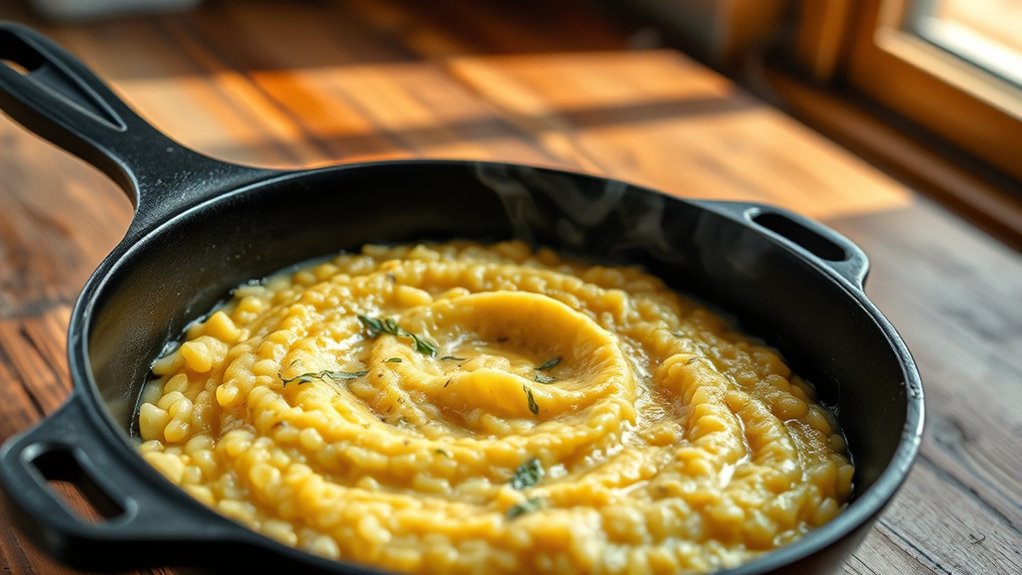
You can absolutely make risotto in a cast iron skillet, but it takes a bit of care.
The skillet’s excellent heat retention helps maintain even cooking and a steady simmer, essential for creamy, perfectly al dente rice.
Just preheat gradually, stir gently, and add warm broth slowly to avoid sticking or burning.
While it demands patience and control, the result is richly flavored with a rustic depth.
Keep going, and you’ll master how to tackle common challenges and choose the best gear for risotto success.
Key Takeaways
- Yes, you can make risotto in a cast iron skillet with careful temperature control and seasoning to prevent sticking.
- Preheat the skillet gradually and maintain medium heat to ensure even cooking and avoid scorching.
- Stir gently and consistently to release starch and achieve a creamy yet slightly al dente texture.
- Add warm broth slowly in small increments, allowing full absorption before adding more to lock in flavor.
- Cast iron’s heat retention provides steady heat, promoting even cooking and quick recovery after stirring.
Can You Really Make Risotto in a Cast Iron Skillet?
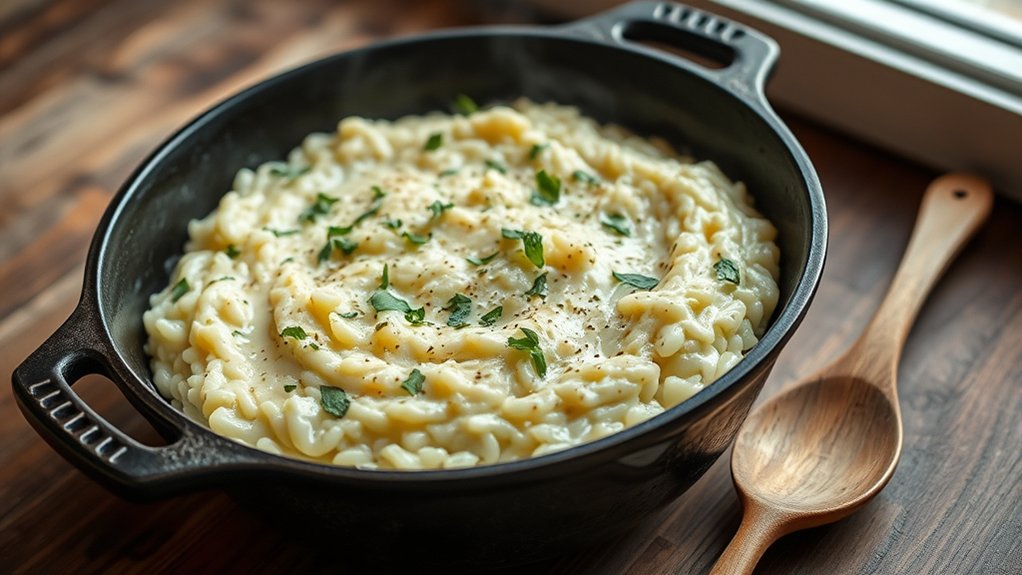
Although cast iron skillets aren’t the traditional choice for risotto, you can definitely make a creamy, delicious risotto in one. The key is understanding how skillet seasoning impacts the cooking process.
A well-seasoned skillet creates a natural non-stick surface, helping you stir the risotto smoothly without sticking or burning. This allows you to develop the ideal risotto texture—creamy yet slightly al dente.
You’ll want to keep stirring gently, gradually adding liquid, just like with any risotto. The skillet’s surface enhances flavor development, giving your dish a subtle, rustic depth.
How Cast Iron Skillet Heat Retention Affects Risotto
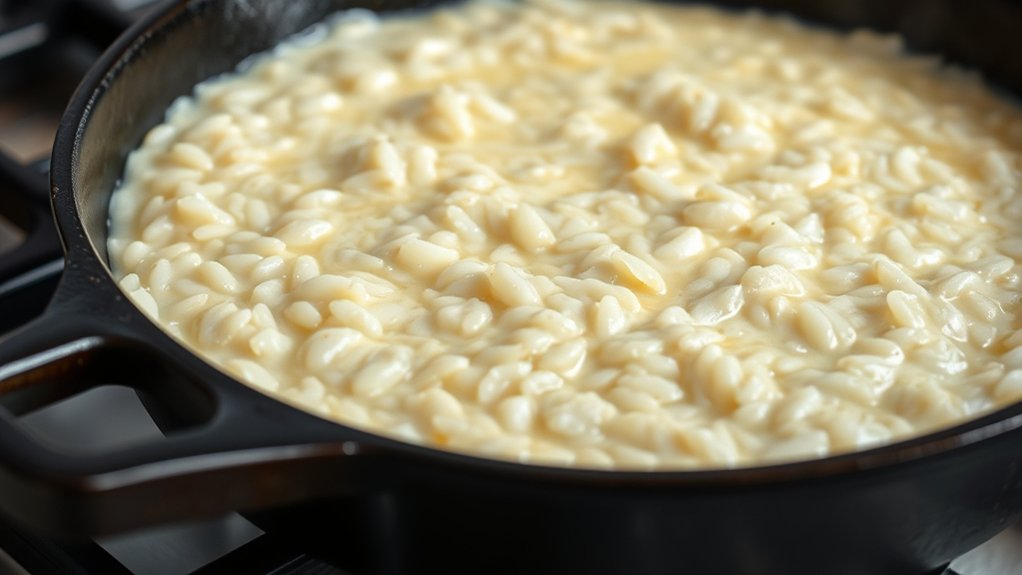
Three key benefits of using a cast iron skillet for risotto come from its exceptional heat retention. First, the skillet maintains a steady temperature, ensuring even heat distribution throughout cooking. This means your rice cooks uniformly, avoiding hot spots that can cause uneven texture.
Second, because the skillet holds heat so well, you’ll notice a more consistent simmer during the gradual stirring and liquid absorption stages. This stability helps control the cooking time precisely, so your risotto reaches that perfect creamy consistency without rushing or slowing down.
Finally, the retained heat allows the skillet to recover quickly after each stir or liquid addition, keeping your risotto on track. Overall, heat retention in cast iron enhances both texture and timing, vital for a flawless risotto.
Tips for Perfect Risotto in Cast Iron Skillets
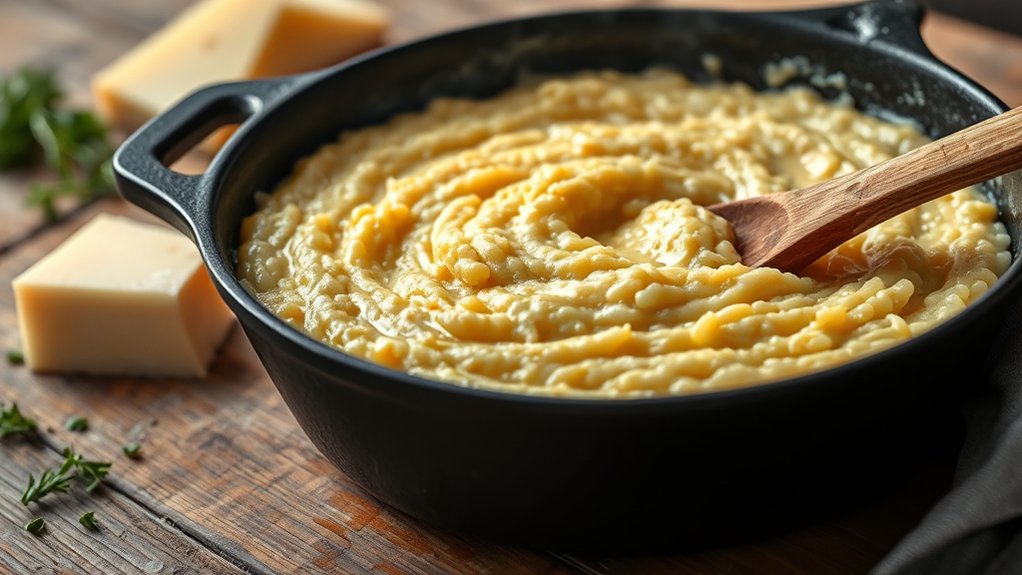
The steady heat retention of a cast iron skillet sets the stage for crafting risotto that’s creamy and perfectly cooked every time. To master risotto variations and elevate your cooking techniques, keep these tips in mind:
- Preheat Gradually: Warm your skillet slowly to avoid hotspots that can scorch the rice, ensuring even cooking and a tender bite.
- Stir with Care: Use gentle, consistent stirring to release the rice’s starch, creating that luscious creaminess risotto is known for.
- Add Broth Slowly: Pour warm broth in small increments, letting the rice absorb it fully before adding more. This patient approach locks in flavor and texture.
Common Risotto Challenges in Cast Iron Skillets: And How to Fix Them
When cooking risotto in a cast iron skillet, you might encounter a few common challenges that can disrupt the creamy texture and even cooking you’re aiming for. One issue is uneven heat distribution, which can cause hot spots and lead to sticking or burning. To fix this, keep the skillet on medium heat and be patient.
Another challenge is mastering the stirring techniques; constant, gentle stirring helps release the rice’s starches, creating that signature creaminess. Avoid vigorous stirring, which can break grains and make the texture mushy. Also, adding broth gradually while stirring prevents clumping and guarantees even absorption.
If you notice the risotto sticking, lower the heat slightly and add a touch more liquid. By adjusting your approach, you’ll maintain that perfect creamy texture every time.
Choosing the Best Cookware for Perfect Risotto
Although cast iron skillets can deliver excellent results, choosing the right cookware plays an essential role in achieving that perfectly creamy risotto texture. When exploring the best risotto recipes, you’ll notice that cookware materials greatly influence heat distribution and moisture control. Here’s what to evaluate:
- Stainless Steel Pans – They heat evenly and resist sticking, letting you stir without worry.
- Nonstick Skillets – Perfect for beginners, they prevent rice from clumping and burning.
- Cast Iron Skillets – Great for heat retention but need careful temperature control to avoid scorching.
Understanding these options helps you pick cookware that complements your cooking style and guarantees risotto with the ideal creaminess and flavor every time.
Frequently Asked Questions
Can I Use a Cast Iron Skillet for Other Italian Dishes?
You can definitely use your cast iron skillet for other Italian dishes like Italian pasta sauces or cast iron pizza. It heats evenly, giving you a crispy crust and rich flavors, making your meals deliciously authentic.
How Do I Season a Cast Iron Skillet Before Cooking Risotto?
You’ll want to start with proper seasoning methods. Heat your skillet, then rub it with a thin layer of high-smoke-point oil like flaxseed or grapeseed. This creates a slick, non-stick surface perfect for creamy risotto cooking.
Is It Safe to Use Acidic Ingredients in a Cast Iron Skillet?
You can use acidic ingredients in cast iron, but don’t cook them for long. Prolonged exposure can strip seasoning and add a metallic taste.
Can I Make Risotto in a Cast Iron Skillet on an Induction Stove?
Yes, you can make risotto on an induction stove using a cast iron skillet. Induction cooking heats evenly, but remember to master risotto techniques like gradual liquid addition and constant stirring for creamy, perfect results every time.
How Do I Clean a Cast Iron Skillet After Making Risotto?
Don’t beat a dead horse. Gently scrub stubborn residue with coarse salt and a sponge. Rinse with warm water, dry thoroughly, and re-season your skillet to maintain its non-stick surface using proven cleaning techniques.
Conclusion
You absolutely can make risotto in a cast iron skillet, and many home cooks swear by it for its incredible heat retention. Did you know cast iron can hold heat up to 50% longer than stainless steel? This means your risotto cooks evenly, developing that creamy texture you crave.
Just remember to stir frequently and manage the heat carefully. With a little practice, your cast iron skillet will become your go-to for perfect, comforting risotto every time.
In conclusion, using a cast iron skillet to make risotto is not only possible but also a fantastic choice for achieving that rich, creamy consistency.



Leave a Reply