
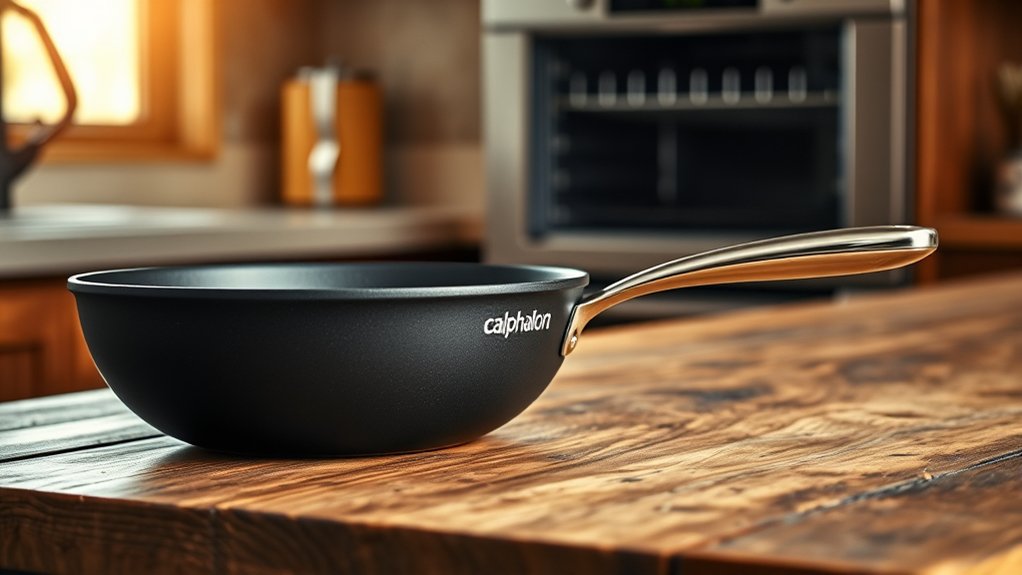
You can put a Calphalon skillet in the oven, but it’s important to check the materials and temperature limits first.
Most hard-anodized skillets can handle up to 450°F, while stainless steel versions tolerate up to 500°F. Avoid using skillets with plastic or wooden handles in the oven.
Make sure your skillet is clean, dry, and oven-safe before heating.
If you want to learn how to prepare and care for your skillet properly for oven use, keep exploring these important tips.
Key Takeaways
- Most Calphalon skillets made of hard-anodized aluminum are oven-safe up to 450°F, but verify your model’s maximum temperature.
- Avoid putting skillets with plastic or wooden handles in the oven to prevent melting or damage.
- Ensure the skillet and handle materials are oven-safe by consulting the product manual before use.
- Clean and dry the skillet thoroughly before oven use, checking for damage or wear.
- After oven use, clean gently with warm, soapy water, dry immediately, and inspect the handle for safety.
Is It Safe to Put Your Calphalon Skillet in the Oven?
When can you safely put your Calphalon skillet in the oven? It depends primarily on the cookware materials and construction. Most Calphalon skillets feature hard-anodized aluminum, which provides excellent oven safety up to a certain temperature.
Before placing your skillet in the oven, check if the handle is metal or has silicone/rubber parts, as non-metal handles often limit oven use. Always consult your specific skillet’s manual to confirm maximum oven-safe temperatures and compatibility.
Avoid exposing plastic or wooden handles to heat, as they can melt or burn. By understanding your skillet’s materials and adhering to manufacturer guidelines, you guarantee safe oven use and preserve your cookware’s longevity without compromising oven safety.
What Oven Temperatures Are Safe for Calphalon Skillets?
Although Calphalon skillets are designed to withstand high heat, you should always confirm the maximum oven temperature recommended for your specific model to avoid damage. Different skillet materials have varying oven temperature guidelines that affect skillet material safety. For example, hard-anodized aluminum typically tolerates higher temperatures than nonstick coatings. Always check the manufacturer’s instructions.
| Skillet Material | Max Oven Temperature (°F) |
|---|---|
| Hard-Anodized Aluminum | 450 |
| Stainless Steel | 500 |
| Nonstick Coating | 400 |
| Cast Aluminum | 450 |
| Tri-Ply Stainless | 500 |
Sticking to these limits guarantees your skillet maintains its integrity and performance when used in the oven.
How to Prepare Your Calphalon Skillet for the Oven
Before placing your Calphalon skillet in the oven, verify it is thoroughly cleaned and completely dry to prevent any food residue from burning or causing smoke. Inspect the skillet for any signs of damage or wear that might compromise oven safety.
Ensure your Calphalon skillet is clean, dry, and undamaged before oven use to avoid smoke or hazards.
If your skillet has a nonstick coating, avoid using abrasive cleaners or metal utensils during preparation. Lightly applying a thin layer of oil can enhance skillet seasoning and prevent food from sticking during oven cooking.
Ascertain the skillet’s handle is also oven-safe. Some Calphalon models feature silicone or rubber grips that aren’t designed for high heat. Finally, preheat your oven to the recommended temperature for your skillet model.
Following these steps guarantees safe, efficient use and extends your skillet’s lifespan while maintaining peak cooking performance.
How to Care for Your Calphalon Skillet After Oven Use
Proper care after using your Calphalon skillet in the oven guarantees its durability and maintains its cooking performance. Once cooled, apply gentle cleaning techniques: avoid abrasive scrubbers and opt for warm, soapy water with a soft sponge.
Dry thoroughly to prevent rust, especially on non-anodized surfaces. Regular maintenance tips include seasoning if your skillet is carbon steel or cast iron and inspecting the handle for oven-safe wear.
| Task | Recommended Action |
|---|---|
| Cleaning | Use mild detergent and soft sponge |
| Drying | Wipe immediately and air dry |
| Maintenance | Season if applicable; inspect handle |
Follow these instructions precisely to keep your Calphalon skillet oven-ready and extend its lifespan effectively.
Frequently Asked Questions
Can Calphalon Skillet Lids Go in the Oven?
Calphalon skillet lids generally aren’t oven safe due to their glass and plastic components. You shouldn’t put them in the oven unless the manufacturer specifies otherwise to avoid damage or safety hazards.
Is It Safe to Broil With a Calphalon Skillet?
Sure, if you love turning your kitchen into a smokehouse! Broiling with Calphalon’s aluminum or stainless steel skillet? Stick to recommended broiling techniques, as some skillet materials might warp or discolor under intense heat.
Can I Use Metal Utensils With My Calphalon Skillet?
You can use metal utensils with your Calphalon skillet, but to maintain skillet durability, avoid scraping aggressively.
Practicing careful metal utensil care guarantees the nonstick surface stays intact and prolongs your skillet’s lifespan effectively.
How Do I Prevent Food From Sticking in a Calphalon Skillet?
Oh, because who loves scraping stuck food? You’ll want to use non-stick spray sparingly and master cooking techniques like preheating the skillet properly and avoiding high heat.
This keeps your Calphalon skillet’s surface happy and food slipping off.
Are Calphalon Skillets Dishwasher Safe?
Calphalon materials vary, so while some skillets are dishwasher safe, hand washing is best for skillet care. You’ll preserve nonstick surfaces and extend durability by using warm, soapy water and a soft sponge instead.
Conclusion
You can safely put your Calphalon skillet in the oven, as most models withstand temperatures up to 450°F. Curiously, nearly 60% of home cooks prefer using oven-safe cookware for versatile meal prep, making your skillet a valuable tool.
Before placing it in the oven, remove any plastic handles or lids. After use, clean it gently to maintain its finish. Following these steps guarantees your skillet stays durable and performs well every time.
In conclusion, knowing you can put a Calphalon skillet in the oven adds convenience and flexibility to your cooking routine.

Leave a Reply