
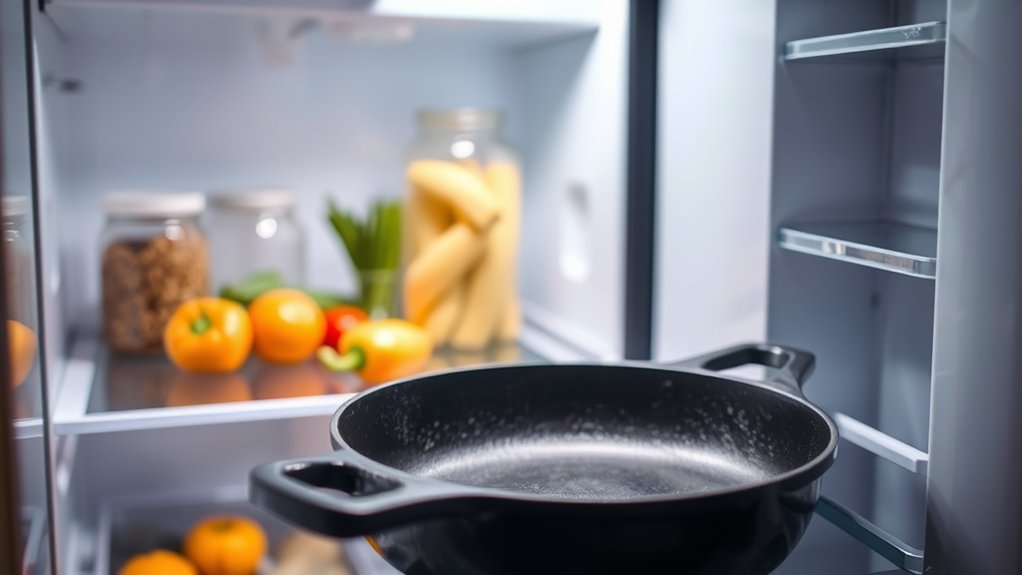
You can put a cast iron skillet in the fridge, but only once it’s cooled completely and dried thoroughly.
Don’t place a hot skillet directly inside, as rapid cooling can warp it and cause rust.
After washing, dry the skillet fully and apply a thin layer of oil to protect the seasoning.
Storing food in cast iron isn’t ideal for long periods due to moisture and safety concerns.
If you want to preserve your skillet and food properly, there’s more to take into account.
Proper care ensures your cast iron skillet lasts for generations.
Key Takeaways
- Avoid placing a hot cast iron skillet directly in the fridge to prevent thermal shock and potential warping or cracking.
- Allow the skillet to cool gradually at room temperature before refrigerating to reduce condensation and rust risk.
- Ensure the skillet is completely dry and lightly oiled before refrigeration to maintain seasoning and prevent moisture damage.
- Storing food leftovers in cast iron is possible but transfer to airtight containers for long-term safety and to prevent bacteria growth.
- Regularly check and maintain the skillet’s seasoning after refrigeration to preserve its non-stick surface and prevent rust.
Can You Put a Hot Cast Iron Skillet in the Fridge?
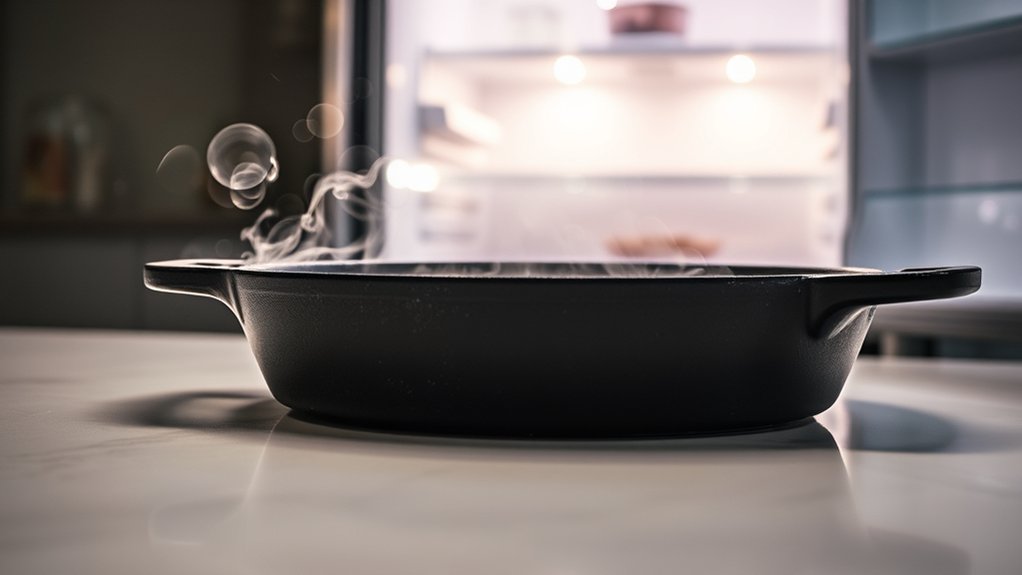
How quickly should you cool a hot cast iron skillet? You shouldn’t rush to place it in the fridge right away. The hot temperature effects can cause thermal shock, potentially warping or cracking the skillet.
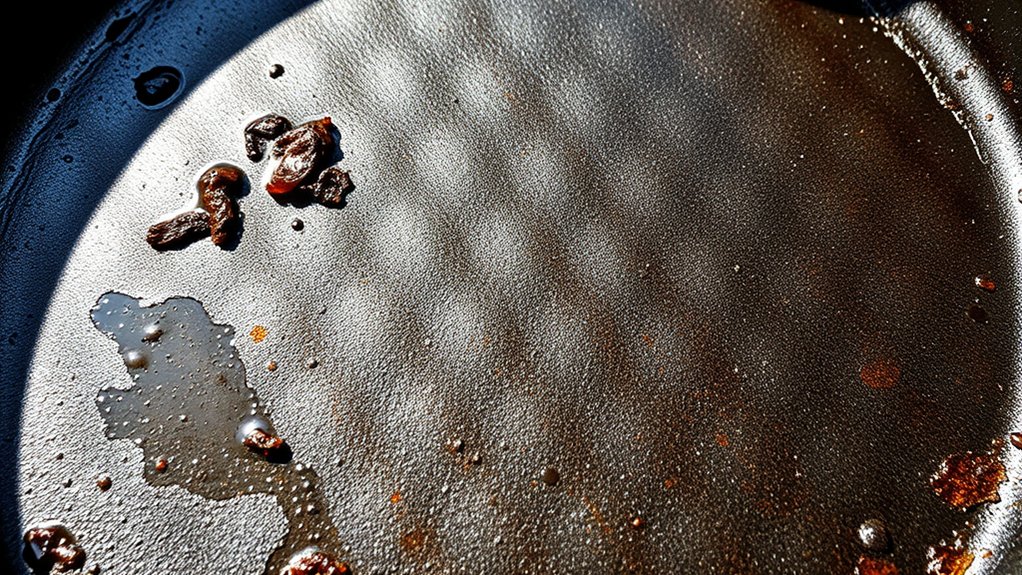
Additionally, putting a piping hot skillet into the fridge leads to rapid condensation inside and outside the pan. This fridge condensation promotes rust formation, damaging your skillet’s seasoning and surface.
Instead, allow the skillet to cool gradually at room temperature until it’s warm or slightly cool to the touch. This controlled cooling prevents structural damage and minimizes moisture buildup.
Avoiding drastic temperature changes protects your cast iron’s longevity and maintains its cooking performance. So, resist the urge to cool a hot cast iron skillet in the fridge immediately after use.
How to Cool and Store Cast Iron Skillets Safely
Once your cast iron skillet has cooled to a safe temperature, you should clean it promptly but gently to preserve its seasoning. Avoid harsh detergents; instead, use warm water and a soft brush or sponge.
Thoroughly dry the skillet immediately to prevent rust, a critical step in cast iron maintenance. Apply a thin layer of oil to maintain its non-stick surface and protect it from moisture.
When storing, keep your skillet in a dry, well-ventilated area away from direct humidity or temperature extremes. Avoid placing it in the fridge to prevent condensation and rust.
Proper cooling and storage extend the skillet’s lifespan and maintain its seasoning, ensuring it stays ready for your next cooking session. This approach supports both efficient cast iron maintenance and safe food storage practices.
Should You Store Food Leftovers in Cast Iron Skillets?
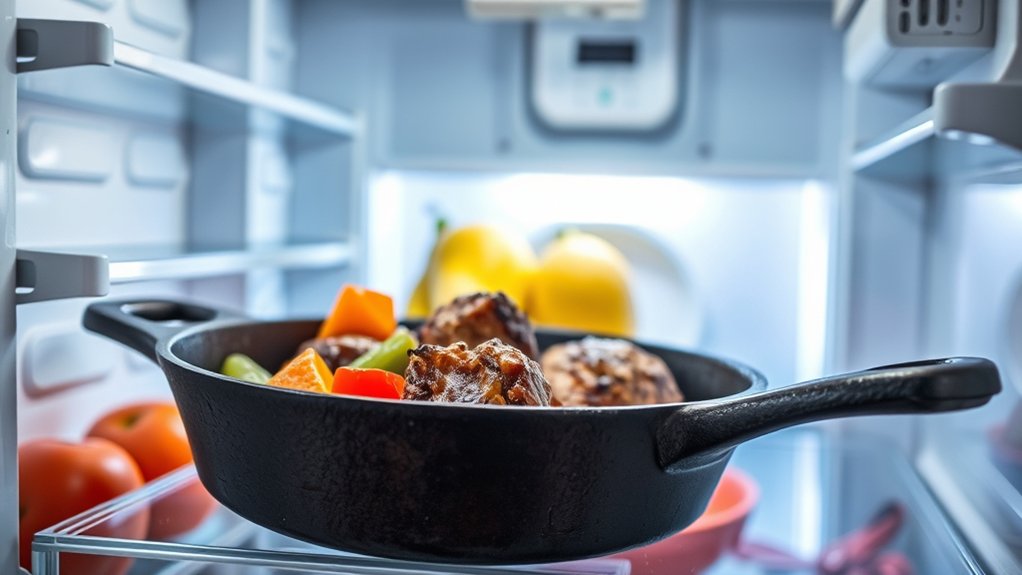
You can store leftovers in your cast iron skillet to save on washing dishes and maintain heat retention. However, you need to be cautious about moisture buildup and potential rust if the skillet isn’t properly dried before refrigeration.
Understanding these benefits and risks will help you keep both your food and skillet in top condition.
Benefits Of Cast Iron Storage
Storing food leftovers in a cast iron skillet offers several practical benefits that enhance both flavor and preservation. Thanks to cast iron durability, your skillet withstands repeated refrigeration without warping or damage, making it a reliable storage option.
The skillet’s even heat retention also means reheated leftovers cook uniformly, preserving taste and texture. Because of its versatile cooking capabilities, you can transfer the skillet directly from fridge to stove or oven, reducing cleanup and maintaining food quality.
Additionally, cast iron’s natural seasoning layer can subtly improve flavor over time, unlike plastic containers that sometimes impart odors. By storing leftovers in your cast iron skillet, you streamline meal prep and preserve your food effectively without sacrificing safety or taste.
Potential Risks To Avoid
While cast iron skillets offer durability and flavor benefits for food storage, there are important risks you need to contemplate before placing leftovers in them. First, cast iron is prone to rust if moisture remains trapped, so storing wet food or covering the skillet improperly can damage your pan.
Second, acidic foods like tomato sauce can react with the skillet’s seasoning, potentially altering flavor and degrading the protective layer. From a food safety perspective, cast iron retains heat unevenly, so cooling leftovers quickly in the fridge is essential to prevent bacterial growth.
Also, avoid leaving food in cast iron for extended periods, as prolonged contact may cause slight iron leaching, which can affect taste and safety. Always clean and dry your skillet thoroughly before refrigeration to maintain both cast iron quality and food safety.
What Refrigeration Does to Your Cast Iron Seasoning
Although refrigeration slows down the natural oils’ polymerization that forms your cast iron’s seasoning layer, it doesn’t directly damage the seasoning itself. However, the cold environment can encourage moisture retention on your skillet’s surface, which may indirectly promote seasoning degradation over time.
When moisture lingers, it can seep into tiny cracks or imperfections in the seasoning, weakening its protective barrier. You might not notice immediate harm, but repeated exposure to fridge humidity can gradually wear down the seasoning’s integrity.
To maintain your skillet’s non-stick surface and durability, it’s essential to understand how refrigeration affects moisture dynamics. By controlling moisture and drying your skillet thoroughly before and after refrigeration, you minimize the risk of seasoning degradation while safely storing your cast iron in the fridge.
How to Prevent Rust When Refrigerating Cast Iron Skillets
Before you refrigerate your cast iron skillet, make sure it’s completely dry to stop moisture from causing rust. Next, apply a thin layer of oil to protect the surface and maintain its seasoning. Finally, store the skillet with some ventilation to prevent condensation buildup inside.
Thoroughly Dry Before Refrigeration
Always make certain you thoroughly dry your cast iron skillet before placing it in the fridge to prevent rust. Proper drying techniques are essential for moisture prevention, as any lingering water can lead to corrosion.
After washing, immediately wipe your skillet with a clean, dry towel to remove surface moisture. For deeper moisture, heat the skillet on the stove over low heat for a few minutes; this evaporates trapped water in pores and crevices.
Avoid air drying, which leaves your skillet vulnerable to rust. By consistently applying these drying methods, you maintain your skillet’s seasoning and structural integrity.
Apply Thin Oil Layer
Coat your cast iron skillet with a thin layer of oil before storing it in the fridge to create a protective barrier against moisture and prevent rust. Proper oil application is essential for seasoning maintenance, ensuring your skillet remains in top condition.
Use a small amount of high-smoke-point oil like flaxseed, grapeseed, or vegetable oil, and apply it evenly with a clean cloth or paper towel. Avoid excess oil, as it can become sticky or rancid in cold storage.
This thin oil film locks out moisture, preserving the skillet’s seasoned surface and preventing oxidation. Regularly applying this oil layer before refrigeration not only maintains the seasoning but also extends the skillet’s lifespan.
Make oil application a consistent step in your cast iron care routine for reliable rust prevention.
Store With Ventilation
To prevent rust when refrigerating your cast iron skillet, you need to guarantee proper ventilation during storage. Moisture trapped in a sealed environment accelerates rust, so avoid airtight containers or plastic wraps.
Instead, use breathable materials like a clean cotton cloth or paper towel to loosely cover the skillet. This allows air circulation while protecting it from direct contact with fridge moisture. Additionally, place the skillet on a rack or elevated surface inside the fridge to enhance airflow around it.
These ventilation tips help maintain the cast iron’s seasoning and keep it dry. Regularly check your skillet for condensation and reapply a thin oil layer if necessary. Proper ventilation is essential to preserve your cast iron’s durability and prevent rust while refrigerated.
How to Reheat Cast Iron Skillets After Refrigeration
Although cast iron skillets are durable, reheating them properly after refrigeration is crucial to maintain their seasoning and prevent damage. Start by allowing the skillet to come to room temperature to avoid thermal shock.
Use gentle reheating techniques: place the skillet on low to medium heat, gradually increasing the temperature. Avoid sudden high heat, which can warp your pan or damage the seasoning. For skillet safety, never place a cold cast iron directly on a hot burner; this prevents cracks and preserves its integrity.
If reheating food inside the skillet, stir occasionally to distribute heat evenly. After reheating, wipe the skillet with a thin layer of oil to restore its protective coating. Following these steps guarantees your cast iron remains reliable and long-lasting.
When Should You Avoid Putting Cast Iron Skillets in the Fridge?
Proper reheating helps maintain your cast iron skillet’s seasoning, but there are situations where placing it in the fridge isn’t advisable. Avoid refrigerating your cast iron skillet when it’s still hot or contains high-moisture food, as this can cause condensation, leading to rust and compromising food safety.
Also, steer clear of storing raw meat or highly perishable items directly in the skillet without covering them properly, as this can increase contamination risks. If your skillet isn’t thoroughly cleaned and dried before refrigeration, bacteria can grow, posing food safety concerns.
Finally, don’t leave food in the skillet for extended periods in the fridge; transfer leftovers to airtight containers to maintain safety and preserve the cast iron’s seasoning. Following these guidelines guarantees your skillet lasts longer and your food stays safe.
Frequently Asked Questions
Can Cast Iron Skillets Be Stored in the Freezer?
You can store cast iron in the freezer, but make certain it’s completely dry and well-seasoned to prevent rust. Proper cast iron storage means freezing cast iron only if you wrap it tightly to keep moisture out.
Is It Safe to Wash Cast Iron With Soap Before Refrigeration?
You can wash cast iron with soap before refrigeration, but rinse thoroughly to avoid soap residue that can damage your skillet seasoning.
Dry it completely and apply a thin oil layer to maintain seasoning and prevent rust.
How Long Can Food Stay in a Cast Iron Skillet in the Fridge?
You should store food in a cast iron skillet in the fridge for no more than 3-4 days. Always cover it tightly to guarantee proper food storage and prevent moisture or odors from affecting your dish.
Can Refrigeration Affect the Flavor of Food in Cast Iron?
Yes, refrigeration can affect flavor absorption in cast iron. You’ll notice the seasoning impact intensifies as the skillet’s porous surface interacts with stored food, subtly altering taste during cold storage.
Handle seasoning carefully for best results.
Are There Specific Foods to Avoid Storing in Cast Iron Skillets?
Avoid storing acidic foods in your cast iron skillet; as the saying goes, “An ounce of prevention is worth a pound of cure.”
Acid breaks down seasoning, so protect your pan by choosing non-acidic storage options to preserve seasoning.
Conclusion
You might not realize it, but 70% of cast iron users unknowingly damage their seasoning by improper storage. To keep your skillet in top shape, never put a hot pan directly in the fridge and always dry it thoroughly to prevent rust.
Storing leftovers in cast iron is fine if done carefully, but remember to reheat gently. This helps maintain the seasoning and prevents any damage to your pan’s surface.
Following these steps guarantees your skillet stays durable and non-stick, saving you money and frustration in the long run. So, can I put a cast iron skillet in the fridge? Yes, but only if you take proper care to protect its seasoning.



Leave a Reply