
Can I Put an Electric Skillet in the Dishwasher?
You shouldn’t put your entire electric skillet in the dishwasher because water and detergent can damage its electrical parts and reduce its lifespan.
While some removable pans or glass lids might be dishwasher-safe, always check the manual first.
To protect your skillet, hand wash the cooking surface with warm, soapy water and keep the heating element dry.
Proper cleaning and care can help your skillet perform well longer.
Keep going to uncover the best cleaning and storage tips.
Key Takeaways
- Most electric skillets have electrical components that should never be submerged or placed in the dishwasher.
- Removable cooking pans may be dishwasher-safe if specified by the manufacturer, but non-stick coatings can degrade with repeated dishwasher use.
- Heating elements must never go in the dishwasher and should be cleaned by hand with a damp cloth and dried thoroughly.
- Dishwasher detergents and high-pressure water jets can damage seals, cause corrosion, or short-circuit electrical parts of the skillet.
- Always check the manufacturer’s manual for specific cleaning instructions and opt for hand washing to maintain skillet safety and longevity.
Is It Safe to Put Your Electric Skillet in the Dishwasher?
When it comes to cleaning your electric skillet, you might wonder if tossing it in the dishwasher is a safe and effective option. For electric skillet safety, it’s essential to check the manufacturer’s instructions first.
Most electric skillets have electrical components that aren’t dishwasher-safe, risking damage or malfunction. The heating element and control panel should never be submerged or exposed to high water pressure.
Instead, focus on dishwasher cleaning tips that apply only to removable, non-electrical parts, such as glass lids or detachable trays. Hand washing with warm, soapy water and a soft sponge usually works best to preserve the skillet’s integrity and extend its lifespan.
Following these guidelines guarantees you clean your skillet safely without compromising its functionality.
What Are the Risks of Putting an Electric Skillet in the Dishwasher?
You shouldn’t put your electric skillet in the dishwasher because water can damage its electrical components. The seals and waterproofing may also weaken, causing leaks or malfunction.
Protecting these parts guarantees your skillet stays safe and works properly.
Electrical Component Damage
Although electric skillets are designed for convenient cooking, their electrical components are highly sensitive to water and harsh detergents used in dishwashers. When you put an electric skillet in the dishwasher, water can seep into the internal wiring and heating elements, causing water damage. This exposure increases the risk of electrical failure, which can render the skillet unsafe or completely inoperable.
Dishwashers use high-pressure jets and strong detergents that may corrode or short-circuit delicate circuits. Even if the skillet looks fine externally, hidden damage might compromise its functionality and safety. To protect your appliance, avoid submerging or exposing the electrical parts to moisture.
Instead, clean the skillet’s surface by hand, ensuring the electrical components remain dry and intact for long-lasting performance.
Waterproofing and Seals
Since electric skillets rely on waterproof seals to protect their internal components, putting them in the dishwasher can compromise these barriers. Dishwashers expose your skillet to high-pressure water jets and strong detergents that can degrade the waterproofing materials.
Once damaged, water may seep into the electrical parts, causing malfunctions or safety hazards. You should also consider that seal maintenance is essential for your skillet’s longevity. Regular cleaning with a damp cloth and avoiding harsh chemicals helps preserve these seals.
Instead of risking dishwasher damage, hand wash your skillet carefully, focusing on preserving the integrity of its waterproofing materials and seals. This approach guarantees your electric skillet remains safe and functional over time.
Which Parts of an Electric Skillet Can Go in the Dishwasher?
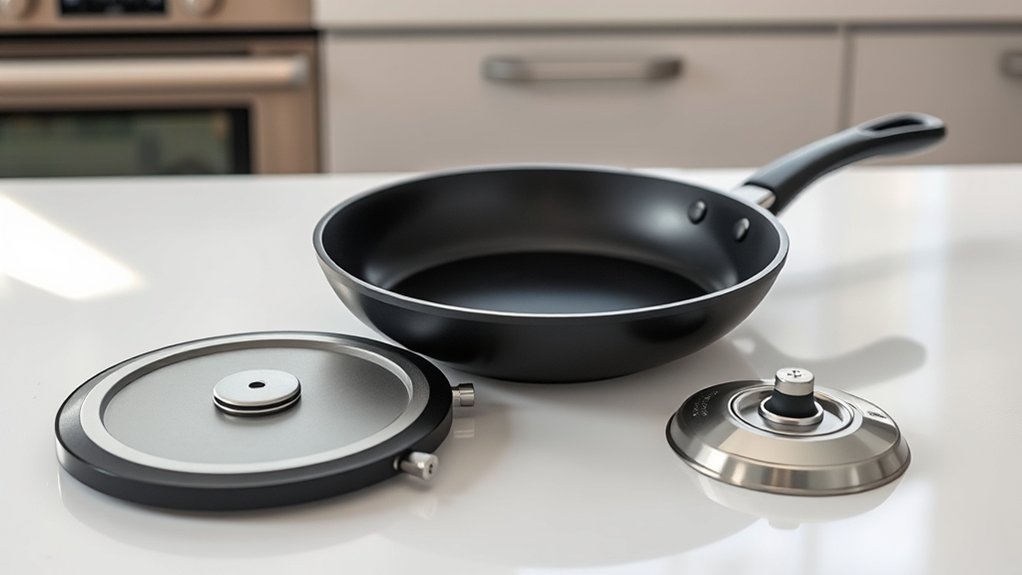
You can usually put removable cooking pans in the dishwasher, but make sure to check the manufacturer’s guidelines first. Avoid placing the heating element or electric components in the dishwasher to prevent damage.
Some accessories, like glass lids, may be dishwasher safe, but it’s best to confirm before washing.
Removable Cooking Pans
When you own an electric skillet with removable cooking pans, it’s important to know which parts can safely go in the dishwasher. Not all removable pans are dishwasher-safe, and skillet materials play a key role in this. Here’s what to examine:
- Non-stick removable pans: Most non-stick pans can go in the dishwasher, but repeated washing may degrade the coating over time. Hand washing is gentler.
- Stainless steel pans: These are usually dishwasher-safe and resist warping or discoloration, making them ideal for dishwasher cleaning.
- Cast iron or aluminum pans: Avoid the dishwasher, as harsh detergents and high heat can damage the surface or cause rust.
Always check your skillet’s manual to confirm which removable pans are dishwasher-safe to maintain their longevity.
Heating Element Care
Although the removable cooking pans of an electric skillet often handle dishwasher cleaning well, the heating element requires special care and should never go in the dishwasher. Proper heating element maintenance is essential to guarantee your electric skillet longevity.
Exposure to water and harsh detergents can damage its electrical components.
| Heating Element Care | Recommended Practice | Reason |
|---|---|---|
| Avoid Dishwasher | Hand wipe with damp cloth | Prevent electrical damage |
| Dry Thoroughly | Use a dry towel | Avoid corrosion |
| Check for Damage | Inspect regularly | Assure safe operation |
| Store Properly | Keep dry and cool | Maintain heating efficiency |
Treat the heating element gently to preserve its function and extend your skillet’s lifespan.
Dishwasher Safe Accessories
Caring for your electric skillet means treating its heating element with care, but you can usually clean other parts more easily. When it comes to dishwasher safe accessories, check your manufacturer’s instructions, but generally:
- Removable cooking surface – Often dishwasher safe; place it securely on the dishwasher racks to prevent warping.
- Glass lids – Usually safe in the dishwasher’s top rack; use mild cleaning agents to avoid cloudiness.
- Detachable temperature controls or cords – Never put these in the dishwasher; clean them by hand only.
How to Clean Your Electric Skillet Without Using a Dishwasher
To clean your electric skillet without using a dishwasher, start by unplugging it and letting it cool completely. Remove any detachable parts like the temperature control probe.
Use a soft sponge or cloth with warm, soapy water to gently clean the skillet’s surface, paying close attention to avoid harsh scrubbing that can damage the nonstick coating. For stubborn residue, soak the skillet in warm water for a few minutes before wiping.
Avoid abrasive cleaners or metal utensils to support nonstick maintenance. Wipe the exterior with a damp cloth, ensuring no water enters electrical components. Dry all parts thoroughly before reassembling.
These cleaning tips help preserve your skillet’s functionality and lifespan without risking damage from dishwasher exposure.
How to Maintain Your Electric Skillet’s Nonstick Surface
When you want your electric skillet’s nonstick surface to last, regular maintenance is key. Adopting effective nonstick maintenance tips and surface protection techniques will keep your skillet performing well. Follow these steps:
- Use only silicone, wooden, or plastic utensils to avoid scratching the surface.
- Clean the skillet with a soft sponge and mild detergent after each use; avoid abrasive cleaners or scrubbers.
- Apply a thin layer of cooking oil occasionally to maintain the nonstick coating’s effectiveness and prevent drying out.
When Should You Seek Professional Repair for Your Electric Skillet?
Maintaining your electric skillet’s nonstick surface helps prevent minor issues, but some problems require professional attention. You should watch for repair signs like inconsistent heating, unusual smells, or visible damage to the power cord or temperature controls.
If your skillet doesn’t reach the desired temperature or shuts off unexpectedly, it’s time to contemplate professional service. Attempting DIY fixes on electrical components can be risky and might void your warranty.
A certified technician can accurately diagnose internal faults, replace damaged parts, and guarantee your skillet operates safely. Don’t delay seeking professional repair if you notice these signs; addressing issues early can extend your skillet’s lifespan and prevent potential hazards.
Always prioritize safety and rely on experts when electrical problems arise.
How to Store Your Electric Skillet After Cleaning
Although your electric skillet is clean and ready for storage, proper handling guarantees it stays in good condition. To maintain its longevity, follow these storage solutions for proper organization:
- Dry Thoroughly: Verify the skillet and its components are completely dry to prevent rust and mildew.
- Use Original Packaging or a Protective Cover: Store your skillet in its box or a dustproof cover to protect it from dust and scratches.
- Choose a Cool, Dry Location: Keep it in a cabinet or pantry away from moisture and extreme temperatures.
Frequently Asked Questions
Can I Use Metal Utensils With My Electric Skillet?
You shouldn’t use metal utensils with your electric skillet to guarantee metal utensil safety and maintain electric skillet care. Metal can scratch the nonstick surface, reducing its lifespan and affecting cooking performance.
Choose silicone or wooden tools instead.
How Long Does It Take for an Electric Skillet to Preheat?
Your electric skillet’s preheating time usually takes about 5 to 10 minutes to reach the ideal temperature.
Keep an eye on the indicator light or temperature settings to know when it’s ready for cooking.
What Types of Foods Are Best Cooked in an Electric Skillet?
You’ll cook up a storm with an electric skillet, perfect for stir fry recipes and breakfast dishes like pancakes or eggs. Its even heat makes sautéing veggies and simmering sauces easy and efficient every time.
Can I Use Cooking Spray on My Electric Skillet?
Yes, you can use cooking spray on your electric skillet for easy food release and quick cleanup. However, consider cooking spray alternatives like oil or butter to avoid buildup that might affect your skillet’s performance over time.
Is It Safe to Leave an Electric Skillet Plugged in Overnight?
Back in the days of rotary phones, safety concerns were simple: don’t leave electric skillets plugged in overnight. You shouldn’t either, as it poses electrical hazards and risks overheating.
Always unplug after use for safety.
Conclusion
You shouldn’t put your electric skillet in the dishwasher, as water and heat can damage its electrical components. In fact, 60% of skillet damages reported by manufacturers come from improper cleaning methods.
Instead, clean the skillet’s removable parts by hand and wipe the base carefully. Taking these simple steps helps maintain its nonstick surface and extends its life.
Always store your skillet dry and in a safe place to keep it working like new. Remember, avoiding the dishwasher is key to preserving your electric skillet.

Leave a Reply