
You can put water in your cast iron skillet, but only sparingly and with care.
Using water to deglaze or steam food is fine, but it’s important to add it to a hot pan to avoid damaging the seasoning.
Never soak your cast iron skillet, as prolonged exposure to water can cause rust and break down the protective layer.
After using water, always dry your skillet thoroughly.
Apply a thin coating of oil afterward to maintain its surface.
Keep these tips in mind to extend your skillet’s life and effectiveness.
More details can help you master its care.
Key Takeaways
- You can add water for deglazing or steaming but avoid frequent use to protect the seasoning layer.
- Always add water to a hot skillet and use it quickly to prevent damage and maintain seasoning.
- Never soak a cast iron skillet in water as prolonged exposure causes rust and breaks down seasoning.
- After using water, dry the skillet immediately with a towel and heat it briefly to remove moisture.
- Lightly oil the skillet after drying to prevent rust and preserve its nonstick surface.
Can You Put Water in a Cast Iron Skillet?
When should you put water in a cast iron skillet? You can add water during cooking for specific techniques like deglazing or steaming, where water helps lift browned bits and create sauces. However, frequent or careless use of water can harm your skillet’s seasoning, leading to rust.
For skillet maintenance, avoid soaking your cast iron in water or using excessive water for cleaning. Instead, rinse it quickly, scrub with a brush or coarse salt, and dry thoroughly.
While water cooking has its place, always guarantee the skillet is dried and lightly oiled afterward to preserve the non-stick surface. Using water correctly balances cooking needs and skillet longevity, keeping your cast iron reliable and rust-free for years.
Safe Ways to Use Water in Your Cast Iron Skillet
Using water in your cast iron skillet can enhance cooking techniques like deglazing and steaming, but only if done properly. When you add water for water steaming, make certain your skillet is hot before introducing a small amount of water or broth.
This quick steam will cook food evenly without compromising the skillet’s seasoning. To deglaze, pour a splash of water into the hot pan after searing meats or vegetables. Scrape the browned bits off the bottom to create flavorful sauces.
Always use moderate water amounts and avoid sudden temperature changes to prevent warping or rust. After using water, dry the skillet thoroughly and apply a thin oil layer to maintain its seasoning.
Use moderate water, avoid temperature shocks, dry well, and oil to protect your cast iron skillet.
These safe water uses maximize your cast iron skillet’s versatility and longevity.
Why You Should Never Soak Your Cast Iron Skillet
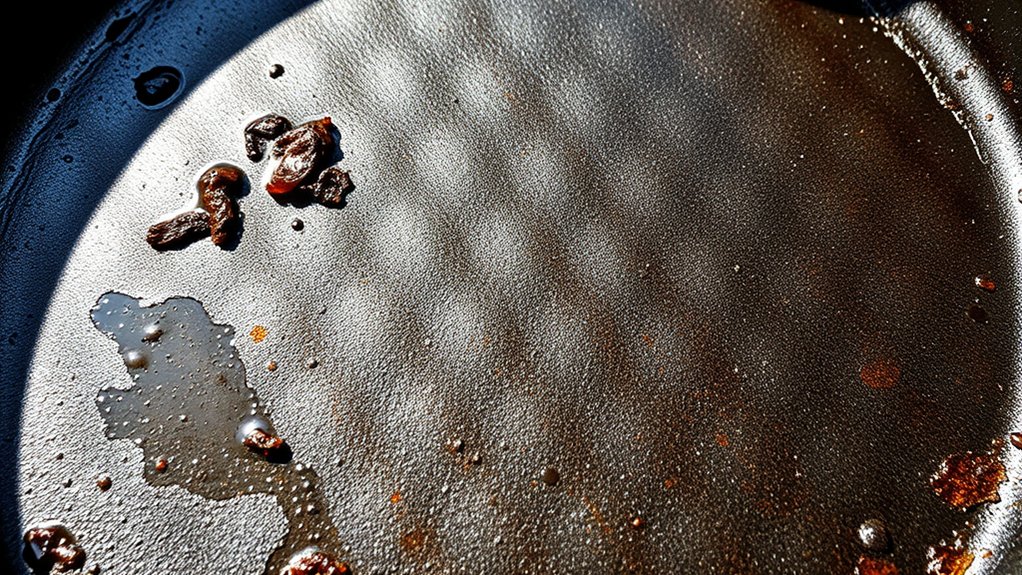
Although it may seem like a good idea, you should never soak your cast iron skillet because prolonged exposure to water causes rust and damages the seasoning. When you leave your skillet submerged, water seeps into the porous surface, breaking down the carefully built-up seasoning layer essential for non-stick cooking.
This compromises your pan’s ability to perform well and shortens its lifespan. Proper cast iron maintenance calls for minimal water contact and prompt drying to preserve its seasoning and structural integrity.
Instead, use quick rinses and scrubbing techniques suited to cast iron cooking techniques. Soaking undermines the skillet’s durability and can lead to costly repairs or replacement.
Protect your investment by avoiding soaking and following recommended care practices.
How to Dry and Care for Your Cast Iron Skillet After Washing
Avoiding soaking is just the first step in preserving your cast iron skillet. Proper drying and care are essential for skillet maintenance. Follow these drying techniques to keep your skillet in top shape:
- Immediately after washing, dry your skillet thoroughly with a clean towel.
- Place the skillet on a low burner heat for a few minutes to evaporate any remaining moisture.
- Lightly coat the cooking surface with a thin layer of oil to maintain the seasoning and prevent moisture from causing damage.
- Store your skillet in a dry place with good air circulation to avoid trapped moisture.
How to Prevent Rust When Using Water on Cast Iron
Even when you rinse your cast iron skillet with water, you can prevent rust by acting quickly and following proper care steps. After water usage, immediately dry the skillet thoroughly using a clean towel or by heating it on the stove over low heat. This removes any residual moisture that causes rust.
Next, apply a thin layer of cooking oil to the skillet’s surface while it’s still warm, sealing the pores and enhancing rust prevention. Avoid soaking your skillet in water for extended periods, as this promotes rust formation.
Regularly reseason your cast iron to maintain its protective coating. By promptly drying and oiling your skillet after water contact, you guarantee rust prevention and prolong its lifespan, maintaining ideal performance in your kitchen.
Frequently Asked Questions
Can I Use Soap With Water on My Cast Iron Skillet?
You can use mild soap with water to clean your cast iron skillet occasionally. Avoid harsh soap types to preserve seasoning.
Stick to proper cleaning methods, like gentle scrubbing and thorough drying, to maintain its nonstick surface.
Will Water Damage the Seasoning on My Cast Iron Skillet?
Water won’t damage your cast iron’s seasoning if you dry it promptly. Excess water causes water absorption, leading to rust.
For proper seasoning maintenance, always dry and lightly oil your skillet after washing to protect the surface.
How Often Should I Reseason My Cast Iron Skillet?
You’ll want to reseason your skillet when food starts sticking or the surface looks dull, usually every few months with regular use. Proper skillet maintenance guarantees ideal seasoning frequency, keeping your cast iron nonstick and rust-free.
Is It Safe to Cook Acidic Foods With Water in Cast Iron?
You can safely cook acidic foods with water in cast iron if you avoid prolonged exposure. Use proper cooking techniques, like quick simmering and thorough seasoning, to maintain acidic food safety and protect your skillet’s seasoning layer.
Can I Put a Wet Cast Iron Skillet in the Oven?
Wet or dry, cast iron thrives in the oven’s heat. Just remember moisture effects can cause rust if left too long.
For oven safety, dry your skillet thoroughly before baking to maintain its seasoning and longevity.
Conclusion
Think of your cast iron skillet like a trusty old friend—you wouldn’t leave them soaking in water all day, right? Just like that, avoid soaking your skillet to keep it strong and rust-free.
A quick rinse with warm water and thorough drying will keep it ready for your next meal. Treat it right, and your skillet will reward you with years of perfect, crispy dishes.
Remember, water’s fine—just don’t overdo it. When wondering, “Can I put water in my cast iron skillet?” the key is moderation and proper care to maintain its seasoning and durability.

Leave a Reply