
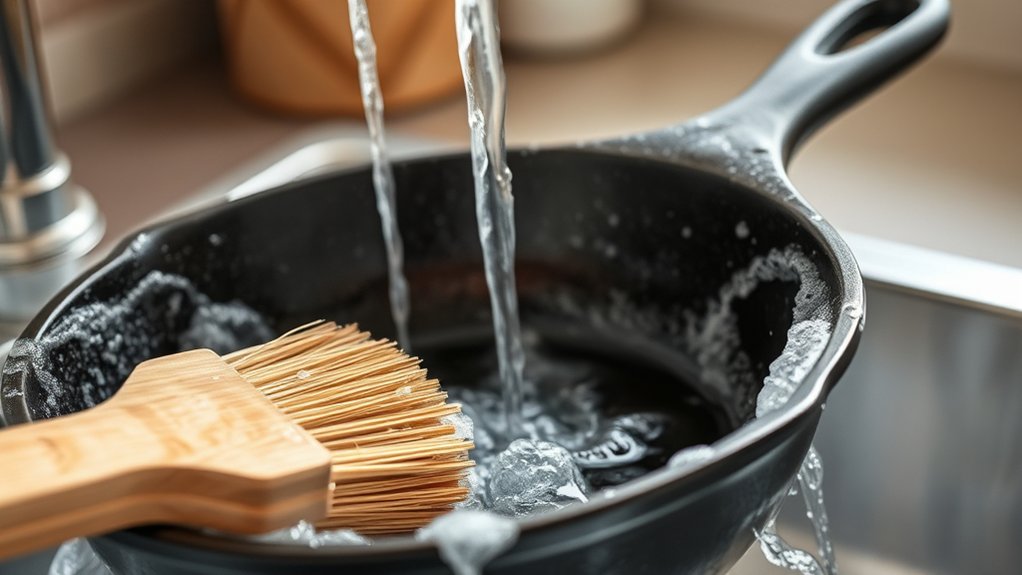
You can definitely scrub a cast iron skillet, but it’s important to do so carefully to protect its seasoning.
Use warm water with a stiff brush or a non-abrasive scrubber while the skillet is still warm. Avoid using harsh abrasives, steel wool, or soaking the skillet, as these can damage the surface and lead to rust.
After scrubbing, dry the skillet thoroughly to prevent moisture buildup.
Then, apply a thin layer of oil to maintain its smooth, non-stick finish.
Keep reading to learn how to clean and care for your skillet properly.
Key Takeaways
- Yes, you can scrub a cast iron skillet using a stiff brush or non-metal scrubber while it’s warm to remove food residue safely.
- Avoid harsh abrasives, steel wool, and soaking to protect the skillet’s seasoning and prevent rusting.
- Use warm water and gentle scrubbing motions, focusing on stubborn spots without aggressive scrubbing.
- After scrubbing, thoroughly dry the skillet and apply a thin layer of oil to maintain seasoning and prevent rust.
- Periodically restore seasoning by heating the oiled skillet in the oven to polymerize the protective layer.
Is It Safe to Scrub Your Cast Iron Skillet?
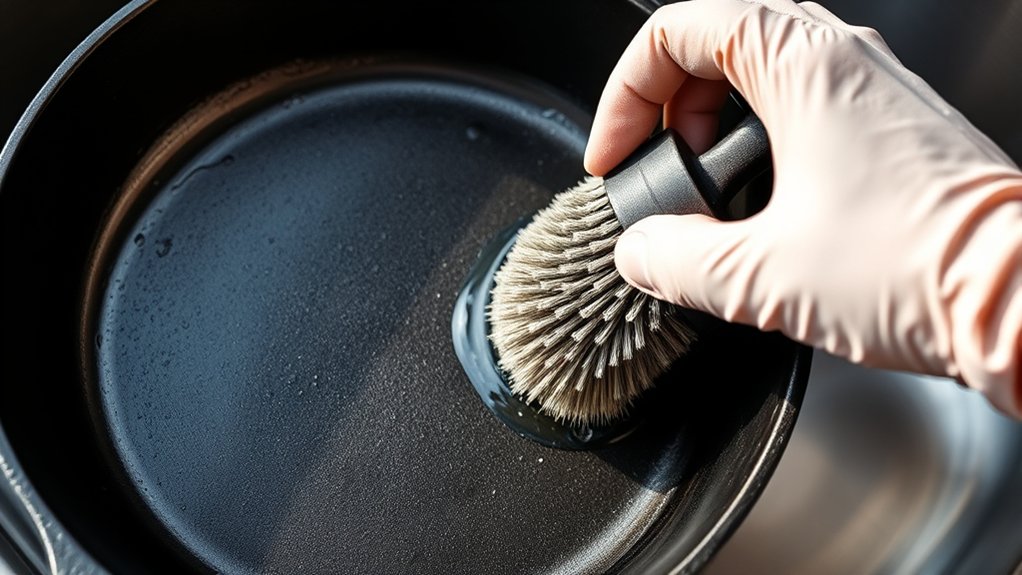
How you clean your cast iron skillet directly affects its performance and lifespan. Scrubbing your skillet is safe when done correctly as part of effective cast iron care.
You need to choose cleaning techniques that remove food residue without stripping the protective seasoning layer. Avoid harsh abrasives or soaking the pan, since these can cause rust or damage the surface.
Instead, use a stiff brush or non-metal scrubber immediately after cooking while the skillet is still warm. This approach efficiently loosens stuck particles without compromising the seasoning.
After scrubbing, dry the skillet thoroughly and apply a thin layer of oil to preserve its non-stick properties. By following these precise cleaning techniques, you maintain your skillet’s durability and guarantee consistent cooking performance over time.
How to Scrub a Cast Iron Skillet Without Damage
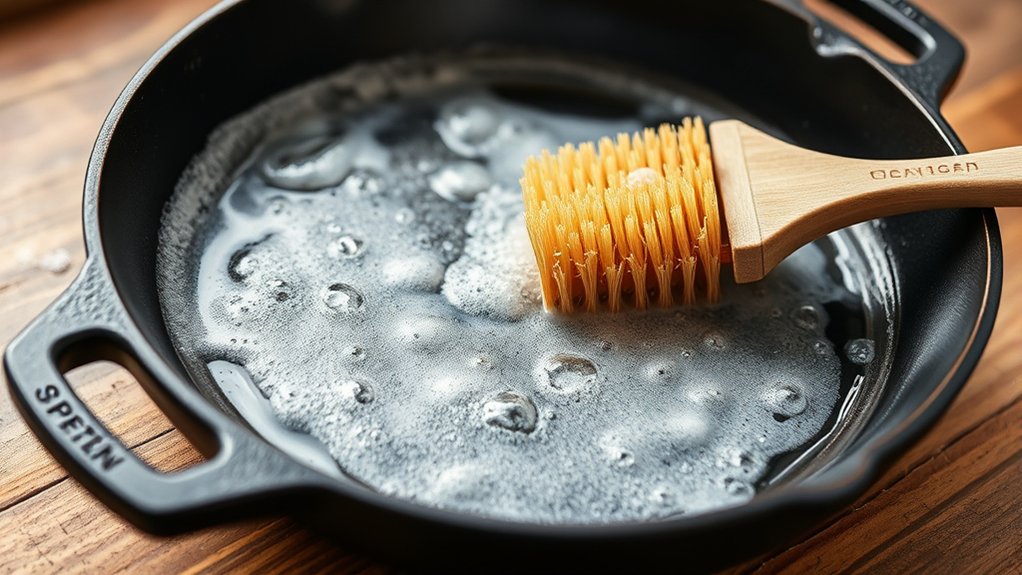
Maintaining your cast iron skillet’s seasoning while scrubbing requires careful technique. Start by rinsing the skillet with warm water to loosen food particles. Use a soft brush or non-abrasive scrub pad to gently scrub, avoiding harsh scrubbing tools that can strip the seasoning.
Employ proper scrubbing techniques by focusing on stubborn spots with circular motions rather than aggressive back-and-forth scrubbing. Common mistakes include using soap or steel wool, which can damage the skillet’s protective layer.
After scrubbing, thoroughly dry the skillet to prevent rust. Finally, apply a light coat of oil to restore seasoning and protect the surface. By following these steps precisely, you’ll clean effectively without compromising your skillet’s longevity or performance.
Best Tools and Cleaners for Scrubbing Cast Iron
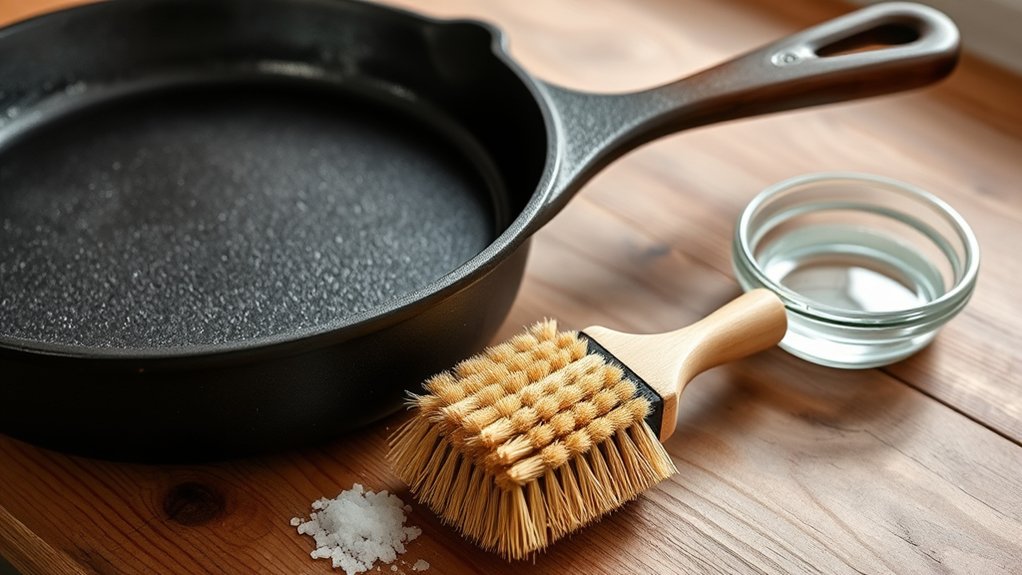
Which tools and cleaners work best when scrubbing your cast iron skillet? Start with cast iron brushes designed specifically for tough residues without damaging the seasoning.
These stiff-bristled brushes provide effective scrubbing power, reaching into crevices without scratching the surface. Avoid steel wool or abrasive pads, as they can strip the skillet’s protective layer.
Stiff-bristled brushes clean deeply without damage; avoid steel wool or abrasive pads to protect your skillet’s seasoning.
For cleaning solutions, opt for mild dish soap or specialized cast iron cleaners that break down grease without harming seasoning. Use sparingly; excessive soap can degrade the protective coating.
Hot water combined with a cast iron brush usually suffices for regular cleaning. In stubborn cases, a paste of coarse salt and water acts as a gentle abrasive, enhancing scrubbing while preserving your skillet’s integrity.
Choosing the right tools and cleaning solutions guarantees your cast iron stays durable and ready for cooking.
How to Restore Seasoning After Scrubbing
After thoroughly scrubbing your cast iron skillet, you might notice the seasoning looks dull or uneven. To restore its non-stick surface, start by drying the skillet completely to prevent rust.
Then apply a thin layer of high-smoke-point oil, such as flaxseed or grapeseed oil, to the entire surface. Use proper seasoning methods by heating the skillet in an oven at 450°F for one hour; this polymerizes the oil, rebuilding the protective layer.
Allow the skillet to cool in the oven before storing. Repeat these restoration techniques as necessary to maintain an even, durable seasoning. Avoid over-oiling, which causes sticky residue.
Tips to Prevent Rust and Keep Your Cast Iron Smooth
Even though cast iron is incredibly durable, it demands consistent care to prevent rust and maintain a smooth cooking surface. After each use, dry your skillet thoroughly. Never let moisture linger, as water is the primary cause of rust.
Apply a thin layer of cooking oil while the pan is still warm to create a protective barrier, aiding in preventing rust. Avoid soaking your skillet or using harsh detergents, which can strip seasoning and roughen the surface.
Store your cast iron in a dry place with good air circulation. Placing a paper towel inside absorbs residual moisture. Occasionally, re-season your skillet by applying oil and heating it to reinforce the non-stick layer.
Frequently Asked Questions
Can I Use Soap on a Cast Iron Skillet?
You can use soap occasionally without harming your cast iron, debunking common soap myths. Just avoid harsh detergents; gentle soap supports cast iron maintenance by removing food residue while preserving seasoning if you dry and oil it promptly afterward.
How Often Should I Deep Clean My Cast Iron Skillet?
Think of your skillet as a loyal sword. Deep cleaning techniques sharpen its edge. You should perform deep cleaning every few months, balancing ideal cleaning frequency with regular maintenance to preserve seasoning. This prevents rust and ensures peak performance.
Is It Okay to Put a Cast Iron Skillet in the Dishwasher?
You shouldn’t put your cast iron skillet in the dishwasher; harsh detergents and water ruin its seasoning.
For proper cast iron maintenance, use gentle cleaning techniques like hand scrubbing with a brush and drying thoroughly.
Can Scrubbing Remove the Non-Stick Seasoning Permanently?
Think scrubbing won’t damage your skillet’s seasoning? Aggressive scrubbing can strip it, but with proper cast iron maintenance, you can restore seasoning through oiling and heating. This ensures your skillet stays non-stick and durable for years.
What Should I Do if My Cast Iron Skillet Cracks?
If your cast iron skillet cracks, stop using it immediately. Cast iron repair is difficult; typically, replacement’s safer.
Focus on skillet maintenance to prevent damage. Avoid thermal shock, dry thoroughly, and season regularly to preserve durability and performance.
Conclusion
Think of your cast iron skillet as a seasoned warrior—scrubbing it carefully sharpens its edge without dulling its spirit. You can confidently scrub away stubborn residue using the right tools and gentle techniques, preserving its protective seasoning.
After cleaning, restore its armor with proper oiling to prevent rust and keep that smooth, non-stick surface intact. With mindful care, your skillet will serve you faithfully, improving with every use and cleaning.
Yes, you can scrub a cast iron skillet, but always with care to maintain its seasoning and longevity.



Leave a Reply