
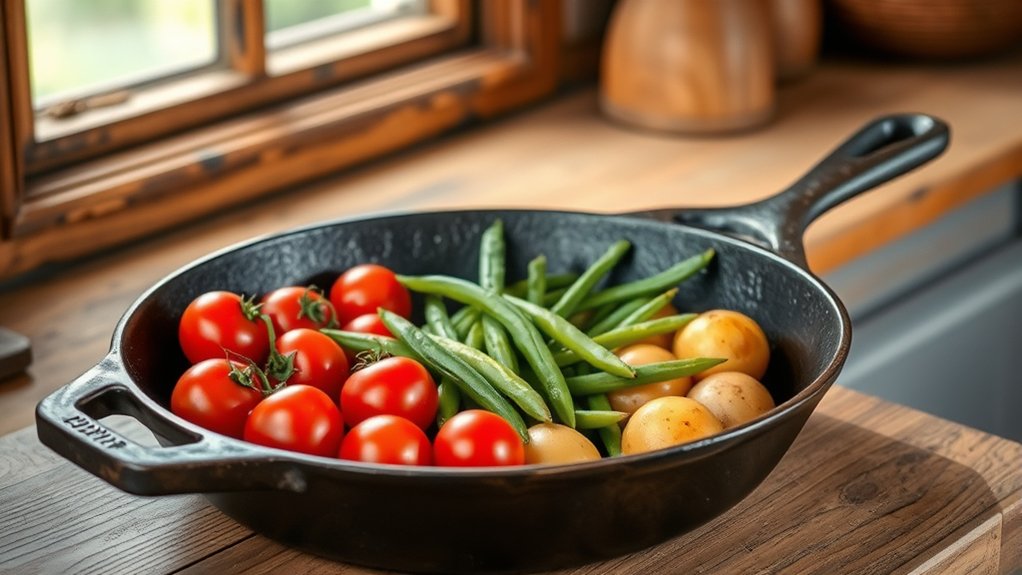
You can store food in a cast iron skillet, but it’s best to avoid prolonged storage to protect the seasoning and prevent rust.
Cool food before placing it in the skillet, and steer clear of acidic or very moist foods that can damage the seasoning or cause metallic flavors.
For longer storage, transfer food to airtight containers, then clean, dry, and oil your skillet promptly. This helps maintain your skillet’s quality and ensures it stays rust-free.
Learn how to keep your cast iron in top shape and safely store your meals for the best cooking experience.
Key Takeaways
- Cast iron skillets can store food short-term but are not ideal for long-term storage due to moisture retention and spoilage risk.
- Avoid storing acidic or wet foods in cast iron to prevent seasoning damage and metallic taste.
- Cool food completely before storing and preferably transfer leftovers to separate airtight containers.
- After use, clean, dry immediately, and apply a thin oil layer to maintain seasoning and prevent rust.
- Store cast iron in a dry, ventilated area and avoid airtight lids to minimize moisture buildup and corrosion.
Can You Store Food in a Cast Iron Skillet?
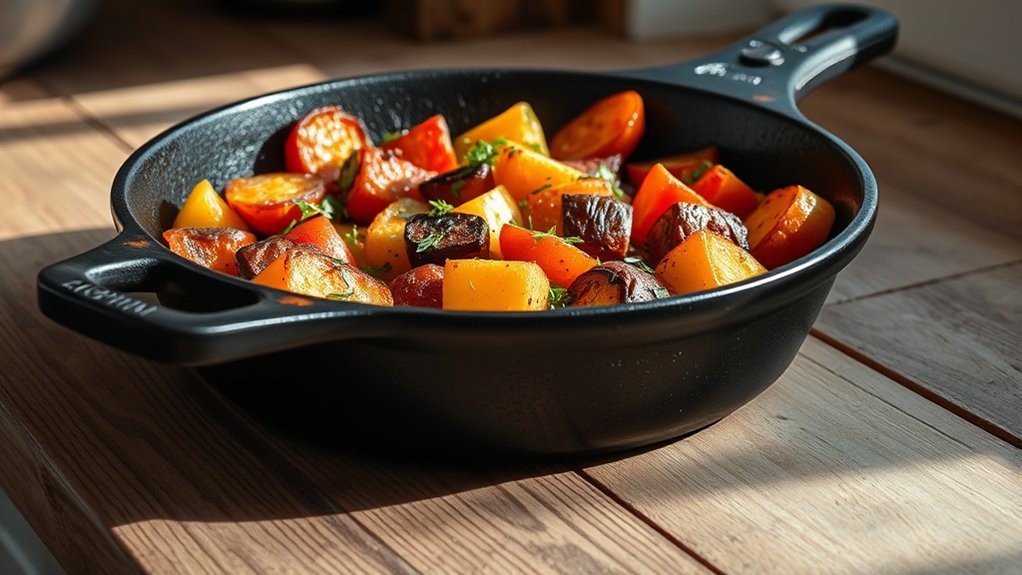
Wondering if you can store food directly in a cast iron skillet? Yes, you can use cast iron for food storage, but there are important considerations. Cast iron retains heat and moisture, which may cause food to spoil faster if left at room temperature.
For short-term food storage, such as keeping leftovers warm before serving, cast iron works well. However, for longer storage, you should cool the food first and refrigerate it in a separate container rather than leaving it in the skillet.
Storing acidic or wet foods in cast iron for prolonged periods can lead to metallic taste and potential damage to the seasoning. So, while cast iron is durable for cooking, it’s best to limit its use for food storage to maintain both food quality and your cookware’s longevity.
Does Storing Food Hurt Your Cast Iron Seasoning?
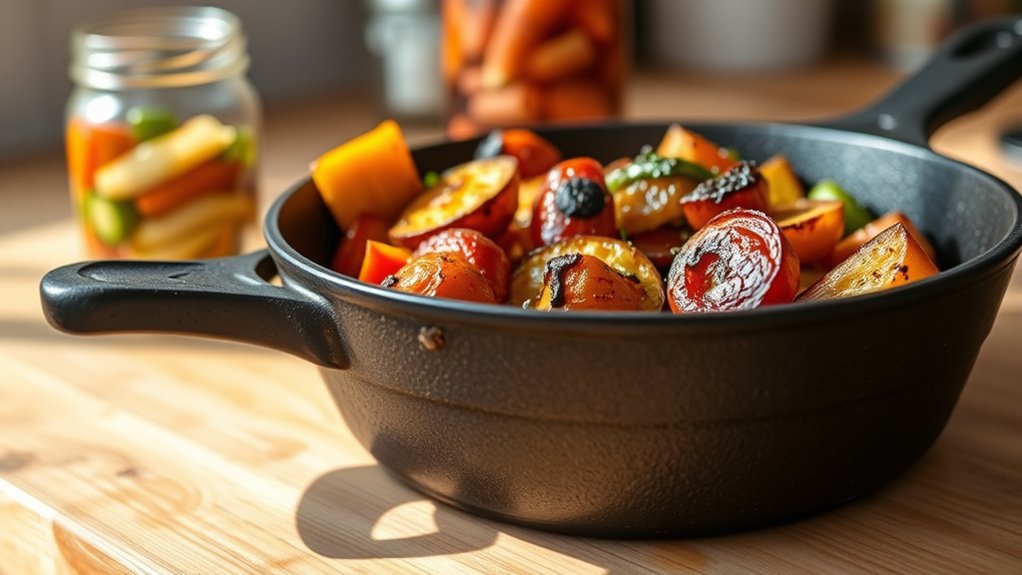
How does storing food impact your cast iron seasoning? Storing food in your cast iron skillet can affect seasoning maintenance, especially if the food is acidic. Acidic ingredients like tomatoes or vinegar break down the seasoning layer over time, causing it to wear away.
This degradation exposes the iron, increasing the risk of rust. Additionally, prolonged moisture contact from stored food promotes seasoning damage and corrosion. To preserve your seasoning, avoid storing highly acidic foods in cast iron, and never leave food in the skillet for extended periods.
After use, clean and dry the skillet thoroughly, then apply a thin layer of oil to maintain the protective seasoning layer. Proper seasoning maintenance guarantees your cast iron skillet remains non-stick and rust-free for years.
What Types of Food Are Safe to Store in Cast Iron?
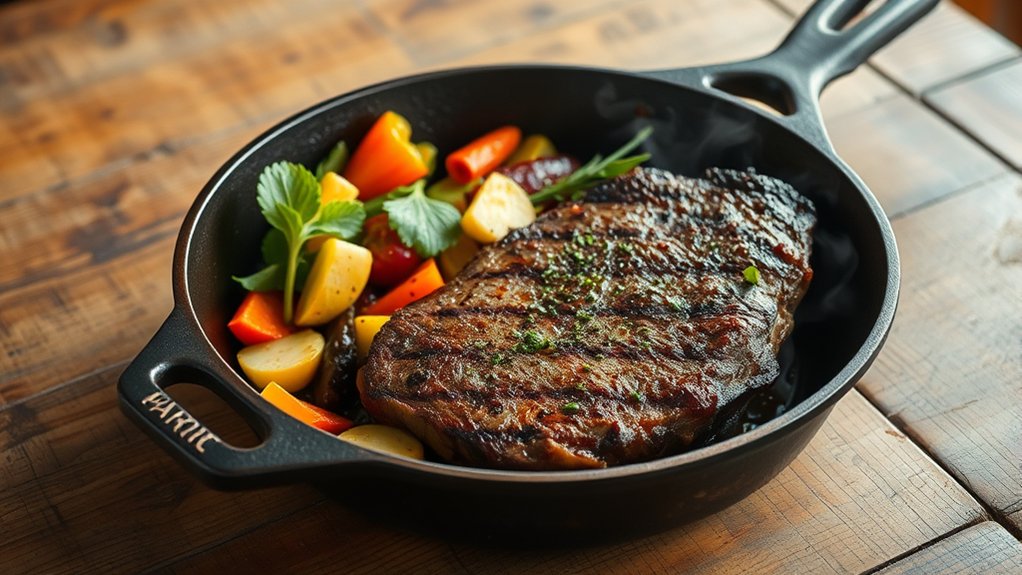
While acidic foods can damage your cast iron seasoning, some types of food are safe to store in your skillet without causing harm. Foods that are low in acidity and moisture, such as cooked meats, roasted vegetables, and dry grains, generally qualify as safe food for cast iron storage.
These items won’t react with the skillet’s surface or degrade the seasoning. Additionally, foods with a higher fat content can even help maintain the seasoning layer when stored briefly.
Avoid storing liquids or highly acidic foods like tomato-based sauces, citrus, or vinegar, as they can strip the seasoning and cause rust. By sticking to safe food options like cooked proteins and dry or mildly moist foods, you preserve both the integrity of your cast iron and the quality of your stored meals.
How to Store Food Safely in Cast Iron Skillets
To store food safely in your cast iron skillet, avoid leaving it inside for extended periods to prevent rust and flavor changes. Make sure your skillet is well-seasoned to maintain its protective layer and resist moisture.
Always cover your food with a breathable material that allows ventilation to keep it fresh and prevent spoilage.
Avoid Prolonged Storage
You should never leave food stored in a cast iron skillet for more than a few hours. Prolonged storage risks food contamination and can damage the skillet’s seasoning, compromising cast iron care.
When storing leftovers, transfer food promptly to appropriate airtight containers instead of leaving it in the skillet. Moisture trapped in cast iron promotes rust and bacterial growth, which deteriorate both food quality and the skillet’s surface.
After transferring leftovers, clean and dry your skillet thoroughly to maintain its seasoning and prevent corrosion. Proper handling during storing leftovers and timely cleaning guarantees your cast iron skillet remains safe, functional, and durable over time.
Avoiding extended food storage in cast iron is essential for both food safety and preserving your cookware’s integrity.
Use Proper Seasoning
Maintaining proper seasoning on your cast iron skillet plays a key role in safely storing food, even for short periods. The seasoning creates a protective, non-stick layer that prevents rust and limits food absorption, reducing contamination risks.
To guarantee effective seasoning maintenance, follow these seasoning techniques:
- Clean your skillet promptly after use without harsh detergents to preserve the seasoning.
- Dry thoroughly to prevent moisture buildup that leads to rust.
- Apply a thin layer of cooking oil after each cleaning to reinforce the seasoning.
- Re-season your skillet periodically by heating a layer of oil to bond it firmly with the iron surface.
Cover With Ventilation
Proper ventilation is essential when storing food in a cast iron skillet to prevent moisture buildup and bacterial growth. You should avoid airtight covers and instead use ventilated lids or breathable materials that allow air circulation.
This approach helps maintain the skillet’s seasoning and keeps your food fresh longer. Here’s a quick guide to cover options:
| Cover Type | Ventilation Level | Suitability for Cast Iron Storage |
|---|---|---|
| Ventilated Lids | High | Ideal for moisture control |
| Cheesecloth | Moderate | Good for short-term storage |
| Paper Towels | Low | Use with caution |
| Plastic Wrap | None | Not recommended |
| Aluminum Foil | None | Avoid due to moisture trapping |
Choose ventilated lids or breathable materials to store food safely in your cast iron skillet.
How to Prevent Rust When Storing Food in Cast Iron
Although cast iron skillets are prized for their durability, they can develop rust quickly if food is stored improperly. To guarantee effective rust prevention, you must prioritize moisture control and proper seasoning. Follow these steps:
Cast iron skillets resist rust when moisture is controlled and seasoning is maintained properly.
- Thoroughly clean and dry the skillet immediately after use to eliminate residual moisture.
- Apply a thin layer of vegetable oil or seasoning to create a moisture barrier.
- Store the skillet in a dry, well-ventilated area to prevent humidity buildup.
- Avoid stacking or covering the skillet with airtight lids, which trap moisture and accelerate rust formation.
Should You Refrigerate Food in a Cast Iron Skillet?
Why should you think twice before refrigerating food directly in a cast iron skillet? The main concern lies in food safety and preserving the skillet’s seasoning. Cast iron is reactive, and moisture from refrigerated food can promote rust, especially if the skillet isn’t well-seasoned or dried thoroughly afterward.
Additionally, refrigerating food in cast iron can cause temperature fluctuations that may degrade the seasoning layer, compromising its non-stick qualities. For ideal food safety, it’s better to transfer leftovers to airtight containers before refrigeration.
This prevents prolonged moisture contact with the cast iron, reducing rust risk and maintaining seasoning integrity. By avoiding refrigerating food directly in cast iron, you protect both your food and your skillet, ensuring safe storage and long-lasting performance.
Best Practices for Cleaning and Storing Cast Iron After Use
When you finish cooking, immediately cleaning and drying your cast iron skillet prevents rust and preserves its seasoning. Employ proper cleaning techniques to maintain its performance and longevity.
- Rinse with hot water and use a stiff brush or non-abrasive scrubber to remove residue; avoid soap to protect seasoning.
- Thoroughly dry the skillet with a towel or heat it on the stove to eliminate moisture.
- Apply a thin layer of cooking oil to the surface to reinforce the seasoning and prevent rust.
- Store your skillet in a dry, well-ventilated area; avoid stacking with other cookware unless separated by paper towels or cloth to prevent moisture buildup.
Following these cleaning techniques and storage solutions guarantees your cast iron skillet remains rust-free and ready for your next meal.
Frequently Asked Questions
Can Cast Iron Skillets Be Used for Baking in the Oven?
Yes, you can use cast iron skillets for baking in the oven. Just guarantee you follow proper baking techniques and check oven safety guidelines since cast iron retains heat well and withstands high temperatures without damage.
How Do I Re-Season a Cast Iron Skillet?
Want to restore your skillet’s non-stick surface? Use re-seasoning techniques: clean thoroughly, apply a thin layer of seasoning oils like flaxseed or vegetable oil, then bake upside down at 450°F for an hour. Repeat as needed.
Are Cast Iron Skillets Safe for Induction Cooktops?
Yes, your cast iron skillet is induction compatible due to its magnetic properties. It excels at heat retention, ensuring even cooking on induction cooktops.
Just make sure the bottom is flat for ideal contact.
Can I Use Soap to Clean My Cast Iron Skillet?
Think of soap as a gentle rain washing away seasoning in your cast iron skillet. You shouldn’t use soap frequently; instead, rely on scrubbing with hot water and a brush for effective cleaning methods that preserve seasoning.
How Long Does a Cast Iron Skillet Typically Last?
You can expect your cast iron skillet to last decades with proper cast iron maintenance. Its cast iron durability withstands regular use, but seasoning, cleaning, and drying properly are essential to preserve its lifespan and performance.
Conclusion
You can certainly let your cast iron skillet double as a temporary food companion, but keep its well-being in mind. Storing certain foods briefly won’t harm its seasoned charm, yet long stays, especially with acidic dishes, might ruffle its protective coat.
Always embrace proper cleaning and drying rituals to keep rust at bay. With thoughtful care, your trusty skillet will continue to serve you deliciously, season after season, without losing its graceful resilience.
In conclusion, while you can store food in a cast iron skillet for a short time, it’s best to avoid prolonged storage to maintain its seasoning and durability.



Leave a Reply