
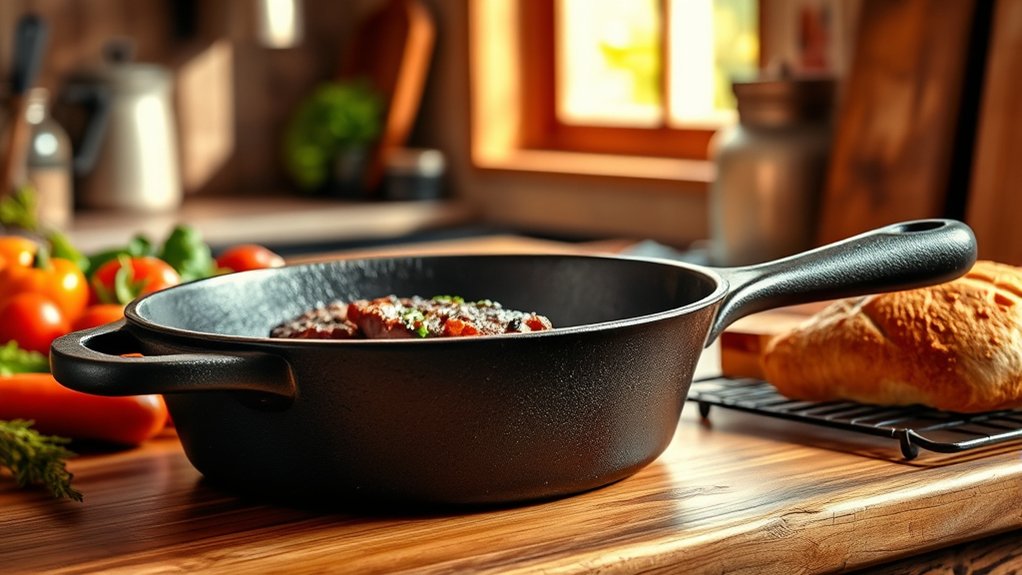
You can use a cast iron skillet for most cooking tasks because it holds and distributes heat evenly, making it perfect for searing, frying, and baking.
Cast iron skillets are versatile and durable, making them a staple in many kitchens.
However, avoid cooking acidic foods like tomatoes, delicate sauces, or dishes needing quick temperature changes, as cast iron can react with acids or be cumbersome to handle in such cases.
It works well on various heat sources, but proper care is essential to maintain its seasoning.
Understanding these nuances can enhance your cooking experience.
Key Takeaways
- Cast iron skillets excel for searing, frying, baking, and sautéing but are not ideal for delicate or highly acidic dishes.
- Their superior heat retention and even distribution make them perfect for consistent cooking but limit quick temperature changes.
- Avoid cooking acidic foods like tomatoes in cast iron to prevent flavor alteration and damage to the seasoning.
- Cast iron is compatible with most heat sources, including induction and gas, but can be heavy and slow to heat.
- Proper care with oiling and gentle cleaning is necessary to maintain seasoning and prevent rust for long-term use.
Can You Use a Cast Iron Skillet for Everything?
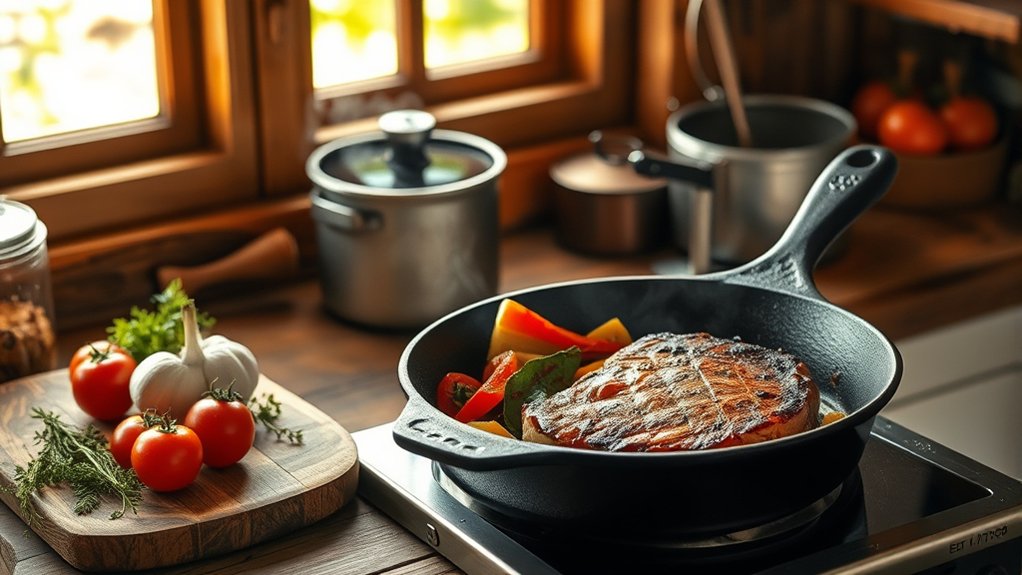
Can you really use a cast iron skillet for everything in your kitchen? While cast iron offers incredible cooking benefits like excellent heat retention, even cooking, and versatility, it isn’t ideal for every task.
You can sear meats, bake cornbread, sauté vegetables, and even fry eggs with it. However, delicate dishes like crepes or acidic foods such as tomato sauces may not fare well, as cast iron can react with acidity and affect flavor.
Also, cast iron requires proper seasoning and maintenance to prevent rust and maintain its non-stick surface. So, while you can use a cast iron skillet for most cooking needs, it’s wise to complement it with other cookware for specific dishes to maximize efficiency and flavor.
What Makes Cast Iron Skillets Unique for Cooking?
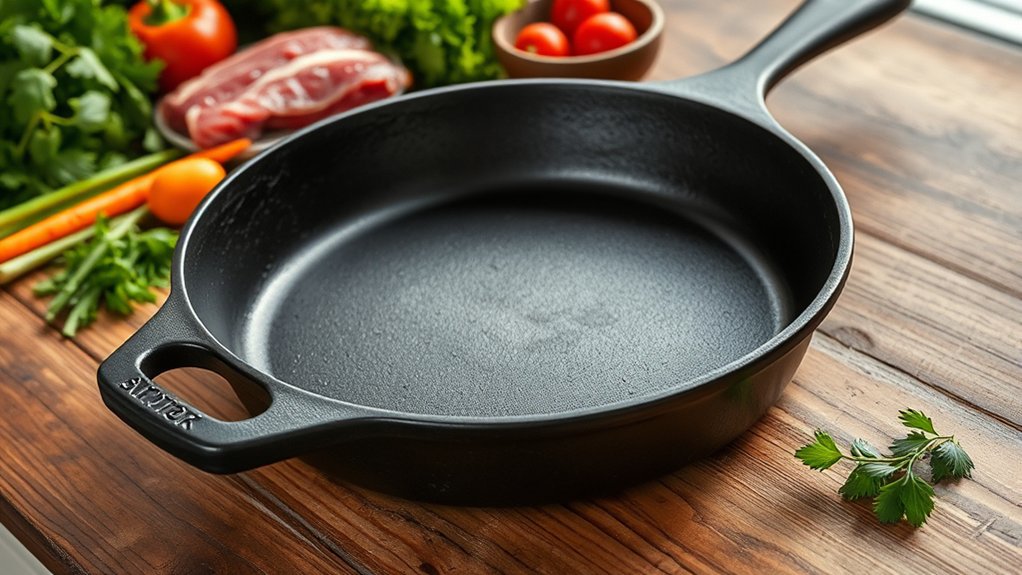
Although many cookware options exist, cast iron skillets stand out due to their unparalleled heat retention and even distribution. These qualities allow you to achieve consistent cooking results.
Their unique seasoning techniques create a durable, non-stick surface that improves with use. This enhances flavor and reduces the need for excessive oil.
These cooking benefits make cast iron skillets versatile and efficient tools in your kitchen.
| Feature | Benefit |
|---|---|
| Heat Retention | Maintains steady cooking temperature |
| Seasoning Techniques | Develops natural, non-stick coating |
| Durability | Lasts decades with proper care |
Best Dishes to Cook in a Cast Iron Skillet
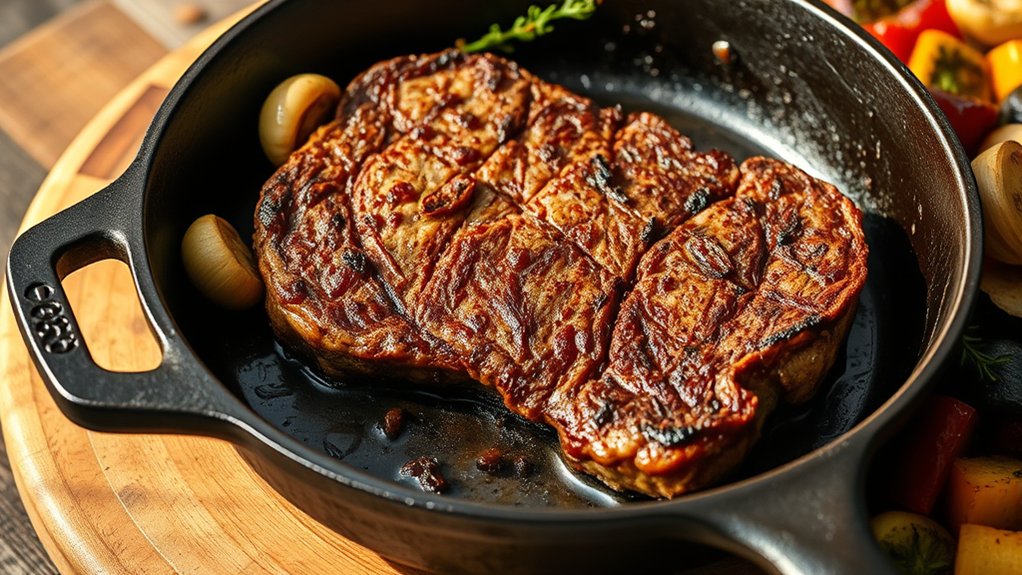
Five standout dishes showcase the true versatility of a cast iron skillet. Start with breakfast frittatas; the skillet’s even heat distribution guarantees your eggs cook uniformly, while its oven-safe nature lets you finish the dish perfectly under the broiler.
Next, try savory cornbread. Its ability to create a crispy crust while keeping the inside moist makes it unbeatable. You can also sear steaks to develop a rich, caramelized crust that’s hard to achieve with other pans.
Additionally, skillet-roasted vegetables benefit from the retained heat for consistent caramelization. Finally, use it for skillet pizzas, where the cast iron produces a crispy base and evenly cooked toppings. These dishes leverage the skillet’s thermal properties, making it a go-to tool in your kitchen.
When Should You Avoid Using a Cast Iron Skillet?
Since cast iron skillets retain heat so well and require special care, you should avoid using them for cooking delicate dishes like eggs or fish that need quick temperature changes or non-stick surfaces. Knowing when to avoid cast iron is essential to preserving your cookware and ensuring ideal results.
Cast iron limitations include its reactive nature with acidic ingredients like tomatoes or vinegar, which can damage the seasoning and impart a metallic taste. Additionally, its heavy weight and slow heat adjustment make it unsuitable for recipes demanding rapid temperature shifts.
Avoid using cast iron for simmering delicate sauces or boiling water for extended periods, as this can degrade the seasoning. Recognizing when to avoid cast iron helps you maintain your skillet’s performance and longevity.
Can Cast Iron Skillets Be Used on All Heat Sources?
Understanding when not to use your cast iron skillet sets the stage for knowing where it can perform best. Cast iron skillets boast impressive versatility, but you must consider heat source limitations to maximize their use.
Here’s what you need to know:
- Induction compatibility is a strong advantage; cast iron works flawlessly on induction cooktops due to its magnetic properties.
- It excels on gas stoves, distributing heat evenly without issue.
- Electric coil burners are suitable, though heating can be slower.
- Avoid using cast iron on glass or ceramic cooktops without caution, as the skillet’s rough bottom may scratch the surface.
How to Care for and Maintain Your Cast Iron Skillet
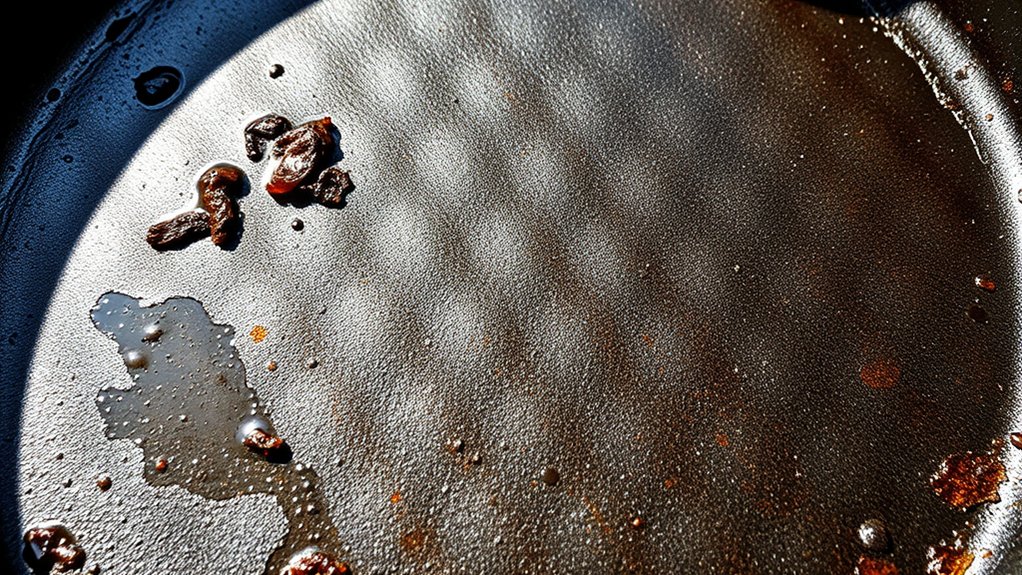
Although cast iron skillets are known for their durability, proper care and maintenance are essential to preserve their seasoning and prevent rust. Start by mastering the seasoning process: regularly apply a thin layer of oil and heat the skillet to build a natural, non-stick surface.
Avoid harsh soaps and soaking; instead, use gentle cleaning techniques such as scrubbing with coarse salt and a soft brush or cloth immediately after use. Dry the skillet thoroughly to prevent moisture buildup, then apply a light coat of oil before storing.
How Does Cast Iron Compare to Other Cookware Types?
When you compare cast iron to other cookware, its superior heat retention and even distribution stand out immediately. You’ll also notice it’s incredibly durable, though it requires specific maintenance to keep it performing well.
Plus, cast iron offers unmatched cooking versatility, from searing to baking, that many other materials can’t match.
Heat Retention And Distribution
Cast iron excels at retaining and evenly distributing heat, making it a top choice for cooking tasks that require consistent temperatures. When you use cast iron, you benefit from:
- Superior heat retention, which keeps your food cooking evenly without sudden temperature drops.
- Uniform heat distribution across the skillet’s surface, preventing hot spots that can burn food.
- The ability to maintain high heat for searing meats, enhancing flavor through better browning.
- Versatility to transfer from stovetop to oven while maintaining consistent heat.
Compared to other cookware like aluminum or stainless steel, cast iron’s density allows it to hold heat longer and distribute it more evenly. This makes your cooking more predictable and efficient, especially for slow-cooked or seared dishes where steady heat is essential.
Durability And Maintenance
One of the key reasons you might choose cast iron over other cookware is its exceptional durability combined with straightforward maintenance. Cast iron withstands high heat and resists warping, outlasting many alternatives.
Proper seasoning techniques build a resilient non-stick surface and are essential for rust prevention. Unlike stainless steel or non-stick pans, cast iron requires regular oiling after cleaning to maintain its protective coating.
| Cookware Type | Maintenance Needs |
|---|---|
| Cast Iron | Regular seasoning, oiling |
| Stainless Steel | Occasional polishing |
| Non-Stick | Gentle cleaning, avoid scratches |
| Aluminum | Prone to discoloration |
| Ceramic | Fragile, careful handling |
This durability and ease of upkeep make cast iron uniquely reliable for long-term use.
Cooking Versatility Comparison
Although many cookware materials serve specific purposes well, you’ll find that cast iron stands out for its exceptional versatility. It adapts seamlessly to diverse cooking methods and accommodates various food types, making it a kitchen essential. Here’s how cast iron compares:
- Retains and distributes heat evenly, unlike thin stainless steel pans.
- Handles high heat for searing, roasting, frying, and baking, surpassing nonstick coatings.
- Naturally nonstick when seasoned, suitable for delicate food types like eggs and fish.
- Moves effortlessly from stovetop to oven, unlike many aluminum or glass options.
While other cookware excels in niche tasks, cast iron’s durability and adaptability let you master multiple cooking methods without switching pans. This versatility saves time, space, and enhances flavor development across your recipes.
Frequently Asked Questions
Can Cast Iron Skillets Be Used for Baking Desserts?
Yes, you can use cast iron skillets for baking desserts. Just follow baking tips like preheating the skillet and greasing it well.
It’s perfect for dessert recipes like cobblers, brownies, and skillet cakes, ensuring even cooking.
Are Cast Iron Skillets Safe for People With Metal Allergies?
If you’re sensitive, like Sarah who experienced metal allergy reactions, be cautious with cast iron. Proper cast iron maintenance creates a seasoned barrier, reducing risk, but consult a doctor to guarantee it’s safe for your specific metal allergy.
How Heavy Is a Typical Cast Iron Skillet?
A typical cast iron skillet weighs between 5 to 12 pounds, depending on size. You’ll appreciate skillet weight as it reflects cast iron durability, providing excellent heat retention and long-lasting performance in your kitchen.
Can Cast Iron Skillets Be Used in Microwaves?
You can’t use cast iron in microwaves because it’s metal, which causes sparks and fires.
For microwave safety, always choose microwave-safe containers instead of cast iron cookware to avoid damage and hazards.
Do Cast Iron Skillets Affect the Taste of Food?
You won’t find cast iron skillets negatively affect taste; instead, their seasoning builds over time, enhancing flavor. Properly maintained, they contribute a subtle, rich flavor enhancement, making your food taste even better with each use.
Conclusion
You can rely on your cast iron skillet for a wide range of cooking tasks, but it’s not a one-size-fits-all solution. While it shines with searing, frying, and baking, you’ll want to steer clear when cooking acidic dishes or delicate foods.
Remember, every tool has its place in the kitchen—don’t put all your eggs in one basket. With proper care, your cast iron will be a trusted companion for years to come.
When considering can I use a cast iron skillet for everything, keep in mind its strengths and limitations to make the most out of this versatile cookware.



Leave a Reply