
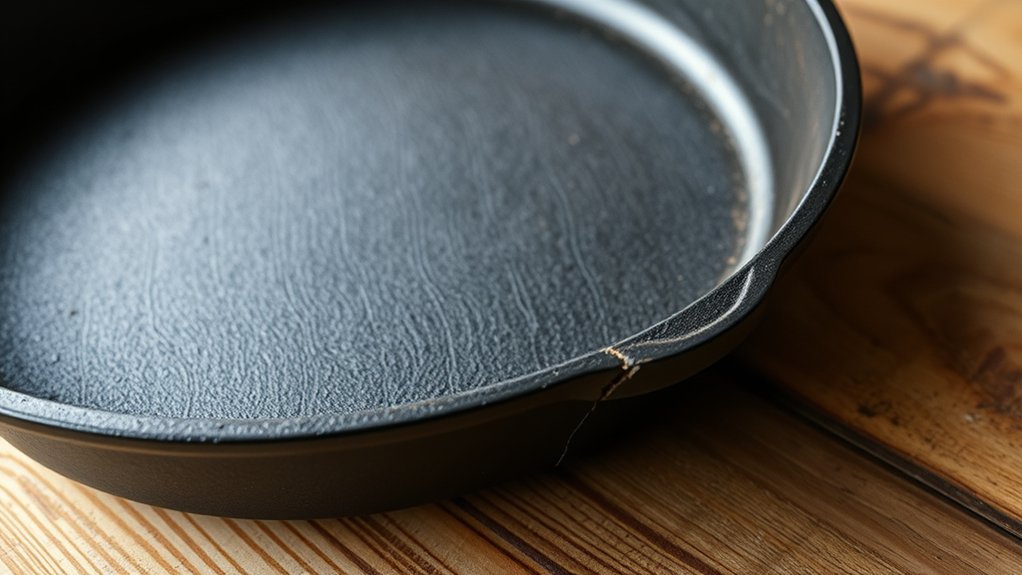
You shouldn’t use a cracked cast iron skillet because it compromises safety and cooking performance.
Cracks weaken the skillet’s structure, increasing the risk of breakage and uneven heating, which affects how your food cooks.
Cracks also harbor bacteria and make cleaning difficult, posing health risks.
While minor cracks might be temporarily repaired, often replacement is safer and more reliable.
If you want to understand the risks, repair options, and alternative cookware, there’s more you should know.
Key Takeaways
- Using a cracked cast iron skillet risks breakage and uneven heating, compromising cooking safety and performance.
- Cracks can harbor bacteria and food residue, posing potential health hazards.
- Small, superficial cracks might be temporarily repaired with epoxy but are not reliable long-term.
- Deep or structural cracks near handles or cooking surfaces typically require professional repair or replacement.
- For safety and consistent cooking, replacing a cracked cast iron skillet is often the best choice.
Can You Use a Cracked Cast Iron Skillet?
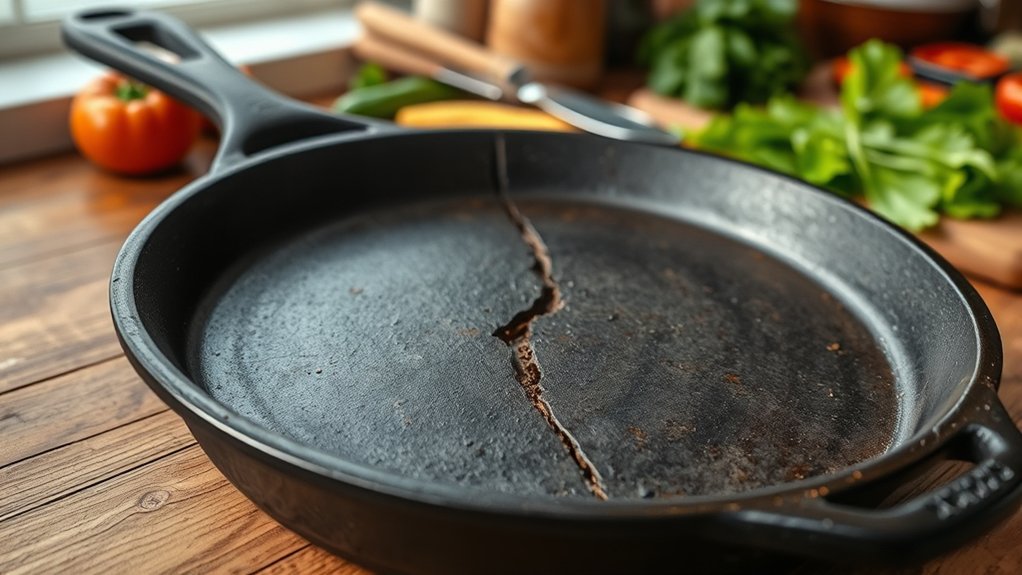
Can you safely use a cracked cast iron skillet? Generally, it’s not advisable. Cracks compromise the skillet’s structural integrity, which can worsen with heat exposure and impact your cooking techniques. You risk uneven heating and possible breakage during use.
While minor surface imperfections might not affect performance, a visible crack signals that the skillet can’t hold up under regular cooking stresses. Proper skillet maintenance includes regular seasoning and avoiding thermal shock, but these won’t repair or prevent cracks.
Using a cracked skillet isn’t just about performance; it’s a safety concern. To preserve cooking quality and guarantee safety, consider replacing the skillet or using it for decorative purposes only. Prioritize intact cookware to maintain effective cooking techniques and proper skillet maintenance.
How Does a Crack Affect Your Cast Iron Skillet?
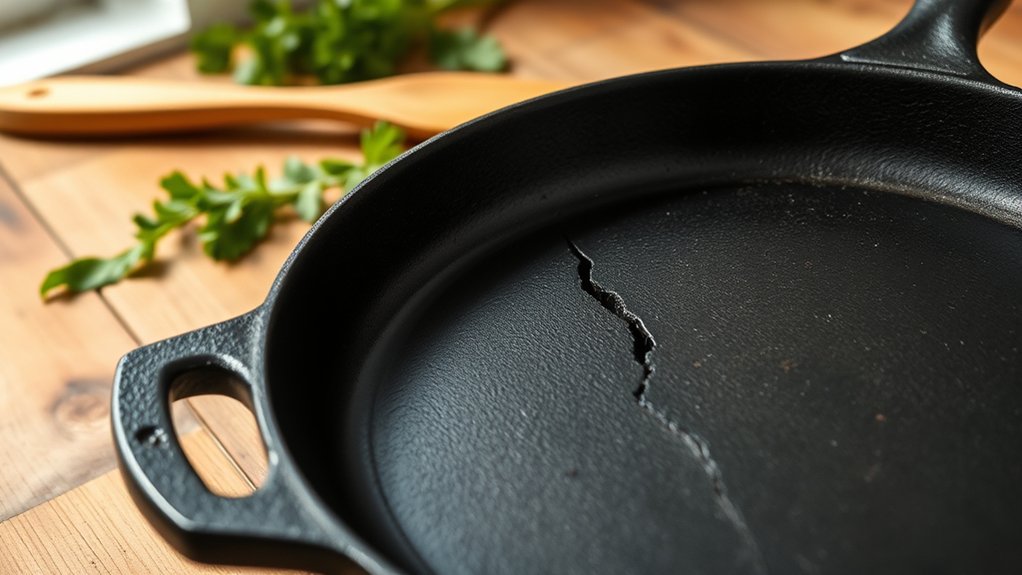
Although a crack may seem minor at first, it considerably undermines your cast iron skillet’s strength and heat distribution. Different crack types—hairline, surface, or deep fractures—impact your skillet in various ways, directly influencing cooking performance.
Even small cracks can significantly weaken your cast iron skillet’s durability and heat distribution.
You’ll notice uneven heating, which can lead to inconsistent cooking results. Additionally, cracks can worsen over time, compromising the pan’s structural integrity. Specifically, a crack affects your skillet by:
- Disrupting even heat conduction across the cooking surface
- Creating weak points prone to further damage or breakage
- Allowing moisture or residue to seep into crevices, affecting seasoning
- Reducing overall lifespan and reliability during high-heat cooking
Understanding these impacts helps you assess whether your cracked skillet can still perform adequately or requires replacement.
Is It Safe to Cook With a Cracked Skillet?
You shouldn’t cook with a cracked cast iron skillet because the crack compromises its structural integrity, increasing the risk of breakage during use. This can lead to dangerous accidents and uneven heating, which affects your food’s quality.
Additionally, cracks can harbor bacteria and make thorough cleaning difficult, posing potential health risks.
Structural Integrity Concerns
When a cast iron skillet develops a crack, it compromises the pan’s structural integrity and poses safety risks during cooking. You should recognize that a cracked skillet may:
- Weaken the pan’s ability to withstand heat, leading to potential breakage under high temperatures
- Cause uneven heating, negatively affecting cooking performance and food quality
- Increase the likelihood of the crack widening with repeated use, making the skillet unstable
- Create sharp edges or fragments that could cause injury
Using a cracked cast iron skillet puts you at risk of sudden failure, which can cause spills or burns. To maintain ideal cooking performance and safety, it’s best to avoid using a cracked skillet and consider repairing or replacing it.
Prioritizing the pan’s structural integrity guarantees reliable and safe cooking every time.
Health Risks Considerations
Since cracks in cast iron can harbor bacteria and food particles, cooking with a damaged skillet raises legitimate health concerns. You risk exposing yourself to health risks because these cracks are difficult to clean thoroughly, allowing bacteria to multiply.
The potential hazards include foodborne illnesses caused by trapped residues that contaminate your meals. Additionally, the crack can worsen over time, creating sharp edges or fragments that might flake into your food.
This contamination risk compromises food safety and your well-being. To avoid these potential hazards, it’s best to replace the skillet or have it professionally repaired if possible.
Prioritizing a crack-free cast iron guarantees safe cooking and minimizes health risks, maintaining both the quality of your meals and your peace of mind.
Can You Repair a Cracked Cast Iron Skillet?
You need to first assess how severe the crack is before considering any repairs. Minor surface cracks might be manageable, but deep or structural cracks often compromise the skillet’s integrity.
Understanding the repair methods available will help you decide if fixing the skillet is practical or if replacement is a better option.
Assessing Damage Severity
How severe is the crack in your cast iron skillet? Proper crack identification is essential for a thorough damage evaluation. You need to examine the crack’s length, depth, and location carefully.
Consider these factors:
- Is the crack superficial or penetrating through the skillet’s thickness?
- Does it run along the cooking surface or the sides?
- Are there multiple cracks or a single fracture line?
- Is the crack near a handle or stress point?
These details determine whether the skillet remains functional or poses safety risks. A deep or extensive crack often compromises structural integrity, making repair challenging or unsafe.
Conversely, minor, surface-level cracks may be manageable. Accurate damage evaluation helps you decide if repairing the skillet is feasible or if replacement is necessary.
Repair Methods Overview
Although repairing a cracked cast iron skillet can be challenging, several methods exist depending on the crack’s severity and location. You can attempt welding for deep cracks or epoxy for minor surface issues.
Some repair methods require professional tools, while others are DIY-friendly. Here’s a clear overview to help you decide:
| Repair Method | Suitable Crack Type | Notes |
|---|---|---|
| Welding | Deep, structural cracks | Requires professional equipment |
| Epoxy Adhesive | Small, non-structural | Temporary fix, not heat-resistant fully |
| Brazing | Medium cracks | Strong bond, heat application needed |
| Cold Stitching | Moderate cracks | Metal pins inserted, labor-intensive |
| Replacement | Extensive damage | Often more cost-effective than repair |
Choose the repair method that matches your skillet’s damage for safe, durable results.
When Should You Replace Your Cast Iron Skillet?
Several signs indicate when it’s time to replace your cast iron skillet, especially if it’s cracked. Knowing the replace criteria helps you avoid safety risks and guarantees peak cooking performance.
Although cast iron skillets boast a long lifespan, cracks compromise their structural integrity and heat distribution. Consider replacing your skillet if you notice:
- Cracks extending through the cooking surface or handle
- Significant rust that cannot be removed
- Warping that prevents even contact with your stovetop
- Persistent flaking or chipping of the seasoning layer
If your skillet meets any of these conditions, continuing to use it may be unsafe and inefficient. Prioritize your cookware’s reliability to maintain both cooking quality and kitchen safety.
Recognizing these signs promptly aligns with best practices regarding skillet lifespan management.
Alternatives to a Cracked Cast Iron Skillet
What options do you have when your trusted cast iron skillet develops cracks? Exploring alternative cookware can guarantee you maintain cooking efficiency and safety. Nonstick pans offer easy cleanup and even heating, ideal for delicate foods.
Stainless steel skillets provide durability and excellent heat retention without the risk of cracking. Additionally, enameled cast iron combines traditional heat distribution with a protective coating, preventing further damage.
| Alternative Cookware | Benefits |
|---|---|
| Nonstick Pans | Easy cleanup, lightweight |
| Stainless Steel | Durable, no cracking risk |
| Enameled Cast Iron | Heat retention, chip-resistant |
Opting for these alternative cookware options can enhance your kitchen’s versatility while avoiding hazards linked to cracked cast iron.
Frequently Asked Questions
How Do I Properly Season a New Cast Iron Skillet?
You season your new cast iron skillet by applying a thin layer of oil, like flaxseed or vegetable oil, then baking it upside down at 450°F for an hour.
Repeat seasoning techniques to build a durable, nonstick surface.
Can Cast Iron Skillets Be Used on Induction Cooktops?
Yes, your cast iron skillet offers excellent induction compatibility due to its magnetic properties.
If you want cookware alternatives, consider stainless steel or enameled cast iron, which also work well on induction cooktops without compromising performance.
What Is the Best Way to Clean a Cast Iron Skillet?
Imagine scraping off stuck-on eggs with a spatula; you’ll want gentle cleaning techniques like warm water and a soft brush. Avoid soap, dry thoroughly, then oil it. These maintenance tips keep your skillet seasoned and rust-free.
How Do I Prevent Rust on My Cast Iron Skillet?
You prevent rust on your cast iron skillet by applying protective coatings like seasoning with oil after each use. Keep it dry, avoid soaking, and store it in a dry place for effective rust prevention.
Can I Use Soap to Wash My Cast Iron Skillet?
Like challenging old legends, you can use soap on cast iron despite cleaning myths. Just avoid harsh detergents; mild soap and water won’t ruin seasoning if you dry and re-oil promptly.
Soap usage is safe, controlled.
Conclusion
You shouldn’t use a cracked cast iron skillet—it’s like trying to sail a ship with a hole in the hull; it’s unsafe and unreliable. Cracks compromise heat distribution and can worsen over time, risking injury or damage.
While some repairs exist, they’re often temporary fixes at best. Instead, replace your skillet to keep cooking safe and efficient.
Trust your instincts and invest in quality—your kitchen deserves nothing less than the best. When it comes to using a cracked cast iron skillet, it’s always safer to choose a new one.

Leave a Reply