
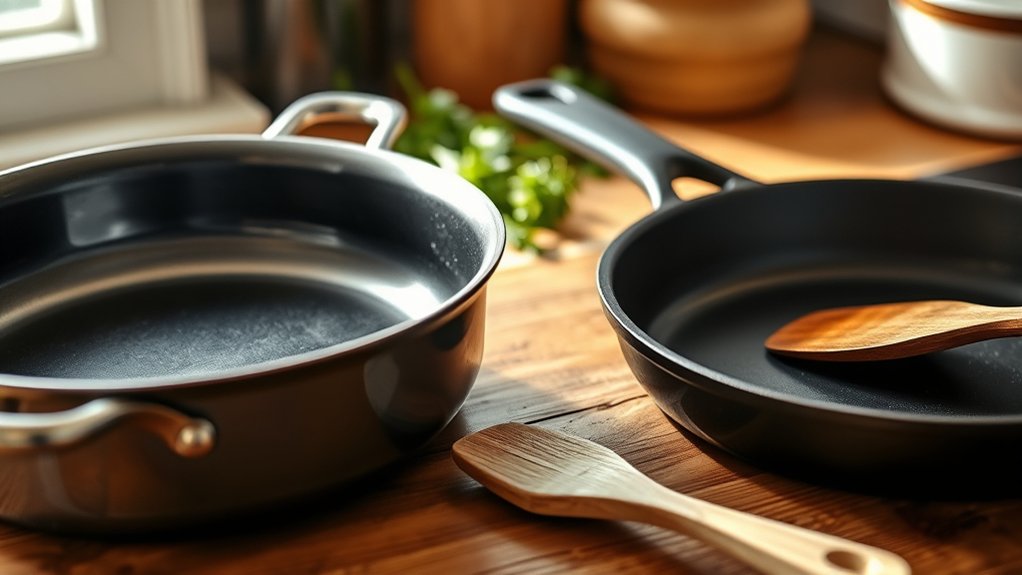
Can I use a pan instead of a skillet? Yes, you can use a pan for most cooking tasks, but it’s important to consider the shape and material to achieve the best results.
Skillets typically have low, sloped sides that facilitate quick stirring and even browning. Pans, on the other hand, often feature straighter sides which are better suited for simmering and retaining moisture.
The material of the cookware, such as cast iron or copper, also plays a significant role in heat control and cooking performance.
By understanding these differences, you can select the right tool and technique to optimize your cooking. Explore how the shape and material influence your dishes to make the most of your cookware.
Key Takeaways
- Pans can generally replace skillets for sautéing, frying, and searing, but may affect cooking precision due to shape differences.
- Skillets have low, flared sides ideal for stirring and flipping, while pans often have straighter sides better for simmering.
- Heat distribution and retention depend more on material than on whether it’s a pan or skillet.
- Using a pan instead of a skillet may limit liquid containment and even browning due to side shape.
- Choose cookware based on the recipe and cooking technique rather than just the pan versus skillet label.
What’s the Difference Between a Pan and a Skillet?
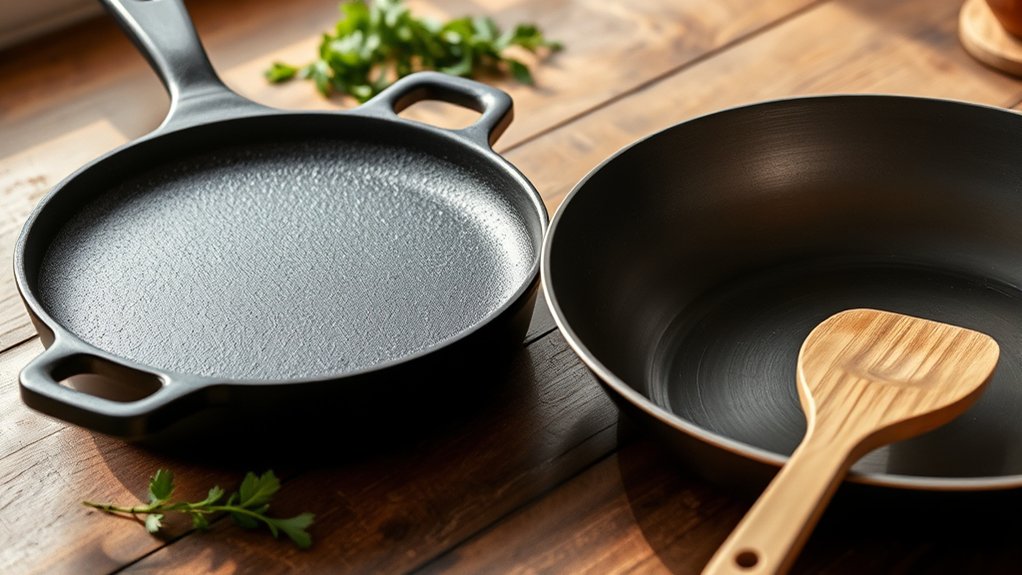
Although the terms “pan” and “skillet” are often used interchangeably, they refer to distinct types of cookware with specific features. Pan types vary widely, including saucepans, frying pans, and sauté pans, each designed for particular cooking tasks.
Skillets, a specific pan type, usually have low, flared sides and a flat bottom, optimizing heat distribution and retention. Skillet uses primarily focus on frying, searing, and browning foods due to their ability to maintain high temperatures evenly.
When you select cookware, understanding these differences helps you choose the right tool for your cooking method. Recognizing that all skillets are pans but not all pans are skillets clarifies their roles in the kitchen, ensuring you use the appropriate pan type for your desired cooking technique.
Can You Use a Pan Instead of a Skillet?
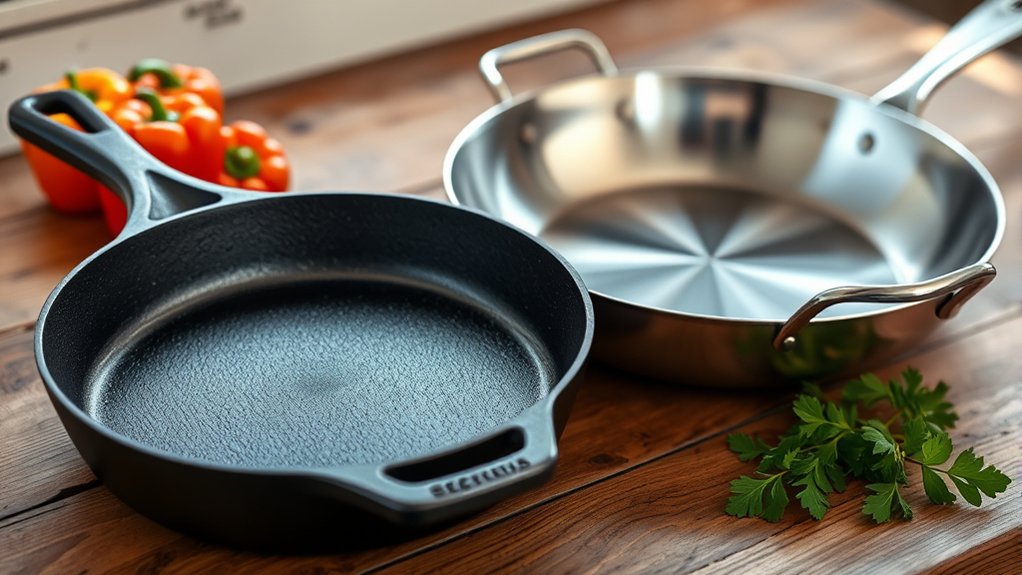
How effectively you can use a pan instead of a skillet depends on the cooking technique and the pan’s design. Pans offer significant versatility, making them practical skillet alternatives for many tasks like sautéing, frying, and searing.
However, pans with sloped sides may not contain liquids or facilitate even browning as well as a traditional skillet’s flat base and straight sides. When you choose a pan for skillet-replacing duties, verify it distributes heat evenly and accommodates the cooking method.
While pans can handle most skillet-required techniques, they might fall short in scenarios demanding precise control over surface contact. Understanding these nuances lets you optimize pan versatility without compromising cooking quality, making it a reliable, flexible option in your kitchen arsenal.
How Pan and Skillet Material and Shape Affect Cooking
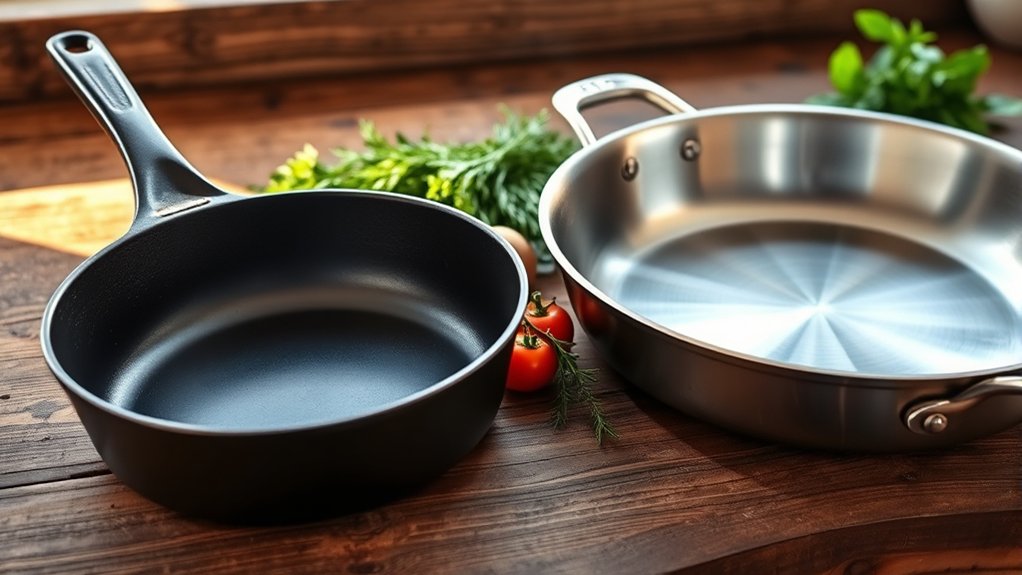
Since the material and shape of your pan or skillet directly influence heat distribution and cooking performance, selecting the right combination is essential for achieving desired results. Material conductivity determines how quickly and evenly your cookware heats.
For example, copper offers superior conductivity, ensuring uniform temperature, while cast iron retains heat longer but heats more slowly. The shape impacts how you can maneuver and cook food; skillets typically feature sloped sides for easy stirring and flipping, whereas pans often have straighter sides, offering shape versatility for tasks like simmering or sautéing.
Understanding these distinctions helps you optimize cooking techniques, ensuring even heat and appropriate food handling. By considering material conductivity alongside shape versatility, you can confidently choose cookware that aligns with your specific cooking needs and preferences.
Choosing the Right Pan or Skillet for Your Recipe
Selecting the right pan or skillet depends on the recipe you’re preparing and the cooking techniques it requires. Different cookware types serve specific functions; for example, a skillet’s sloped sides facilitate quick stirring and flipping, ideal for sautéing, while a pan with straight sides suits simmering and frying.
Consider recipe suitability carefully: recipes needing even heat distribution, like searing meat, benefit from heavy-bottomed skillets, while delicate sauces might require lighter pans for better temperature control.
Material also matters. Cast iron retains heat well, perfect for high-heat cooking, whereas nonstick pans work best for low-fat recipes. By matching your cookware type to the recipe’s demands, you guarantee peak cooking results every time without compromising texture or flavor.
Frequently Asked Questions
How Do I Properly Season a Cast Iron Skillet?
You season your cast iron skillet by coating it thinly with oil, then baking it upside down at 450°F for an hour. This builds a non-stick layer, revealing cast iron benefits through proven seasoning techniques.
Can I Use a Nonstick Pan at High Temperatures?
Sure, crank your nonstick pan to the max until its coating gasps for mercy. You’ll quickly learn nonstick limitations: high temperature effects degrade coatings, releasing toxins and ruining your pan. Keep heat moderate for safety and longevity.
What Cleaning Methods Extend the Life of Cookware?
You should use gentle cleaning techniques like hand washing with mild detergent and avoid abrasive scrubbers. Proper cookware maintenance includes drying thoroughly and seasoning cast iron regularly to extend your cookware’s life effectively.
Are Pans or Skillets Dishwasher Safe?
About 60% of cookware manufacturers advise against dishwasher use due to harsh dishwasher materials damaging coatings. To guarantee cookware safety, you should hand wash pans or skillets, preserving their lifespan and performance.
Can I Use a Skillet on an Induction Cooktop?
You can use a skillet on an induction cooktop if it has induction compatibility. Make sure your skillet material is magnetic, like cast iron or stainless steel.
Aluminum or copper won’t work without an induction-compatible base.
Conclusion
Whether you reach for a pan or a skillet, you hold the key to revealing your kitchen’s magic. Each tool has its own rhythm and flavor, shaping your dish’s story with every sizzle and sear. By understanding their differences and strengths, you’ll wield your cookware like a maestro, crafting meals that sing.
So trust your instincts, choose wisely, and let your culinary creativity soar—because the perfect dish starts with the right pan in your hands. And if you ever wonder, “Can I use a pan instead of a skillet?” remember that knowing when and how to substitute can unlock new possibilities in your cooking.

Leave a Reply