
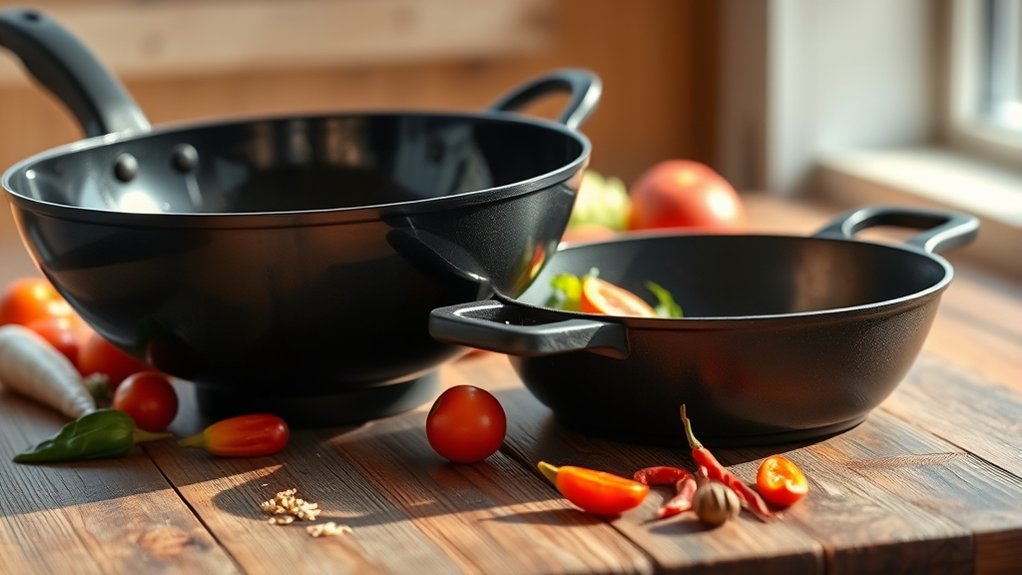
Yes, you can use a wok instead of a skillet, especially for high-heat, fast cooking like stir-frying.
A wok’s rounded shape concentrates heat at the bottom and offers more surface area for tossing, which differs from a skillet’s flat base designed for even browning and frying.
Adjust your technique by reducing oil and preheating well to prevent sticking.
If you want to master when and how to switch between these pans for various dishes, you’ll find useful tips ahead.
Key Takeaways
- Yes, a wok can replace a skillet for many dishes, especially those requiring high heat and quick cooking.
- Woks excel at stir-frying and searing but have a rounded base, which differs from the flat surface of skillets.
- Adjust cooking techniques by using the wok’s center for searing and sides for gentler cooking or warming.
- Woks need less oil and require thorough preheating to simulate skillet cooking effectively.
- Consider your stovetop heat source, as woks perform best with powerful, high-heat burners.
When Should You Use a Wok Instead of a Skillet?
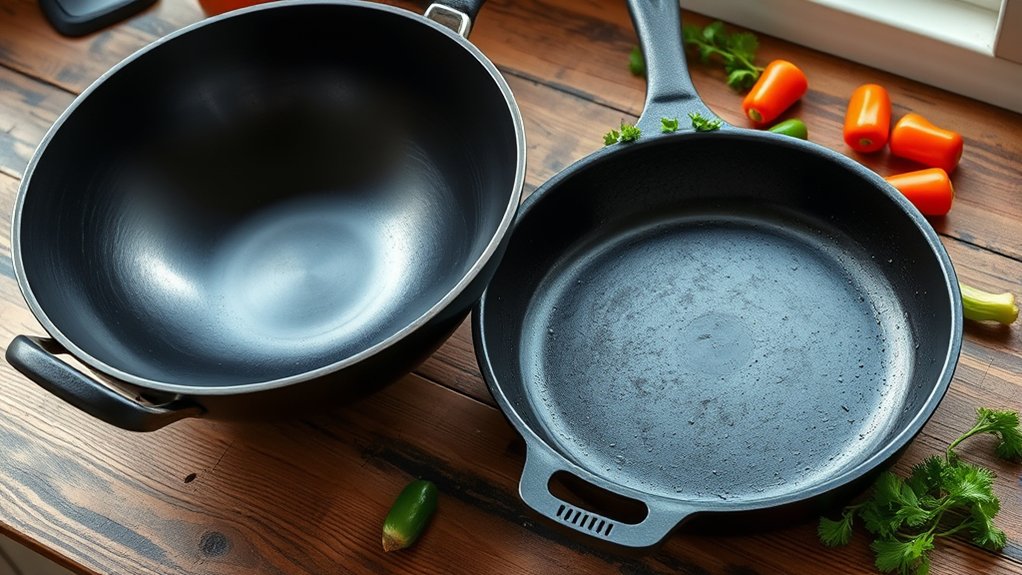
Although both woks and skillets serve versatile cooking purposes, you should use a wok instead of a skillet when preparing dishes that require high heat and rapid, even cooking. Wok advantages include its unique shape, which concentrates heat at the bottom while providing ample surface area along the sloped sides for quick tossing and stirring.
This design enables superior heat distribution and retention, allowing you to cook ingredients swiftly without steaming them. In contrast, skillet limitations stem from their flat bottoms and lower sides, which restrict airflow and heat intensity, making it harder to achieve the searing and wok hei effect essential in many Asian cuisines.
When you need to stir-fry, sear, or cook with intense heat, the wok’s design outperforms a skillet, optimizing cooking efficiency and flavor development.
Main Differences Between Woks and Skillets
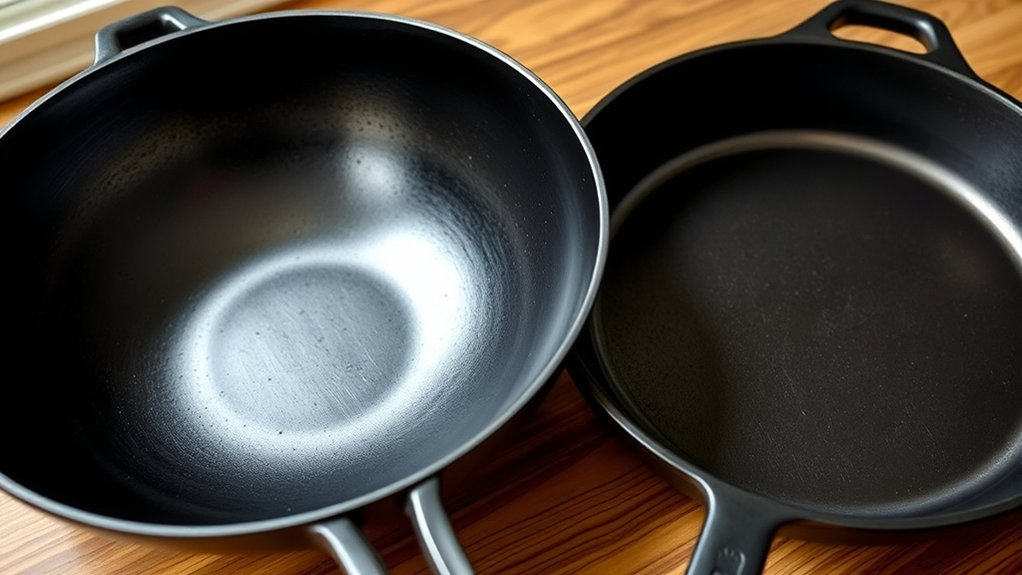
Understanding the main differences between woks and skillets helps you select the right tool for your cooking needs. Wok shapes and cooking techniques directly influence heat distribution and food contact area, shaping how each performs.
Knowing how woks and skillets differ guides you to the perfect cookware for your meals.
Woks have a rounded, conical shape allowing for intense, concentrated heat at the bottom and cooler sides. Skillets feature a flat, broad base for even heating.
Woks excel in stir-frying due to their high, sloped sides, facilitating tossing and quick cooking. Skillets suit searing and frying with stable heat retention.
The depth of a wok accommodates larger volumes and liquid-based cooking, whereas skillets are shallower, better for browning and pan-frying.
Material differences affect heat responsiveness: woks often use carbon steel; skillets vary from cast iron to stainless steel.
Recognizing these distinctions helps you optimize your cooking techniques.
How to Cook Skillet Recipes in a Wok
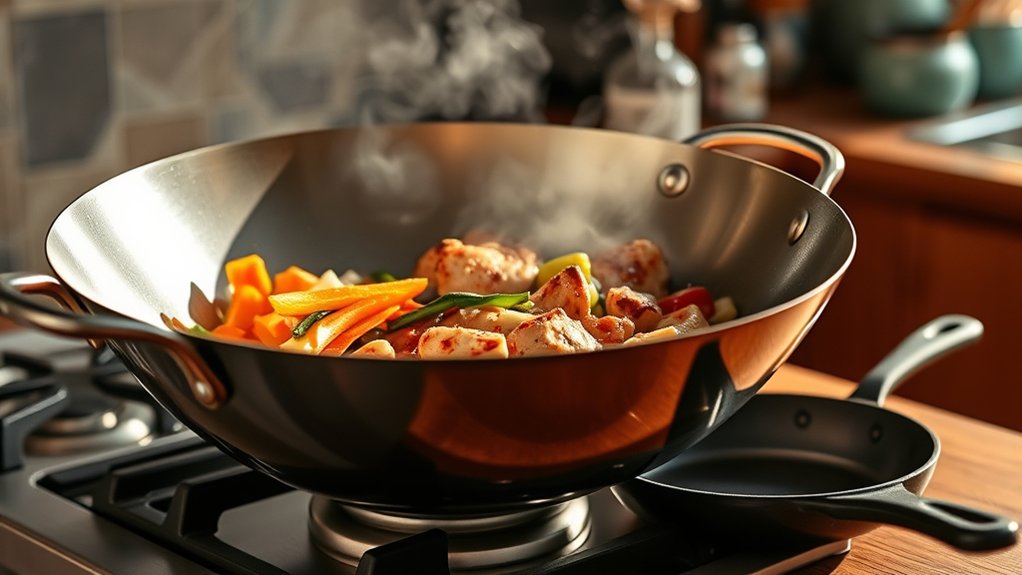
The unique shape and heat distribution of a wok require adjustments when adapting skillet recipes. To cook skillet recipes in a wok, you need to modify your approach using specific wok techniques. Begin by preheating the wok thoroughly to utilize its superior heat retention and achieve even cooking.
Since a wok’s curved surface concentrates heat at the bottom, use the center for searing and the sides for gentle cooking or keeping ingredients warm. You’ll also want to adjust your stirring frequency; frequent tossing prevents sticking and promotes uniform cooking, compensating for the wok’s deeper shape.
When executing skillet adaptations, reduce oil amounts as the wok’s design necessitates less fat for nonstick cooking. Mastering these techniques guarantees skillet recipes translate effectively in your wok.
Best Dishes to Make in a Wok or Skillet
Versatility defines both the wok and skillet, making them indispensable tools for a variety of dishes. You’ll find that each excels in specific preparations, but there’s considerable overlap. For instance, stir fry recipes thrive in both, thanks to even heat distribution and rapid cooking.
Both wok and skillet offer versatile cooking with even heat, perfect for quick, flavorful stir fry dishes.
Skillets shine with sautéed vegetables, allowing controlled browning and deglazing. Here are some of the best dishes to make:
- Classic stir fry recipes with proteins and crisp vegetables
- Sautéed vegetables with a caramelized finish
- Pan-seared meats and fish with a flavorful crust
- One-pan egg and grain dishes, like fried rice or shakshuka
Understanding these strengths helps you maximize flavor and texture, whether you’re using a wok’s deep, sloped sides or a skillet’s flat, stable surface.
How to Choose Between a Wok and Skillet
When deciding between a wok and a skillet, consider the cooking technique and dish requirements. If you need high-heat, rapid cooking with continuous stirring, the wok benefits you with its curved shape, allowing efficient heat distribution and tossing. It excels at stir-frying, searing, and steaming.
Conversely, a skillet’s flat bottom provides skillet versatility, offering even heat for sautéing, frying, and browning with stable contact on standard stovetops. If your recipe demands sautéing or pan-frying with minimal oil, the skillet is ideal. However, if you want quick, smoky flavors from high heat, opt for the wok.
Assess your stovetop compatibility and cooking style; a wok requires a powerful heat source for peak performance, while a skillet adapts easily to various heat levels and cooking methods.
Frequently Asked Questions
Can I Use a Wok on an Electric Stove?
You can use a wok on an electric stove, but wok compatibility depends on the stove’s coil size and heat output. Performance may vary.
A flat-bottomed wok works best to guarantee even heating and stability on electric burners.
How Do I Season a Carbon Steel Wok?
To season your carbon steel wok, heat it until smoking, apply a thin layer of high-smoke-point oil, and wipe excess. Repeat heating and oiling cycles.
Proper wok seasoning prevents rust and creates a natural nonstick surface.
Is a Wok Dishwasher Safe?
Your wok’s seasoning is like a protective armor, so you shouldn’t put it in the dishwasher. Harsh detergents and water can strip wok materials, damaging the surface.
For proper wok care, always hand wash and dry promptly.
Can I Bake With a Wok?
You can bake with a wok if it’s oven-safe and has a sturdy handle.
Wok baking suits certain wok recipes, like frittatas or roasted vegetables, thanks to its even heat distribution and deep shape.
What Utensils Are Best for Cooking in a Wok?
You’ll want bamboo or wooden spatulas and ladles as your primary wok utensils; they prevent scratching and withstand high heat, perfectly complementing your wok’s cooking techniques like stir-frying and tossing for even heat distribution.
Conclusion
Choosing between a wok and a skillet isn’t rocket science, but knowing their strengths can transform your cooking. Use a wok for high-heat, quick stir-fries with even heat distribution. Opt for a skillet when you need steady, controlled cooking and browning.
You can adapt many skillet recipes in a wok by adjusting heat and technique. Mastering both tools guarantees your kitchen skills soar to new heights, making every dish a culinary masterpiece.
When deciding on cookware, remember that you can use a wok instead of a skillet by understanding these key differences and applying the right cooking methods.

Leave a Reply