
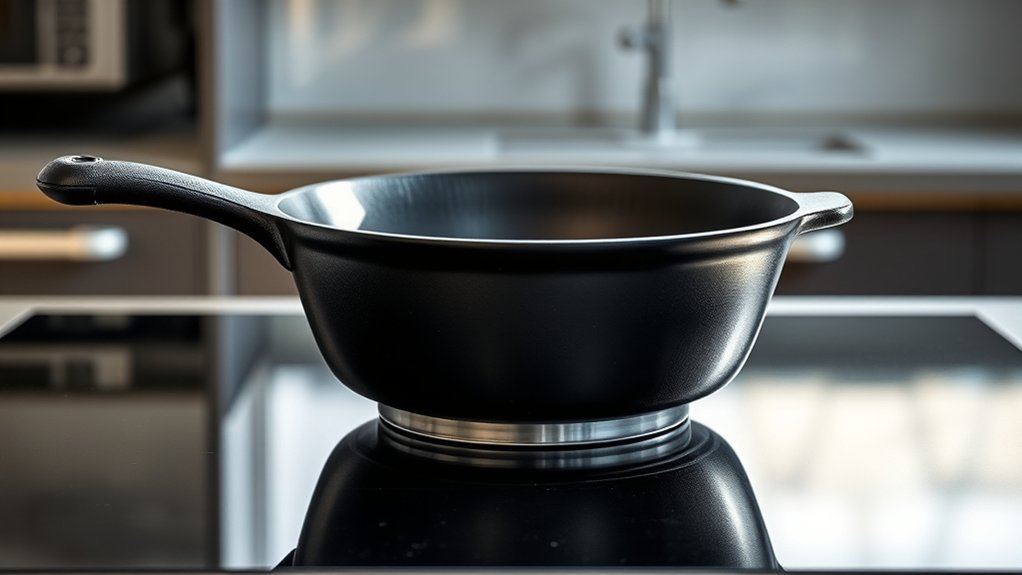
You can use a cast iron skillet on a glass top stove, but you need to handle it carefully to avoid damage.
Always lift the skillet instead of sliding it to prevent scratches, and make sure the base is clean and flat for even heat transfer.
Heat it gradually to avoid thermal shock and never drop or bang the skillet.
If you want to optimize safety and performance, understanding proper use and alternatives is essential.
Key Takeaways
- You can use a cast iron skillet on a glass top stove if you handle it carefully to avoid scratches.
- Always lift the skillet instead of sliding it to prevent damaging the glass surface.
- Ensure the skillet base is clean, dry, and flat for efficient heat transfer and reduced abrasion.
- Apply heat gradually to avoid thermal shock to both the skillet and stove.
- Consider using protective measures like silicone pads or regular skillet maintenance to minimize risks.
Can You Use a Cast Iron Skillet Safely on a Glass Top Stove?
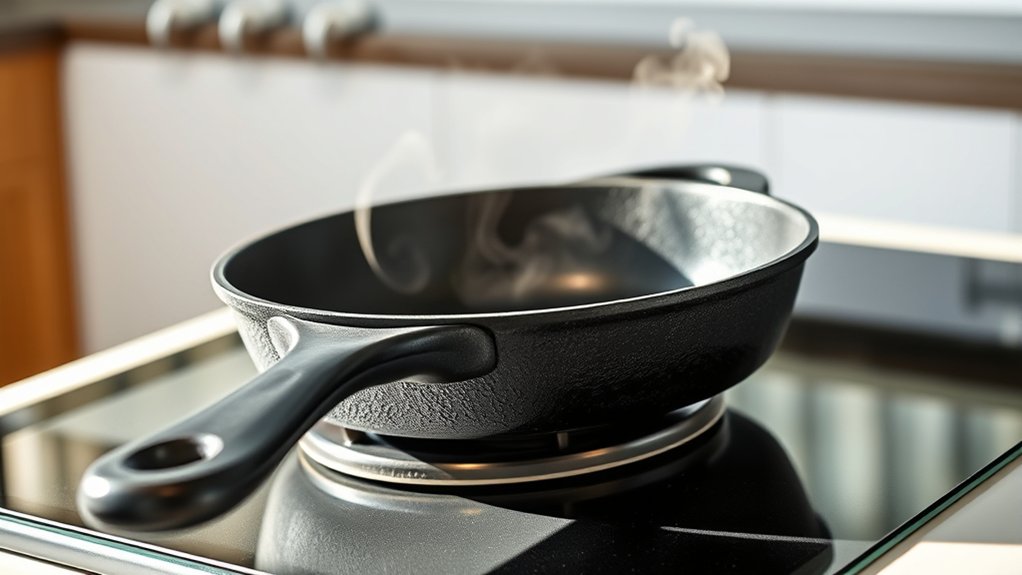
How can you safely use a cast iron skillet on a glass top stove without damaging the surface? To guarantee glass stove compatibility, you must handle the skillet carefully.
Cast iron benefits include excellent heat retention and even cooking, but its weight requires cautious placement. Always lift the skillet instead of sliding it to prevent scratches.
Use a clean, dry skillet base to avoid residue buildup that can cause staining or uneven heating. Adjust the heat gradually to avoid thermal shock to the glass surface.
Additionally, check that the skillet’s base is flat to maintain full contact with the stove, guaranteeing efficient heat transfer and reducing stress on the glass. Following these steps allows you to enjoy the advantages of cast iron without compromising your glass cooktop.
Does Cast Iron Scratch or Damage Glass Cooktop Surfaces?
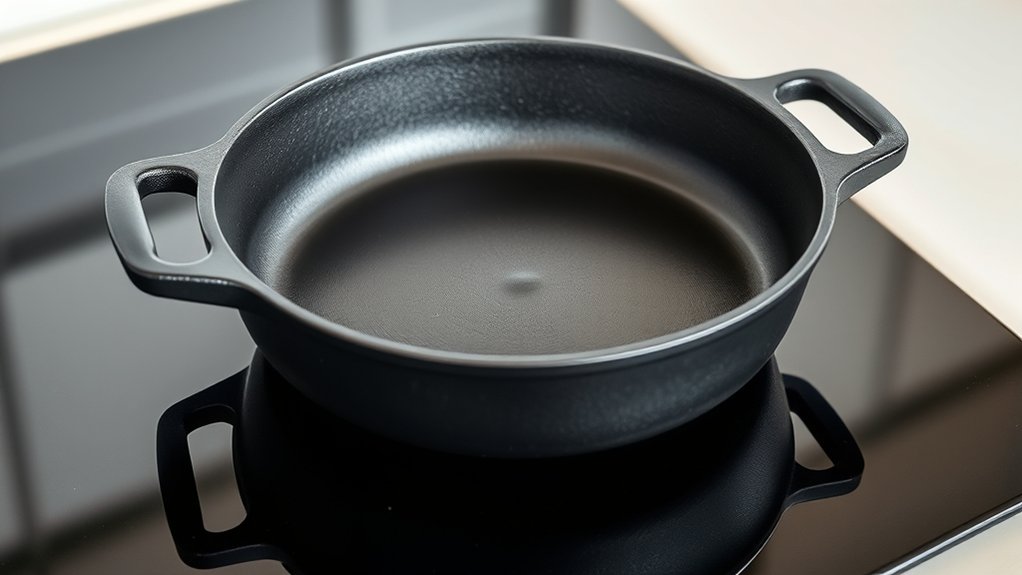
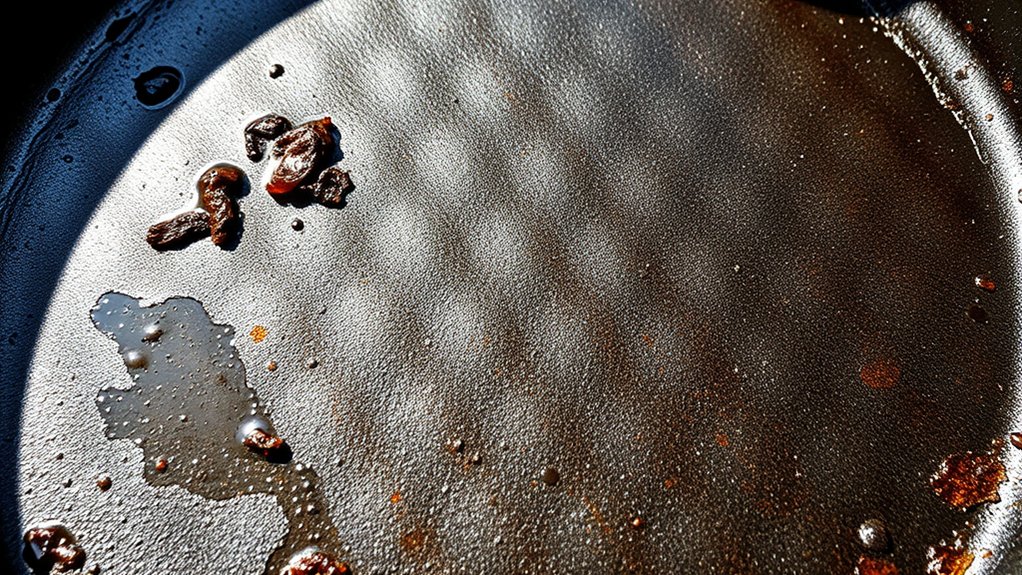
While careful handling of a cast iron skillet minimizes risks, you might still wonder if its weight and rough texture can scratch or damage your glass cooktop. Cast iron’s dense, coarse surface poses a potential hazard if dragged or dropped on the glass, as even minor abrasions compromise the cooktop’s integrity.
Proper cast iron maintenance, such as seasoning to smooth the skillet’s surface, reduces friction and mitigates scratching risks. Additionally, glass surface protection depends largely on how you position and lift the skillet; any sliding motion can cause micro-scratches that accumulate over time.
Though cast iron doesn’t inherently damage glass tops, neglecting maintenance and careless handling increase the likelihood of scratches. Consequently, understanding the material properties and practicing diligent care are essential for preserving your cooktop’s pristine condition.
How to Prevent Scratches When Using Cast Iron on Glass Stoves
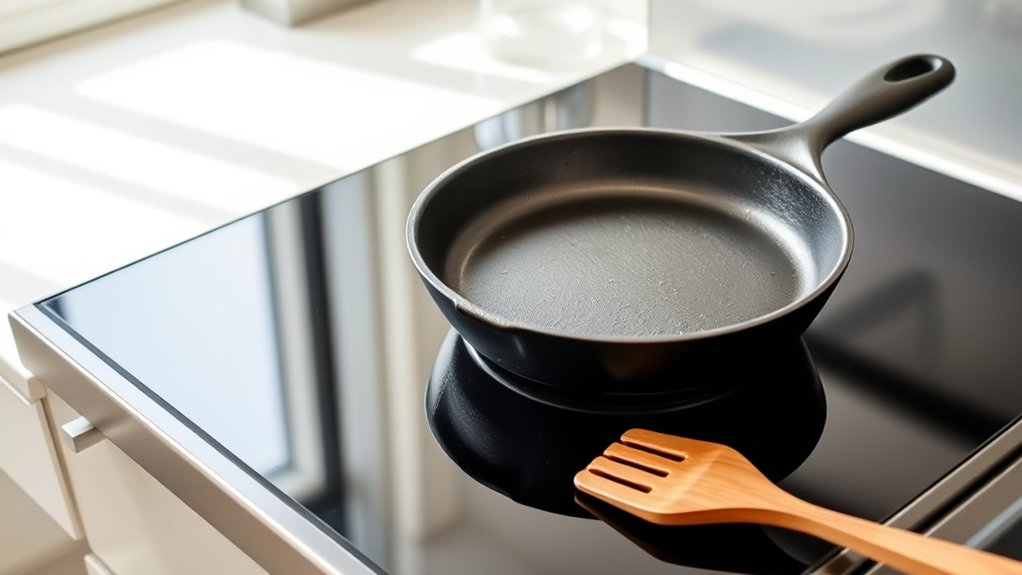
Although cast iron is durable, you need to handle it carefully on glass stoves to avoid scratches. For effective scratching prevention, always lift your skillet instead of sliding it across the surface. Sliding creates friction that can damage the glass.
Use a soft cloth or silicone pads under the skillet when placing it down to enhance surface protection. Verify the bottom of your cast iron is clean and smooth; debris or rough spots increase abrasion risk.
Avoid dropping or banging the skillet, as impacts may cause micro-cracks in the glass. Regularly inspect and maintain your cookware’s base, and consider seasoning it properly to reduce roughness.
How to Heat and Cook Safely With Cast Iron on Glass Top Stoves
When cooking with cast iron on a glass top stove, you must apply heat gradually to prevent thermal shock that can damage both the cookware and the stove surface. Begin with low to medium heat, allowing the skillet to warm evenly before increasing the temperature.
This controlled approach guarantees ideal heat distribution across the cast iron, preventing hot spots that could stress the glass top. Use cooking techniques such as preheating the pan off the stove or adding oil only after the skillet is warm to maintain consistent temperature control.
Avoid sudden temperature changes and do not slide the skillet across the glass surface, as this risks scratching. By managing heat application and employing proper cooking techniques, you’ll protect your stove while maximizing cast iron performance.
What Cookware Works Best Instead of Cast Iron on Glass Stoves?
If you want to protect your glass top stove and still cook efficiently, choosing the right cookware is essential. Instead of cast iron, consider non stick pans and stainless steel options, which offer smooth, flat bottoms that distribute heat evenly without scratching the surface.
Non stick pans reduce the need for excess oil and simplify cleaning, while stainless steel cookware provides durability and excellent heat conduction, especially when paired with an aluminum or copper core. Both materials minimize the risk of damaging the glass cooktop because they slide easily and avoid rough contact.
Avoid cookware with warped or uneven bases, as they can create hotspots and stress the glass. Selecting cookware with these characteristics guarantees the best performance and longevity for your glass stove.
Frequently Asked Questions
Can Cast Iron Skillets Be Used on Induction Glass Top Stoves?
Yes, your cast iron skillet works on induction glass top stoves due to induction compatibility. Just be cautious with skillet weight to avoid scratching or damaging the glass surface while ensuring efficient heat transfer and cooking performance.
How Do I Clean a Cast Iron Skillet After Cooking on Glass Stoves?
After your medieval feast, clean your cast iron skillet with hot water and a stiff brush. Skip soap. Dry it thoroughly, then apply a thin oil layer.
These maintenance tips prevent rust, ensuring longevity and ideal performance.
Does Seasoning Cast Iron Affect Its Use on Glass Top Stoves?
Seasoning impacts your cast iron’s cooking performance by creating a smooth, non-stick surface, reducing friction against glass tops. Proper seasoning minimizes scratching risks and helps distribute heat evenly, enhancing both efficiency and cookware longevity on glass stove surfaces.
Can I Put a Hot Cast Iron Skillet Directly Into Cold Water on a Glass Stove?
Don’t drop a bombshell by plunging your hot cast iron skillet into cold water; thermal shock can crack your glass stove’s surface. For stove safety, always let the skillet cool gradually before cleaning or cooling it down.
Are There Specific Brands of Cast Iron Recommended for Glass Top Stoves?
You can trust Lodge cookware and Le Creuset for glass top stoves; both brands offer smooth, well-seasoned surfaces that minimize scratching risks while providing excellent heat retention and distribution.
This ensures safe, efficient cooking performance.
Conclusion
You can use a cast iron skillet on a glass top stove, but you must handle it carefully, clean it properly, and avoid sliding it to prevent scratches.
It’s important to heat it gradually and monitor cooking temperatures closely. Maintaining your cookware regularly also helps protect your stove’s surface.
Remember, protecting your glass cooktop requires patience, precision, and proper technique. By following these steps, you guarantee safety, preserve your stove, and enjoy the benefits of cast iron cooking on a glass top stove.

Leave a Reply