
You can use a cast iron skillet right after seasoning once it cools to room temperature.
However, start by cooking hearty foods over moderate heat to protect the new seasoning layer.
Avoid acidic or delicate dishes initially, as the polymerized oil coating is still fragile.
Give your skillet 12–24 hours to fully stabilize for the best non-stick performance and longevity.
If you keep caring for it properly, you’ll develop a durable, efficient cooking surface that improves with use.
Key Takeaways
- Wait 12–24 hours after seasoning for the oil to fully polymerize and create a smooth, hardened surface before cooking.
- Begin cooking only once the skillet has cooled to room temperature to avoid damaging the new seasoning layer.
- Start with hearty, non-acidic foods and use moderate heat to help reinforce the seasoning without eroding it.
- Gradually preheat the skillet to prevent thermal shock that can weaken the seasoning.
- Avoid scrubbing or using harsh detergents after cooking to preserve the delicate polymerized coating.
Can You Cook on a Cast Iron Skillet Immediately After Seasoning?
How soon can you cook on a cast iron skillet after seasoning? You can start cooking almost immediately once the skillet cools to room temperature. Proper seasoning creates a protective, non-stick layer essential for effective cooking techniques and skillet care.
However, avoid cooking acidic or delicate dishes right away, as the seasoning may still be settling. Using the skillet promptly with hearty foods helps reinforce the seasoning, enhancing its durability.
Avoid acidic or delicate foods initially; start with hearty dishes to strengthen your skillet’s seasoning layer.
Verify you apply appropriate heat gradually to prevent thermal shock that might damage the seasoning layer. By understanding and respecting these details, you maintain your skillet’s performance and longevity.
With careful skillet care and proper cooking techniques, you’ll enjoy a reliable, seasoned surface that improves with each use.
What Happens to Your Skillet Right After You Season It
Once you finish seasoning your cast iron skillet, the surface begins forming a polymerized layer that bonds to the metal, creating the essential non-stick coating. This chemical transformation is vital for durable skillet care, strengthening the skillet’s resistance to rust and enhancing cooking performance.
During the seasoning process, the oil you applied heats, breaks down, and fuses into the skillet’s pores, creating a hard, smooth finish. Right after seasoning, this layer is still delicate and can be compromised by improper handling.
At this stage, avoid scrubbing or using harsh detergents, as they can strip the coating. Instead, treat your skillet gently to let the seasoning fully cure and stabilize, ensuring a long-lasting, effective cooking surface.
How Long Should You Wait Before Using a Newly Seasoned Cast Iron Skillet?
Allowing the seasoning to fully cure before cooking is key to preserving the skillet’s protective layer. The seasoning duration directly impacts heat retention and the skillet’s long-term performance. Typically, you should wait at least 24 hours after seasoning before using the skillet to let the oils polymerize completely. Here’s what to take into account:
Waiting 24 hours after seasoning lets oils fully polymerize, ensuring lasting protection and optimal heat retention.
- Initial Cool-Down: Let your skillet cool and rest for 12–24 hours post-seasoning to solidify the coating.
- Check Surface: Verify the surface feels smooth and non-sticky; incomplete curing can impair heat retention.
- Test Heat Retention: When you first cook, do so over medium heat to verify the seasoning’s integrity and heat distribution.
Patience during seasoning duration guarantees a resilient, efficient cast iron skillet ready for ideal use.
Essential Cooking Tips for Newly Seasoned Cast Iron Skillets
Although your cast iron skillet is seasoned and ready, using it effectively requires some specific cooking practices to maintain and enhance its surface. Start by preheating your skillet gradually to avoid thermal shock that can damage seasoning layers.
Use moderate heat settings; high heat can break down seasoning methods prematurely. Incorporate cooking techniques like searing and sautéing with a small amount of oil to strengthen the non-stick coating. Avoid acidic foods initially, as they can erode the newly formed seasoning.
After cooking, clean the skillet gently with hot water and a soft brush. Skip harsh detergents. Dry it immediately to prevent rust, then lightly oil the surface to reinforce the seasoning. Adopting these precise cooking techniques guarantees your cast iron skillet performs efficiently right after seasoning.
Maintaining and Improving Your Skillet’s Seasoning
You’ve started using your skillet with care, but maintaining and improving its seasoning requires ongoing attention. Proper skillet care guarantees a durable, non-stick surface. Focus on these key seasoning techniques:
Maintaining your skillet’s seasoning ensures a durable, non-stick surface through consistent care and attention.
- Regular Cleaning: Avoid soap; instead, scrub with coarse salt and a brush, then dry thoroughly to prevent rust.
- Re-seasoning as Needed: Apply a thin layer of oil after each use and heat the skillet to maintain the polymerized coating.
- Avoid Acidic Foods Initially: Until the seasoning strengthens, acidic ingredients can break down the layer, so limit their use early on.
Frequently Asked Questions
Can I Use Soap to Clean a Cast Iron Skillet?
You can use mild soap occasionally, but harsh soaps harm seasoning. Instead, scrub with coarse salt and hot water as cleaning methods.
Soap alternatives preserve the skillet’s non-stick surface and enhance its longevity.
How Do I Remove Rust From My Cast Iron Skillet?
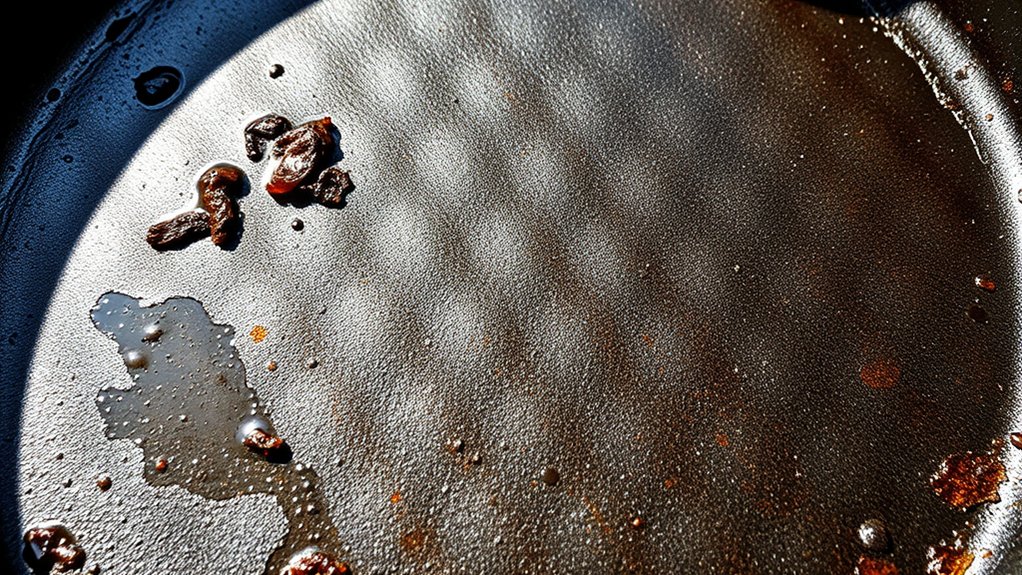
Picture your skillet’s surface, mottled with rust. To remove rust, scrub with steel wool or a vinegar soak, then rinse and dry thoroughly.
Follow with thorough cast iron maintenance by reseasoning to restore its protective coating.
What Oils Are Best for Seasoning Cast Iron?
You should use best seasoning oils with a high oil smoke point, like flaxseed, grapeseed, or avocado oil. These oils polymerize well, creating a durable, non-stick surface that enhances your cast iron skillet’s performance.
Can Cast Iron Skillets Go in the Dishwasher?
If you toss your cast iron skillet in the dishwasher, like Sarah did, you’ll strip its seasoning layer. For proper cast iron maintenance, always hand wash with mild soap and dry thoroughly to preserve seasoning and avoid rust.
How Do I Store a Cast Iron Skillet to Prevent Damage?
You should store your cast iron skillet in a dry place, using proper storage techniques like placing a paper towel inside to absorb moisture.
This skillet care prevents rust and damage, keeping your cookware in top condition.
Conclusion
So, you just seasoned your cast iron and want to dive right in? Sure, you *could*—if you enjoy playing skillet roulette with your food’s taste and your pan’s lifespan. Waiting a bit lets that seasoning set like a fine wine, not a cheap paint job.
Treat your skillet right now, and it’ll reward you with non-stick magic later. Patience isn’t just a virtue; it’s cast iron survival 101.
Can I use a cast iron skillet right after seasoning? It’s best to wait a while to let the seasoning fully cure for optimal performance.

Leave a Reply