
You can use coconut oil for cast iron skillet seasoning, but it’s best to opt for refined coconut oil because of its higher smoke point.
This helps prevent burning and ensures a smoother seasoning process.
Apply thin, even layers of the oil and season at around 350°F.
This method helps avoid sticky residue or an uneven coating on your skillet.
Coconut oil creates a durable, non-stick surface and even offers some antimicrobial benefits.
However, it may require more frequent upkeep compared to other oils.
If you want to optimize your cast iron care, it’s worth considering the pros and cons of using coconut oil for seasoning.
Key Takeaways
- Coconut oil can be used to season cast iron, especially refined types with higher smoke points around 350°F.
- Thin, even layers prevent sticky residue and promote durable, non-stick skillet surfaces.
- Virgin coconut oil’s lower smoke point may cause uneven seasoning or require more frequent reseasoning.
- Proper heating allows coconut oil to polymerize and create a solid protective layer on the skillet.
- After cleaning, reapply a light coconut oil layer to maintain and enhance the skillet’s seasoning.
Is Coconut Oil Effective for Seasoning Cast Iron Skillets?
How well does coconut oil work for seasoning cast iron skillets? Coconut oil offers distinct benefits for this purpose due to its high smoke point and stable saturated fats, which contribute to a durable, non-stick surface.
Coconut oil’s high smoke point and stable fats create a durable, non-stick cast iron seasoning surface.
When you apply coconut oil during seasoning techniques, you create an even, hard layer that resists flaking and peeling. This oil’s ability to polymerize effectively under heat guarantees a reliable protective coating.
However, for ideal seasoning, you need to apply thin, consistent layers and heat the skillet to the right temperature to avoid sticky residue. Using coconut oil benefits your cast iron by promoting longevity and enhancing cooking performance when you follow proper seasoning techniques meticulously.
This makes it a viable option compared to other oils commonly used for cast iron care.
The Good and Bad of Using Coconut Oil on Cast Iron
While coconut oil offers several advantages for cast iron care, it also comes with certain drawbacks you should consider before committing to its use. Understanding the coconut oil benefits and coconut oil drawbacks will help you make an informed choice.
- Coconut Oil Benefits: It has a high smoke point for refined versions, aiding in effective seasoning and creating a durable, non-stick surface.
- Antimicrobial Properties: Coconut oil contains natural antimicrobial agents, which can help keep your skillet hygienic.
- Coconut Oil Drawbacks: Virgin coconut oil has a lower smoke point, which may lead to uneven seasoning or sticky residue if not applied carefully.
Balancing these factors guarantees you use coconut oil effectively without compromising your cast iron skillet’s performance.
How Does Coconut Oil Compare to Other Cast Iron Seasoning Oils?
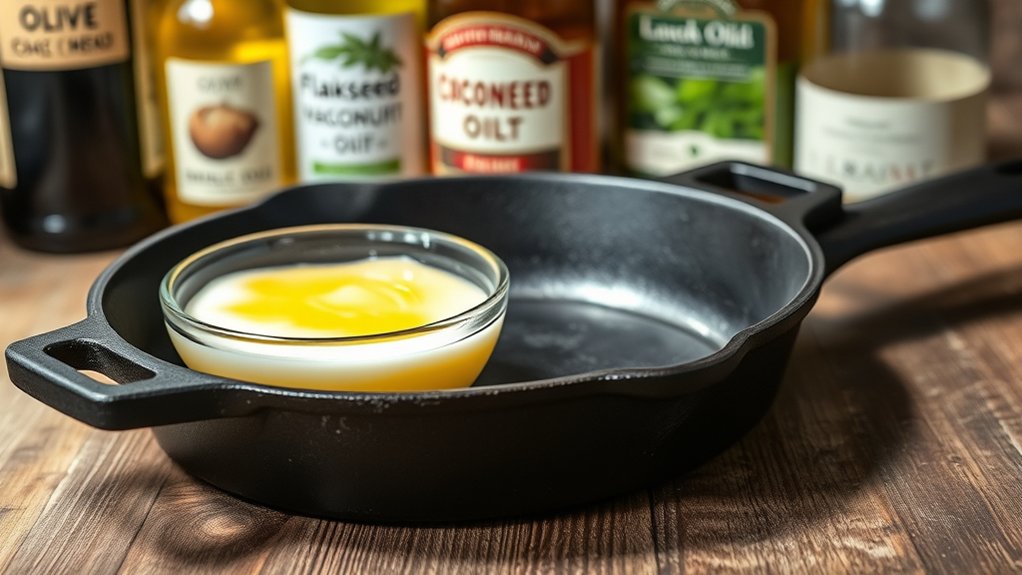
When you season your cast iron skillet, choosing the right oil greatly impacts the durability and non-stick quality of the surface. Coconut oil benefits include its natural antioxidants and quick polymerization, which can create a solid seasoning layer.
However, compared to common seasoning oils like flaxseed or grapeseed oil, coconut oil has a relatively low smoke point of around 350°F, meaning it can burn more easily during seasoning. Oils with higher smoke points allow for a more stable, longer-lasting seasoning.
While coconut oil forms a decent initial coating, its lower smoke point may require more frequent reseasoning. If you prioritize ease and longevity, oils with higher smoke points might serve better. Still, coconut oil benefits make it an acceptable option, especially if you prefer natural, readily available oils.
How to Care for Your Cast Iron Skillet With Coconut Oil
Choosing coconut oil for seasoning means you’ll want to adjust your care routine to maintain its benefits and address its lower smoke point. Proper seasoning techniques are essential to preserve your skillet’s non-stick surface and durability.
Seasoning with coconut oil requires careful care to protect your skillet’s non-stick surface and handle its lower smoke point.
Here’s how to care for your cast iron with coconut oil:
- Season at a controlled temperature: Use moderate heat (around 350°F) to avoid burning the oil, which guarantees a smooth, durable coating.
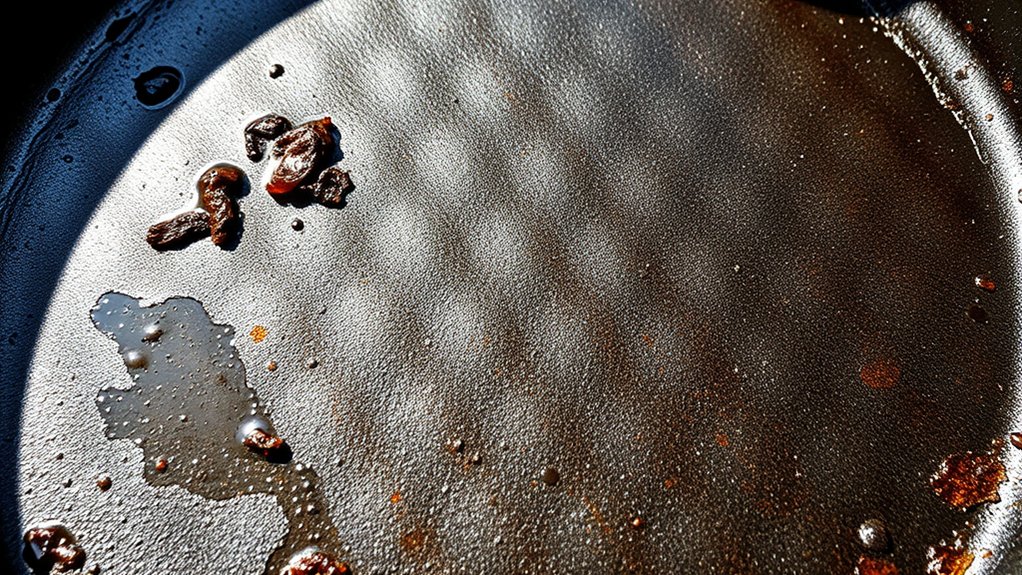
- Apply thin oil layers: Excess coconut oil can become sticky or rancid. Use a paper towel to evenly coat and remove any excess oil.
- Regular maintenance: After each use, clean with warm water and mild soap if needed, then reapply a light coconut oil layer to protect and enhance seasoning.
These steps maximize the oil benefits while extending your skillet’s lifespan.
Frequently Asked Questions
Can Coconut Oil Remove Rust From Cast Iron Skillets?
Coconut oil alone can’t effectively remove rust from cast iron skillets. For rust removal, you should use abrasive methods like scrubbing with steel wool.
Then season with coconut oil to protect and restore your skillet’s surface.
Is Coconut Oil Safe for Cooking Acidic Foods in Cast Iron?
You shouldn’t use coconut oil for cooking acidic foods in cast iron because its oil stability decreases at high cooking temperatures. This can cause off-flavors and damage seasoning. Choose more stable oils for acidic dishes instead.
Does Coconut Oil Affect the Flavor of Food Cooked in Cast Iron?
Yes, coconut oil can subtly influence your food’s flavor profile, adding a mild sweetness. Depending on your cooking techniques, it complements dishes well but may alter delicate flavors, so use it thoughtfully for the best results.
Can Coconut Oil Cause Cast Iron to Become Sticky or Gummy?
Yes, coconut oil can cause a sticky residue if applied too thickly or not heated properly. This affects seasoning stability, so you should use thin layers and fully polymerize the oil to maintain a smooth, durable surface.
How Long Does Seasoning With Coconut Oil Last on Cast Iron?
Like a fleeting sunset, seasoning longevity with coconut oil usually lasts a few weeks. Its oil stability is moderate, so you’ll want to reseason regularly to keep your cast iron’s surface smooth and durable.
Conclusion
You can use coconut oil to season your cast iron skillet, but it’s not the best choice due to its lower smoke point and potential for sticky residue.
For example, a home cook tried coconut oil but noticed uneven seasoning after several uses. They eventually switched to flaxseed oil for a more durable, smooth finish.
To get the best results, pick oils with high smoke points that dry well. This ensures your skillet stays non-stick and long-lasting.
When deciding whether to use coconut oil for cast iron skillet seasoning, keep these factors in mind for optimal performance.


Leave a Reply