
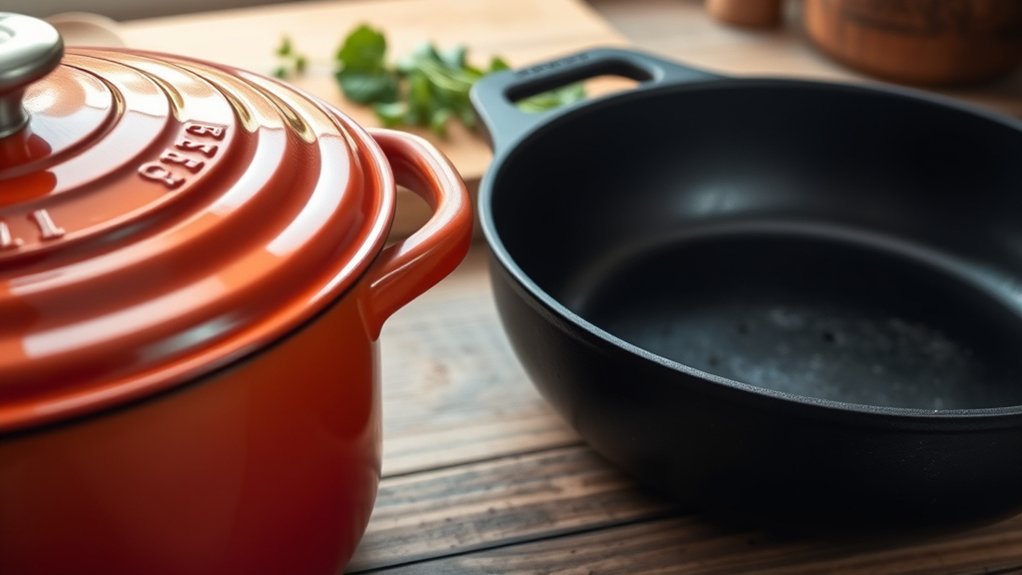
You can use a Dutch oven instead of a skillet, but you’ll need to adjust your technique.
Dutch ovens have thicker walls and retain heat longer, so they heat up slower and don’t sear as quickly as skillets.
They excel at slow cooking, braising, and moisture retention, but aren’t ideal for quick frying or sautéing.
If you want to optimize your results and understand when to choose each, keep exploring their distinct roles and ideal applications.
Key Takeaways
- Dutch ovens can substitute skillets but require longer cooking times and lower temperatures due to thicker walls and heat retention.
- Dutch ovens excel in slow cooking and braising but are less effective for quick searing and sautéing compared to skillets.
- Skillets provide rapid, even heat distribution ideal for high-temperature cooking, which Dutch ovens cannot match efficiently.
- Adjust cooking methods when using a Dutch oven, as moisture retention and heat steadiness differ significantly from skillets.
- For delicate or quick-cooking foods, skillets are preferable; Dutch ovens are better suited for one-pot meals and slow recipes.
Can You Use a Dutch Oven Instead of a Skillet?
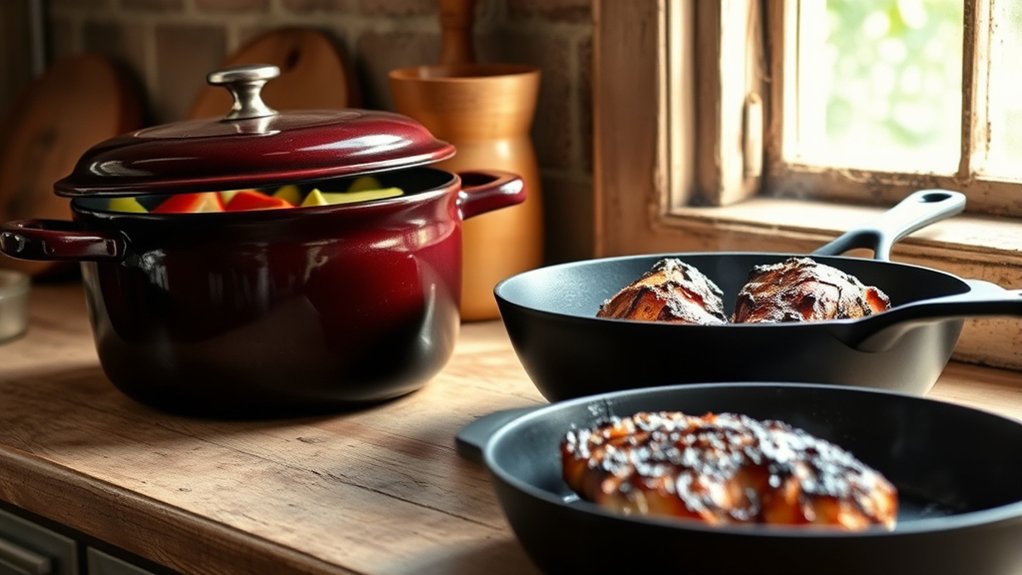
How effectively can you substitute a Dutch oven for a skillet in your cooking? The Dutch oven versatility makes it a strong candidate for many skillet tasks, especially those requiring even heat distribution and moisture retention.
A Dutch oven’s versatility makes it an excellent alternative for many skillet cooking tasks.
Its thick walls and heavy lid allow for slow cooking and braising, which a skillet cannot replicate as effectively. However, skillet advantages include superior searing capabilities and easier maneuverability due to its shallow design and sloped sides.
If you need to quickly sauté or achieve a crisp crust, the skillet remains ideal. Yet, for recipes demanding both stovetop and oven use, the Dutch oven excels.
Essentially, you can use a Dutch oven instead of a skillet, but understanding each tool’s strengths guarantees you enhance cooking performance and results.
What Are the Key Differences Between a Dutch Oven and a Skillet?
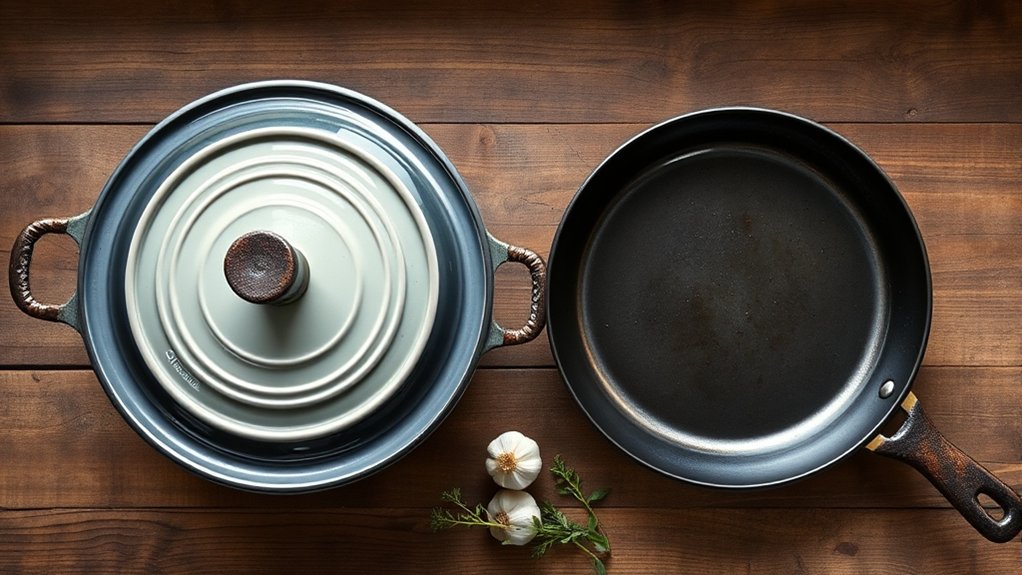
You’ll notice that Dutch ovens and skillets differ considerably in material and construction, which directly affects heat distribution. Understanding how each tool manages heat will clarify their best cooking uses.
Let’s compare these factors to help you choose the right cookware for your needs.
Material And Construction
The fundamental differences in material and construction between a Dutch oven and a skillet directly impact their cooking performance and versatility. Dutch ovens typically feature thick cast iron walls with an enamel or ceramic construction, enhancing heat retention and providing a non-reactive cooking surface.
This design supports slow, even cooking and moisture retention. Skillets, especially cast iron skillets, have thinner walls and a flatter base, optimized for quick heat transfer and high-temperature searing. While both can be made from cast iron, the skillet’s open, shallow shape contrasts with the Dutch oven’s deep, lidded form.
The ceramic construction in many Dutch ovens adds durability and ease of cleaning but reduces the skillet’s primary advantage of rapid heat responsiveness. Understanding these material distinctions helps you select the right cookware for your cooking method.
Heat Distribution Methods
Although both Dutch ovens and skillets rely on cast iron for heat conduction, their heat distribution methods differ markedly due to their shapes and thicknesses. You’ll notice that a Dutch oven’s thick walls and enclosed design optimize heat retention, allowing even, sustained cooking.
In contrast, a skillet’s wide, shallow profile promotes rapid, direct heat transfer across the flat surface, ideal for searing.
Key differences include:
- Heat Retention: Dutch ovens maintain steady temperatures longer, suitable for slow-cooking techniques.
- Heat Spread: Skillets distribute heat quickly and evenly across the base, essential for sautéing.
- Thermal Mass: The Dutch oven’s volume stores more heat energy, influencing cooking times and methods.
Understanding these distinctions helps you select the right cookware tailored to your specific cooking techniques and heat management needs.
Typical Cooking Uses
When choosing between a Dutch oven and a skillet, consider their distinct cooking applications that stem from their design differences. A skillet excels in sauté techniques and frying methods due to its wide, flat surface and shallow sides, allowing for quick moisture evaporation and even browning. It’s ideal for searing meats, stir-frying vegetables, and preparing dishes requiring rapid heat adjustments.
Conversely, a Dutch oven’s thick walls and heavy lid make it perfect for slow-cooking, braising, and stewing, where consistent, retained heat is vital. While you can perform frying in a Dutch oven, its deeper design limits the control and accessibility that a skillet offers for sautéing. Understanding these differences guarantees you select the appropriate cookware for your culinary goals.
Can a Dutch Oven Replace a Skillet for Searing and Frying?
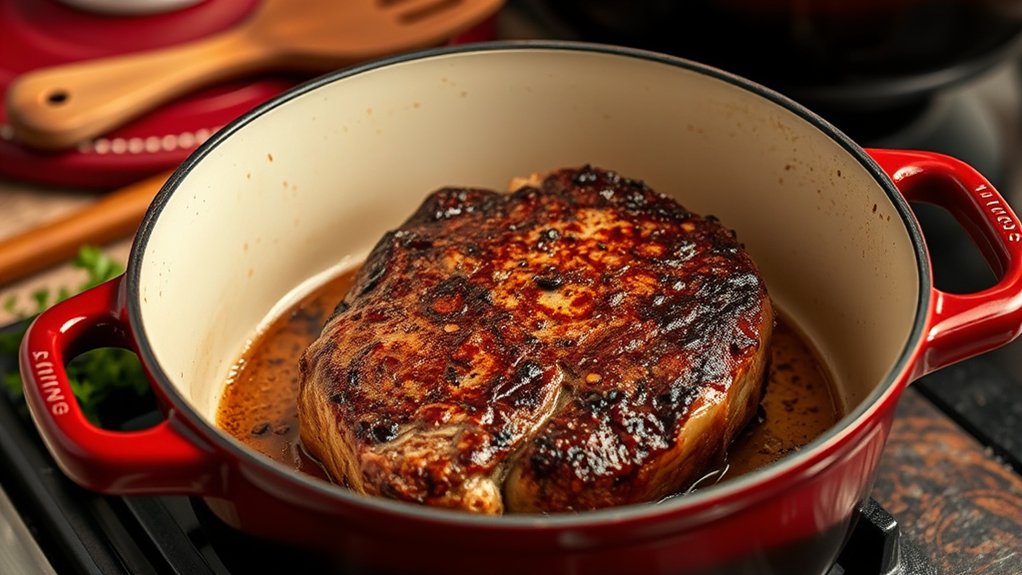
How effectively can a Dutch oven replace a skillet for searing and frying? While a Dutch oven excels in heat retention and even distribution, it’s not optimized for high-heat searing techniques or shallow frying methods typical of skillets. You can sear and fry in a Dutch oven, but consider these factors:
- Surface Area: Dutch ovens have smaller surface areas, limiting efficient browning and crowding food.
- Heat Control: Thicker walls mean slower temperature adjustments, affecting precise frying temperatures.
- Oil Depth: Its depth suits deep frying but complicates shallow frying and flipping delicate items.
For searing techniques requiring rapid, high-heat contact and frying methods demanding quick temperature shifts, a skillet remains superior. Use a Dutch oven when you prioritize heat consistency over quick temperature changes.
How Do You Adjust Cooking Times When Using a Dutch Oven?
When you switch to a Dutch oven, understand that its thick walls distribute heat more evenly but also retain it longer, affecting cooking times. You’ll need to reduce or extend cooking durations depending on the recipe to prevent undercooking or burning.
Additionally, the Dutch oven’s moisture retention slows evaporation, which can alter how quickly food cooks and browns.
Heat Distribution Differences
Although Dutch ovens and skillets both cook food, they distribute heat very differently, which directly impacts your cooking times. Dutch ovens excel in heat retention due to their thick cast iron walls, providing consistent, even heat that enhances cooking efficiency.
Skillets, often thinner and designed for quick heat-up, create hot spots that require more attentive temperature control.
When using a Dutch oven, consider these heat distribution differences:
Thermal mass: Dutch ovens absorb and hold heat longer, reducing temperature fluctuations.
Heat conduction: Skillets heat rapidly but unevenly, affecting searing and browning.
Heat source compatibility: Dutch ovens perform well on lower, steady heat settings, unlike skillets needing high, direct heat.
Understanding these factors helps you optimize your cooking approach with either tool.
Cooking Time Modifications
Since Dutch ovens retain heat more efficiently than skillets, you’ll need to adjust your cooking times to avoid overcooking. Lower the cooking temperature by 25°F (about 15°C) and reduce the overall time by 20-30% compared to skillet recipes. This balance guarantees even cooking without drying out food.
Always monitor progress closely, as recipe timing guidelines for skillets don’t directly translate.
| Skillet Cooking Time | Dutch Oven Cooking Time | Skillet Temp (°F) | Dutch Oven Temp (°F) | Notes |
|---|---|---|---|---|
| 10 minutes | 7-8 minutes | 375 | 350 | Sautéing |
| 20 minutes | 14-16 minutes | 400 | 375 | Pan-frying |
| 30 minutes | 21-24 minutes | 425 | 400 | Searing |
| 45 minutes | 31-36 minutes | 350 | 325 | Braising |
| 60 minutes | 42-48 minutes | 375 | 350 | Slow simmering |
Moisture Retention Effects
Because Dutch ovens excel at trapping moisture, you’ll need to modify cooking times to prevent sogginess or undercooked interiors. The superior moisture retention creates a humid environment that slows evaporation, affecting texture and doneness. To adjust effectively, consider these factors:
Lower the cooking temperature slightly to compensate for retained steam and avoid overcooking.
Reduce initial cooking time compared to a skillet, then check internal doneness earlier due to slower moisture loss.
Use a thermometer to monitor internal temperature precisely, ensuring the food reaches safe levels without excess moisture buildup.
What Are the Best Recipes for Using a Dutch Oven Instead of a Skillet?
How can you maximize the versatility of your Dutch oven when replacing a skillet? Focus on recipes that benefit from the Dutch oven’s superior heat retention and even cooking.
Braised dishes, such as beef stew or coq au vin, excel because the pot maintains consistent moisture and temperature. Searing meats followed by slow cooking is another ideal approach, leveraging the Dutch oven’s thick walls for skillet alternatives.
You can also prepare one-pot meals like chili or risotto, where the heavy lid traps steam effectively. While stir-frying or quick sautéing might not be ideal, recipes requiring gradual cooking or moisture retention align perfectly with Dutch oven capabilities.
Using Dutch oven recipes designed for these methods guarantees you exploit its strengths when substituting for a skillet.
What Can’t a Dutch Oven Do That a Skillet Can?
While a Dutch oven offers impressive versatility, it doesn’t replace every function a skillet provides. You’ll find certain skillet advantages essential for specific cooking techniques that a Dutch oven can’t match. For example:
A Dutch oven is versatile but can’t fully replace the quick, precise functions of a skillet.
- Achieving a quick, high-heat sear or stir-fry due to the skillet’s broad, flat surface and thinner material.
- Cooking delicate foods like eggs or pancakes evenly without sticking, thanks to the skillet’s smooth, shallow design.
- Rapid temperature adjustments, as skillets heat and cool faster, granting greater control during precise cooking.
These skillet advantages stem from their design optimized for direct, intense heat and quick response, which a Dutch oven’s thick walls and lid can’t replicate. Understanding these limitations helps you choose the right tool for your cooking technique and desired outcome.
Frequently Asked Questions
How Do You Properly Clean a Dutch Oven?
You clean a Dutch oven by hand washing with warm, soapy water and a soft sponge. Avoid harsh abrasives.
Dry thoroughly to prevent rust. Follow maintenance tips like seasoning cast iron regularly to maintain a nonstick surface.
Can a Dutch Oven Be Used on Induction Cooktops?
Just like a knight’s shield responds to the call, your Dutch oven’s induction compatibility guarantees ideal cookware efficiency on induction cooktops. Its magnetic base interacts flawlessly, delivering precise heat control and consistent cooking performance every time you use it.
What Materials Are Dutch Ovens Typically Made From?
Dutch ovens are typically made from cast iron, providing excellent heat retention and even cooking. Many feature an enamel coating that prevents rust, eliminates seasoning, and offers a non-reactive, easy-to-clean surface for versatile cooking.
Are Dutch Ovens Oven-Safe at High Temperatures?
You’re holding a powerhouse: Dutch ovens are oven-safe at high temperatures, often up to 500°F. Just follow oven usage guidelines carefully to avoid damage, ensuring you use proper handles and lids suited for intense heat exposure.
How Heavy Is a Typical Dutch Oven Compared to a Skillet?
A typical Dutch oven weight ranges from 8 to 12 pounds due to cast iron construction, while skillet weight usually falls between 2 to 5 pounds.
You’ll notice Dutch ovens are considerably heavier than skillets.
Conclusion
You can use a Dutch oven instead of a skillet, but it’s important to understand its strengths and limitations. Dutch ovens excel at slow cooking, braising, and recipes that require even heat distribution. However, they are less ideal for quick searing or frying because of their thicker walls and greater heat retention.
Think of it like choosing between a broadsword and a rapier—each has its own purpose and style. When using a Dutch oven in place of a skillet, adjust cooking times accordingly to prevent overcooking or burning.
Mastering both tools guarantees precision and versatility in your kitchen. Ultimately, knowing when to use a Dutch oven instead of a skillet will elevate your cooking skills and results.

Leave a Reply