
You shouldn’t use your cast iron skillet right away without cleaning and seasoning it first.
Factory coatings or oils can affect cooking and cause food to stick.
Start by washing the skillet with warm water and mild soap or coarse salt to remove any residues.
Then, dry it thoroughly to prevent rust.
Afterward, apply a thin layer of high-smoke-point oil and heat the skillet to build a protective, non-stick surface.
Proper preparation guarantees better cooking and longevity.
Uncover these essential steps to maintain your skillet’s performance and durability.
Key Takeaways
- You can use a cast iron skillet immediately, but it’s best to clean and season it first for optimal cooking performance.
- New skillets may have factory residues that should be scrubbed off with warm water and mild soap or coarse salt.
- Thoroughly dry the skillet after cleaning to prevent rust before applying a thin layer of high-smoke-point oil for seasoning.
- Heating the oiled skillet helps open pores for better oil absorption, creating a durable, non-stick surface.
- Proper seasoning and maintenance improve heat distribution, prevent sticking, and extend the skillet’s lifespan.
Can You Use a Cast Iron Skillet Right Out of the Box?
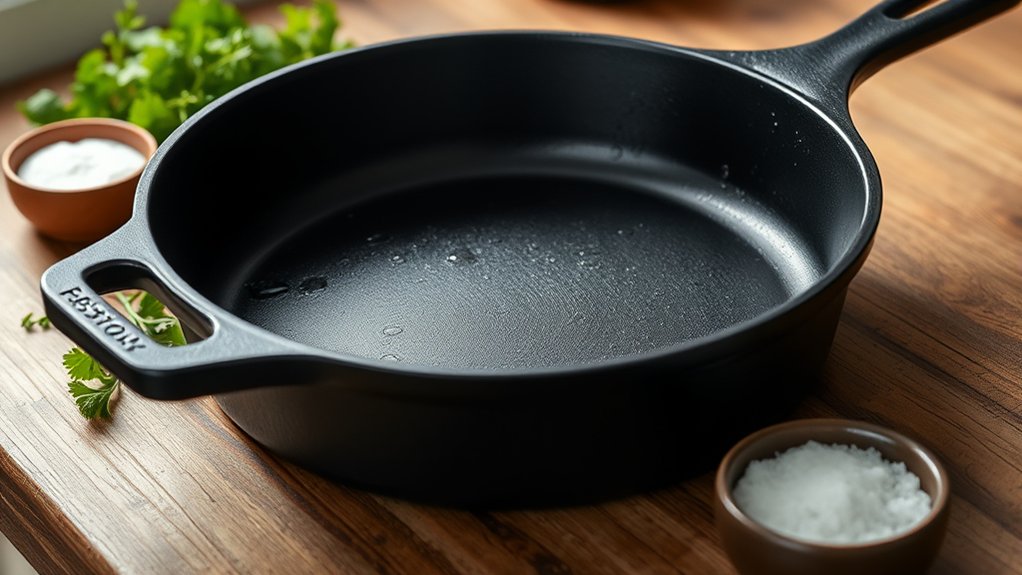
Can you use a cast iron skillet right out of the box? Technically, yes, but it’s not ideal. Most new cast iron skillets come pre-seasoned, which provides a basic non-stick layer.
However, this layer may be thin or uneven, impacting cooking performance and cast iron maintenance. Before cooking, inspect the skillet for protective coatings like factory oils or rust inhibitors, which you must remove with hot water and a stiff brush.
Proper cleaning guarantees your cooking techniques deliver consistent heat and flavor without imparting off-tastes. Using a skillet without adequate preparation can lead to food sticking and uneven seasoning buildup.
To maximize durability and cooking efficiency, you should perform initial cleaning and seasoning steps before regular use, laying the foundation for effective cast iron maintenance.
How to Season Your New Cast Iron Skillet
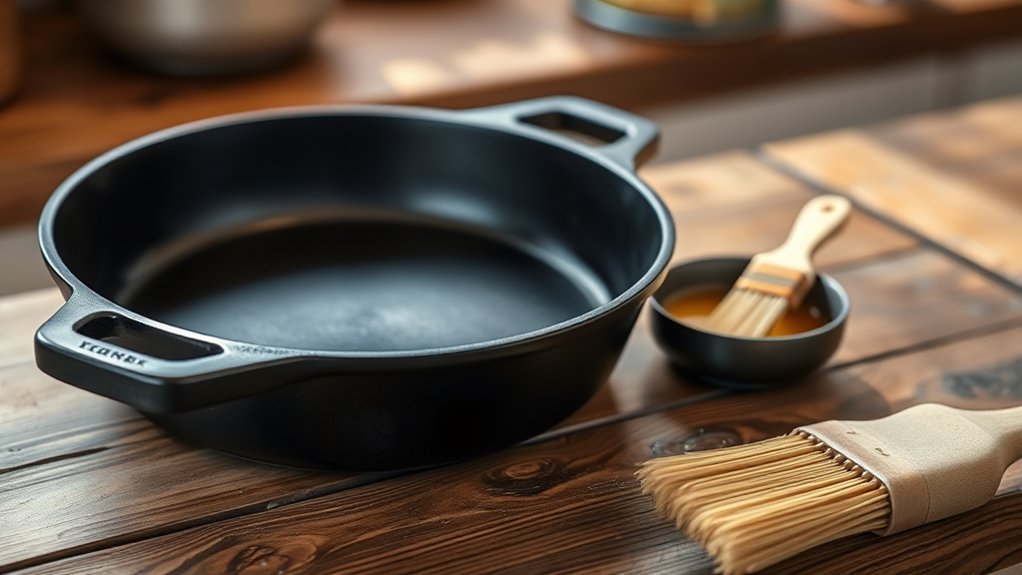
To season your new cast iron skillet, start by thoroughly cleaning and drying it to remove any factory residues.
Next, apply a thin, even layer of oil to the entire surface, including the handle and exterior. This oil coating is essential for creating a durable, non-stick finish through the seasoning process.
Preparing Your Skillet
Although cast iron skillets come pre-seasoned, you should season your new skillet before its first use to build a durable, non-stick surface. Proper preparation enhances skillet benefits like even heat distribution and natural non-stick properties.
Begin by washing the skillet with warm water and mild soap to remove factory residues, then dry it thoroughly to prevent rust. Next, heat the skillet to open its pores, enabling better oil absorption during seasoning.
This step is vital in cast iron care, ensuring a resilient, protective layer that improves with each use. By carefully preparing your skillet, you lay the foundation for longevity and ideal cooking performance.
Neglecting this process can compromise seasoning quality, reducing the skillet’s effectiveness and lifespan.
Applying Oil Coating
Once your skillet is clean, dry, and heated, you’re ready to apply the oil coating that forms the seasoning layer. Use a high-smoke-point oil like flaxseed or grapeseed for best results.
Pour a small amount onto the skillet, then use a lint-free cloth or paper towel to spread it evenly across all surfaces, including the handle and exterior. The goal is a thin, uniform layer to promote effective oil absorption into the cast iron’s pores.
Avoid excess oil, as it can create sticky residue. After coating, place the skillet upside down in a preheated oven at 450°F (232°C) for one hour.
This process polymerizes the oil, enhancing heat retention and building a durable, non-stick surface. Repeat as needed for a robust seasoning.
Why You Shouldn’t Skip Seasoning Your Cast Iron Skillet?
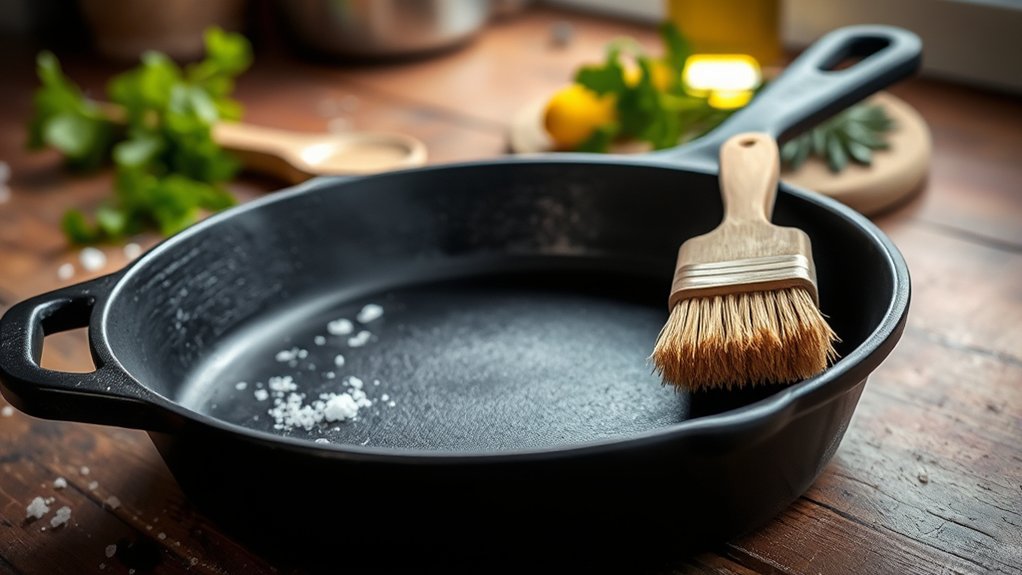
Because seasoning forms a protective layer on your cast iron skillet, skipping this essential step exposes the metal to rust and food sticking. The importance of seasoning lies in creating a durable, non-stick surface that improves with use.
This protective coating prevents moisture from reaching the iron, reducing corrosion risk and extending your skillet’s lifespan. The benefits of seasoning also include enhanced cooking performance; food releases easily without excess oil, making cleanup simpler.
Additionally, a well-seasoned skillet develops a natural patina that adds flavor depth over time. Neglecting seasoning compromises these advantages, leading to uneven heating and poor food release. To fully capitalize on your skillet’s potential, you must prioritize seasoning as a foundational maintenance step before regular cooking.
How to Clean Your Cast Iron Skillet Before First Use
Before you start cooking, you need to remove any factory residue from your cast iron skillet to guarantee safe use. Begin by scrubbing it thoroughly with warm water and mild soap, then dry it completely.
Once clean, apply a thin layer of oil and heat the skillet to initiate the seasoning process that protects the surface.
Removing Factory Residue
Although cast iron skillets come pre-seasoned, they often retain factory residues that can affect flavor and cooking performance. To guarantee ideal use, you need to remove the factory coating thoroughly.
Start by scrubbing the skillet with hot water and a stiff brush. Avoid soap, as it can strip seasoning later. If residue persists, use coarse salt as an abrasive to dislodge stubborn particles.
Rinse the skillet well and dry it completely with a towel or by heating it briefly on the stove. This residue removal process eliminates manufacturing oils and protective coatings that aren’t food-safe.
Completing this step sets a clean foundation for proper seasoning and prevents unwanted flavors from contaminating your food. Don’t skip this essential cleaning before your first cooking session.
Initial Seasoning Steps
To prepare your cast iron skillet for its first use, you’ll need to clean and season it meticulously to build a durable, non-stick surface. Start with initial cleaning by scrubbing the skillet under warm water using a stiff brush or non-abrasive scrubber to remove any factory oils or residues.
Avoid soap if possible, but if necessary, use a mild amount and rinse thoroughly. After cleaning, dry the skillet immediately and completely with a clean towel to prevent rust.
Next, apply a thin layer of high-smoke-point oil over the entire surface, including the handle. Place the skillet upside down in a preheated oven at 400°F for one hour, then let it cool inside.
Proper drying and seasoning seal the iron, ensuring longevity and excellent cooking performance.
Cooking Tips for Your New Cast Iron Skillet
When you start cooking with your new cast iron skillet, seasoning it properly guarantees a natural, non-stick surface that improves with use. To maximize cast iron benefits, preheat your skillet gradually to avoid warping and always use oils with high smoke points. Avoid acidic ingredients initially, as they can damage the seasoning layer.
Use moderate heat; cast iron retains heat well, so excessive heat often isn’t necessary. After cooking, clean your skillet while it’s still warm using hot water and a brush. Skip soap to protect the seasoning.
Dry it thoroughly and apply a thin oil layer to prevent rust. This skillet maintenance routine guarantees durability and ideal performance, letting you enjoy consistent cooking results and the skillet’s legendary heat retention for years to come.
Keep Your Cast Iron Skillet Seasoned and Ready for Years
Maintaining the seasoning on your cast iron skillet guarantees it stays non-stick and rust-free, preserving its performance over time. For long lasting care, you must follow consistent maintenance tips.
After each use, clean the skillet gently with hot water and a soft brush. Avoid soap to protect the seasoning. Dry it thoroughly to prevent rust, then apply a thin layer of oil to seal the surface.
| Step | Action | Frequency |
|---|---|---|
| Clean | Hot water, soft brush | After every use |
| Dry | Thoroughly with towel | After every use |
| Oil | Light coating of vegetable oil | After every use |
| Store | Dry place, ventilated | Always |
| Re-season | Oven bake with oil | Periodically |
These maintenance tips guarantee your skillet stays ready for years.
Common Seasoning and Cooking Mistakes to Avoid
Although seasoning a cast iron skillet might seem straightforward, many users unknowingly make errors that degrade its surface and cooking performance. One common seasoning mistake is applying too much oil during the process, which leads to sticky, uneven layers rather than a smooth, non-stick coating.
You should also avoid using vegetable oils with low smoke points, as they can polymerize poorly and cause a patchy seasoning. Regarding cooking errors, refrain from cooking acidic foods like tomatoes in your skillet early on, as they can strip the seasoning.
Additionally, don’t wash your skillet with soap or soak it in water, since this can break down the seasoning layer. By steering clear of these seasoning mistakes and cooking errors, you’ll maintain your skillet’s durability and best performance.
Frequently Asked Questions
Can I Use Soap to Clean My Cast Iron Skillet Regularly?
You shouldn’t use soap regularly on your cast iron skillet, as it can strip seasoning. Instead, try cleaning techniques like scrubbing with coarse salt and water or using soap alternatives such as mild detergent only occasionally to preserve seasoning.
Is It Safe to Cook Acidic Foods in a Cast Iron Skillet?
You can cook acidic foods in your cast iron skillet, but prolonged exposure may damage the cast iron seasoning and cause acidic food reactions, affecting flavor and surface.
Use acidic ingredients sparingly to preserve your skillet’s seasoning.
How Do I Remove Rust From My Cast Iron Skillet?
You remove rust by scrubbing with steel wool, rinsing, drying thoroughly, then re-seasoning your skillet.
Apply rust prevention by maintaining a thin oil layer and using proper seasoning techniques regularly to protect your cast iron skillet.
Can I Use a Cast Iron Skillet on Induction Cooktops?
You can use your cast iron skillet on induction cooktops because cast iron has excellent induction compatibility. It also provides superior heat distribution, ensuring even cooking.
Just make sure your skillet’s base is flat for proper contact.
What’s the Best Way to Store a Cast Iron Skillet?
Think of your cast iron skillet as a trusted companion. Store it dry and lightly oiled to protect seasoning techniques.
Maintain skillet organization by stacking with paper towels between pans, preventing moisture and rust for long-lasting performance.
Conclusion
You shouldn’t use your cast iron skillet right out of the box without seasoning—it takes just a few simple steps to create a natural, non-stick surface. Did you know a well-seasoned skillet can develop up to 100 layers of polymerized oil? That’s what makes it nearly indestructible and perfect for cooking.
By seasoning and caring for your skillet properly, you guarantee it performs at its best and lasts a lifetime. Remember, using your cast iron skillet right away without seasoning can lead to rust and food sticking.
So, always season your skillet before use to enjoy its full benefits and longevity.



Leave a Reply