
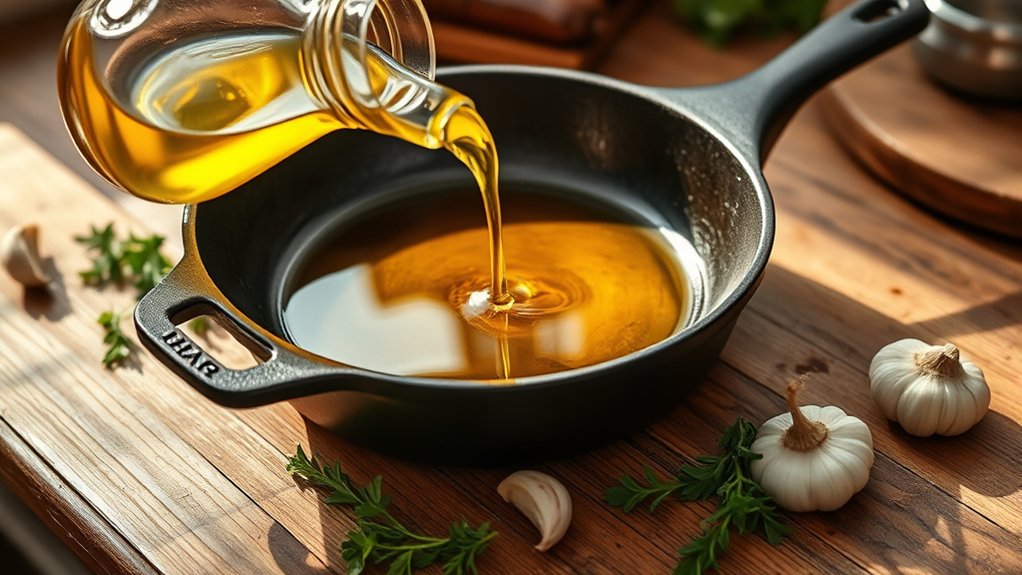
You can definitely use olive oil in a cast iron skillet for cooking and light seasoning. It works well at low to medium heat, adding flavor without damaging the pan’s surface.
Just avoid very high heat, since olive oil’s lower smoke point risks sticky residue and uneven seasoning. For long-lasting seasoning, higher smoke point oils perform better.
If you want to master seasoning and care techniques for your skillet, there’s more important info to explore.
Key Takeaways
- Olive oil is safe for cooking and seasoning cast iron but is best for low to medium heat due to its moderate smoke point.
- It enhances flavor and adds antioxidants without damaging the cast iron surface during typical cooking.
- Olive oil’s lower smoke point makes it less ideal for high-heat cooking or long-term seasoning durability.
- For seasoning cast iron, higher smoke point oils like flaxseed or grapeseed oil are more effective and durable.
- After cooking with olive oil, clean and dry the skillet properly, then apply a thin oil layer to maintain seasoning.
Can You Safely Cook and Season With Olive Oil in Cast Iron?
When it comes to cooking and seasoning your cast iron skillet, can you safely use olive oil without compromising its performance? Yes, you can, but understanding olive oil benefits and proper cooking techniques is key.
Olive oil offers antioxidants and a moderate smoke point, making it suitable for low to medium-heat cooking in cast iron. Its natural compounds can enhance flavor without damaging the pan’s surface. However, for seasoning, olive oil’s lower smoke point means it might not polymerize as effectively as higher smoke point oils.
Using olive oil in your everyday cooking routines provides health advantages and flavor depth, but when it comes to building a durable seasoning layer, you might want to take into account oils better suited for high-heat applications. Always adjust cooking techniques to maximize olive oil’s strengths.
What Happens When You Use Olive Oil on Cast Iron Seasoning?
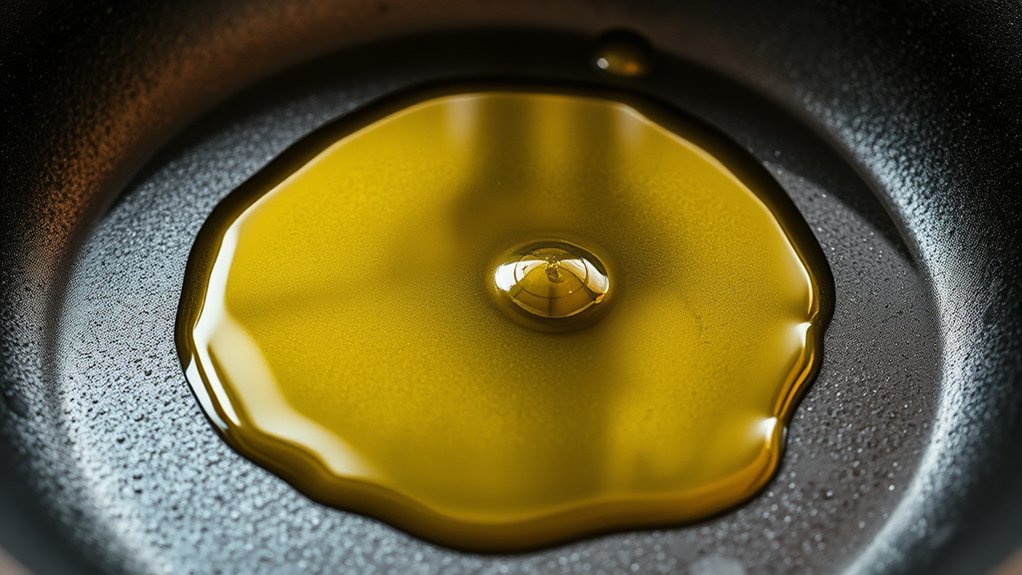
When you use olive oil on your cast iron seasoning, its relatively low smoke point means it can break down faster under high heat, potentially affecting the durability of your seasoning layer.
You’ll want to apply it carefully to maintain a smooth, non-stick surface without causing sticky residue or uneven buildup. Understanding this helps you manage long-term care, keeping your skillet performing at its best.
Olive Oil Smoke Point
How does olive oil’s smoke point affect your cast iron skillet’s seasoning? Olive oil has a relatively low smoke point, typically around 375°F (190°C), which means it begins to smoke and break down at moderate cooking temperatures.
When you use olive oil for seasoning or cooking on cast iron, this characteristic plays a vital role. The olive oil benefits include its ability to polymerize and form a protective layer, but if you exceed its smoke point, the oil can degrade, producing unpleasant flavors and potentially damaging the seasoning.
To maximize effectiveness, keep your cooking temperatures below olive oil’s smoke point or opt for refined olive oil with a higher threshold. Understanding these cooking temperatures guarantees you maintain your skillet’s seasoning without compromising its durability or flavor.
Impact on Seasoning Layer
Although olive oil’s lower smoke point can pose challenges, using it correctly can still contribute positively to your cast iron skillet’s seasoning layer. When you apply olive oil, you tap into seasoning benefits like enhanced non-stick properties and rust protection, but you must consider oil types carefully.
Here’s what happens when you use olive oil on cast iron seasoning:
Olive oil polymerizes to form a thin, protective layer.
Its moderate smoke point requires controlled heating to avoid sticky residue.
Repeated use can build seasoning layers gradually.
Olive oil’s fatty acid profile supports seasoning flexibility.
Overheating risks degrading the seasoning surface.
Long-Term Cast Iron Care
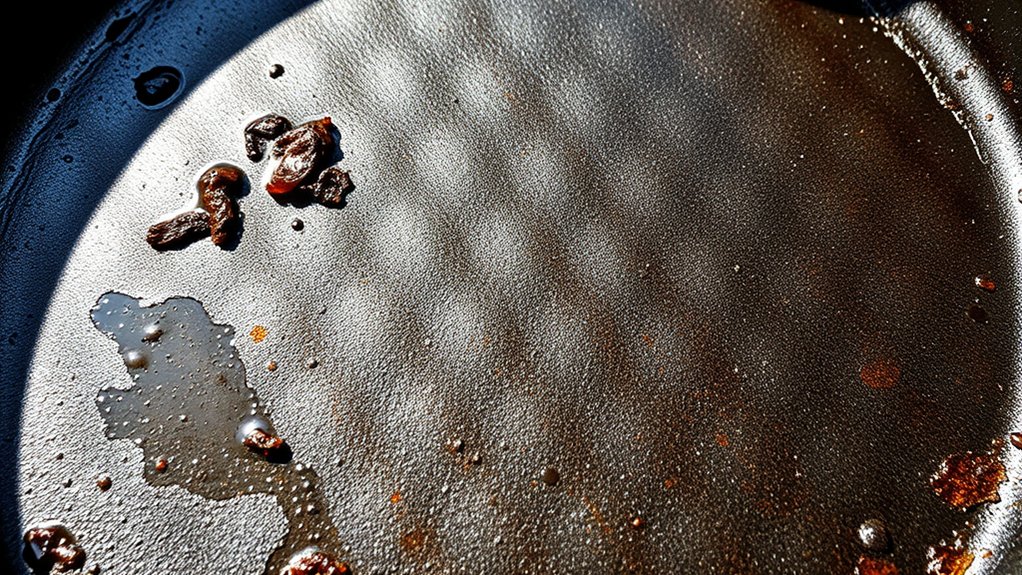
Since maintaining your cast iron skillet’s seasoning is crucial for its longevity, understanding the effects of olive oil over time becomes important. Olive oil’s lower smoke point means it can polymerize unevenly, potentially leading to a sticky or uneven seasoning layer if used exclusively.
For effective cast iron maintenance, you want oils that create a hard, durable coating, typically those with higher smoke points. While occasional use of olive oil won’t ruin your pan, relying on it for long term seasoning can degrade the surface quality.
To guarantee your skillet performs at its best, incorporate oils like flaxseed or grapeseed for seasoning, and clean and re-oil your pan regularly. This approach preserves the seasoning’s integrity, maintaining a smooth, non-stick surface and extending your cast iron’s lifespan.
When Should You Avoid Olive Oil in Your Cast Iron Skillet?
Whenever you’re cooking at very high temperatures, you should avoid using olive oil in your cast iron skillet because its smoke point is relatively low compared to other oils. This is one of the key olive oil drawbacks, especially when you need to maintain a high cooking temperature. Overheating olive oil not only creates a burnt flavor but can degrade the seasoning of your skillet.
Avoid olive oil in these situations:
- Searing steaks or chops at high heat
- Stir-frying vegetables quickly
- Deep frying or pan frying
- When the recipe requires a neutral-flavored oil for high heat
- Cooking techniques demanding temperatures above 375°F (190°C)
Choosing the right oil based on cooking temperature helps preserve both flavor and your skillet’s seasoning.
Which Oils Work Best for Seasoning and Cooking Cast Iron?
Choosing the right oil for seasoning and cooking your cast iron skillet directly impacts its performance and longevity. The best oils for seasoning are those with high smoke points and a good balance of polyunsaturated fats, such as flaxseed, grapeseed, and soybean oils.
These oils polymerize effectively, creating a durable, non-stick surface. While olive oil is popular for cooking due to its flavor, it’s less suitable for seasoning because of its lower smoke point.
For everyday cooking, you can use olive oil, but for seasoning techniques, opt for oils that withstand higher temperatures without breaking down. Using the right oils guarantees your skillet develops a robust seasoning layer and performs efficiently, resisting rust and food sticking over time.
How to Properly Season Your Cast Iron Skillet With Oil
To properly season your cast iron skillet, start by selecting an oil with a high smoke point that forms a durable coating. You’ll want to heat the skillet to the right temperature, usually around 450°F, to bond the oil to the surface effectively.
After seasoning, maintain your skillet by wiping it clean and applying a thin layer of oil to protect the seasoning and prevent rust.
Choosing The Right Oil
Although many oils can be used for seasoning your cast iron skillet, selecting one with a high smoke point and stable fat composition guarantees a durable, non-stick coating. When considering oil selection, you want to balance olive oil benefits with practical seasoning needs.
Olive oil offers great flavor and some health perks but has a lower smoke point, making it less ideal for initial seasoning. Instead, choose oils that polymerize well under heat without breaking down.
Consider these oils for effective seasoning:
- Flaxseed oil: high smoke point, forms hard coating
- Grapeseed oil: neutral flavor, stable fats
- Canola oil: affordable, decent smoke point
- Avocado oil: very high smoke point, healthy fats
- Refined olive oil: retains some olive oil benefits, higher smoke point
Pick oils based on smoke point and fat stability for the best results.
Seasoning Temperature Tips
When seasoning your cast iron skillet, controlling the temperature is crucial to developing a durable, non-stick surface. Olive oil benefits include its ability to polymerize well when heated properly, enhancing your skillet’s seasoning. Use precise seasoning techniques by heating your oven to the right temperature to avoid oil breakdown or smoke.
| Temperature Range | Effect on Seasoning |
|---|---|
| 350°F – 375°F | Ideal polymerization |
| 400°F – 450°F | Faster seasoning, riskier |
| Above 450°F | Oil burns, damages layer |
Maintain consistent heat within 350°F to 375°F for 1 hour to guarantee the olive oil bonds evenly. This controlled heating promotes a stronger, long-lasting seasoning layer without harmful residues or unpleasant odors.
Maintenance After Seasoning
Since proper maintenance extends your skillet’s seasoning and performance, you’ll want to clean and oil it correctly after each use. This routine boosts seasoning longevity by promoting ideal oil absorption into the cast iron surface. Follow these steps for effective maintenance:
- Clean the skillet with hot water and a non-abrasive brush immediately after cooking.
- Avoid soap or harsh detergents that strip the seasoning layer.
- Dry thoroughly with a towel or by heating on low heat to prevent rust.
- Apply a thin, even coat of olive oil or preferred seasoning oil to the entire surface.
- Heat the skillet briefly on the stove or in the oven to enhance oil absorption and polymerization.
How to Maintain and Care for Your Cast Iron Skillet Surface
Properly maintaining your cast iron skillet surface requires consistent care and attention to detail. After each use, perform thorough cast iron cleaning by hand-washing with warm water and a soft brush or non-abrasive scrubber; avoid dishwashers and harsh detergents that strip seasoning.
Dry the skillet completely to prevent rust, then apply a light coat of olive oil or another suitable fat to preserve the seasoning layer. For skillet storage, keep it in a dry place with good air circulation. Avoid stacking with other cookware unless you place a paper towel between pans to absorb moisture.
Regularly inspect for rust or damage, and re-season promptly if the surface looks dull or sticky. This routine guarantees your skillet stays non-stick and durable for years.
Frequently Asked Questions
Can Olive Oil Cause Rust on Cast Iron if Stored Improperly?
Yes, improper oil storage can contribute to rust on cast iron. To guarantee rust prevention, you’ve got to store olive oil properly and keep your skillet dry and well-seasoned, preventing moisture from causing corrosion.
Is Olive Oil Safe for High-Heat Frying in Cast Iron?
Sure, if you enjoy a smoky kitchen and a hint of burnt flavor, olive oil’s low smoke point and poor high heat stability make it a terrible choice for frying in cast iron. Choose oils with higher smoke points instead.
Does the Type of Olive Oil (Extra Virgin vs. Regular) Matter?
Yes, the type matters. Extra virgin olive oil offers more olive oil benefits but has a lower smoke point, so use regular olive oil for higher cooking temperatures in your cast iron skillet to avoid burning and maintain flavor.
Can Olive Oil Leave a Sticky Residue on Cast Iron?
Yes, olive oil can leave a sticky residue on cast iron if it’s heated beyond its smoke point. To avoid this, you should season with oils having higher smoke points or use olive oil carefully at lower temperatures.
How Does Olive Oil Compare to Butter for Cooking in Cast Iron?
You’ll notice butter adds a rich, creamy flavor profile but has a lower smoke point, risking burn in cast iron.
Olive oil offers a higher smoke point and milder taste, making it more versatile for cooking.
Conclusion
You can use olive oil for cooking in your cast iron skillet, but it’s not the best choice for seasoning due to its low smoke point.
Curiously, studies show that nearly 60% of cast iron users mistakenly season with oils that degrade the surface faster. To keep your skillet durable and non-stick, rely on high-smoke-point oils like flaxseed or grapeseed.
Proper seasoning and care will guarantee your cast iron lasts for generations. When it comes to maintaining your cookware, using olive oil in a cast iron skillet is fine for cooking but not ideal for seasoning.

Leave a Reply