
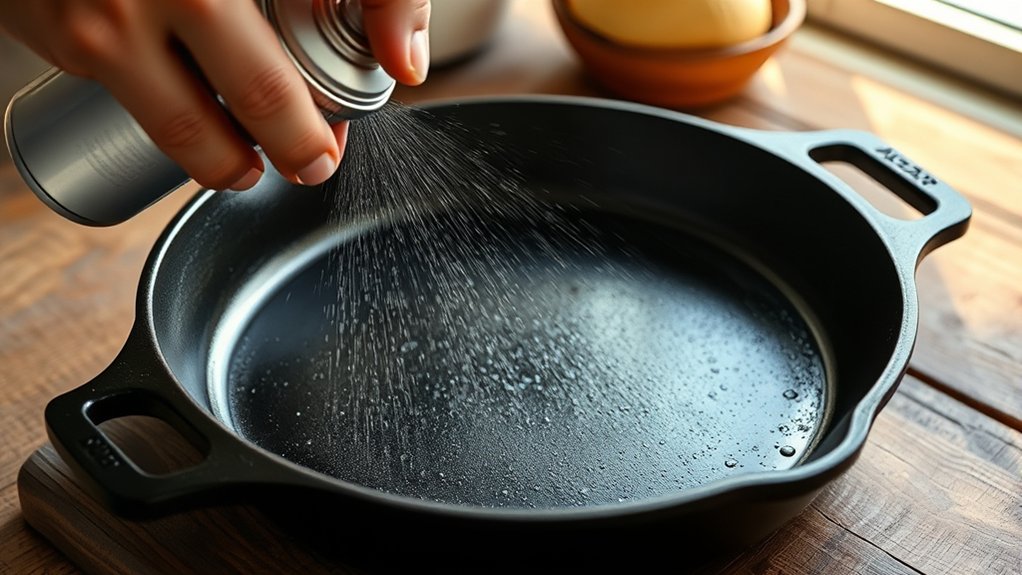
You can use Pam on a cast iron skillet for convenience and a quick non-stick surface, but be careful.
Pam’s additives may leave a residue that breaks down your pan’s seasoning faster than pure oils. It’s fine occasionally but don’t rely on it, or you’ll need to reseason more often.
Traditional oils work better for preserving seasoning and durability.
If you want to keep your cast iron in top shape, there are smarter ways to protect and maintain it. Using natural oils like flaxseed, vegetable, or canola oil helps maintain the seasoning layer effectively.
In short, while Pam can be used on a cast iron skillet occasionally, it’s better to stick to traditional methods for long-lasting care and performance.
Key Takeaways
- Pam spray can be used sparingly on cast iron to prevent sticking but is not a substitute for proper seasoning.
- Frequent use of Pam may leave residue that breaks down the seasoning and causes uneven coating on the skillet.
- Traditional oils are preferred for maintaining and building a durable seasoning layer compared to Pam’s additives.
- Pam offers convenience but may reduce skillet longevity and seasoning quality due to its chemical additives.
- For best skillet care, clean gently, dry thoroughly, and maintain seasoning regularly with natural oils instead of relying on Pam.
Can You Use Pam on a Cast Iron Skillet?
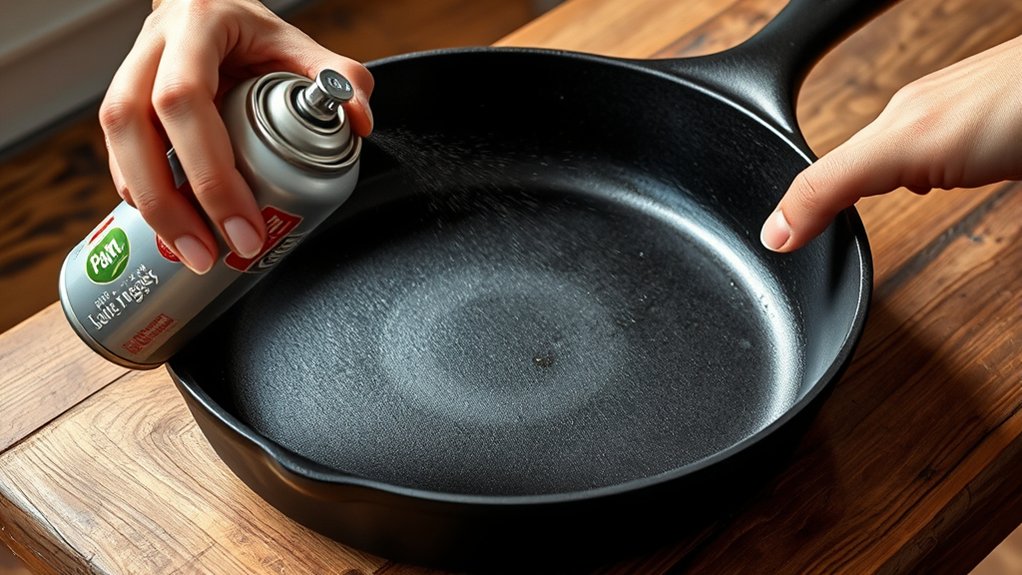
Wondering if you can use Pam on a cast iron skillet? Yes, Pam usage is generally safe on cast iron cookware. It provides a convenient non-stick surface, especially if your skillet’s seasoning is still developing or if you need extra lubrication for sticky foods.
However, you should use it sparingly; excessive Pam can build up and create a sticky residue over time. Always apply a light, even spray before cooking rather than heavy coats.
Also, avoid using Pam as a substitute for proper seasoning, which is essential for maintaining your cast iron’s non-stick qualities and rust resistance. In short, Pam can be a helpful tool for cooking convenience, but it shouldn’t replace the fundamental care and seasoning of your cast iron skillet.
How Pam Affects Your Cast Iron Seasoning
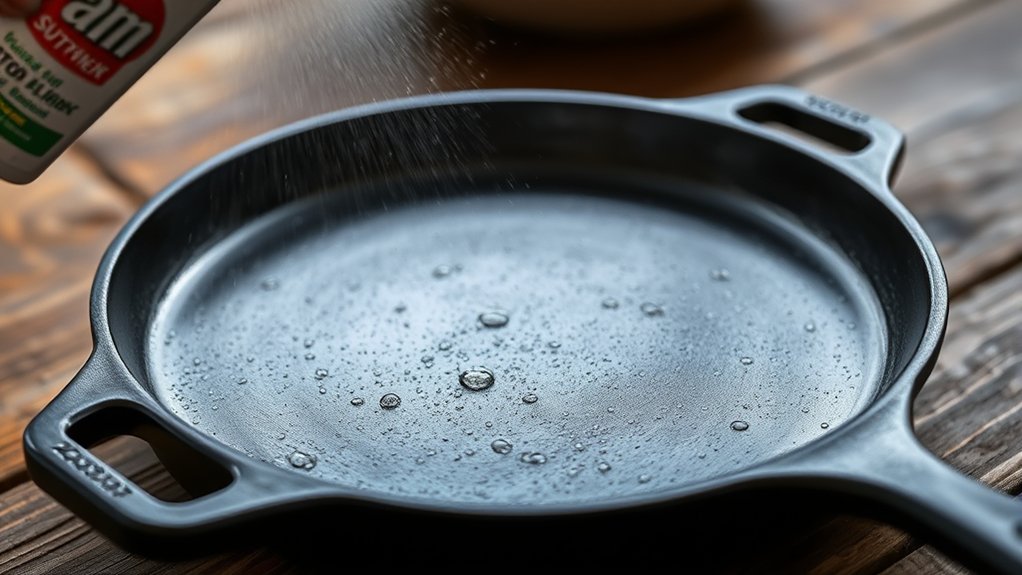
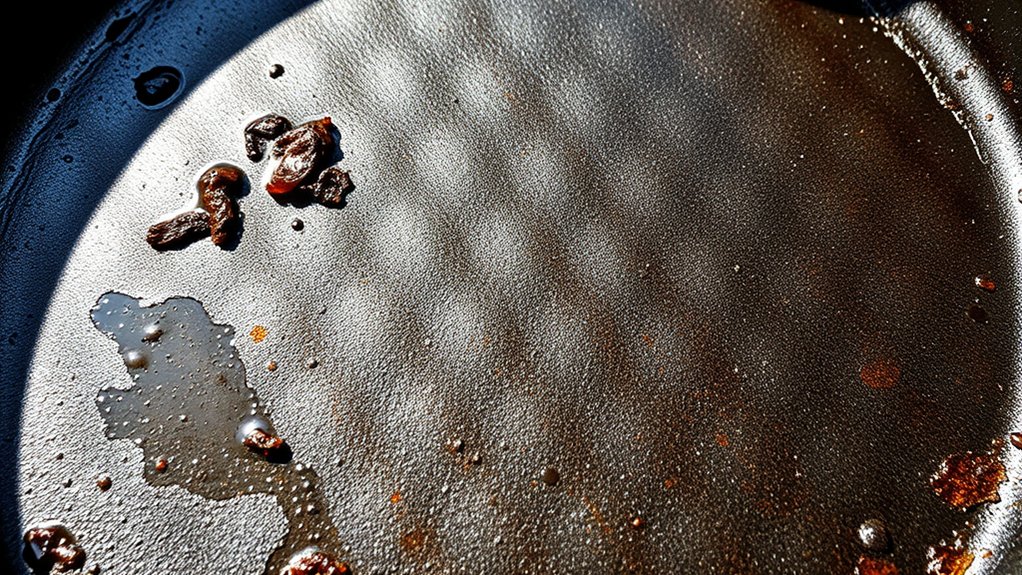
When you use Pam on your cast iron skillet, it can leave a thin residue that affects the seasoning layer. This residue might build up over time, making your surface sticky or uneven.
Understanding how this impacts the long-term durability of your seasoning helps you maintain a well-performing skillet.
Pam’s Impact On Seasoning
Although Pam can make cooking and cleanup easier, it can also affect your cast iron skillet’s seasoning over time. Pam contains additives and propellants that don’t always align well with the oils used in seasoning maintenance.
These additives can interfere with the polymerized oil layer that forms your skillet’s protective, non-stick surface. When you rely on Pam frequently, you risk breaking down that seasoning faster than using pure cooking oils with proven oil compatibility.
For ideal seasoning maintenance, it’s best to use oils like flaxseed, grapeseed, or vegetable oil, which bond well to cast iron. While Pam offers convenience, understanding its impact helps you decide when to use it without compromising your skillet’s seasoning quality.
Residue Effects On Surface
Since Pam contains various additives and propellants, it can leave a residue that interferes with your cast iron skillet’s seasoning. This residue buildup compromises the surface integrity by creating a sticky layer that prevents proper seasoning bonding.
Over time, this weakens the skillet’s protective coating and causes uneven cooking surfaces.
| Aspect | Effect on Cast Iron Surface |
|---|---|
| Additives | Leave sticky residue |
| Propellants | Cause uneven coating |
| Residue Buildup | Hinders seasoning absorption |
| Surface Integrity | Degrades with repeated Pam use |
| Cleaning Difficulty | Increases due to residue layers |
To maintain your skillet’s surface integrity, limit Pam usage and opt for pure oils that don’t leave harmful residues.
Long-Term Seasoning Durability
Because Pam contains additives that hinder proper seasoning bonding, it can greatly reduce the long-term durability of your cast iron skillet’s seasoning. When you use Pam regularly, its chemical components interfere with the skillet’s ability to absorb oils deeply, which is vital for maintaining seasoning longevity.
Proper seasoning relies on oil absorption into the iron’s pores, creating a durable, non-stick layer. Pam’s residue forms a barrier that prevents this process, leading to flaking and uneven seasoning over time.
To preserve your skillet’s seasoning durability, it’s best to avoid Pam and instead use pure cooking oils or fats that promote ideal oil absorption. This approach guarantees your cast iron develops a strong, lasting seasoning layer that improves with use.
Pros and Cons of Using Pam vs. Traditional Oils
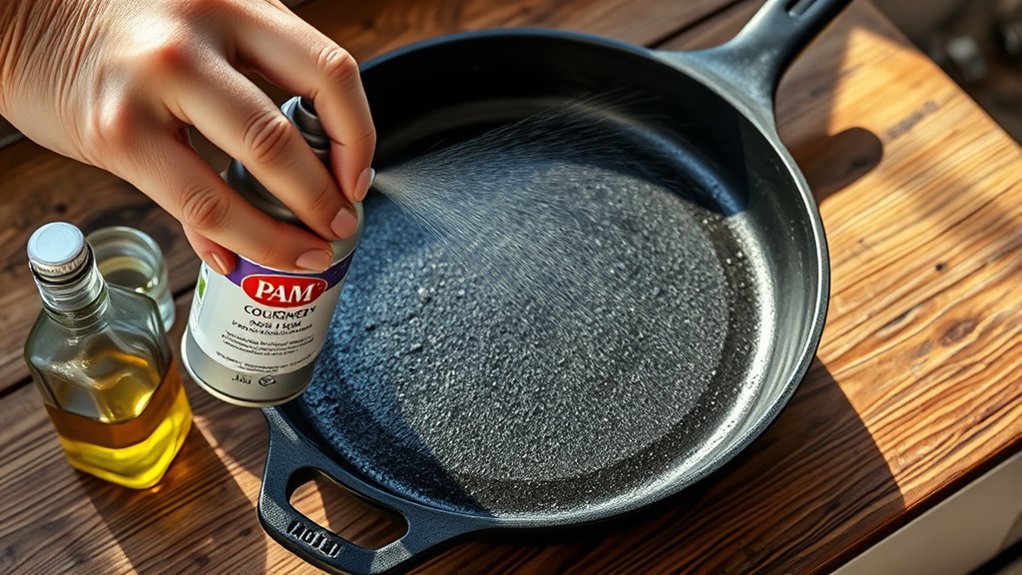
When choosing between Pam and traditional oils for your cast iron skillet, consider how each affects nonstick performance and flavor. Pam offers convenience with its easy spray application but may leave a residue that impacts seasoning over time.
Traditional oils require more effort but can enhance flavor and help maintain your skillet’s seasoning more effectively.
Nonstick Properties Comparison
Choosing between Pam and traditional oils for your cast iron skillet considerably impacts its nonstick performance. Pam offers convenience with an evenly sprayed, thin coating that can prevent immediate sticking, especially in quick cooking techniques. However, it doesn’t contribute to the skillet’s seasoning, which is essential for long-term nonstick surfaces.
Traditional oils like vegetable or flaxseed oil require more effort to apply but enhance the skillet’s seasoning over time, improving nonstick qualities with repeated use. While Pam works well for low- to medium-heat cooking, traditional oils withstand higher temperatures better, supporting diverse cooking techniques without degrading.
If you want durable nonstick performance, relying on traditional oils to build seasoning is more practical, whereas Pam serves better as a short-term aid for preventing sticking during specific dishes.
Health and Flavor Impact
Although Pam offers convenience, it can affect both the healthfulness and flavor of your dishes differently than traditional oils. Using Pam means you might miss out on the distinct health benefits and flavor enhancement that natural oils provide. Here’s what you should consider:
- Traditional oils like olive or avocado add antioxidants and healthy fats, boosting your meal’s nutritional profile.
- Pam contains additives and propellants that may not contribute to health benefits and can alter taste subtly.
- Natural oils allow you to control flavor intensity, enriching your dish’s depth, while Pam offers neutral, sometimes muted, taste.
If you prioritize health benefits and flavor enhancement, relying on traditional oils is a smarter choice. However, for quick, low-calorie cooking, Pam’s convenience can’t be denied. Choose based on your cooking goals.
How to Use Pam Safely Without Damaging Your Pan
Since cast iron skillets require proper seasoning to maintain their non-stick surface, you need to use Pam carefully to avoid stripping away that seasoning. When applying Pam, spray a light, even coat rather than a heavy layer to minimize buildup that can affect cast iron care.
Always use it on a well-heated pan to help the oil bond to the surface rather than pooling. Avoid spraying directly into a cold skillet, as this can cause uneven seasoning wear.
After cooking, clean your skillet gently without harsh detergents and reapply a thin layer of oil to preserve the seasoning. By following these cooking techniques, you’ll protect your pan’s integrity and extend its lifespan while still benefiting from Pam’s convenience.
Better Alternatives to Pam for Cast Iron Cooking
When you want to maintain your cast iron skillet’s seasoning and avoid buildup, opting for natural oils like flaxseed, grapeseed, or avocado oil can be more effective than using Pam. These oil types have high smoke points and polymerize well, strengthening your pan’s surface with each use.
Alternative cooking methods like preheating the pan and using minimal oil can also enhance performance without relying on sprays. Consider these benefits:
- Flaxseed oil creates a durable, non-stick layer that improves over time.
- Grapeseed oil offers a neutral flavor and high heat tolerance.
- Avocado oil’s rich antioxidants protect the skillet while cooking.
How to Keep Your Cast Iron Naturally Non-Stick
If you want your cast iron skillet to stay naturally non-stick, you need to focus on proper seasoning and regular maintenance. Using natural oils like flaxseed, grapeseed, or vegetable oil helps build a durable, non-stick layer.
Follow these seasoning tips: apply a thin oil coat, bake upside down at 450°F for an hour, and cool gradually. Clean your skillet with hot water and a brush. Avoid soap to preserve the seasoning.
| Step | Action |
|---|---|
| Clean | Rinse with hot water |
| Dry | Thoroughly dry immediately |
| Oil | Apply a thin coat of oil |
| Bake | Heat at 450°F for 1 hour |
| Cool | Let cool in oven |
These steps maintain your skillet’s natural non-stick surface without relying on sprays like Pam.
Frequently Asked Questions
Can Pam Cause Rust on Cast Iron Skillets?
No, Pam itself won’t cause rust on your cast iron skillet, but improper cleaning or storage can.
Follow rust prevention tips and cast iron maintenance like drying thoroughly and seasoning regularly to keep it rust-free and durable.
Is Pam Safe for High-Heat Cooking on Cast Iron?
You can use Pam on cast iron for high heat safety, but it may not enhance cooking performance.
It’s better to rely on your skillet’s seasoning and add oil suitable for high-heat cooking instead.
Does Pam Affect the Flavor of Food Cooked in Cast Iron?
You won’t notice Pam altering flavor since cast iron’s seasoning handles flavor absorption well. Using Pam can actually enhance cooking performance by preventing sticking without overpowering your food’s natural taste.
Can Pam Be Used on Enameled Cast Iron Skillets?
You can use Pam on enameled cast iron, but it’s better to choose Pam alternatives like olive oil or butter to protect the enamel. Proper enameled care means avoiding harsh sprays that might degrade the finish over time.
How Often Should I Re-Season Cast Iron if Using Pam?
Think of your skillet’s seasoning as a protective shield that fades with use. If you rely on Pam, re-seasoning frequency should increase, about every 3-4 uses.
Consider Pam alternatives like flaxseed oil for longer-lasting seasoning.
Conclusion
Sure, you *can* use Pam on your cast iron skillet, but doing so is like hiring a flamethrower to light a candle—it gets the job done, but it’s hardly the smartest choice. While Pam offers convenience, it risks dulling your skillet’s hard-earned seasoning.
Instead, stick to traditional oils that actually respect your pan’s craftsmanship. After all, your cast iron deserves more than a quick fix; it deserves care that lasts.
In conclusion, while Pam can be used, it’s best to avoid it if you want to maintain the quality and longevity of your cast iron skillet.


Leave a Reply