
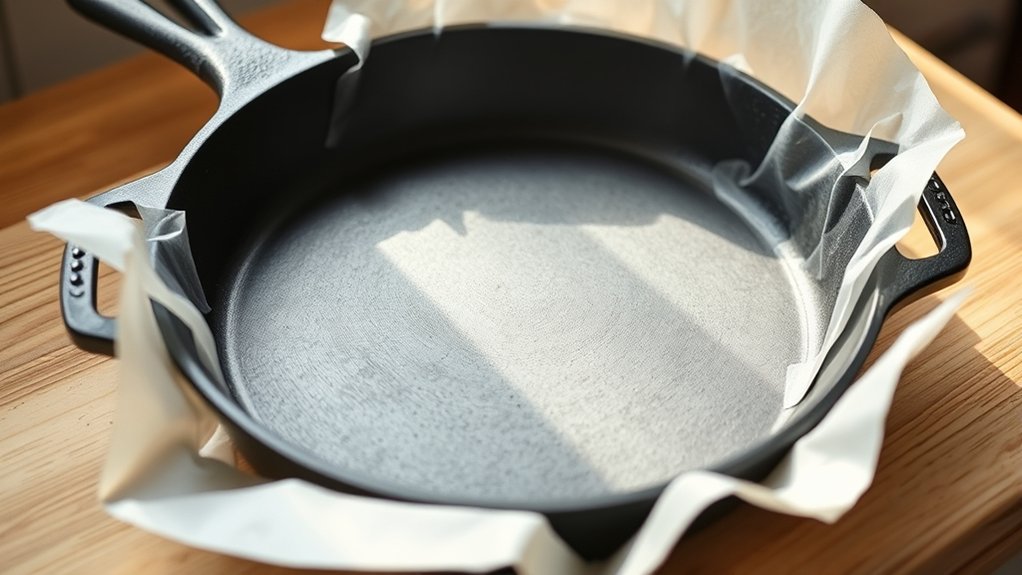
You can use parchment paper in your cast iron skillet safely at moderate temperatures, typically up to 420°F, to prevent sticking and make cleanup easier.
Using parchment paper in cast iron skillets also helps protect the skillet’s seasoning, especially during baking or roasting.
Just avoid exposing the parchment paper to direct flames or very high heat, which can cause it to burn or smoke.
If you want to master the best ways to use parchment—and explore smart alternatives—you’ll find plenty of useful tips ahead.
Key Takeaways
- Parchment paper is safe in cast iron up to 420°F and should not contact open flames or very high heat.
- It prevents sticking and simplifies cleanup while protecting the skillet’s seasoning layer.
- Trim parchment paper edges to avoid ignition from contact with heating elements or flames.
- Avoid high-temperature searing when using parchment to prevent burning or smoking.
- Alternatives like silicone mats or light oiling offer reusable, high-heat non-stick options for cast iron.
Is Parchment Paper Safe to Use in Cast Iron Skillets?
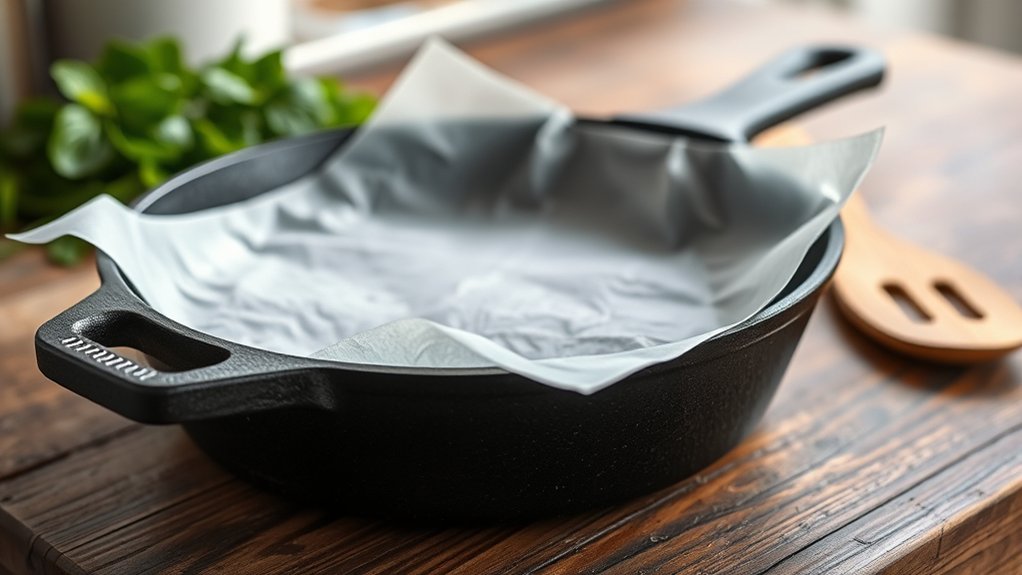
Although parchment paper is a kitchen staple for baking, you might wonder if it’s safe to use in a cast iron skillet. The good news is, parchment paper safety generally holds up well when used correctly in cast iron. It can withstand temperatures up to about 420°F (215°C), which suits many cooking tasks.
However, you should avoid direct contact with open flames or very high heat to prevent burning. Using parchment paper can also help with cast iron maintenance by reducing the need for excessive scrubbing, protecting the seasoning layer.
Just make certain the paper doesn’t extend beyond the pan’s edges, where it could ignite. By following these simple precautions, you can safely incorporate parchment paper into your cast iron cooking routine without compromising your skillet’s longevity.
When Is Parchment Paper Helpful or Harmful for Cast Iron Cooking?
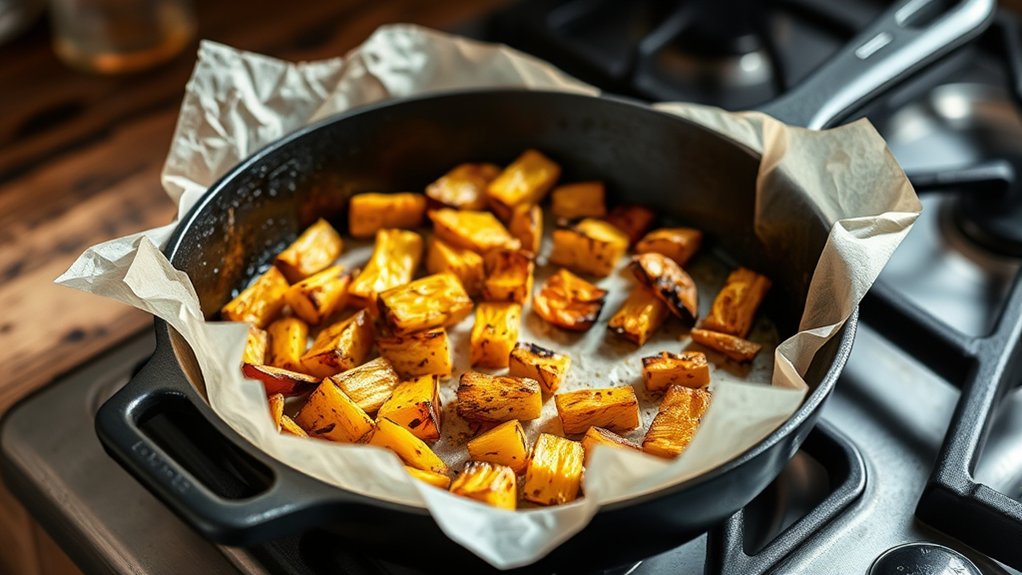
When should you reach for parchment paper in your cast iron skillet, and when might it cause more harm than good? Parchment paper benefits shine when you want to prevent sticking or make cleanup easier, especially with delicate foods like fish or baked goods. It acts as a barrier, protecting your cast iron’s seasoning from harsh scrubbing.
However, parchment paper can be harmful if you use it at too high a temperature. Most parchment papers aren’t designed for the intense heat cast iron can reach, risking burning or smoking. Another pitfall is relying on it too much, which might prevent your skillet from developing its natural non-stick surface.
How to Use Parchment Paper Correctly With Your Cast Iron Skillet
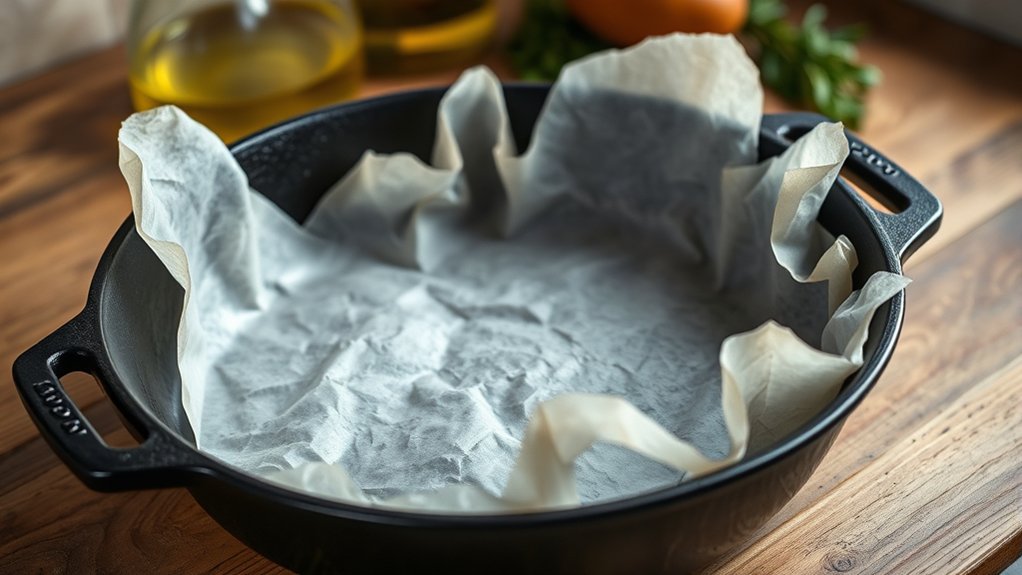
Knowing when to use parchment paper in your cast iron skillet is just the start; applying it correctly guarantees you get the most out of both the paper and your pan. First, always confirm the parchment paper fits snugly without crumpling, preventing uneven cooking or burning.
Trim excess paper to avoid contact with open flames or heating elements. Use parchment paper benefits like easy cleanup and reduced sticking when baking or roasting. Remember, parchment can’t withstand extreme direct heat for long, so avoid high-temperature searing.
As a cast iron tip, preheat your skillet before laying down the parchment to maintain even heat distribution. With these steps, you’ll protect your skillet’s seasoning while enjoying hassle-free cooking and the natural non-stick advantages cast iron offers.
Easy Alternatives to Parchment Paper for Non-Stick Cast Iron Cooking
Looking for easy alternatives to parchment paper that keep your cast iron skillet non-stick? Silicone mats are a fantastic option. They’re heat-resistant, reusable, and provide a smooth surface that prevents food from sticking without affecting flavor.
Plus, they’re easy to clean and eco-friendly. Another great choice is using baking sheets tailored for high heat. These sheets can line your skillet, protecting both the pan and your food, especially when roasting or baking.
You can also lightly oil your cast iron before cooking, creating a natural non-stick barrier. Each of these alternatives helps maintain your skillet’s seasoning while simplifying cleanup. By experimenting with silicone mats and baking sheets, you’ll find non-stick solutions that fit your cooking style perfectly.
Frequently Asked Questions
Can Parchment Paper Withstand the High Heat of Cast Iron Skillets?
You shouldn’t rely on parchment paper’s high temperature resistance in a cast iron skillet because it can burn at high heat.
To protect your cast iron care, use it only at low temperatures or as a liner after cooking.
Does Parchment Paper Affect the Seasoning of a Cast Iron Skillet?
Don’t worry. Parchment paper won’t harm your skillet’s seasoning preservation. Its non-stick surface creates minimal parchment paper interaction.
This lets your cast iron maintain its flavorful, protective coating while you cook or bake with confidence and ease.
Can I Use Parchment Paper for Baking in a Cast Iron Skillet?
You can use parchment paper for baking in a cast iron skillet to prevent sticking and simplify cleanup.
Just remember, proper baking techniques and skillet maintenance guarantee your cast iron stays seasoned and performs beautifully over time.
Is Parchment Paper Reusable When Cooking With Cast Iron?
Think of parchment paper as a delicate shield; its parchment durability limits reusability. You can reuse it sparingly, but for ideal cooking efficiency, fresh sheets guarantee better non-stick performance and safer, more even heat distribution in your cast iron skillet.
How Does Parchment Paper Compare to Silicone Mats in Cast Iron Cooking?
You’ll find silicone mats offer superior durability and better heat retention in cast iron cooking compared to parchment paper, which can burn or tear.
Silicone’s reusable nature makes it a more reliable, long-lasting choice.
Conclusion
You might worry that parchment paper won’t hold up in your cast iron skillet’s high heat—but it actually can, up to about 420°F. Using it wisely helps prevent sticking and makes cleanup a breeze, especially with delicate foods. Just avoid direct flame or broiler use, and you’ll be fine.
If you prefer, there are great alternatives like silicone mats or well-seasoned skillets. These options also help protect your food and cookware while cooking.
So go ahead—parchment paper can be a helpful kitchen ally with your cast iron skillet!

Leave a Reply