
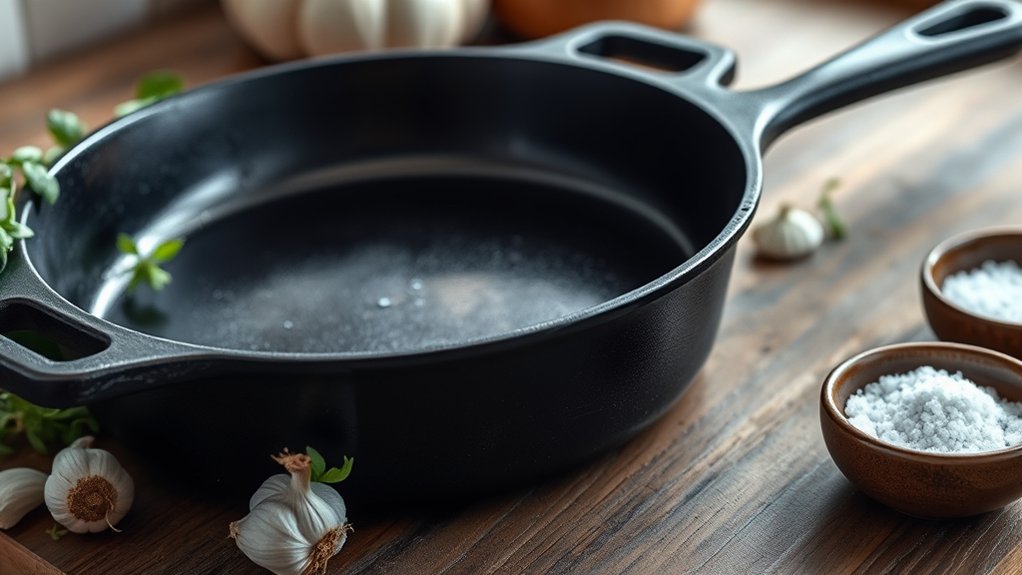
Yes, you can use a pre-seasoned cast iron skillet immediately for cooking without any extra seasoning.
The factory-applied seasoning creates a durable, non-stick layer that protects your pan and enhances heat retention.
Just preheat gradually and avoid harsh detergents to maintain this coating.
Over time, cooking regularly will build a stronger, personalized seasoning layer.
If you want to get the best performance and longevity from your skillet, understanding proper use and care will be essential.
Key Takeaways
- Yes, pre-seasoned cast iron skillets are ready for immediate cooking without additional seasoning.
- Factory seasoning provides a protective, non-stick surface for reliable use from the start.
- Avoid harsh detergents and high heat to maintain the skillet’s seasoning layer.
- Regular cooking builds personal seasoning layers, improving performance and durability.
- Proper cleaning and occasional re-seasoning help preserve the skillet’s non-stick coating.
Can I Use a Pre-Seasoned Cast Iron Skillet Right Away?
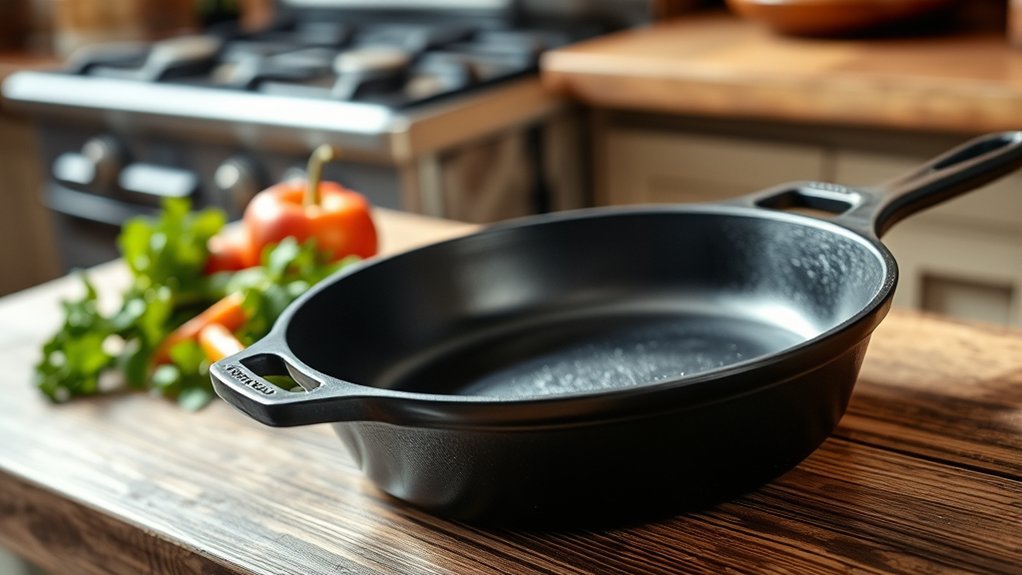
Wondering if you can use a pre-seasoned cast iron skillet right away? Absolutely. One of the key pre-seasoned benefits is that these skillets come ready for immediate usage, saving you the initial seasoning process.
You can use a pre-seasoned cast iron skillet immediately—no need to season before cooking.
When manufacturers apply a factory seasoning, they create a protective, non-stick layer that prevents rust and improves cooking performance from the start. You can confidently heat your skillet, add oil, and cook without waiting.
However, treat the seasoning gently. Avoid harsh detergents and high heat initially to preserve the coating. Using it right away means you can enjoy the durability and heat retention cast iron offers while building up your own seasoning layers through regular cooking.
This practical approach maximizes your skillet’s lifespan and performance efficiently.
Should I Add Extra Seasoning to My Pre-Seasoned Cast Iron Skillet?
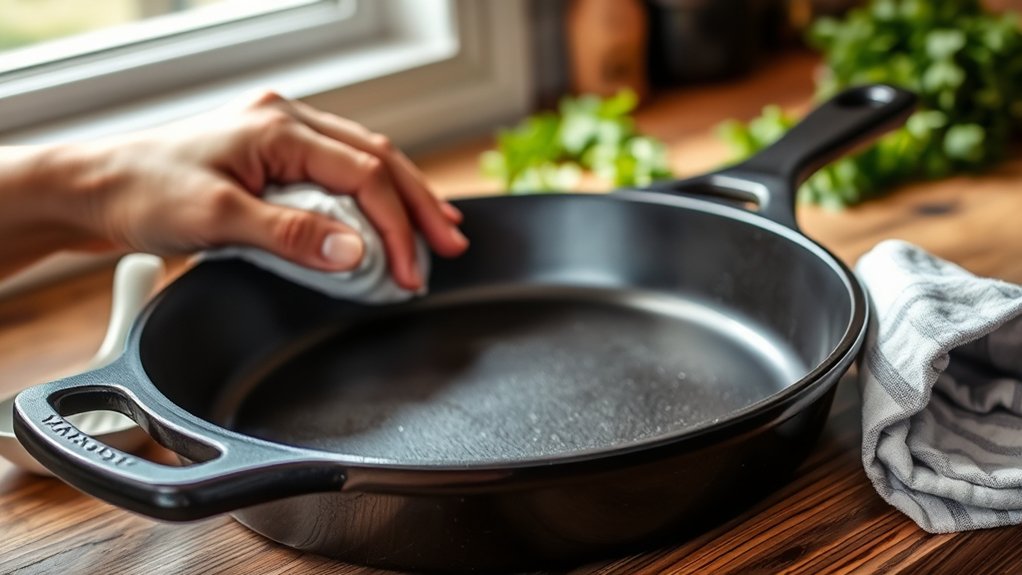
While you can use a pre-seasoned cast iron skillet right away, adding extra seasoning can greatly enhance its performance and longevity. Extra seasoning builds a more durable, non-stick surface and protects the pan from rust.
It deepens the skillet’s seasoning benefits, improving heat retention and food release. You’ll notice easier cooking and cleaning after applying additional layers.
| Seasoning Aspect | Benefits |
|---|---|
| Durability | Protects against rust and wear |
| Non-stick Quality | Improves food release |
| Heat Retention | Enhances cooking consistency |
| Maintenance Ease | Simplifies cleaning and upkeep |
Adding extra seasoning isn’t mandatory but is a practical step to maximize your skillet’s lifespan and cooking performance.
How Are Pre-Seasoned Cast Iron Skillets Made?
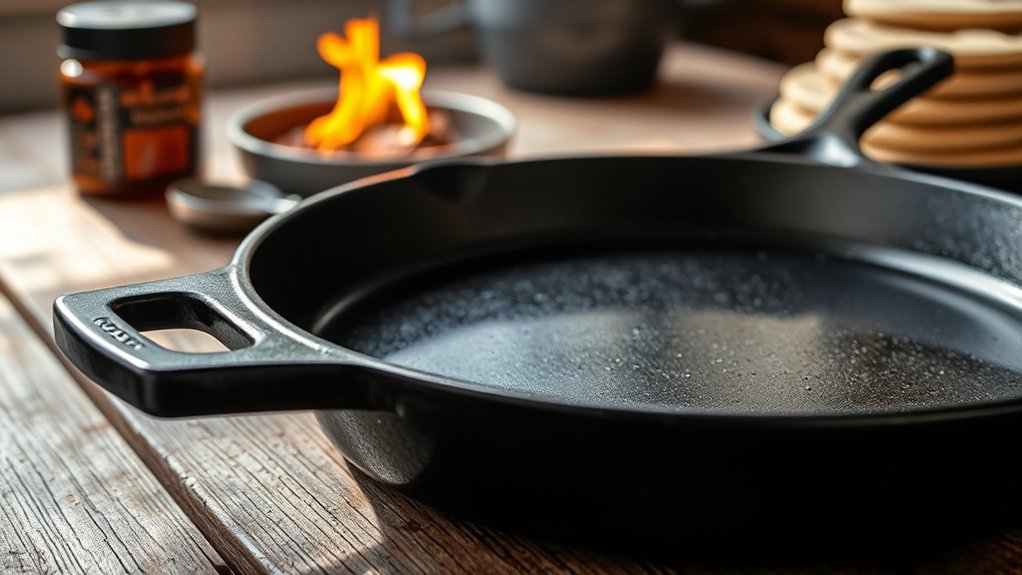
Pre-seasoned cast iron skillets undergo a specific process that applies a protective layer of oil baked onto the surface, making them ready for immediate use. During the manufacturing process, the skillet is first cast and cleaned thoroughly.
Then, manufacturers apply a thin coating of vegetable oil or flaxseed oil, chosen for its polymerization properties. This oil is heated at high temperatures in an industrial oven, causing it to bond firmly to the iron through a seasoning technique.
This forms a durable, non-stick layer that prevents rust and enhances cooking performance. The consistency of this process guarantees each skillet arrives with a reliable seasoning foundation.
Understanding this manufacturing process helps you appreciate why pre-seasoned skillets offer convenience, saving you time before your first use.
Tips for Cooking With a Pre-Seasoned Cast Iron Skillet
Even though your cast iron skillet comes ready to use, you should take specific steps to maintain its seasoning and get the best cooking results. Proper cooking techniques will not only preserve the skillet’s non-stick surface but also enhance flavor in your dishes.
| Tip | Benefit |
|---|---|
| Preheat gradually | Guarantees even heat distribution |
| Use moderate oil amounts | Protects seasoning, boosts flavor |
| Avoid acidic foods early | Prevents seasoning damage |
| Cook fatty foods first | Builds up seasoning layers |
How to Clean and Maintain Your Pre-Seasoned Cast Iron Skillet
Maintaining the seasoning on your cast iron skillet goes hand in hand with how you clean it after each use. Use gentle cleaning techniques: avoid soap or harsh detergents that strip seasoning. Instead, scrub with a stiff brush or coarse salt and warm water.
Dry your skillet thoroughly. Moisture invites rust. After drying, apply a thin layer of cooking oil to restore the protective coating. For maintenance tips, always heat your skillet briefly before storage to guarantee complete dryness.
Never soak the skillet or place it in a dishwasher. Regularly re-season your skillet by applying oil and heating it in the oven to reinforce the non-stick layer. Following these cleaning techniques and maintenance tips will keep your pre-seasoned cast iron skillet in prime condition for years.
Common Pre-Seasoned Cast Iron Skillet Problems and How to Fix Them
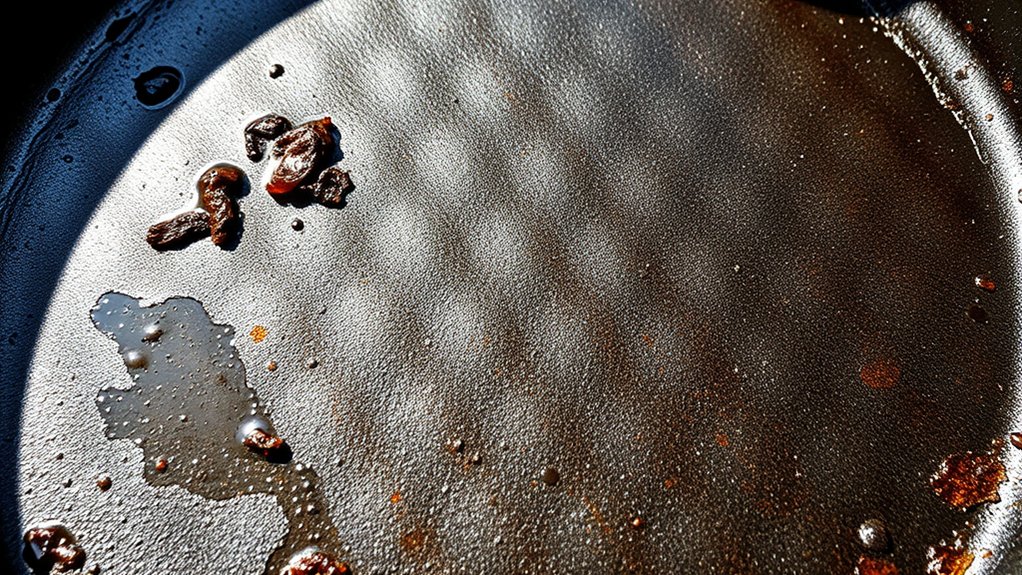
You might notice sticky surfaces, rust spots, or uneven seasoning on your pre-seasoned cast iron skillet, which can affect cooking performance. These issues usually stem from improper cleaning, moisture exposure, or inconsistent seasoning layers.
Addressing them promptly with the right techniques will restore your skillet’s non-stick surface and longevity.
Sticky Surface Issues
Although pre-seasoned cast iron skillets offer convenience, their surfaces can sometimes become sticky, which hampers cooking performance. This sticky residue usually results from excess oil or uneven seasoning buildup.
To fix it, follow these steps:
- Clean thoroughly: Wash the skillet with hot water and a mild scrubber to remove loose residue. Avoid soap, which can strip seasoning.
- Dry and heat: Completely dry the skillet, then heat it on the stovetop to evaporate any moisture.
- Re-season properly: Apply a thin layer of high-smoke-point oil and bake it upside down at 450°F for an hour to build a smooth, non-sticky seasoning layer.
Rust Formation Causes
One common issue with pre-seasoned cast iron skillets is rust formation, which usually happens when moisture interacts with the iron surface. If you don’t dry your skillet thoroughly after washing, water can linger and start corrosion.
Similarly, storing your skillet in a damp environment encourages rust. To prevent this, apply rust prevention techniques like drying the skillet completely with a towel and heating it briefly on the stove to evaporate residual moisture.
Regularly applying a thin layer of oil after cleaning also creates a protective barrier against moisture. Proper cast iron care means avoiding soaking the skillet and never leaving it wet.
Uneven Seasoning Spots
When seasoning on a pre-seasoned cast iron skillet appears uneven, it can cause inconsistent cooking performance and affect the skillet’s non-stick properties. Uneven heating often leads to irregular seasoning buildup, causing some spots to be sticky or dull. To fix this, follow these steps:
- Clean the skillet thoroughly with hot water and a stiff brush to remove any loose or uneven seasoning buildup.
- Dry the skillet completely, then apply a thin, even layer of cooking oil all over the surface.
- Bake the skillet upside down at 450°F (232°C) for one hour to promote even polymerization and smooth out uneven seasoning spots.
Frequently Asked Questions
Can I Use Soap on a Pre-Seasoned Cast Iron Skillet?
You can use mild soap on a pre-seasoned cast iron skillet occasionally without harming the seasoning.
Avoid harsh soap effects by sticking to gentle cleaning methods like soft sponges and thorough drying to maintain its non-stick surface.
How Long Does the Seasoning on a Pre-Seasoned Skillet Last?
Think of the seasoning lifespan as a living shield. It lasts months but fades without care. You’ve got to oil regularly, avoid harsh scrubbing, and heat properly.
These maintenance tips keep your skillet’s non-stick magic alive.
Can I Use a Pre-Seasoned Skillet on an Induction Cooktop?
Yes, you can use a pre-seasoned skillet on an induction cooktop. Its excellent induction compatibility guarantees the skillet heats quickly, while the cast iron’s superior heat distribution assures even cooking throughout your meal.
Is It Safe to Cook Acidic Foods in a Pre-Seasoned Skillet?
You can cook acidic foods in a pre-seasoned skillet, but frequent use may weaken the seasoning durability. To maintain it, avoid prolonged cooking of highly acidic dishes and re-season your skillet regularly for best performance.
What Oils Are Best for Reseasoning a Cast Iron Skillet?
Think of best oil options as armor for your skillet. Flaxseed, grapeseed, and avocado oils build a durable, shiny shield. Use precise reseasoning techniques: apply thin coats, bake at high heat, and repeat for lasting nonstick protection.
Conclusion
You can definitely use your pre-seasoned cast iron skillet right away, but remember, “practice makes perfect.” Adding extra seasoning over time only improves its non-stick surface and durability. Treat it well by cooking with care, cleaning gently, and re-seasoning as needed.
With proper maintenance, your skillet will become a trusty kitchen companion, delivering excellent results for years. Embrace the process, and you’ll master cast iron cooking like a pro. Using a pre-seasoned cast iron skillet is a great way to start your journey toward perfect cast iron cooking.



Leave a Reply