
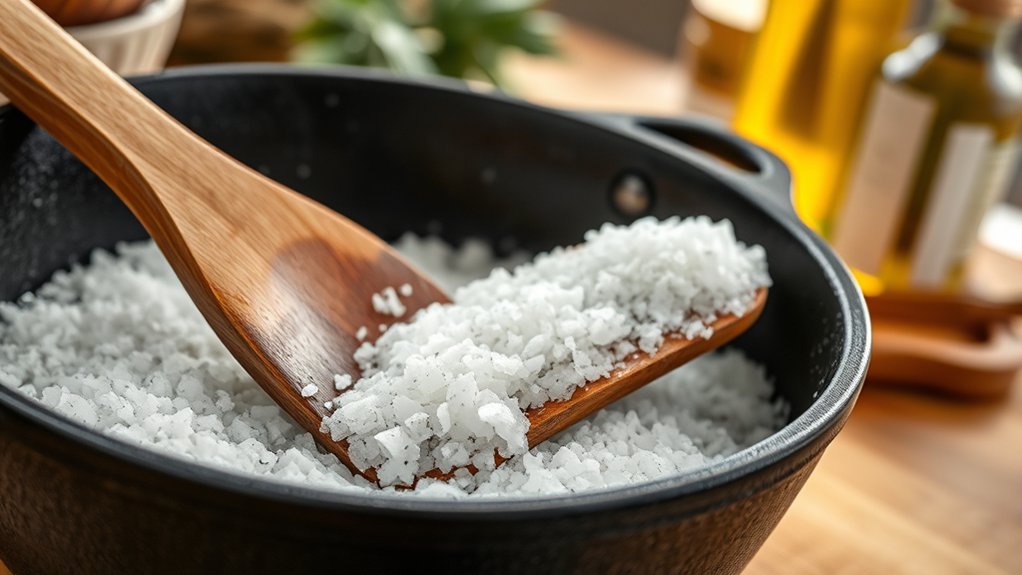
You can definitely use salt to clean your cast iron skillet—it’s a natural and effective way to remove stuck-on food.
Coarse salt acts as a gentle abrasive that won’t damage the essential seasoning that keeps your pan non-stick and rust-free.
Start by warming the pan slightly, then sprinkle a generous amount of coarse salt over the surface.
Use a cloth or paper towel to scrub the skillet, loosening any food residue.
After scrubbing, rinse the pan with warm water and dry it thoroughly.
This salt cleaning method helps preserve your skillet’s seasoning and extends its lifespan without the need for harsh detergents.
If you want to master maintaining and re-seasoning your cast iron, there’s more useful advice ahead.
Key Takeaways
- Yes, coarse salt gently scrubs stuck-on food without damaging the skillet’s seasoning or non-stick surface.
- Salt cleaning preserves the essential oil layer, preventing rust and maintaining skillet longevity.
- Warm the skillet and remove loose debris before scrubbing with salt and a cloth or paper towel.
- Avoid salt on stubborn baked-on residue, greasy buildup, or delicate newly applied seasoning.
- Always dry thoroughly and re-season the skillet after salt cleaning to maintain its protective coating.
Why Is Salt a Popular Choice for Cleaning Cast Iron Skillets?
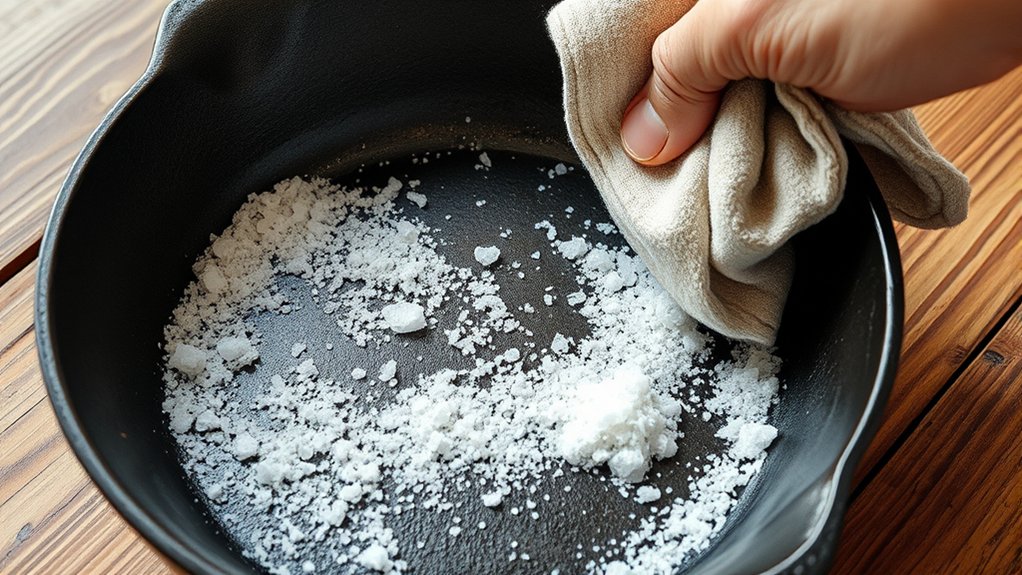
Why choose salt when cleaning your cast iron skillet? Salt offers several benefits that make it a practical and effective cleaning agent. Its coarse texture acts as a gentle abrasive, allowing you to scrub away stuck-on food without harming the skillet’s seasoning.
Unlike harsh detergents or metal scrubbers, salt preserves the essential oil layer that keeps your cast iron non-stick and rust-free. Many cleaning alternatives, such as soap or steel wool, risk stripping this seasoning or scratching the surface.
Salt, on the other hand, is natural, inexpensive, and readily available, making it a convenient choice. When you use salt, you maintain the skillet’s longevity while efficiently removing residues, ensuring your cast iron stays in prime condition after each use.
How Does Salt Remove Food Without Damaging Seasoning?
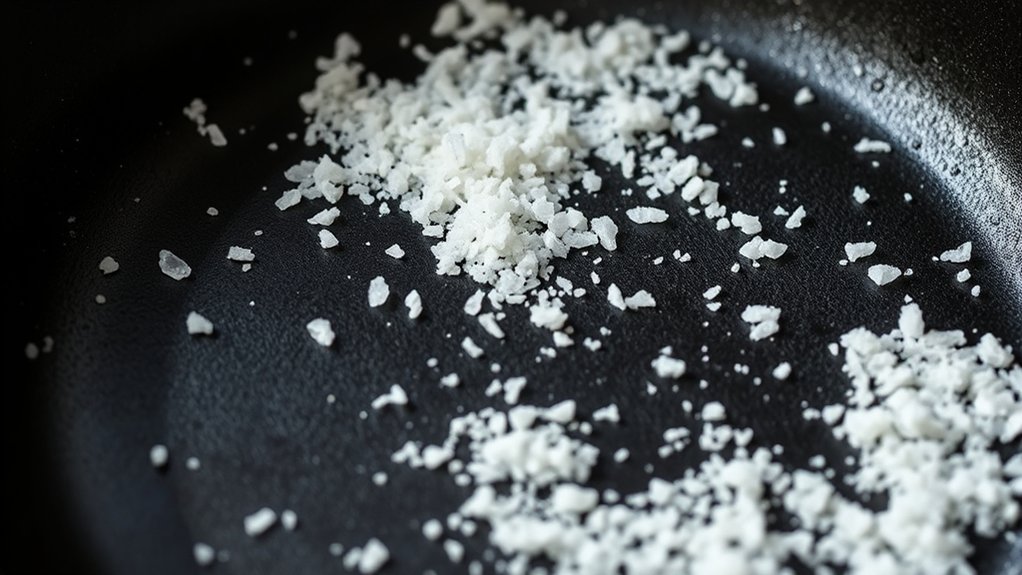
Although cast iron skillets require careful maintenance, salt effectively removes stuck-on food without stripping the essential seasoning. This happens because salt’s abrasiveness is just enough to dislodge food particles without scratching or wearing down the polymerized oil layer that forms your pan’s seasoning.
When you sprinkle coarse salt onto the skillet, it acts like a gentle scrubber, breaking up residue while preserving seasoning protection. Unlike harsh detergents or metal scrubbers, salt won’t dissolve or remove the baked-on oil layer, so you maintain the skillet’s non-stick surface and rust resistance.
How to Clean Your Cast Iron Skillet With Salt (Step-by-Step)
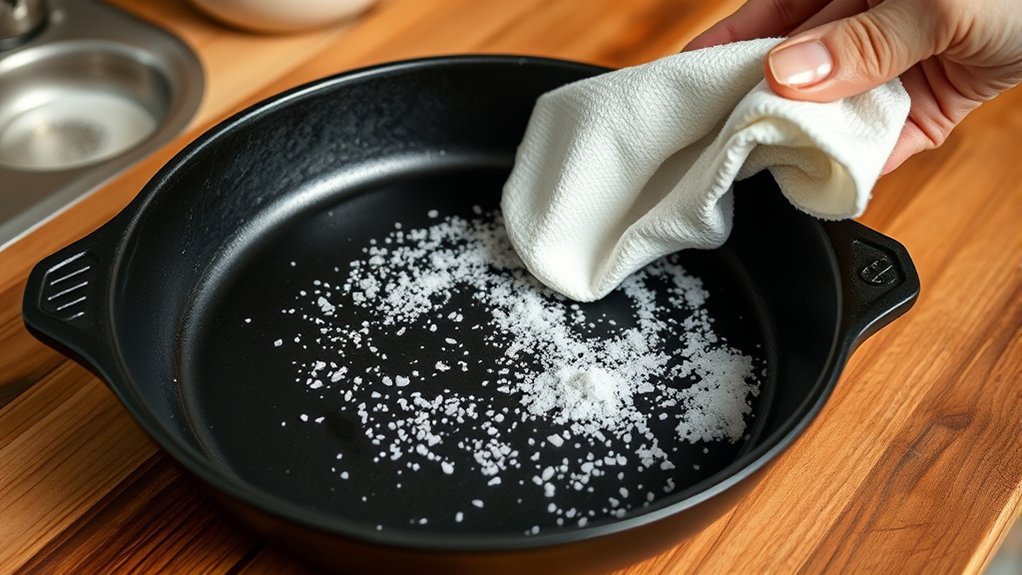
Start by warming your skillet slightly to loosen stuck-on food before adding coarse salt for scrubbing. Use firm, circular motions to let the salt lift debris without harming the seasoning.
Finish by rinsing with warm water and thoroughly drying to prevent rust.
Preparing The Skillet
Before you apply salt to clean your cast iron skillet, make certain the pan is cool enough to handle but still slightly warm. This temperature balance guarantees effective cleaning without risking burns or damaging the pan’s seasoning.
Begin skillet preparation by removing any loose food debris with a paper towel or soft cloth. Avoid using soap or harsh detergents, as they can degrade the seasoning maintenance you’ve worked hard to build.
Inspect the surface for stubborn residues that salt scrubbing will target. Confirming the skillet is dry but warm helps the salt adhere properly and enhances grime removal.
Proper skillet preparation sets the foundation for a thorough salt cleaning, preserving the pan’s non-stick qualities and extending its lifespan with every use.
Salt Scrubbing Technique
Sprinkle a generous layer of coarse kosher salt over the warm surface of your cast iron skillet, covering all areas with stuck-on residue. This salt scrubbing technique leverages the abrasive texture of kosher salt to lift grime without damaging the pan’s seasoning.
Next, take a folded paper towel or a clean cloth and firmly scrub the skillet in circular motions. The salt acts as a natural scouring agent, breaking down food particles effectively. Focus on stubborn spots, applying consistent pressure to dislodge residues. Avoid using metal scrubbers, as they can strip seasoning.
Once you’ve thoroughly scrubbed the surface, the salt will have absorbed the loosened debris, preparing your skillet for rinsing. This method is one of the safest and most efficient cleaning techniques for cast iron maintenance.
Rinsing And Drying
After scrubbing your cast iron skillet with salt, rinse it thoroughly under warm water to wash away the salt and loosened debris. Use gentle rinsing techniques, avoiding soaking the skillet or using soap, which can strip the seasoning. Instead, hold the skillet under running water and use a soft brush or sponge to guarantee all salt particles are removed.
Once rinsed, immediately dry the skillet to prevent rust. Employ effective drying methods by wiping it with a clean cloth or paper towel, then heating it on the stove over low heat for several minutes. This evaporates residual moisture and reinforces the seasoning.
Proper rinsing and drying techniques preserve your skillet’s longevity and non-stick surface, guaranteeing it’s ready for your next cooking adventure without risk of corrosion.
When Should You Avoid Using Salt on Cast Iron Skillets?
Although salt is an effective abrasive for cleaning cast iron skillets, you should avoid using it when the pan has stubborn food residues baked on or when the seasoning is delicate or newly applied. In these cases, salt’s coarse texture can damage the seasoning layer, leading to rust or uneven cooking surfaces.
You’ll also want to skip salt when dealing with greasy or oily buildup, as it won’t dissolve these residues effectively. Knowing when to avoid salt is vital to preserving your skillet’s longevity.
Instead, consider salt alternatives like gentle scrubbing with a nylon brush or using hot water with mild soap sparingly. These methods clean without compromising the seasoning, especially important if you’re maintaining a well-seasoned or freshly seasoned skillet.
Salt vs. Other Ways to Clean Cast Iron Skillets
While salt offers a natural and abrasive method to clean your cast iron skillet, you should weigh its benefits against alternatives like mild soap, nylon brushes, or specialized cast iron scrubbers. Salt’s coarse granules effectively remove stuck-on food without harsh chemicals, preserving seasoning when used properly.
However, abrasive materials such as steel wool can strip seasoning, so they’re best avoided unless you’re ready to re-season. Alternative cleaning methods like using warm water with a sponge or a soft brush provide gentle cleaning without damaging the pan’s surface.
Mild soap, once considered taboo, is now accepted in small amounts for routine cleaning. Ultimately, choosing between salt and other methods depends on how much residue you need to remove and your willingness to maintain seasoning after cleaning.
How to Re-Season Your Cast Iron Skillet After Cleaning With Salt
Since cleaning your cast iron skillet with salt can sometimes strip away parts of its seasoning, you’ll want to re-season it promptly to maintain its non-stick surface and prevent rust. Start by thoroughly drying the skillet after rinsing off the salt to avoid moisture buildup.
Next, apply a thin, even layer of your preferred seasoning oils. Flaxseed, grapeseed, or vegetable oil work well. Use a cloth or paper towel to spread the oil inside and out.
Apply a thin, even layer of flaxseed, grapeseed, or vegetable oil inside and out for seasoning.
Then, place the skillet upside down in a preheated oven at 450°F (230°C) for one hour; put a sheet of foil below to catch drips. After an hour, turn off the oven and let the skillet cool inside.
This re seasoning technique restores the protective layer, ensuring durability and ideal cooking performance.
Top Tips for Maintaining Your Cast Iron Skillet’s Seasoning Long-Term
To keep your cast iron skillet’s seasoning intact over time, you need to develop consistent care habits that protect its surface from damage and wear. Effective seasoning maintenance requires attention to cleaning, drying, and storage routines.
For long term care, follow these top tips:
- Clean with coarse salt and a soft brush to avoid stripping the seasoning.
- Dry immediately and thoroughly after washing to prevent rust.
- Apply a thin layer of cooking oil after each use to reinforce the seasoning.
- Avoid acidic foods that can degrade the seasoning if cooked frequently.
- Store your skillet in a dry place with good air circulation to prevent moisture buildup.
Frequently Asked Questions
Can I Use Flavored or Iodized Salt for Cleaning Cast Iron?
You shouldn’t use flavored salt or iodized salt to clean cast iron since additives can harm seasoning.
Stick to coarse kosher salt for effective scrubbing without damaging your skillet’s protective layer or flavor.
Is Salt Safe for Cleaning Vintage or Heirloom Cast Iron Skillets?
Like a gentle brush on delicate canvas, salt is safe for vintage care and heirloom preservation when used correctly. You’ll want to scrub lightly, avoiding harsh abrasives, to maintain seasoning and protect your skillet’s legacy.
How Often Should I Clean My Cast Iron Skillet With Salt?
You should use salt for cleaning your cast iron skillet sparingly, ideally after heavy cooking. For maintenance, focus on regular seasoning and avoid over-cleaning to preserve the skillet’s seasoning and guarantee long-lasting performance.
Can Salt Cleaning Remove Rust From Cast Iron Skillets?
Yes, you can use salt’s abrasive properties for rust removal techniques on cast iron skillets. Scrub with coarse salt and a scrubber to loosen rust, then rinse and dry thoroughly to restore your skillet effectively.
Does Salt Cleaning Affect the Taste of Food Cooked Afterward?
Like a breeze wiping away dust, salt cleaning won’t leave salt residue effects that alter your food’s taste. Your skillet’s flavor absorption remains intact, so you won’t notice any flavor changes after thorough rinsing and drying.
Conclusion
You might think salt is just a simple seasoning, but when it comes to cleaning your cast iron skillet, it’s a powerful ally that gently scrubs without stripping your hard-earned seasoning. Using salt wisely preserves the skillet’s nonstick surface and flavor.
Remember, overusing salt or scrubbing too harshly can do more harm than good. So, treat your skillet like a trusted partner—clean carefully, season regularly, and it’ll serve you perfectly for years to come.
In conclusion, yes, you can use salt to clean your cast iron skillet, but always do so with care to maintain its quality and performance.



Leave a Reply