
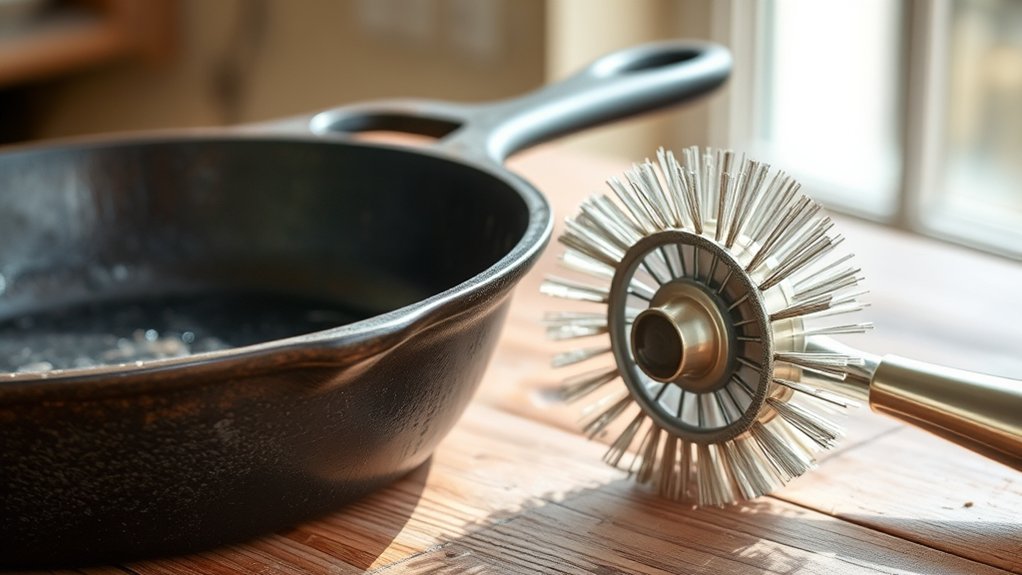
Yes, you can use a wire wheel on your cast iron skillet to remove rust and old seasoning quickly.
Using a wire wheel helps speed up the cleaning process, especially on heavily rusted surfaces.
Just be sure to use light, even pressure and keep the wheel moving to avoid gouging the metal.
Afterward, clean the skillet thoroughly to remove metal particles and reseason it to protect the surface.
This method works best on heavily rusted or damaged pans.
If you want to learn the best practices and alternatives, there’s more to explore.
Key Takeaways
- Yes, a wire wheel can be used to remove rust and old seasoning from cast iron skillets effectively.
- Use light, even pressure and keep the wire wheel moving to avoid damaging the skillet’s surface.
- Wire wheels strip seasoning and expose fresh cast iron, so immediate reseasoning is necessary after use.
- It is best suited for heavily rusted or damaged skillets, not lightly rusted or well-maintained ones.
- Always wear protective gear and use a low-speed setting to ensure safe and controlled cleaning.
Can You Safely Use a Wire Wheel on a Cast Iron Skillet?
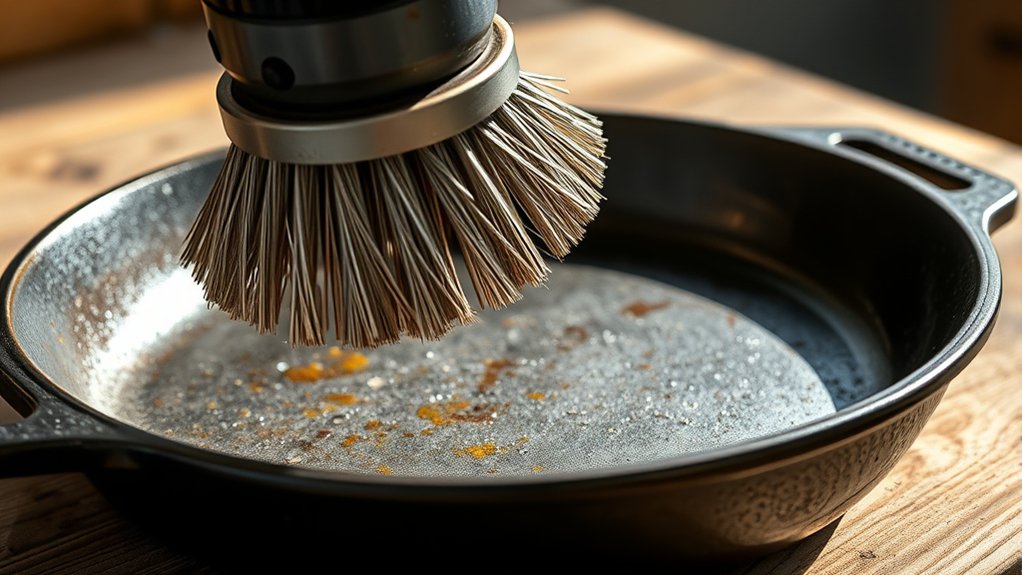
When restoring a cast iron skillet, you might wonder if using a wire wheel is safe. The short answer is yes, but with caution. Wire wheels can efficiently remove rust, old seasoning, and stubborn residue, making them a practical tool in your cast iron care routine.
However, you need to use the wire wheel gently to avoid gouging or excessively thinning the metal. It’s best to apply light, even pressure and avoid prolonged contact in one spot.
After using the wire wheel, thoroughly clean the skillet to remove metal particles, then reseason it to restore the protective layer. As a cleaning method, the wire wheel is effective but should complement, not replace, regular maintenance practices like hand washing and proper drying.
How a Wire Wheel Impacts Cast Iron Seasoning and Surface Texture
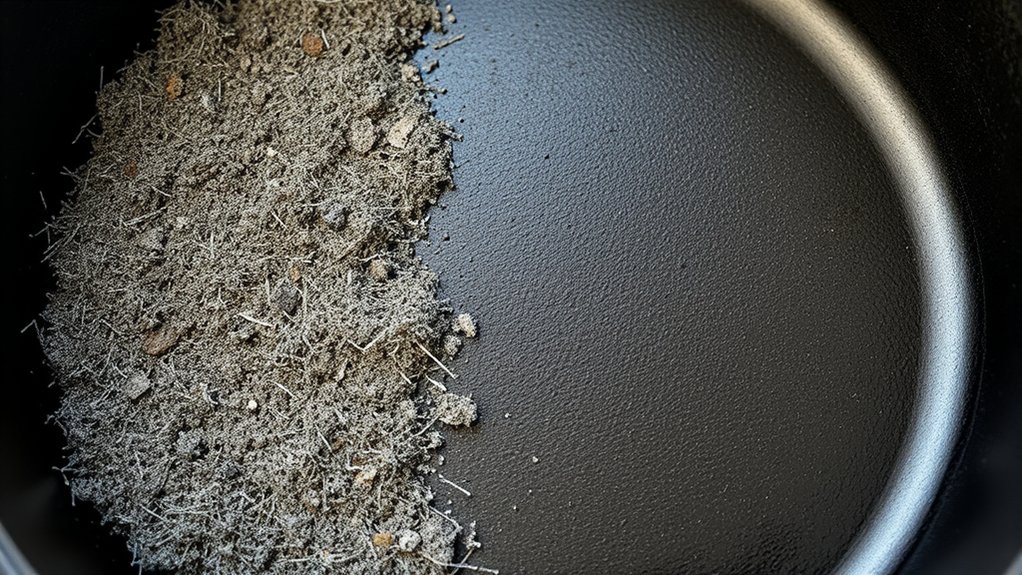
Using a wire wheel strips away the old seasoning and any surface buildup, which means you’ll need to reseason your skillet afterward to rebuild its protective layer.
This abrasive process alters the skillet’s surface finish by removing not only grime but also the polymerized oils that create seasoning integrity. While it exposes fresh cast iron, making it ideal for restoring a heavily damaged or rusted pan, it also leaves the metal vulnerable until you carefully apply a new seasoning layer.
The wire wheel can create a slightly rougher texture, which can actually improve seasoning adherence if reseasoned properly. However, if you neglect reseasoning, the skillet’s surface finish will degrade, leading to rust and uneven cooking. Maintaining seasoning integrity after using a wire wheel is essential for long-term skillet performance.
When Should You Use a Wire Wheel on Cast Iron Skillets?
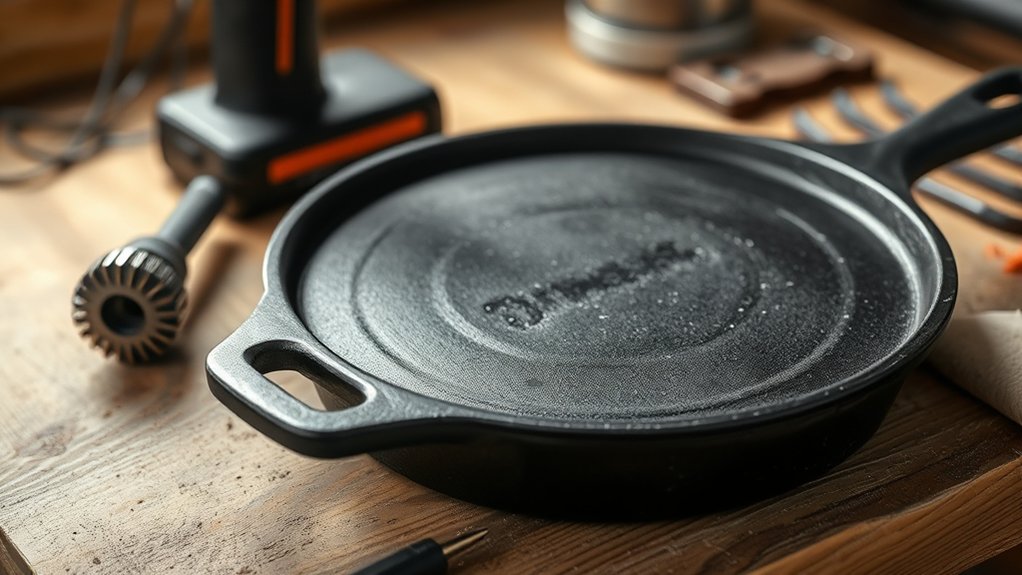
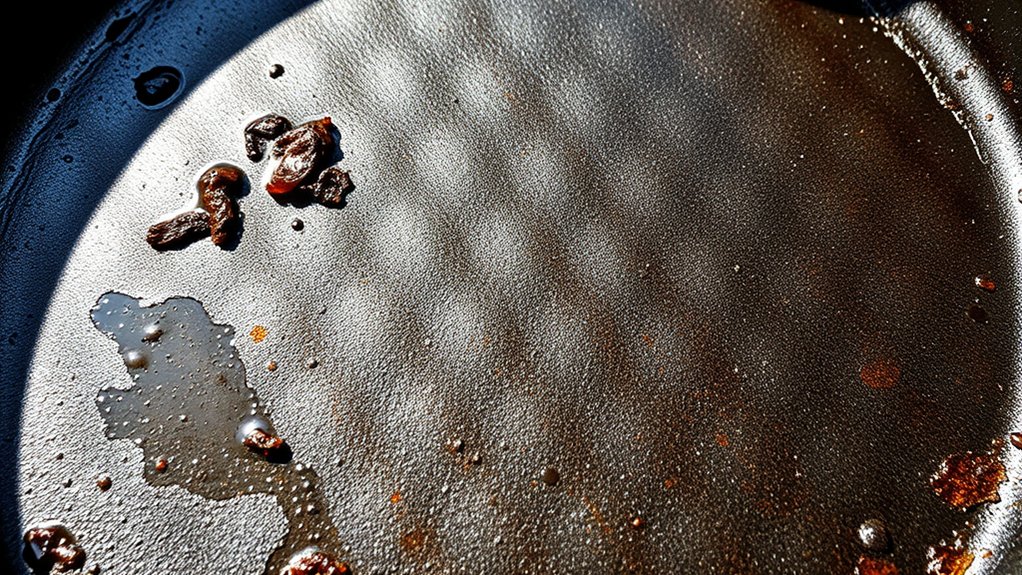
Why should you consider a wire wheel for your cast iron skillet? You should use it primarily during skillet restoration when the pan has significant rust or stubborn debris that traditional scrubbing can’t remove.
A wire wheel excels at rust removal, efficiently stripping away corrosion without excessive effort. It’s ideal if you’re preparing the skillet for reseasoning or want to restore a rough, pitted surface to a smoother finish.
However, avoid using it on lightly rusted or well-maintained skillets, as it can unnecessarily strip seasoning and damage the surface. In short, a wire wheel is a practical tool when deep cleaning is needed, especially for heavily rusted pans, helping you bring your cast iron skillet back to a functional, clean state ready for seasoning.
How to Use a Wire Wheel Without Damaging Cast Iron
Although a wire wheel can be a powerful tool for restoring cast iron, you need to handle it carefully to prevent surface damage. Following proper wire wheel precautions guarantees your skillet stays intact and functional. Here’s how to use it safely:
Using a wire wheel requires care to protect your cast iron’s surface and maintain its durability.
- Wear protective gear to avoid injury from flying debris.
- Use a low-speed setting to control the wheel’s aggressiveness on the cast iron surface.
- Keep the wire wheel moving steadily; don’t let it linger, or you’ll risk gouging the skillet.
- After cleaning, immediately re-season the skillet to restore its protective layer and prevent rust.
Alternative Ways to Remove Rust From Cast Iron Without a Wire Wheel
Several effective methods let you remove rust from cast iron without relying on a wire wheel. One reliable approach is a vinegar soak: submerge your skillet in a 50/50 mixture of white vinegar and water for up to an hour. This weak acid breaks down rust without harming the metal.
After soaking, scrub the skillet with a stiff brush or non-metallic scrubber to lift the loosened rust. For lighter rust, simply scrubbing with coarse salt and a bit of water can be surprisingly effective.
Another option is using baking soda paste: apply it to rusty spots, let it sit, then scrub. These methods offer controlled rust removal without the risk of aggressive abrasion, preserving your skillet’s integrity and preparing it for the next restoration steps.
How to Restore and Reseason Your Cast Iron Skillet After Cleaning
Once you’ve removed rust from your cast iron skillet using gentle methods like vinegar soaking or baking soda paste, the next step is to restore and reseason the surface. Proper cast iron care guarantees your skillet stays durable and non-stick.
Follow these steps for skillet restoration:
- Thoroughly dry the skillet to prevent new rust.
- Apply a thin layer of vegetable oil or flaxseed oil all over the skillet, inside and out.
- Heat the skillet upside down in a preheated oven at 450°F (230°C) for one hour; place foil underneath to catch drips.
- Allow it to cool completely in the oven before storing.
This process rebuilds the protective seasoning layer, enhancing your skillet’s longevity and cooking performance.
Maintenance Tips to Preserve Cast Iron Seasoning Without Harsh Abrasives
To keep your cast iron skillet’s seasoning intact, you should avoid harsh abrasives that can strip away the protective layer. Instead, focus on gentle cleaning methods like scrubbing with a soft brush or non-abrasive sponge using warm water.
Avoid soap or steel wool, as they can degrade seasoning preservation. After cleaning, thoroughly dry your skillet to prevent rust. Apply a thin layer of cooking oil while the pan is still warm to reinforce the seasoning.
Store your skillet in a dry place to minimize moisture exposure. Regularly cooking with oil-rich foods also helps maintain the seasoning. By adopting these maintenance tips, you’ll extend your skillet’s lifespan without compromising its non-stick surface, ensuring consistent performance without resorting to damaging tools like wire wheels.
Frequently Asked Questions
Can Wire Wheels Be Used on Other Cookware Materials?
You can use wire wheels on stainless steel cookware to remove stubborn residue, but avoid them on non-stick surfaces since they’ll damage the coating. Always choose the right tool to keep your cookware safe and effective.
What Types of Wire Wheels Are Safest for Kitchen Use?
Safety first: choose brass or stainless steel wire wheels for kitchen safety since they’re gentler and less likely to damage cookware. Avoid carbon steel wheels, as they’re harsh and risk ruining your tools and surfaces.
How Long Does It Take to Season a Cast Iron Skillet Properly?
The seasoning process usually takes about an hour, including multiple seasoning techniques like applying thin oil layers and baking at 450°F. You’ll need several cycles for a strong, non-stick surface. Patience really pays off here.
Are Wire Wheels Safe for Cleaning Cast Iron Grill Grates?
You wouldn’t want to use a wire wheel on cast iron grill grates; it’s like releasing a tornado! For grill grate maintenance, try gentle scrapers or brass brushes as safer cleaning alternatives to protect seasoning and metal.
Can Wire Wheels Remove Burnt-On Food From Cast Iron?
You can use wire wheels to remove burnt food from cast iron, but they’re abrasive and may damage seasoning. Opt for gentler cleaning methods like scrubbing with salt and a brush to preserve your skillet’s surface.
Conclusion
You can use a wire wheel on your cast iron skillet, but cautiously—did you know 70% of seasoned cast iron damage comes from improper cleaning tools? Using a wire wheel too aggressively can strip seasoning and roughen the surface, so it’s best reserved for heavy rust removal.
Always follow up with thorough reseasoning. For regular maintenance, gentler methods work better to preserve that non-stick finish you rely on every day.
Handle your skillet right, and it’ll last generations. When considering cleaning options, remember that using a wire wheel on cast iron skillet should be approached carefully to avoid damage.


Leave a Reply