
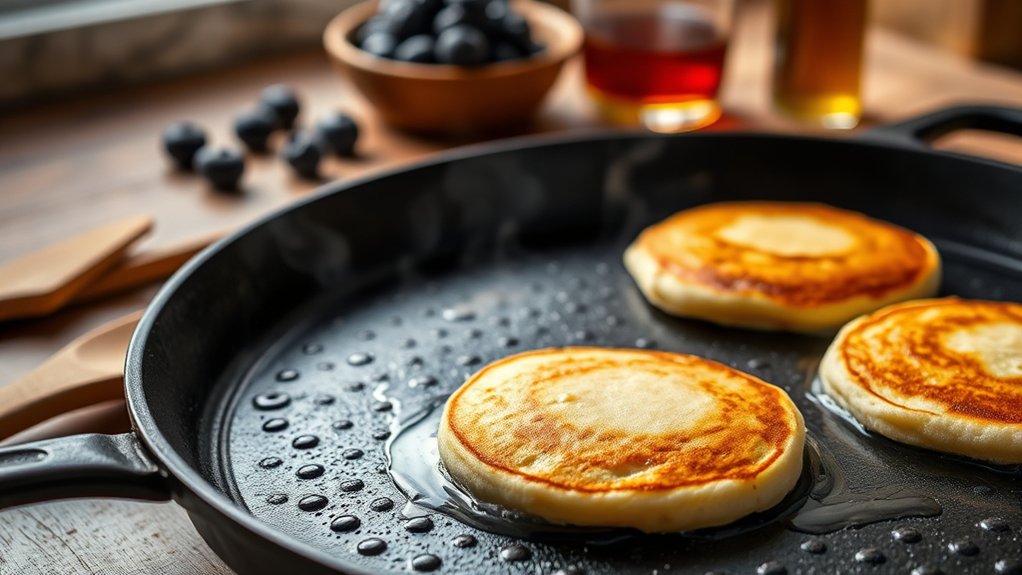
Yes, you can bake on a griddle by carefully controlling the temperature and adjusting your recipes.
Baking on a griddle provides direct, even heat, so you’ll need to modify moisture levels and reduce cooking times by about 20–30% to avoid overcooking.
Using an infrared thermometer helps maintain consistent heat, and rotating your items guarantees even browning.
This method works especially well for cookies, flatbreads, and skillet cornbread.
If you want to master griddle baking, understanding key techniques and tips will help you get the best results.
Key Takeaways
- Yes, griddles can bake items like cookies, biscuits, and small cakes with proper heat control and adjustments.
- Even heat distribution on a griddle supports consistent browning but requires attentive temperature monitoring.
- Baking times on griddles are generally 20 to 30% shorter than traditional ovens due to direct heat.
- Using cast iron or similar bakeware on a preheated griddle improves thermal conductivity and baking results.
- Adjust batter moisture and leavening agents to compensate for direct griddle heat and achieve desired texture.
Can You Bake on a Griddle? What to Expect
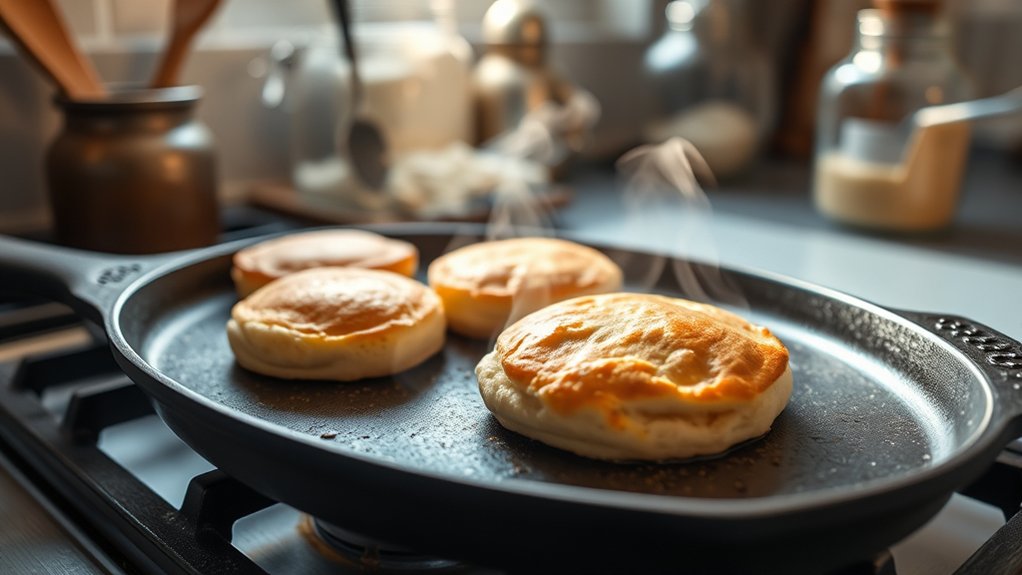
How effectively can you bake on a griddle? Griddle baking offers surprising cooking versatility, allowing you to prepare items like cookies, biscuits, and even small cakes. You’ll find that the even heat distribution typical of quality griddles supports consistent browning and cooking.
However, since griddles apply direct heat from below without an enclosed oven environment, moisture retention differs from traditional baking. Expect variations in texture; for example, crusts may be crisper but interiors less fluffy.
Managing temperature precisely is essential. Use medium to low heat to avoid overcooking or burning. Overall, griddle baking expands your cooking capabilities beyond frying or searing but requires attentive heat control and understanding of heat transfer differences to achieve ideal results.
How to Adjust Recipes for Baking on a Griddle
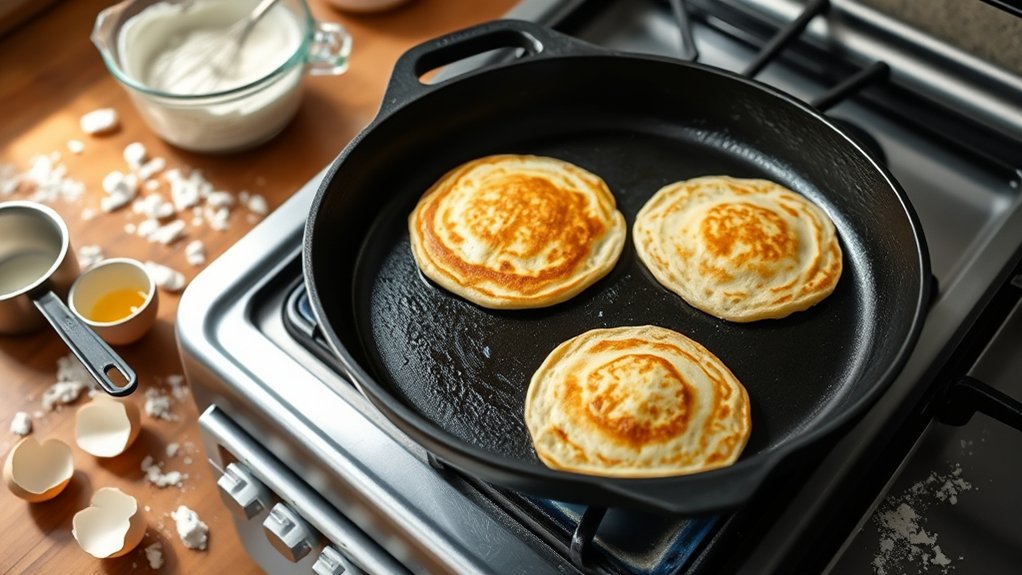
You’ll need to carefully control the griddle’s temperature to guarantee even baking without burning. Adjust ingredient moisture and leavening agents to compensate for the griddle’s direct heat and surface texture.
Finally, modify cooking times by monitoring doneness closely, as griddles often bake faster than conventional ovens.
Temperature Control Tips
Although griddles lack the enclosed environment of an oven, you can effectively control temperature by adjusting heat settings and monitoring surface warmth with an infrared thermometer. Maintaining consistent griddle temperature is essential since uneven heat distribution can cause uneven baking.
Start by preheating the griddle to the target temperature, generally slightly lower than standard oven settings to compensate for direct heat exposure. Use the infrared thermometer to scan multiple points, ensuring uniform heat distribution across the surface. Adjust burners or heat zones accordingly to eliminate hot spots.
Since griddles lose heat more rapidly than ovens, avoid frequent lid openings or batter disturbance. By precisely managing griddle temperature and ensuring even heat distribution, you’ll replicate baking conditions that yield consistent, high-quality results on your griddle.
Ingredient Modification Ideas
Mastering temperature control on a griddle sets the stage for adjusting ingredients to suit this unique cooking environment. When baking on a griddle, you’ll need to take into account ingredient substitutions to maintain texture and moisture, as direct heat can cause quicker browning.
Incorporate flavor enhancements like spices or zest to compensate for potential flavor loss during surface cooking. Adjust leavening agents to guarantee proper rise without overexpansion.
| Ingredient Group | Typical Substitute | Purpose |
|---|---|---|
| Flour | Almond or oat flour | Adjusts texture, absorbs heat |
| Fats | Butter → oil or ghee | Improves heat tolerance |
| Leavening Agents | Baking powder → yeast | Controls rise rate |
| Flavor Enhancers | Vanilla → citrus zest | Boosts aroma/flavor |
Use these ingredient modifications precisely for best griddle baking results.
Cooking Time Adjustments
When baking on a griddle, adjusting cooking times is crucial due to the direct and consistent heat source affecting how quickly your food cooks. Unlike conventional ovens, griddles provide uniform surface heat, requiring precise timing tweaks in your baking methods.
You’ll need to monitor the food closely and modify durations based on thickness, moisture content, and griddle temperature. Employ these cooking techniques to optimize results:
- Reduce initial baking time by 20–30% to prevent overcooking.
- Use a lower heat setting to allow gradual cooking.
- Flip or rotate items halfway to guarantee even browning.
- Test doneness frequently with a toothpick or thermometer.
Best Baked Goods to Make on a Griddle
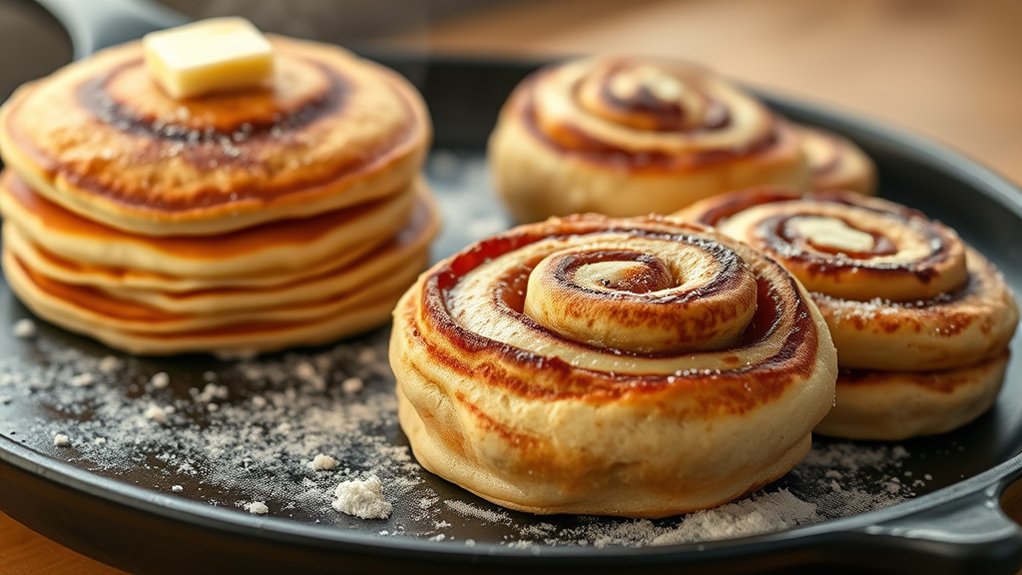
Since griddles provide even, direct heat over a broad surface, they excel at baking certain goods that benefit from consistent temperature and flat cooking space. You’ll find griddle pancakes and griddle muffins ideal due to their batter consistency and cooking requirements.
Other suitable items include flatbreads and skillet cookies, which require steady heat distribution without the need for oven convection.
| Baked Good | Ideal Batter Type | Cooking Time (minutes) |
|---|---|---|
| Griddle Pancakes | Pourable, medium-thick | 2-3 |
| Griddle Muffins | Thick, spoonable | 5-7 |
| Flatbreads | Dough-based | 4-6 |
| Skillet Cookies | Dense, thick | 8-10 |
Utilize the griddle’s surface area to bake evenly, ensuring precise control over temperature for best results.
Tips for Safe and Successful Griddle Baking
To bake safely and effectively on a griddle, you need precise temperature control to guarantee even cooking without burning. Use bakeware designed to withstand direct heat and fit securely on the griddle surface.
Constantly monitor your food’s progress to adjust heat and prevent overcooking.
Temperature Control Techniques
Mastering three key temperature control techniques will guarantee safe and successful griddle baking. First, you must monitor the griddle surface temperature closely to avoid hotspots that cause uneven cooking.
Second, ascertain consistent heat distribution by preheating the griddle thoroughly before placing your bakeware. Third, adjust the heat source gradually to maintain a steady baking environment.
Employ these tactics:
- Use an infrared thermometer to check surface temperature regularly.
- Preheat the griddle for at least 10 minutes to stabilize heat.
- Rotate bakeware periodically to counteract uneven heat zones.
- Lower heat incrementally to prevent sudden temperature spikes.
Suitable Bakeware Choices
Choosing the right bakeware is essential when baking on a griddle, as it directly impacts heat conduction and cooking consistency. Opt for bakeware materials with excellent thermal conductivity, such as cast iron or heavy-gauge aluminum, to guarantee even heat distribution.
Avoid thin or lightweight pans that cause hot spots, leading to uneven baking. Consider the griddle size carefully; your bakeware must fit comfortably without overcrowding to maintain stable temperatures across the surface.
Rectangular or circular pans work best, depending on your griddle’s shape, but always verify they don’t extend beyond the heated area. Additionally, non-stick coatings can facilitate easy food release and cleaning, but confirm they withstand high griddle temperatures to prevent damage.
Selecting appropriate bakeware materials tailored to your griddle size ensures peak baking performance and safety.
Monitoring Cooking Progress
Once your bakeware is properly positioned on the griddle, keeping a close eye on cooking progress guarantees consistent results and prevents overcooking or undercooking. Because the griddle surface distributes heat differently than an oven, you must rely on precise cooking indicators rather than time alone.
Monitor visual cues like browning and texture changes on your baked goods. Use a digital thermometer to check internal temperatures, confirming safety and doneness. Adjust heat as needed to maintain stable conditions on the griddle surface.
Observe color changes and surface texture regularly
Measure internal temperature with a probe thermometer
Rotate bakeware if uneven browning occurs
Adjust griddle temperature promptly based on cooking indicators
These steps confirm safe, successful baking on your griddle every time.
Top Griddle Baking Recipes to Try at Home
Baking on a griddle opens up five versatile recipes that transform this stovetop tool into a compact oven. Depending on your griddle type, cast iron, electric, or nonstick, you can apply specific baking techniques to optimize heat distribution and retention.
Start with classic skillet cornbread, which benefits from even heat and a well-seasoned surface. You can also bake flatbreads, utilizing consistent medium heat for crisp exteriors and soft interiors.
For desserts, try griddle brownies; control temperature precisely to avoid burning. Additionally, individual frittatas cook evenly on a covered griddle with moderate heat.
Finally, experiment with griddle-baked cinnamon rolls, leveraging the griddle’s surface area for uniform browning. Mastering these recipes enhances your griddle’s versatility beyond traditional stovetop use.
How to Troubleshoot Common Griddle Baking Issues
A common challenge when using a griddle for baking lies in managing temperature inconsistencies and heat distribution. To troubleshoot effectively, first verify your griddle surface is clean and evenly heated to prevent uneven baking. Use an infrared thermometer to monitor temperature across the surface.
Adjust your baking techniques to accommodate your griddle’s unique heat profile. If you notice sticking or burning, reduce heat and consider using a light layer of oil or butter.
Key troubleshooting tips include:
- Preheat the griddle thoroughly before placing batter or dough.
- Rotate baked goods periodically for even cooking.
- Use a lid or foil to trap heat and mimic oven conditions.
- Test small batches to refine timing and temperature settings.
Mastering these steps will optimize your griddle baking outcomes.
Frequently Asked Questions
Can I Use a Cast Iron Griddle for Baking?
You can use a cast iron griddle for baking because cast iron benefits include even heat retention and distribution. Adjust baking techniques by preheating thoroughly and monitoring time to guarantee consistent, well-cooked results on your griddle.
How Do I Clean a Griddle After Baking?
You’ll remove baking residue by scraping gently with a plastic spatula, then apply warm water and mild soap. Use a soft scrubber for stubborn spots, rinse thoroughly, and dry immediately to prevent rust.
Is It Better to Use a Gas or Electric Griddle?
You’ll prefer a gas griddle for superior gas efficiency and rapid heat control, ideal for precise cooking. However, electric griddles offer unmatched convenience with consistent temperatures and easy plug-and-play setup, perfect for steady, hassle-free use.
Can I Bake Gluten-Free Recipes on a Griddle?
Yes, you can bake gluten-free recipes on a griddle. Just adjust temperature and cooking time precisely, as gluten free baking requires careful heat control.
Use griddle recipes designed to guarantee even heat distribution for best results.
What Temperature Settings Are Ideal for Griddle Baking?
You’ll want to set your griddle between 325°F and 375°F for ideal baking temperatures. Mastering griddle baking techniques means controlling heat precisely to guarantee even cooking and perfect texture every time you bake.
Conclusion
Baking on a griddle transforms your kitchen into a warm, aromatic haven where golden crusts form evenly beneath your fingertips. By adjusting heat and timing, you’ll achieve perfectly risen breads and tender pastries without an oven. Picture the sizzling surface gently turning batter into fluffy pancakes or crispy flatbreads.
With careful attention and the right techniques, your griddle becomes a versatile baking powerhouse. It expands your culinary toolkit efficiently and reliably. Ultimately, mastering how to bake on a griddle opens up new delicious possibilities in your cooking routine.

Leave a Reply