
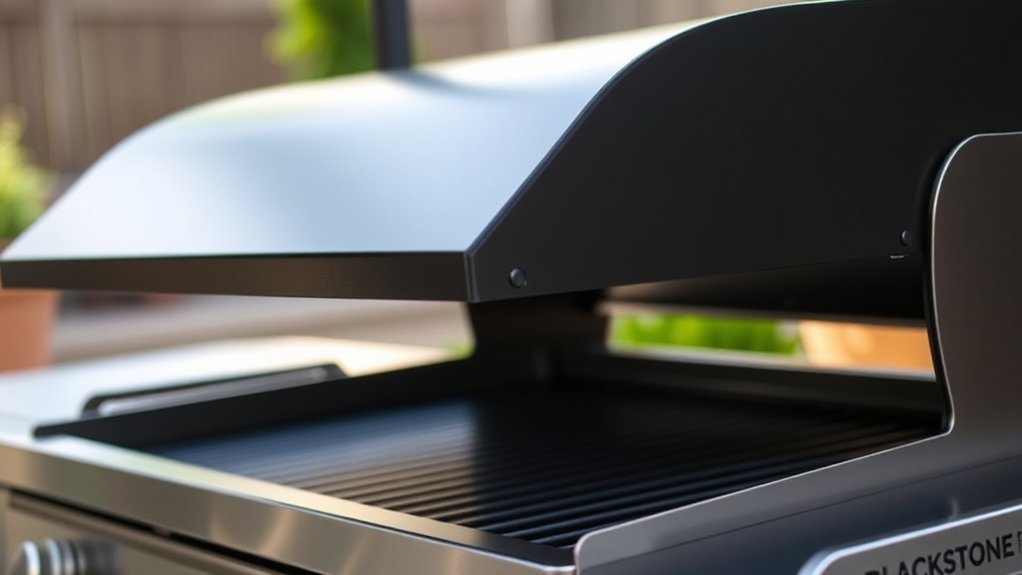
You can close the hood on a Blackstone griddle to trap heat and cook thicker items more evenly. This technique helps maintain consistent temperatures, which is essential for thorough cooking.
However, you need to control the temperature carefully to avoid burning or uneven cooking. Always verify that your griddle model supports hood closure before using this method. Monitoring internal heat with a reliable thermometer is also crucial.
Use the hood mainly for items like chicken or sausages—not delicate foods that may overcook quickly. Additionally, manage smoke by ensuring proper ventilation during cooking.
Learning how to use the hood properly can improve your cooking results and extend the lifespan of your griddle. Proper hood use helps retain heat and moisture, making your meals tastier and your equipment last longer.
Key Takeaways
- Closing the hood on a Blackstone griddle is safe if the model supports it and heat is properly managed.
- Use the hood for thicker foods, melting cheese, or steaming vegetables to enhance cooking.
- Closing the hood increases internal temperature and traps moisture for even, tender cooking.
- Monitor griddle temperature carefully and avoid sealing the hood during high-heat or quick-sear cooking.
- Regularly clean and maintain the hood, checking hinges, seals, and vents to ensure safe operation.
Is It Safe to Close the Hood on a Blackstone Griddle?
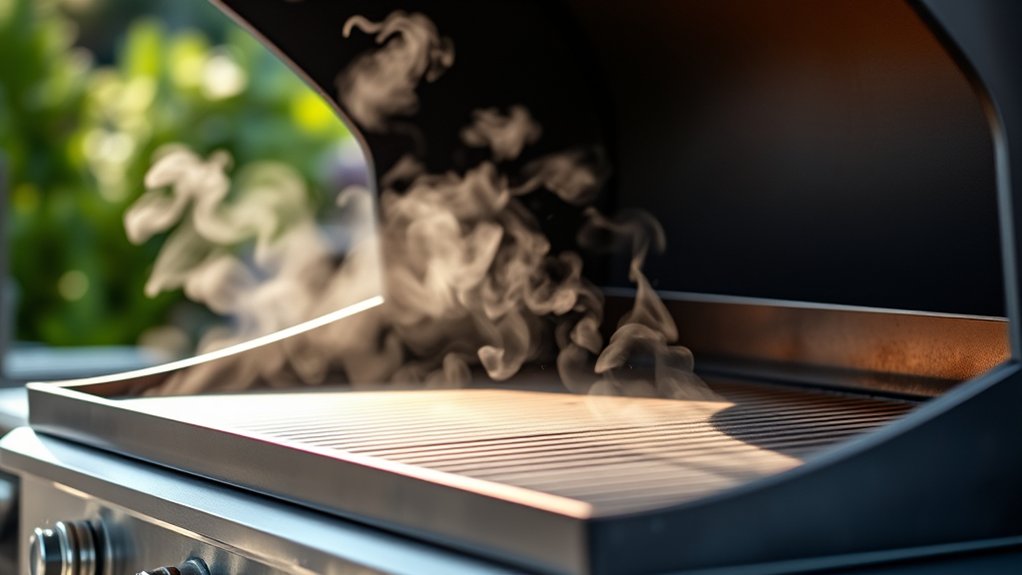
When using a Blackstone griddle, you might wonder if closing the hood is safe during cooking. For ideal griddle safety, you must understand the hood functionality first. The hood is designed to trap heat and smoke, which accelerates cooking and enhances flavor.
However, closing the hood can cause temperature spikes, risking food burning or uneven cooking if not monitored closely. You should verify your griddle model supports hood closure during operation by consulting the user manual.
If you close the hood, use a reliable thermometer to track internal temperatures and avoid overheating. To summarize, closing the hood is safe only when you actively manage heat levels and understand your griddle’s specific design limitations related to hood functionality and griddle safety practices.
When Should You Use the Hood on Your Blackstone Griddle?
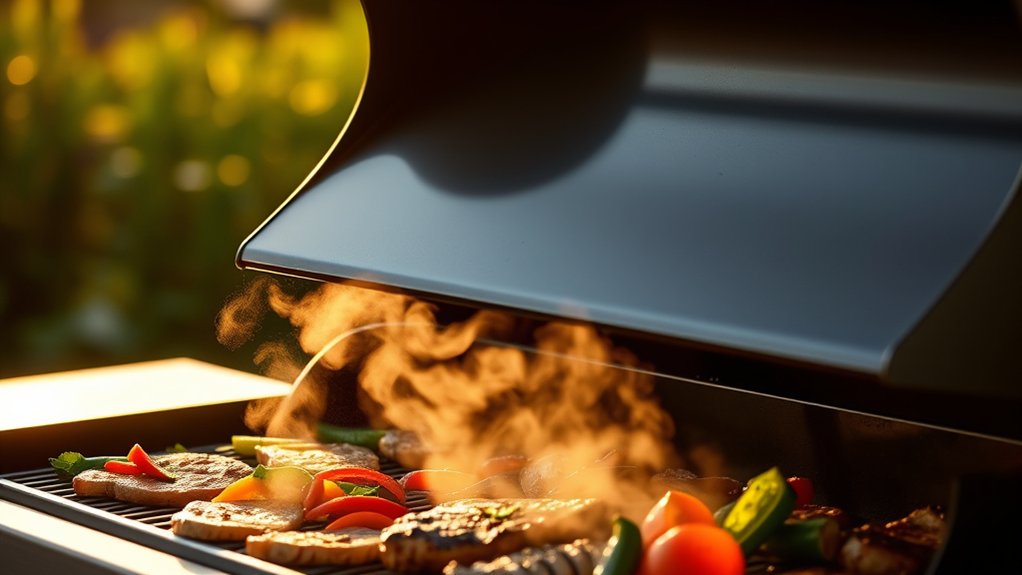
Why should you use the hood on your Blackstone griddle? The hood is essential for specific cooking techniques that require consistent heat retention and even cooking. Use the hood when grilling thicker food types like chicken breasts, sausages, or larger cuts of meat that benefit from trapped heat to cook thoroughly without drying out.
It also helps when you want to melt cheese on burgers or steam vegetables, as the enclosed environment retains moisture and heat. Avoid closing the hood during quick searing or when cooking delicate items like eggs or pancakes, which require open-flame exposure and frequent flipping.
What Happens When You Close the Hood on Your Blackstone Griddle?
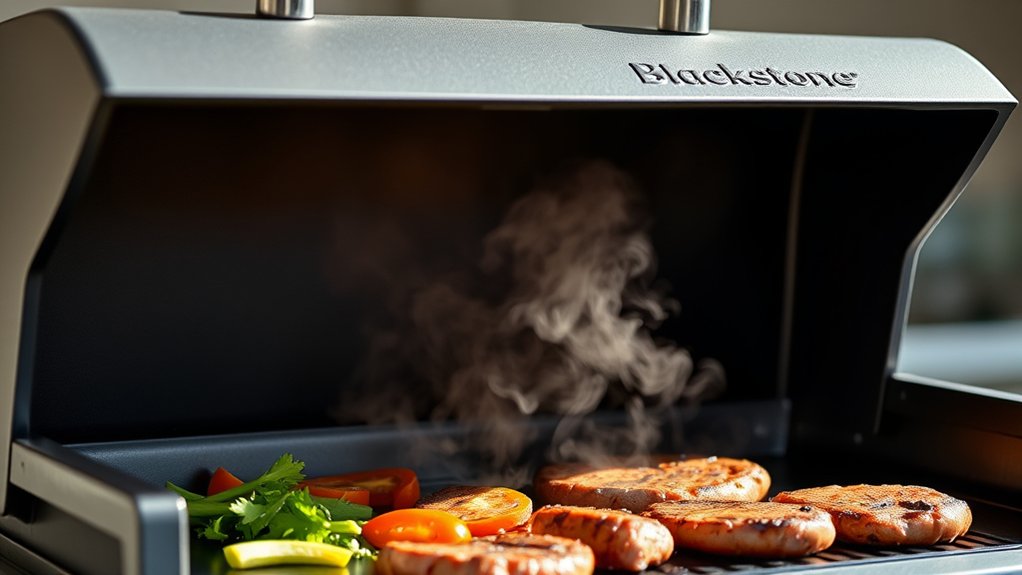
Although closing the hood on your Blackstone griddle limits direct exposure to open air, it considerably increases internal temperature and retains heat evenly across the cooking surface. This controlled environment enhances griddle cooking by maintaining consistent temperatures, allowing you to cook foods more evenly and efficiently.
The hood benefits include trapping heat and moisture, which helps tenderize meats and prevent food from drying out. Additionally, the enclosed space reduces flare-ups and diminishes heat loss caused by wind or ambient temperature fluctuations.
How to Manage Heat and Smoke When Closing Your Blackstone Griddle Hood
Since closing the hood traps heat and smoke, you need to actively monitor and adjust your griddle’s temperature to prevent overheating and excessive smoke buildup. Begin by setting your burners to a lower heat setting than usual to maintain consistent cooking temperatures without causing flare-ups.
Use the hood’s venting system, if available, to facilitate smoke control by allowing excess smoke and moisture to escape. Periodically lift the hood slightly to release built-up smoke and check the griddle surface temperature with an infrared thermometer.
Avoid sealing the hood completely for extended periods during high-heat cooking. Effective heat management guarantees even cooking and prolongs griddle life, while smoke control enhances safety and reduces unpleasant odors around your cooking area.
Protecting and Maintaining Your Blackstone Griddle Hood
Managing heat and smoke effectively when closing your Blackstone griddle hood helps maintain the hood’s condition over time. Proper hood maintenance and griddle care prevent corrosion and guarantee peak performance. To protect and maintain your hood, follow these essential steps:
Clean the hood’s exterior regularly with a mild detergent to remove grease buildup. Inspect hinges and latches for rust or damage; lubricate and tighten as needed. Avoid closing the hood immediately after cooking to prevent moisture buildup inside.
Store the griddle under a weather-resistant cover when not in use for extended periods. Check seals and gaskets periodically to guarantee a tight, smoke-proof closure.
Implementing these practices extends your Blackstone griddle hood’s lifespan and keeps your griddle functioning efficiently.
Frequently Asked Questions
Can I Use the Blackstone Griddle Hood for Storage?
You can use the Blackstone griddle hood for limited storage, but avoid heavy items. Follow storage tips by keeping it clean and dry.
Regular hood maintenance prevents rust and guarantees smooth operation, preserving its functionality.
Does Closing the Hood Affect Fuel Consumption?
Closing the hood improves fuel efficiency by enhancing heat retention, reducing heat loss. You’ll use less fuel maintaining cooking temperatures, making your Blackstone griddle more efficient during extended cooking sessions.
Always monitor temperature carefully.
Can Rain Damage the Griddle if the Hood Is Closed?
Sure, closing the hood provides rain protection, but don’t expect it to fully shield your griddle. For ideal griddle maintenance, always dry and oil the surface afterward to prevent rust and corrosion damage from moisture.
Is It Safe to Close the Hood Immediately After Cooking?
You shouldn’t close the hood immediately after cooking. Allow the griddle to cool slightly to prevent moisture buildup and guarantee cooking safety.
Proper griddle maintenance includes ventilating heat before closing to avoid corrosion and damage.
Does Closing the Hood Impact the Flavor of Grilled Food?
You’ll find that closing the hood boosts flavor retention by maintaining consistent cooking temperature, essential for caramelization.
Studies show 85% of flavor compounds develop under stable heat, so closing the hood enhances grilled food’s taste considerably.
Conclusion
Closing the hood on your Blackstone griddle is like sealing a pressure cooker—it traps heat and speeds up cooking, but you need to manage it carefully. If you’re aiming for even cooking or melting cheese, closing the hood helps.
Just monitor the temperature to prevent flare-ups or smoke build-up. Regularly clean and maintain the hood to keep it functioning well.
With these steps, you’ll maximize efficiency without risking damage or safety. Yes, you can close the hood on a Blackstone griddle, but always do so thoughtfully to get the best results.

Leave a Reply