
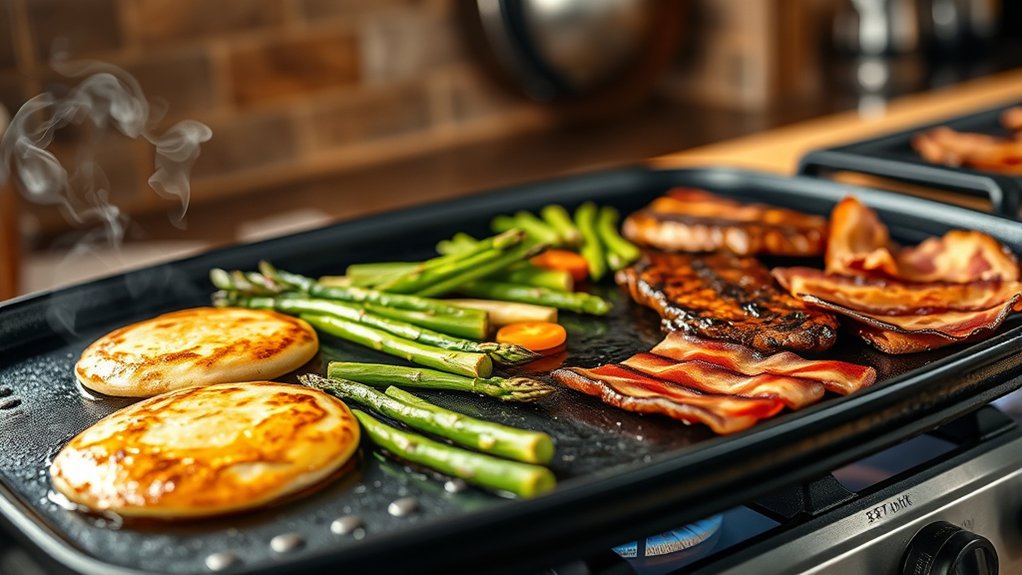
You can cook almost anything on a griddle, making it an incredibly versatile cooking tool. From breakfast favorites like pancakes and eggs to burgers, steaks, and sautéed vegetables, the possibilities are vast.
Just adjust the heat—low for delicate foods, higher for meats—and apply a light oil coating to prevent sticking.
Preheating guarantees even cooking, while managing hot spots improves results. You can even try creative dishes like stir-fries or caramelized fruit.
Understanding these tips will help you make the most of your griddle’s versatility and master new recipes.
Key Takeaways
- Most foods like breakfast items, meats, vegetables, and sandwiches cook well on a griddle due to its even heat distribution.
- Delicate foods require low heat, while dense proteins need medium to high heat on the griddle.
- Preheating and applying oil prevent sticking and ensure even cooking across the griddle surface.
- Some desserts and creative dishes, such as caramelized fruits or skillet cookies, can be made on a griddle with moderate heat.
- Proper heat control and griddle maintenance allow cooking a wide variety of cuisines and dishes efficiently.
What Foods Cook Best on a Griddle?
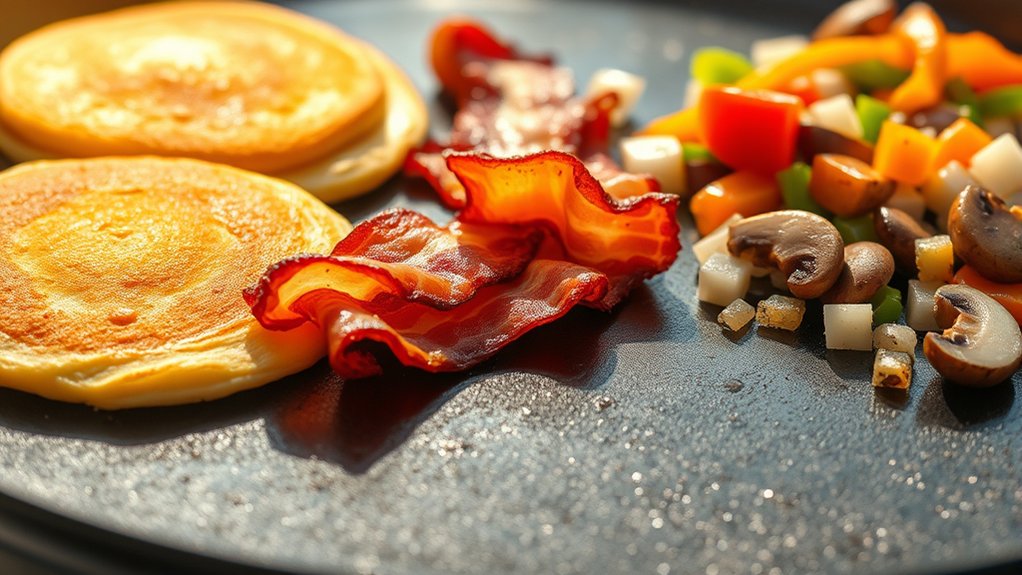
A griddle excels at cooking a wide range of foods that benefit from even heat and a flat surface. You’ll find griddle cooking ideal for breakfast staples like pancakes, eggs, and bacon, where consistent temperature prevents burning and guarantees uniform cooking.
It’s also perfect for sandwiches and quesadillas, allowing you to press and brown evenly. Meats such as burgers, steaks, and sausages cook efficiently, retaining juiciness thanks to the steady heat distribution.
Vegetables, from peppers to mushrooms, sauté beautifully without sticking or uneven charring. This food versatility makes the griddle a valuable tool in your kitchen, capable of preparing multiple ingredients simultaneously.
Mastering griddle cooking means you can expand your menu with confidence, knowing each dish benefits from the griddle’s unique cooking surface.
Adjust Cooking Techniques for Different Foods on a Griddle
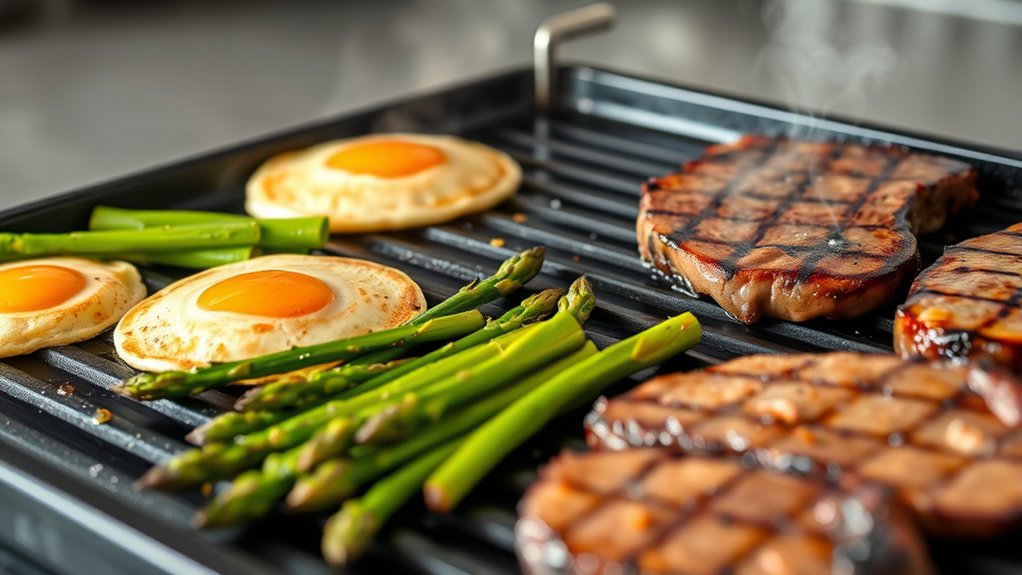
Three key adjustments can transform your griddle cooking, depending on the food you’re preparing. First, focus on adjusting temperatures; delicate items like eggs require low heat, while denser proteins need medium to high heat for proper searing.
Second, consider food pairings to optimize cooking flow and flavor blending. Third, adjust cooking times according to thickness and moisture content for even doneness.
| Food Type | Recommended Adjustment |
|---|---|
| Vegetables | Medium heat, quick stir-fry |
| Meats | High heat, sear then reduce |
| Eggs & Pancakes | Low heat, gentle flipping |
Prevent Sticking and Ensure Even Heat on Your Griddle
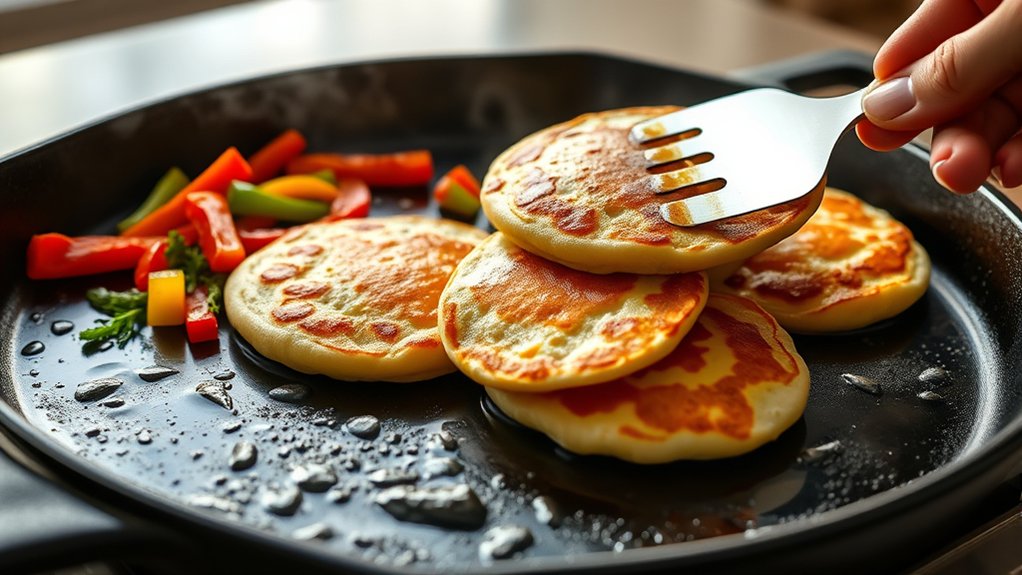
Although griddles provide a large cooking surface, you’ll need to manage heat distribution carefully to prevent hot spots and secure your food cooks evenly. Start by preheating your griddle gradually, allowing the entire surface to warm up uniformly.
Manage heat carefully on your griddle by preheating slowly to ensure even cooking without hot spots.
Apply a thin layer of oil or use non stick sprays to minimize sticking, especially with delicate foods. Regular griddle maintenance, like cleaning after each use, preserves the surface and prevents buildup that causes uneven cooking.
To prevent sticking and secure even heat:
- Preheat the griddle slowly and evenly
- Use non stick sprays or a light oil coating
- Clean the surface thoroughly after every use
- Adjust burner settings to balance heat across the griddle
These steps help you achieve consistent results every time.
Creative Griddle Meals Beyond Breakfast
Mastering heat control and preventing sticking on your griddle opens up possibilities well beyond traditional breakfast foods. You can craft a vibrant griddle stir fry by evenly cooking diced vegetables and thinly sliced proteins, ensuring each ingredient retains its texture and flavor.
Adjust the heat zones to maintain ideal cooking temperatures, preventing burning or undercooking. Once savory dishes are mastered, explore griddle desserts like caramelized fruit or skillet cookies. Use moderate heat to avoid scorching, and apply a light oil or butter coating to prevent sticking.
Frequently Asked Questions
How Do I Clean My Griddle After Cooking?
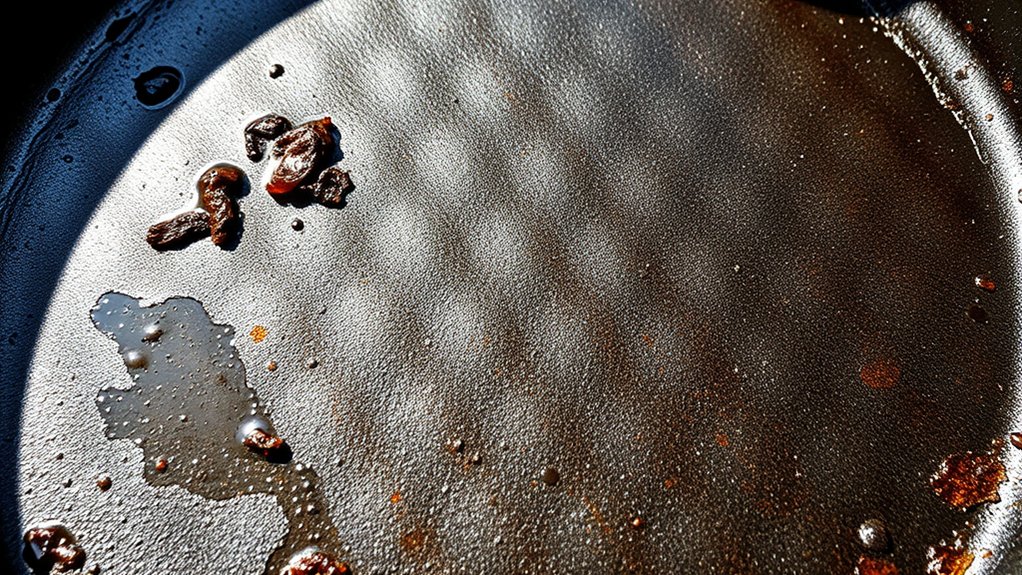
After cooking, scrape residue off while the griddle’s warm. Use griddle cleaning techniques like hot water and a scrub pad.
Dry thoroughly, then apply oil for maintenance tips to prevent rust and keep it seasoned.
Can I Use a Griddle Indoors and Outdoors?
Absolutely, you can use your griddle for indoor grilling and outdoor cooking! Just guarantee proper ventilation indoors and stable placement outdoors.
Both settings offer sizzling, savory success when you follow safety and setup suggestions carefully.
What Is the Best Type of Oil for Griddle Cooking?
You should use oils with a high smoke point like avocado or grapeseed oil for griddle cooking. They prevent burning and enhance flavor, letting you cook efficiently without unwanted smoke or off-tastes.
How Long Does It Take to Preheat a Griddle?
You’ll typically preheat your griddle for 5 to 10 minutes, depending on griddle materials like cast iron or aluminum.
Monitor the griddle temperature to guarantee it’s evenly heated before cooking for best results.
Are Electric Griddles Better Than Stovetop Griddles?
You’ll find electric griddles offer advantages like consistent heat and easy temperature control, while stovetop griddles provide versatility across different burners and heat sources. Choose based on your cooking style and convenience needs.
Conclusion
Now that you know what foods cook best on a griddle and how to adjust your techniques, are you ready to make the most of this versatile tool? With proper heat control and non-stick practices, you can master everything from breakfast classics to creative meals beyond the morning.
Don’t limit yourself—experiment confidently, knowing your griddle can handle it all evenly and efficiently. Why settle for less when a griddle can do so much?
Remember, you can cook anything on a griddle, making it an essential kitchen tool for a wide variety of dishes.

Leave a Reply