
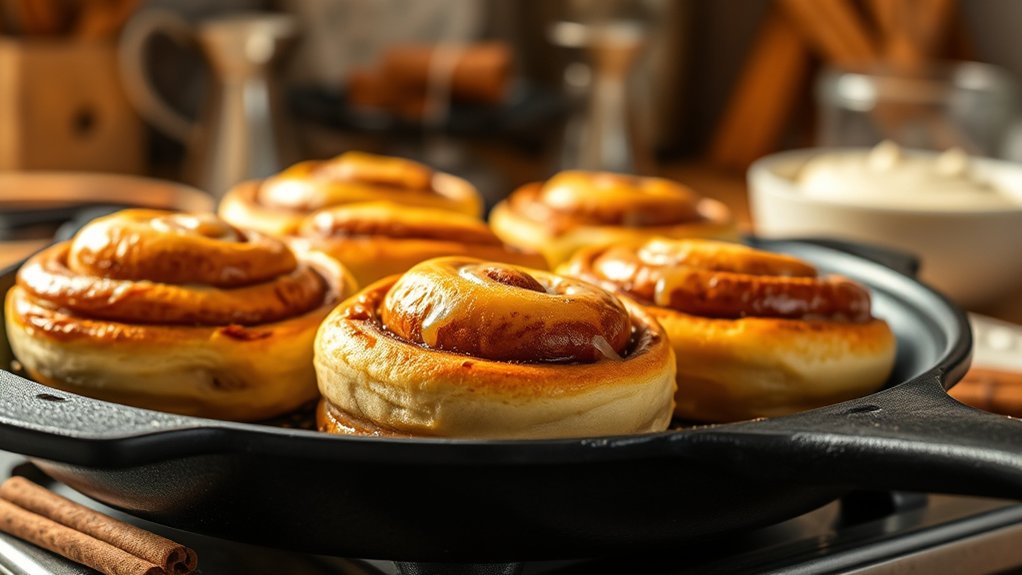
Yes, you can cook cinnamon rolls on a griddle and get deliciously golden, soft rolls without an oven.
Just preheat your griddle to medium-low, grease it lightly, and cook each roll about 12–15 minutes, flipping gently once the bottoms turn golden.
This method heats them evenly with a delightful crispy crust and tender center. Plus, it’s quick and easy, offering a fun twist on tradition.
Keep exploring to uncover tips, tricks, and tasty topping ideas that make griddle rolls shine.
Key Takeaways
- Yes, cinnamon rolls can be cooked on a griddle using medium-low heat (around 300°F) for 12 to 15 minutes for even cooking.
- Grease the griddle lightly and preheat it to prevent sticking and ensure a golden, crispy crust.
- Flip the rolls gently with a thin spatula once the bottom is golden and firm, usually after 5–7 minutes.
- Monitor temperature closely to avoid burning while allowing the rolls to cook through and develop a soft, gooey center.
- Griddle cooking offers faster results, a crispier crust, and easy topping application compared to traditional oven baking.
What You Need: Equipment and Ingredients for Griddle Cinnamon Rolls
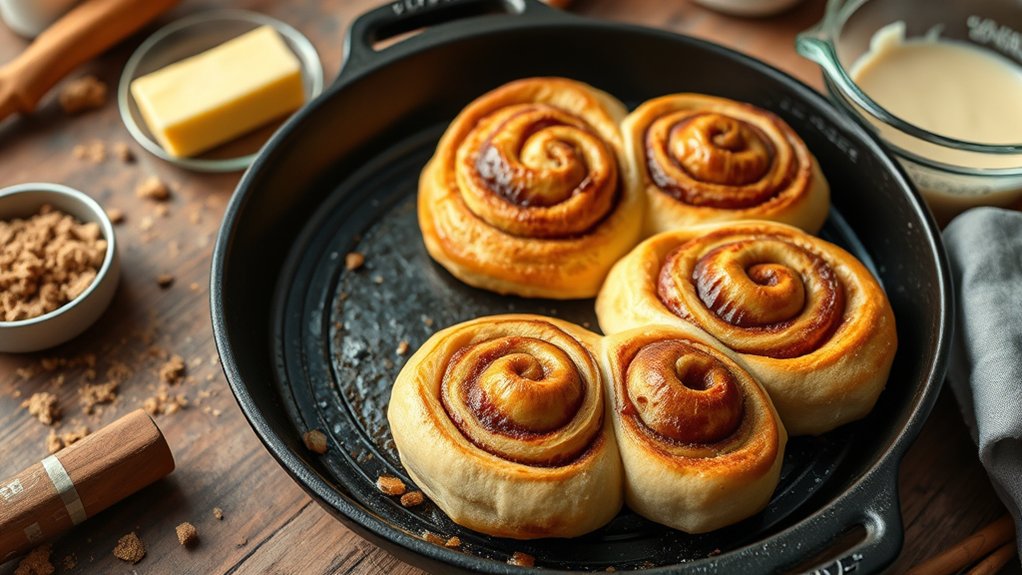
To make delicious cinnamon rolls on a griddle, you’ll need a few essential tools and ingredients that set the stage for perfect results. Start with a sturdy non-stick griddle to guarantee even heat distribution and easy flipping. A spatula with a thin edge helps you lift rolls without tearing.
For ingredients, you’ll want basic dough components: flour, yeast, sugar, butter, and milk. Cinnamon and brown sugar create that classic filling. Don’t worry if you’re missing an ingredient; ingredient substitutions like almond milk for dairy or coconut sugar instead of brown sugar work well without compromising flavor.
Mastering specific cooking techniques, such as maintaining consistent griddle temperature and controlling cooking time, is key to achieving soft, golden rolls. With these essentials, you’re ready to create griddle-cooked cinnamon rolls that rival oven-baked ones.
Step-by-Step Guide to Cooking Cinnamon Rolls on a Griddle
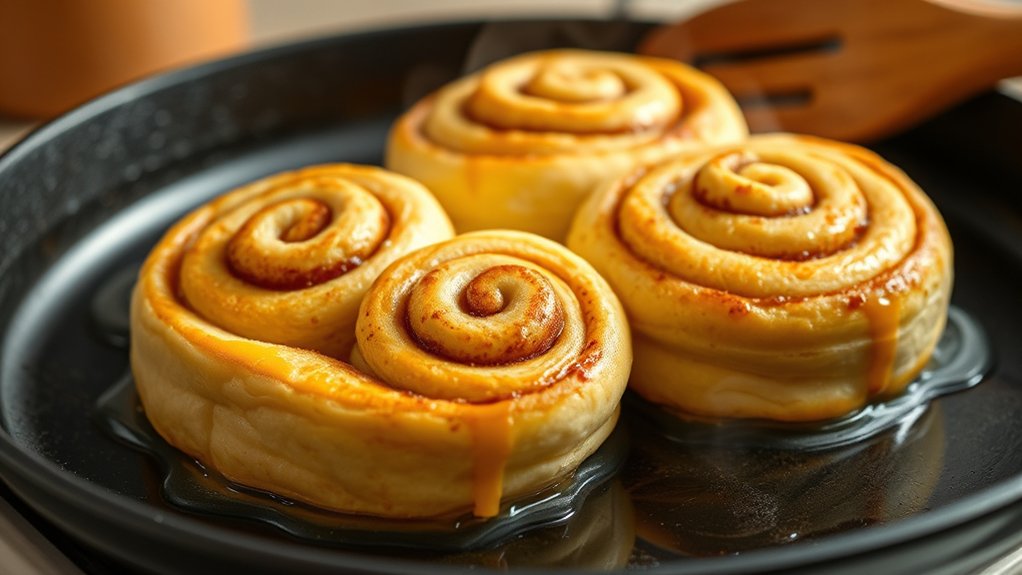
Before you start cooking, make certain your griddle surface is clean and lightly greased for that perfect golden crust. Keep the temperature steady around medium heat and watch the cooking time closely to avoid burning.
As they cook, you’ll want to monitor the rolls carefully and flip them at just the right moment to guarantee even browning.
Preparing The Griddle Surface
Five simple steps will set your griddle surface perfectly for cooking cinnamon rolls, ensuring a golden, evenly cooked treat every time. Start by thoroughly cleaning your griddle with a soft cloth and warm, soapy water to remove any residue. This is essential for proper griddle preparation.
Next, dry the surface completely to avoid steam during cooking. Apply a thin layer of butter or oil evenly across the griddle; this not only prevents sticking but also promotes that beautiful browning.
Preheat the griddle to a moderate temperature before placing your rolls, ensuring the heat is evenly distributed. Finally, maintain the surface by wiping away any excess grease between batches, keeping your griddle ready and clean for consistent cooking results.
Proper surface maintenance guarantees perfect cinnamon rolls every time.
Cooking Time And Temperature
With your griddle perfectly prepared and heated, you’re ready to focus on timing and temperature, the keys to achieving those soft, gooey centers and golden crusts. Set your cooking temperature to medium-low, around 300°F (150°C), to guarantee the cinnamon rolls cook evenly without burning the outside.
The cooking duration typically ranges from 12 to 15 minutes, but it’s essential to watch closely. This moderate heat allows the dough to rise and cook through gradually, creating that ideal tender texture. Avoid cranking the heat; too high a temperature can cause a burnt crust with an undercooked inside.
Stick to this balanced cooking temperature and duration, and you’ll get perfectly cooked cinnamon rolls with a delightful balance of softness and crusty edges.
Monitoring And Flipping Rolls
Keeping a close eye on your cinnamon rolls as they cook is essential to achieving that perfect golden-brown exterior and soft interior. Start by monitoring temperature carefully; a medium-low heat works best to prevent burning while allowing the dough to cook through.
Use a gentle flipping technique. Slide a thin spatula under each roll and turn it over smoothly to avoid tearing. Flip them once the bottom turns golden and firm, usually after 5–7 minutes.
Keep checking the temperature throughout cooking, adjusting your heat to maintain steady warmth without scorching. This attentive monitoring and precise flipping technique guarantees your cinnamon rolls cook evenly, delivering that delightful balance of crispy edges and tender, gooey centers every time you use your griddle.
Griddle vs. Oven: Cooking Time and Temperature Differences
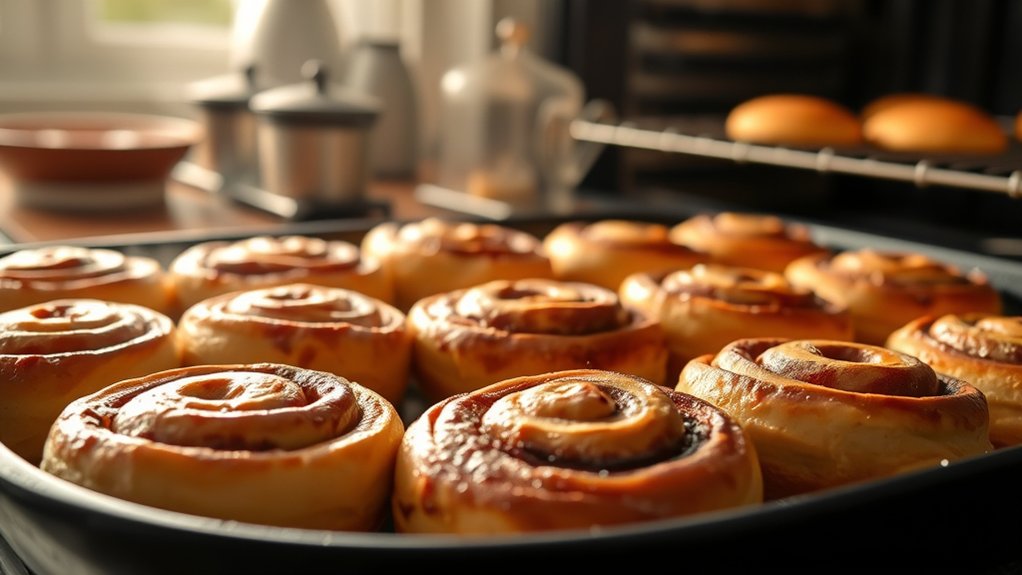
Although baking cinnamon rolls in the oven is traditional, cooking them on a griddle offers a unique twist that affects both time and temperature. With griddle cooking, you’ll notice a quicker, more hands-on approach, while oven baking provides steady, even heat.
Here’s a quick comparison to help you decide:
| Cooking Method | Time | Temperature | Result |
|---|---|---|---|
| Oven Baking | 20-25 minutes | 350°F (175°C) | Soft, fluffy |
| Griddle Cooking | 8-12 minutes | Medium-low heat | Crispy, golden |
Griddle cooking demands your attention but rewards you with a delightful crust. Oven baking is more hands-off, perfect for a slow, even rise.
Whichever you choose, understanding these differences will help you master your cinnamon rolls.
Tips to Prevent Burning and Sticking When Cooking on a Griddle
Two essential steps can save your cinnamon rolls from burning or sticking when cooking on a griddle. First, proper griddle maintenance guarantees an even, non-stick surface. Second, mastering cooking techniques helps you control heat and timing perfectly.
Proper griddle care and cooking skills are key to perfectly cooked, non-stick cinnamon rolls every time.
To keep your rolls flawless:
- Preheat the griddle to medium-low for gentle, even cooking
- Lightly grease the surface with butter or oil to prevent sticking
- Flip rolls carefully using a thin spatula to avoid tearing
- Monitor rolls closely, adjusting heat to prevent scorching
- Clean the griddle promptly after use to maintain its smooth finish
Creative Dough and Filling Variations for Griddle Cinnamon Rolls
You can transform your griddle cinnamon rolls by experimenting with unique dough flavors like cardamom or pumpkin spice. Try mixing unexpected fillings such as cream cheese and fresh berries or brown sugar with toasted pecans for a twist.
Finish them off with creative toppings and glazes, from tangy lemon drizzle to rich salted caramel, to elevate every bite.
Unique Dough Flavor Ideas
A world of flavor awaits when you experiment with unique dough and filling combinations for your griddle cinnamon rolls. Infusing your dough with exciting flavors transforms each bite into a delightful surprise.
Imagine the warm aroma of pumpkin spice swirling through soft, tender dough or the rich, nutty undertones of chocolate hazelnut blending seamlessly with sweet cinnamon. These twists elevate your rolls beyond the ordinary.
Try mixing in subtle hints of herbs or zest for an unexpected zing. Here are some ideas to spark your creativity:
- Pumpkin spice dough with a touch of brown sugar sweetness
- Chocolate hazelnut swirled into the dough for a decadent treat
- Citrus zest-infused dough for a bright, fresh flavor
- Cardamom-spiced dough for an exotic aroma
- Vanilla bean dough to add a creamy, fragrant note
Your griddle cinnamon rolls will never taste the same!
Innovative Filling Combinations
While the dough sets the stage, inventive filling combinations truly make your griddle cinnamon rolls unforgettable. You can elevate classic flavors or dare to mix sweet and savory for a unique twist.
For example, chocolate hazelnut offers a rich, creamy center, while apple pie filling brings cozy, spiced fruit notes. Here’s a quick guide to inspire your next batch:
| Filling Type | Flavor Profile | Best Pairings |
|---|---|---|
| Classic Cinnamon | Warm, spicy, sweet | Brown sugar, butter |
| Chocolate Hazelnut | Nutty, rich, chocolatey | Cream cheese, nuts |
| Apple Pie | Fruity, cinnamon-spiced | Raisins, caramel |
| Savory Herb Cheese | Tangy, aromatic | Spinach, sun-dried tomato |
Experiment with these combos to make your griddle cinnamon rolls a standout treat.
Toppings and Glaze Variations
Once your griddle cinnamon rolls emerge warm and golden, enhancing them with the right toppings and glazes can transform each bite into a luscious experience. Choosing the perfect frosting options and topping ideas lets you customize your treat, adding richness or a tangy contrast.
Whether you prefer classic sweetness or adventurous flavors, there’s a way to elevate your rolls. Consider these delicious choices:
- Cream cheese frosting swirled with a hint of lemon zest for brightness
- Maple glaze drizzled with chopped pecans for a nutty crunch
- A dusting of powdered sugar mixed with cinnamon for subtle sweetness
- Caramel sauce paired with flaky sea salt for a decadent twist
- Fresh berries and whipped cream for a revitalizing finish
These toppings bring out the best in your griddle cinnamon rolls, making each bite unforgettable.
When Cooking Cinnamon Rolls on a Griddle Beats Using the Oven
Although ovens are the traditional choice for baking cinnamon rolls, cooking them on a griddle can offer surprising advantages that you might not expect. Griddle cooking techniques allow you to achieve a perfectly golden crust with a soft, gooey center, all while giving you control over heat distribution.
Plus, you can easily add cinnamon roll toppings like nuts or glaze while still on the griddle for extra flavor and texture.
| Benefit | Why It Matters |
|---|---|
| Faster Cooking Time | Griddles heat quickly and evenly |
| Enhanced Crust Texture | Direct contact creates crisp edges |
| Easy Topping Application | Add toppings mid-cook for freshness |
Next time, try the griddle for a new twist on your cinnamon rolls!
Troubleshooting Common Issues With Griddle-Cooked Cinnamon Rolls
Cooking cinnamon rolls on a griddle offers unique benefits, but it can also present some challenges you might not encounter when using an oven. You’ll face common griddle issues like uneven cooking or dough sticking.
To help, here are troubleshooting tips that guarantee your rolls turn out perfectly golden and fluffy:
Adjust the heat to avoid burning the bottom while the center stays raw. Lightly grease the griddle to prevent sticking and maintain roll shape.
Cover the rolls with a lid to trap heat and promote even cooking. Use a thermometer to keep the griddle temperature steady around 350°F.
Rotate the rolls occasionally for uniform browning.
Frequently Asked Questions
Can You Freeze Cinnamon Rolls Before Cooking Them on a Griddle?
Yes, you can freeze cinnamon rolls before cooking them on a griddle. Use proper freezing techniques by preparing the dough, shaping the rolls, then freezing them on a tray before storing.
This method ensures freshness and makes griddle cooking easier later.
What Type of Griddle Surface Is Best for Cinnamon Rolls?
You’ll want a non-stick or well-seasoned cast iron griddle surface for perfect cinnamon rolls. These surfaces prevent sticking, guarantee even heat distribution, and give your rolls a golden, crispy bottom without burning or tearing.
Are There Gluten-Free Dough Options Suitable for Griddle Cooking?
You’ll find gluten-free alternatives perfect for griddle cooking, especially those designed for dough preparation like almond or rice flour blends.
They hold shape well and brown evenly, letting you enjoy delicious, allergy-friendly cinnamon rolls right on your griddle.
How Do You Store Leftover Cinnamon Rolls Cooked on a Griddle?
You should store leftover cinnamon rolls in airtight containers or resealable plastic bags to keep them soft. Using the best storage methods, like wrapping them in foil before placing in containers, guarantees freshness and flavor for days.
Can You Cook Other Pastries on a Griddle Using Similar Methods?
Like a knight wielding a futuristic laser sword, you can master pastry variations on a griddle. By adjusting griddle techniques, temperature, and timing, you’ll crisp croissants, scones, and danishes with golden, flaky perfection every time.
Conclusion
Cooking cinnamon rolls on a griddle is like painting a masterpiece on a fresh canvas—each swirl gets that perfect golden touch. You’ll enjoy quicker cooking times and a delightful crust that the oven can’t always deliver.
With the right temperature and a little patience, you’ll avoid burning or sticking. This method offers a unique way to enjoy your favorite treat.
So, next time you crave warm, gooey cinnamon rolls, grab your griddle and create a fresh twist on a classic favorite right on your stovetop. Cooking cinnamon rolls on a griddle is a delicious and convenient alternative to the traditional oven method.

Leave a Reply