
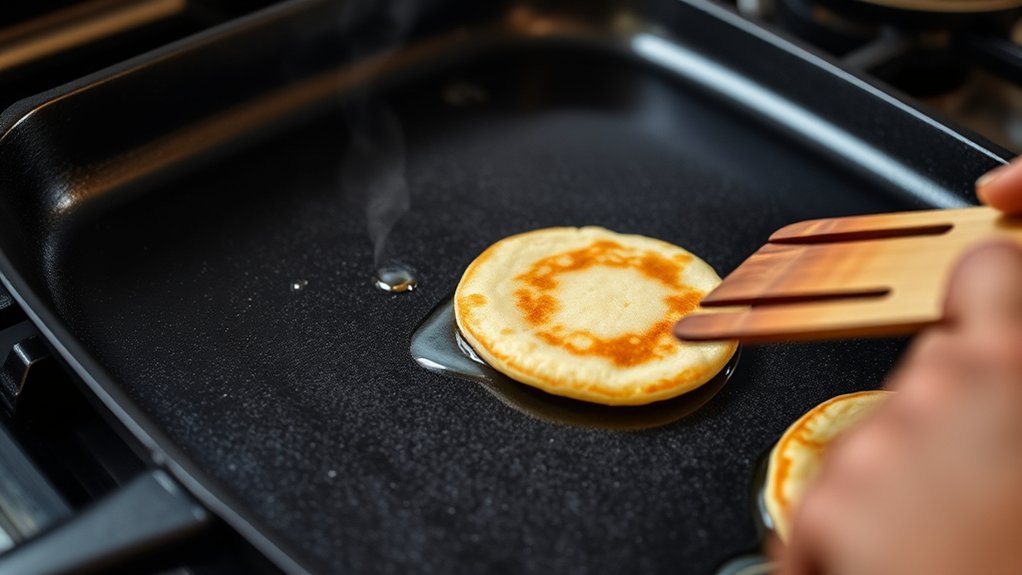
You shouldn’t cook on a griddle right after seasoning because the oil needs time to fully bond with the metal.
Cooking immediately can cause the seasoning to be uneven, lead to food sticking, and create off-flavors from residual oils.
Allowing the griddle to cool guarantees a durable, natural non-stick surface and protects it from rust.
Once it’s ready, your cooking will improve considerably.
Keep exploring to uncover how to recognize readiness and maintain your griddle’s seasoning properly.
Key Takeaways
- Cooking immediately after seasoning can weaken the bond of the oil layer to the griddle surface.
- Allow the griddle to cool completely to ensure the seasoning polymerizes properly.
- Residual oils may smoke and cause off-flavors if cooking is done too soon.
- Waiting enhances the durability and effectiveness of the non-stick seasoning layer.
- For best results, use the griddle after it has developed a smooth, glossy, and cooled patina.
Why You Need to Season Your Griddle Before Cooking
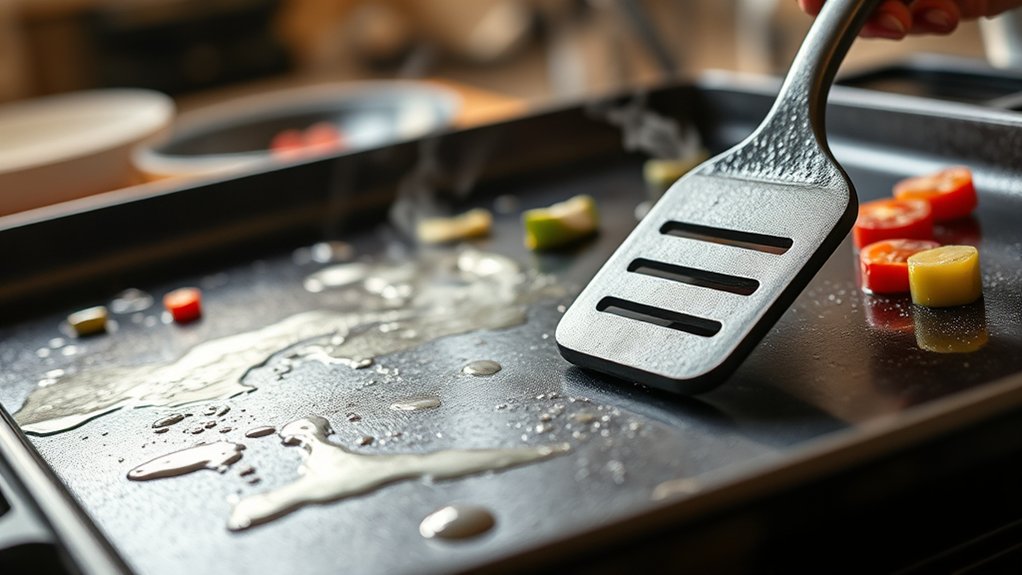
Before you start cooking on your griddle, you need to season it properly to create a natural non-stick surface and protect the metal from rust. Seasoning your griddle enhances its performance, making cleaning easier and extending its lifespan.
This is one of the primary griddle benefits that seasoned users rely on. Effective seasoning techniques involve applying a thin layer of oil with a high smoke point, then heating the griddle to polymerize the oil, creating a durable coating.
Seasoning your griddle with high smoke point oil creates a durable, non-stick surface trusted by experienced cooks.
Skipping this step risks food sticking and premature corrosion. By seasoning your griddle correctly, you guarantee peak cooking results and maintain the equipment’s integrity.
Following proven seasoning techniques assures that you’ll enjoy these griddle benefits every time you cook.
Can You Cook on a Griddle Immediately After Seasoning?
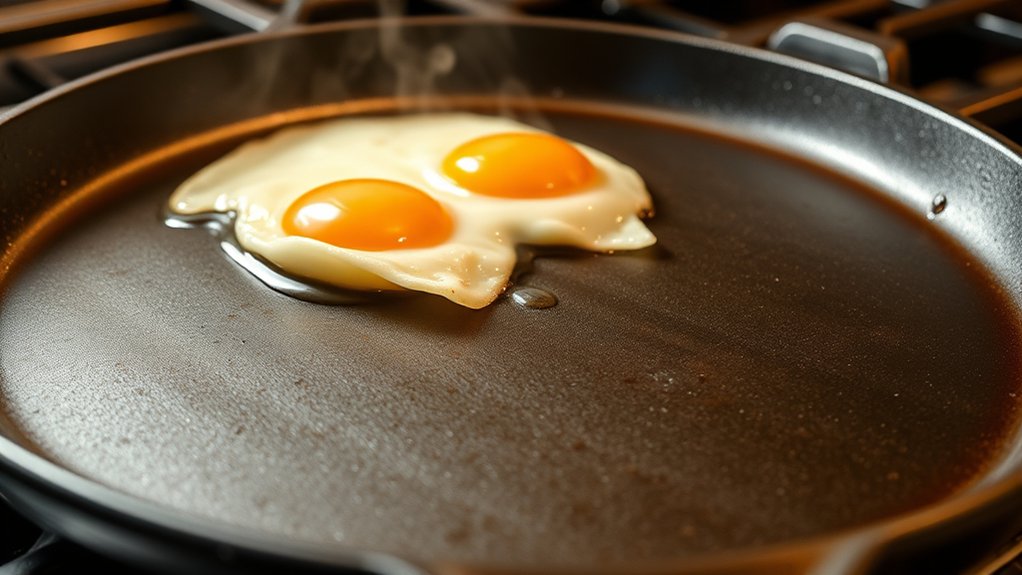
Once you’ve properly seasoned your griddle, you might wonder if it’s ready for cooking right away. Immediate cooking is tempting, but griddle preparation requires a brief cooldown to guarantee the seasoning layer sets properly. Cooking immediately can compromise the seasoning’s durability and affect food quality.
You should wait because:
- The seasoning needs time to bond firmly with the metal.
- Residual oils from seasoning may smoke or impart off-flavors if cooked on too soon.
- Proper cooling enhances the non-stick surface’s longevity.
How to Know When Your Seasoned Griddle Is Ready to Use
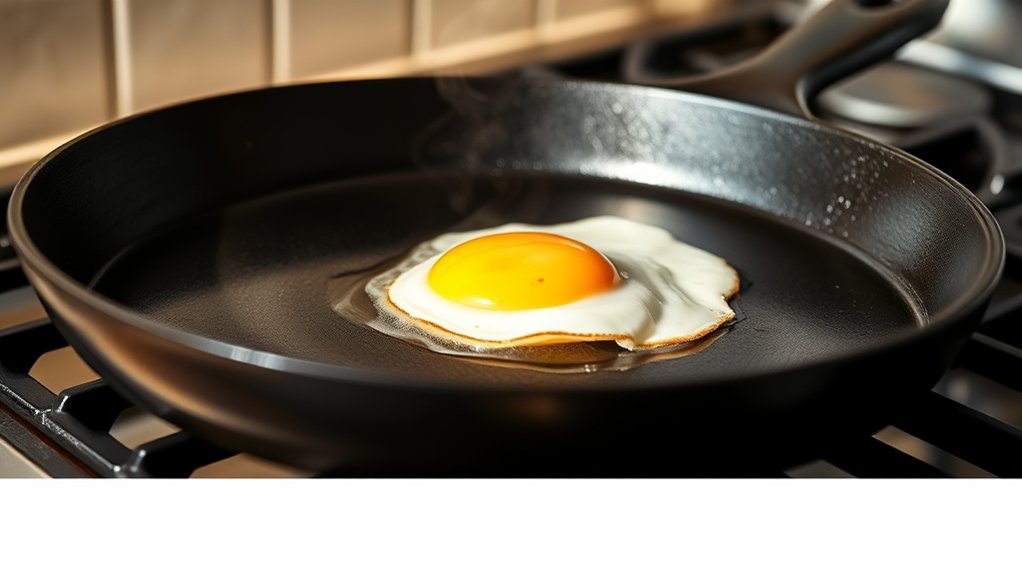
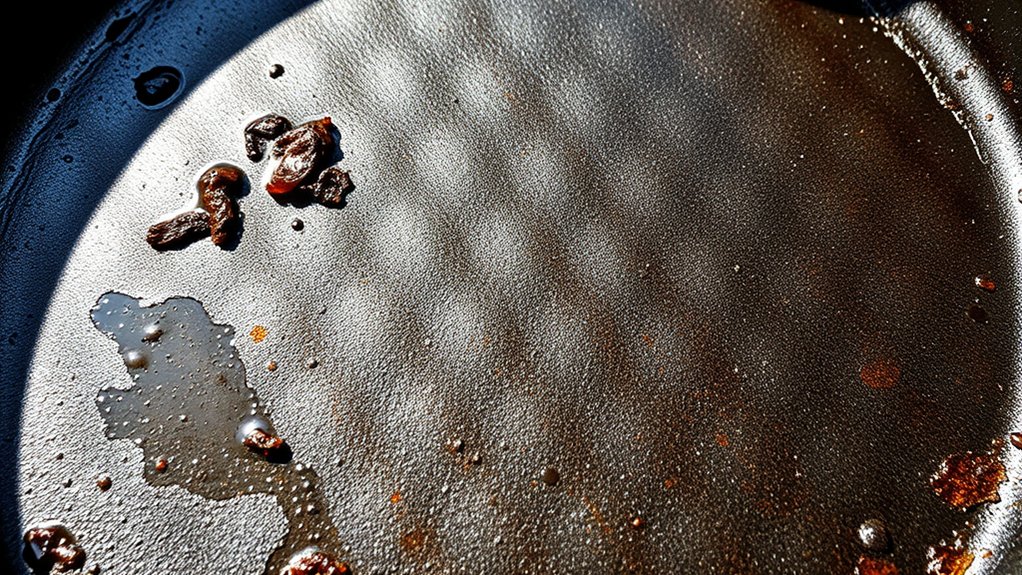
How can you tell when your seasoned griddle is ready for cooking? The key griddle readiness indicators include a smooth, glossy surface free of sticky or powdery residue. After seasoning, allow the griddle to cool completely and inspect its finish; uneven or dull patches suggest additional seasoning timeframes are necessary.
Typically, seasoning requires multiple cycles of oil application and heating, each lasting about 30 minutes, to build a durable non-stick layer. You’ll know your griddle is ready when it exhibits a consistent dark patina and repels water droplets, which bead up rather than soak in.
Avoid rushing to cook immediately; adhering to proper seasoning timeframes guarantees peak performance and longevity. Trust these indicators to confirm your griddle’s readiness for safe, effective use.
Tips for Cooking on a Newly Seasoned Griddle
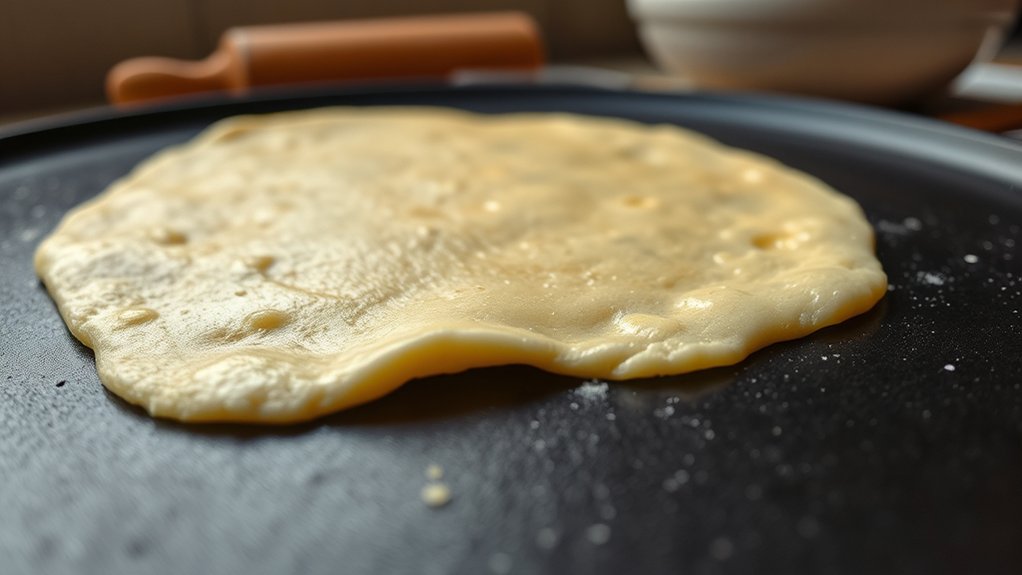
Although your griddle is seasoned and ready, you’ll want to adjust your cooking approach slightly to protect its surface and maximize performance. Embracing proper griddle cooking techniques guarantees you fully benefit from the seasoning’s non-stick and rust-resistant properties.
Adjust your cooking to protect your griddle’s seasoning and ensure optimal non-stick, rust-resistant performance.
Start with these tips:
- Preheat gradually to avoid thermal shock, preserving the seasoning benefits.
- Use moderate amounts of oil to enhance flavor and maintain the seasoning’s integrity.
- Cook foods with lower acidity initially to prevent seasoning degradation.
How to Maintain Your Griddle’s Seasoning After First Use
To keep your griddle’s seasoning intact, avoid harsh cleaning methods that strip away the protective layer. After each use, clean it gently and apply a thin coat of oil to reinforce the seasoning.
Consistent maintenance guarantees your griddle stays non-stick and rust-free for every meal.
Cleaning Without Stripping Seasoning
When you clean your griddle after seasoning, you need to be careful not to strip away the protective layer you’ve worked to build. Employ gentle cleaning techniques and use safe materials to preserve the seasoning. Avoid harsh detergents or abrasive scrubbers that can damage the surface.
Instead, focus on these effective practices:
Wipe the griddle warm with a soft cloth or non-metal spatula to remove food residue.
Use a small amount of hot water and a non-abrasive sponge if needed, avoiding soap whenever possible.
Dry thoroughly and apply a thin layer of oil to maintain the seasoning.
Reapplying Oil Layers
Since seasoning forms a protective barrier, you’ll need to regularly reapply thin oil layers to maintain your griddle’s non-stick surface and prevent rust. Proper oil application reinforces the seasoning, extending its durability.
After each use, clean the griddle, then apply a thin coat of high-smoke-point oil using seasoning techniques like wiping with a lint-free cloth. Heat the griddle briefly to bond the oil and build layers.
| Step | Action | Purpose |
|---|---|---|
| Clean | Remove food residue | Preserve existing seasoning |
| Oil Application | Apply thin oil coat | Prevent rust, enhance non-stick |
| Heat | Warm griddle briefly | Bond oil, strengthen layers |
Consistent reapplication guarantees your griddle stays in prime condition for cooking.
Common Mistakes to Avoid When Seasoning and Cooking
You need to avoid incomplete seasoning, as it leaves your griddle vulnerable to rust and uneven cooking. Don’t let the griddle overheat, because excessive heat can damage the protective coating you worked hard to build.
Following proper seasoning and temperature guidelines guarantees your griddle stays durable and performs at its best.
Incomplete Seasoning Risks
Although seasoning a griddle might seem straightforward, skipping essential steps can lead to uneven seasoning and poor cooking results. Incomplete seasoning risks include patches where food sticks or burns, causing uneven cooking and frustrating your efforts.
If you cook immediately after a partial seasoning, you might damage the developing coating, forcing you to start over.
To avoid these problems, guarantee you:
- Apply a consistent layer of oil for uniform protection
- Allow proper curing time for a durable, non-stick surface
- Avoid premature cooking that disrupts the seasoning process
Overheating Damages Coating
When griddles overheat during seasoning or cooking, the protective coating can break down, leading to flaking and sticky surfaces. You must understand the overheating effects to maintain your griddle’s durability and guarantee griddle safety.
Excessive heat causes the seasoning layer to degrade, exposing the raw metal underneath, which invites rust and uneven cooking. To avoid this, control your cooking temperature carefully and never leave your griddle unattended while heating.
Allow the seasoning to cure properly before applying high heat. Overheating not only damages the coating but also compromises food quality and safety.
Frequently Asked Questions
Can I Use Soap to Clean My Griddle After Seasoning?
You shouldn’t use soap to clean your griddle after seasoning; it can strip the seasoning layer. Instead, follow griddle cleaning tips like wiping with a warm cloth or using soap alternatives such as coarse salt and oil.
What Oils Are Best for Seasoning a Griddle?
Seasoning a griddle is like painting with fire; you want the best seasoning oils with high oil smoke points, such as flaxseed, grapeseed, or avocado oil. Their heat tolerance guarantees a durable, nonstick surface.
How Often Should I Re-Season My Griddle?
You should re-season your griddle monthly or after heavy use to maintain its non-stick surface. Follow griddle maintenance tips and seasoning frequency guidelines to prevent rust and guarantee peak cooking performance consistently.
Can I Season a Griddle in the Oven?
Like giving your griddle a warm hug, you can season it in the oven for even coating. Oven seasoning guarantees thorough polymerization, boosting griddle maintenance and durability, so you get lasting, nonstick performance every time you cook.
Is It Safe to Cook Acidic Foods on a Newly Seasoned Griddle?
You shouldn’t cook acidic foods on a newly seasoned griddle because it can strip the seasoning. For acidic food safety, wait until multiple seasoning layers build up.
Follow griddle seasoning tips for lasting non-stick protection.
Conclusion
You shouldn’t cook on your griddle immediately after seasoning; it needs time to form a strong, protective layer. Think of seasoning like letting paint dry—it’s essential for durability and performance. Wait until the surface looks smooth and feels non-sticky before using it.
With proper care and patience, your griddle will deliver even heat and a naturally non-stick surface. This makes every meal cook flawlessly while lasting for years to come. So, to get the best results, avoid cooking on a griddle right after seasoning.

Leave a Reply