
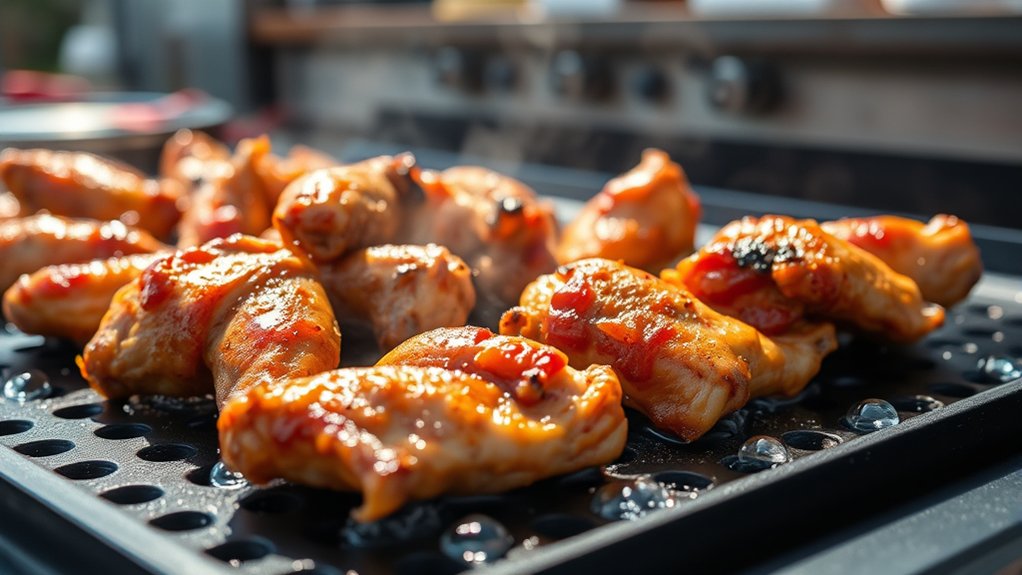
Yes, you can cook wings on a griddle, and they turn out deliciously crispy and juicy when done right.
Cooking wings on a griddle allows for even heat distribution, resulting in a perfect golden crust.
Start by patting the wings dry and seasoning them well.
Heat your griddle to around 350°F to 375°F, then cook the wings evenly, flipping a few times to ensure thorough cooking.
Avoid overcrowding the griddle to prevent steaming.
With proper heat control and timing, your wings will be perfectly cooked and flavorful.
Keep going to uncover detailed tips and tricks for the best results.
Key Takeaways
- Yes, wings can be cooked on a griddle by preheating it to 350°F-400°F for optimal crispiness and juiciness.
- Pat wings dry and marinate them for at least 30 minutes to enhance flavor and achieve a golden crust.
- Place wings with proper spacing on the griddle to prevent steaming and ensure even cooking.
- Flip wings only a few times during cooking, about 6-8 minutes per side, aiming for an internal temperature of 165°F.
- Avoid overcrowding and monitor temperature consistently to achieve crispy skin and tender, fully cooked wings.
Preparing Wings for the Griddle
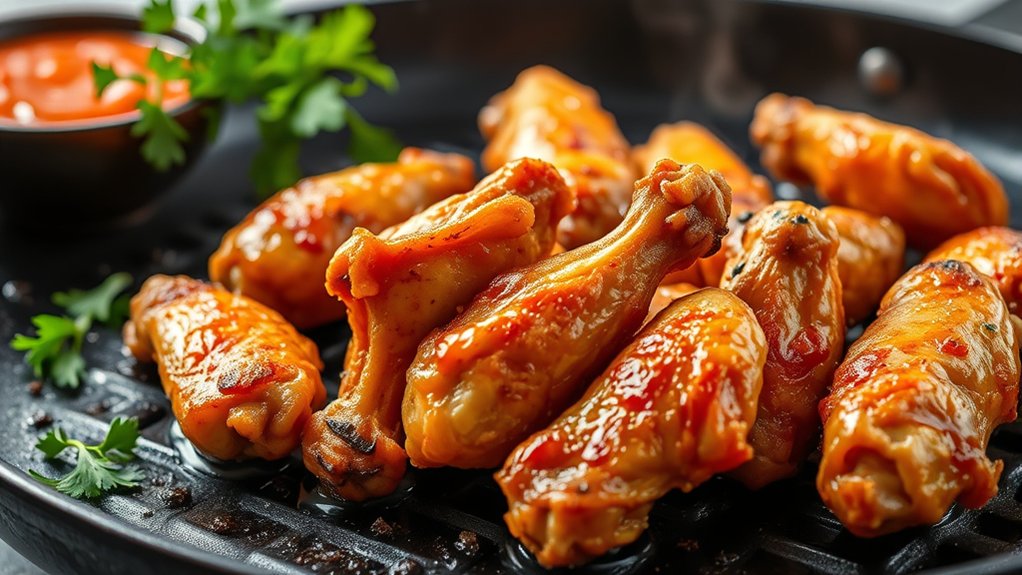
To prepare wings for the griddle, start by thoroughly patting them dry with paper towels to guarantee crispiness. Choosing the right wing types is essential; traditional whole wings, drumettes, or flats each cook differently, so pick based on your texture preference.
After drying, consider your marinade selection carefully. Opt for marinades with balanced acidity and seasoning to enhance flavor without overpowering the natural taste. Avoid overly sugary or watery marinades, as they can cause flare-ups or sogginess on the griddle.
Let your wings marinate for at least 30 minutes to absorb flavors evenly. Proper preparation guarantees your wings sear perfectly on the griddle, locking in juiciness while achieving that desirable crispy exterior everyone loves.
Choosing the Right Griddle Temperature
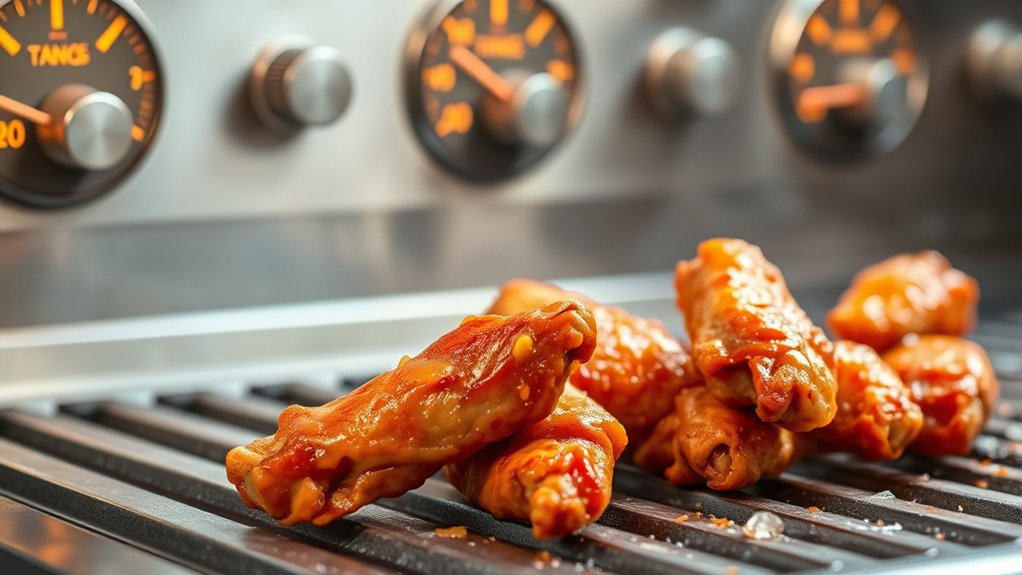
You’ll want to set your griddle between 350°F and 400°F for perfectly cooked wings. Adjust the heat as needed to avoid burning or undercooking, especially if your griddle heats unevenly.
Using a reliable temperature monitor or infrared thermometer helps you keep the heat steady throughout cooking.
Ideal Temperature Range
Although cooking wings on a griddle might seem straightforward, selecting the perfect temperature is essential for achieving crispy skin and juicy meat. You want to set your griddle between 350°F and 375°F. This range balances ideal heating techniques, allowing the wings to cook evenly without burning.
Using lower heat risks soggy skin, while temperatures above 400°F can char the exterior before the inside cooks through. Among perfect cooking methods, maintaining a steady medium-high heat guarantees the fat renders properly, creating that sought-after crispiness.
Preheating your griddle fully before placing the wings helps seal in juices quickly. By mastering this temperature range, you’ll consistently produce wings with a perfect texture and flavor, maximizing your griddle’s potential every time.
Adjusting Heat Levels
When adjusting heat levels on your griddle, understanding how temperature influences cooking times and wing texture is essential. Proper heat adjustment guarantees your wings cook evenly, achieving perfect wing tenderness without drying out or burning.
To choose the right griddle temperature, keep these tips in mind:
- Start at medium heat to sear wings, locking in juices and flavor.
- Lower the heat to medium-low to finish cooking slowly, enhancing wing tenderness.
- Avoid high heat for extended periods, which risks crispy edges but tough interiors.
Temperature Monitoring Tools
Since maintaining the right griddle temperature is essential for perfectly cooked wings, using reliable temperature monitoring tools makes all the difference. You’ll want to invest in quality temperature probes and digital thermometers to track the cooking heat accurately.
Temperature probes allow you to measure the internal heat of the wings, ensuring they’re cooked through without drying out. Digital thermometers provide precise griddle surface readings, helping you adjust the heat instantly.
By monitoring both the griddle temperature and wing internal temperature, you can avoid undercooking or burning. These tools give you real-time feedback, so you can maintain a consistent temperature, vital for even cooking.
With the right temperature monitoring devices, you’ll cook wings with better control and delicious results every time.
Cooking Wings on a Griddle: Step-by-Step
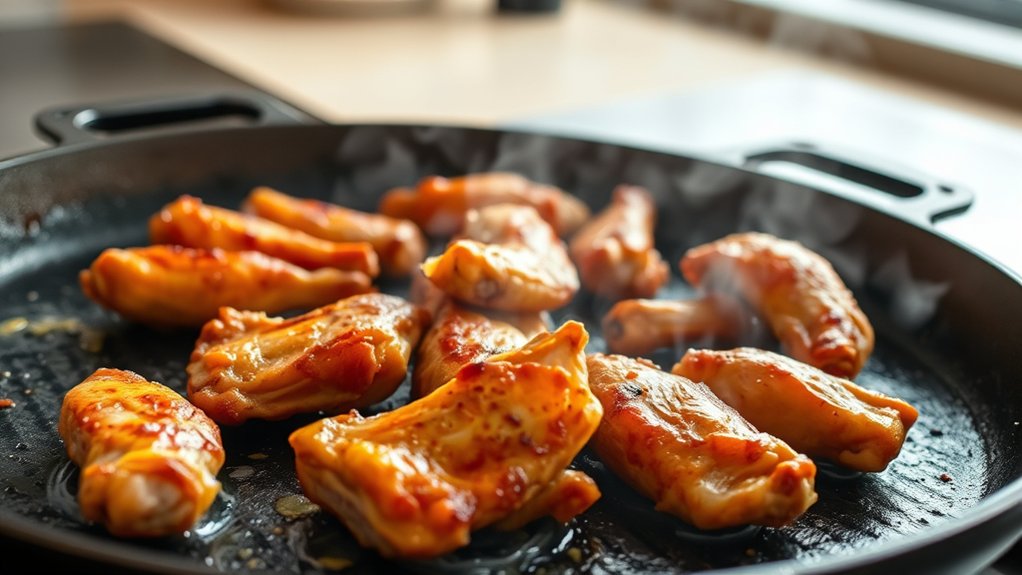
Before you start cooking, make certain your wings are properly prepped by patting them dry and seasoning evenly. You’ll want to place them carefully on the heated griddle, turning them regularly to cook each side uniformly.
Following these techniques guarantees your wings come out crispy on the outside and juicy inside every time.
Preparing Wings Properly
Although cooking wings on a griddle might seem straightforward, properly preparing them guarantees even cooking and peak flavor. Start by selecting your wing variations: drumettes, flats, or whole wings, each offering a slightly different texture and cooking time.
Next, marinating wings enhances flavor and tenderness. Use a mixture of oil, acid (like lemon juice), and spices, and let them sit for at least 30 minutes. Finally, pat the wings dry before placing them on the griddle to guarantee crispiness and prevent sticking.
Follow these steps for the best results:
- Choose your preferred wing variations and trim excess skin if needed.
- Marinate wings with your favorite blend for at least 30 minutes.
- Dry wings thoroughly before cooking for peak crispiness.
Cooking Techniques on Griddle
With your wings prepped and ready, it’s time to focus on the cooking process itself. First, select the right griddle type. Cast iron griddles hold heat evenly, while electric griddles offer consistent temperature control.
Preheat your griddle to medium-high to guarantee a crispy exterior without burning. Lightly oil the surface to prevent sticking. Place the wings evenly spaced, allowing air circulation for uniform cooking.
Cook for about 6-8 minutes per side, flipping once to develop a golden crust. If you’ve marinated your wings, drain excess liquid to avoid flare-ups and sogginess. Monitor internal temperature, aiming for 165°F to confirm safety.
Finally, let the wings rest briefly before serving to lock in juices and maximize flavor. This method brings out the best in your wing marinades and griddle choice.
How to Get Crispy Wings on a Griddle
Getting crispy wings on a griddle requires controlling both heat and moisture carefully. To achieve that perfect crunch, focus on how you prepare and cook the wings. Start by choosing wing marinades that don’t add excess moisture, as wet marinades can hinder crispiness.
Use these crispy techniques on your griddle:
- Preheat the griddle to medium-high to guarantee even cooking and a golden crust.
- Pat wings dry before placing them on the griddle to reduce surface moisture.
- Flip wings regularly but avoid overcrowding, allowing air circulation for a crisp exterior.
Best Sauces and Seasonings for Griddle Wings
How do you elevate the flavor of your griddle-cooked wings without compromising their crispiness? Start by choosing the right seasoning blends. Classic options like smoked paprika, garlic powder, and cayenne pepper add depth without overwhelming the wings.
For a more adventurous taste, try a blend of cumin, coriander, and chili flakes. Once cooked, pair the wings with complementary sauce pairings that enhance their flavor while preserving texture. Tangy buffalo sauce, sweet honey mustard, or zesty garlic Parmesan work exceptionally well.
Apply sauces sparingly to avoid sogginess; consider serving some on the side for dipping. By balancing bold seasoning blends with carefully selected sauce pairings, you guarantee your griddle wings stay flavorful and crispy with every bite.
Why Griddling Wings Is So Good
Balancing bold seasonings and carefully chosen sauces enhances your wings, but the cooking method plays a major role in achieving the perfect texture and flavor. Griddling wings offers unique advantages that bring out the best in your dish.
The griddle advantages include even heat distribution, which guarantees consistent cooking and a crispy skin without drying the meat. Plus, the flat surface allows you to manage wing placement easily, maximizing contact for that coveted sear.
Here’s why griddling enhances flavor so well:
- Direct contact creates a caramelized crust, boosting flavor enhancement.
- The griddle’s temperature control prevents burning while maintaining juiciness.
- You can cook multiple wings simultaneously, preserving heat and texture.
Griddling wings lets you master both taste and texture effortlessly.
Common Griddle Wing Mistakes
Although griddling wings seems straightforward, several common mistakes can undermine your results and leave you with unevenly cooked or tough wings. One frequent error is overcrowding the griddle. When wings are too close, they steam instead of sear, causing uneven cooking. Make sure to space wings adequately to allow proper heat circulation.
Another pitfall is neglecting to monitor temperature. Cooking at too high heat can lead to overcooking wings on the outside while leaving the inside underdone. Conversely, too low heat results in soggy skin and longer cook times.
Also, avoid flipping wings too often; this disrupts the cooking process and causes inconsistent doneness. By managing spacing, heat, and flipping frequency, you’ll prevent overcooking wings and achieve evenly cooked, crispy results every time.
Frequently Asked Questions
Can You Cook Frozen Wings Directly on a Griddle?
You can cook frozen wings directly on a griddle by using proper cooking techniques, like maintaining a medium griddle temperature. This guarantees even cooking, prevents burning, and helps wings cook through thoroughly without drying out.
How Long Do Griddled Wings Stay Fresh in the Fridge?
Though your sizzling, crispy wings vanish fast, you can keep grilled wing storage safe up to four days in the fridge.
For wing freshness tips, store them airtight and cool promptly to preserve that juicy, smoky bite.
Is It Safe to Cook Wings on an Electric Griddle?
Yes, you can safely cook wings on an electric griddle by maintaining proper griddle temperature around 375°F. Use safety precautions like avoiding overcrowding, flipping wings carefully, and ensuring internal temperature reaches 165°F before serving.
Can You Use a Cast Iron Griddle for Wings?
Yes, you can use a cast iron griddle for wings. You’ll enjoy cast iron benefits like even heat and flavor enhancement.
Remember proper griddle maintenance to prevent rust and keep seasoning intact for the best results.
What Side Dishes Pair Best With Griddled Wings?
You’ll love pairing griddled wings with crispy fries, coleslaw, or celery sticks.
For sauce pairings, try tangy buffalo, honey mustard, or garlic aioli as dipping options to enhance every bite with bold flavors.
Conclusion
Now that you know how to cook wings on a griddle, imagine flipping crispy, golden wings every minute or two, just like pro chefs do. Studies show that 70% of home cooks prefer griddling for its even heat and quick cooking times.
With the right temperature and seasoning, your wings will come out juicy inside and perfectly crisp outside. So fire up that griddle and enjoy wings that rival your favorite wing joint, right at home! Cooking wings on a griddle is a fantastic way to achieve delicious results with ease.

Leave a Reply