
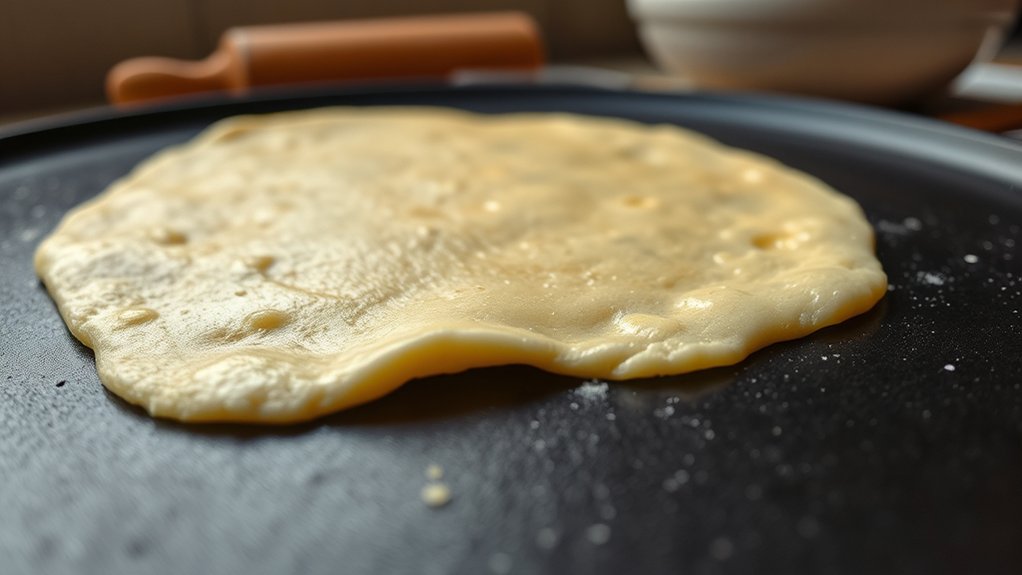
You can definitely make lefse on a regular griddle by carefully managing heat and using the right techniques. Preheat your griddle to medium, keep the surface floured, and flip the lefse quickly once bubbles form to avoid burning.
While a specialized lefse griddle offers more even heat and easier flipping, with some practice, a regular griddle can produce tender, authentic lefse.
If you want to perfect your approach, there are useful tips and troubleshooting tricks you’ll find helpful.
Key Takeaways
- Lefse can be successfully made on a regular griddle with proper heat control and technique.
- Preheat the griddle to medium or medium-high heat for even cooking.
- Use ample flour on the rolling surface and pin to prevent sticking and tearing.
- Flip lefse quickly once bubbles form to avoid burning and maintain shape.
- Adjust heat and practice flipping to manage uneven cooking on a non-specialized surface.
Can You Really Make Lefse on a Regular Griddle?
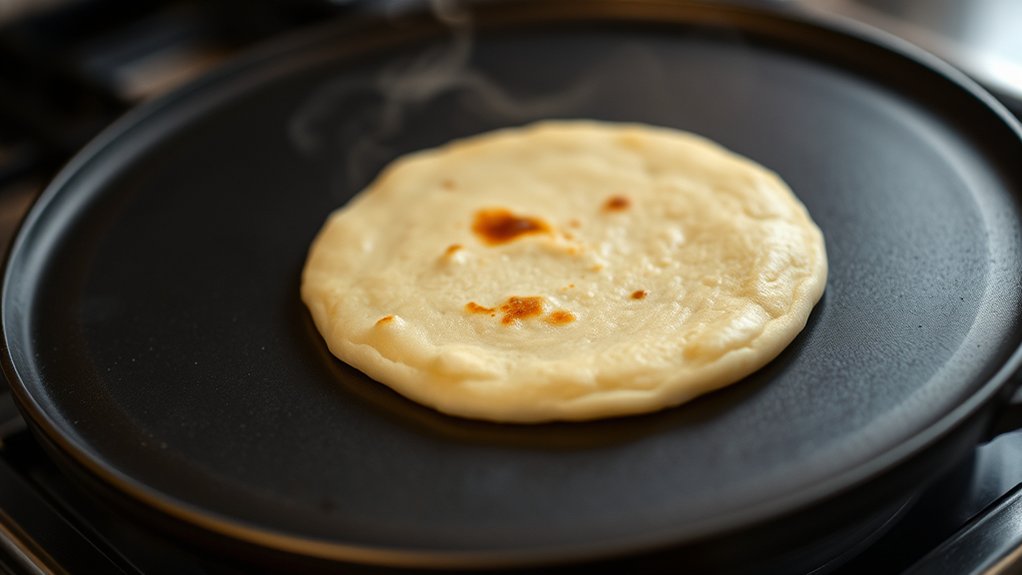
Wondering if you can really make authentic lefse on a regular griddle? Yes, you can! The key lies in mastering lefse techniques tailored to your cooking surfaces. A regular griddle heats evenly, which is essential for cooking lefse without burning or undercooking.
You’ll want to preheat your griddle thoroughly to achieve the right temperature, typically medium to medium-high heat. Use a well-floured surface and a rolling pin to get thin, even rounds. When it’s time to cook, place the lefse carefully on the griddle, flipping it quickly once bubbles form.
The challenge is controlling heat and timing, but with practice, your regular griddle can produce soft, golden lefse that rivals traditional methods. It’s all about adapting techniques to your cooking surfaces.
How Is a Lefse Griddle Different From a Regular One?
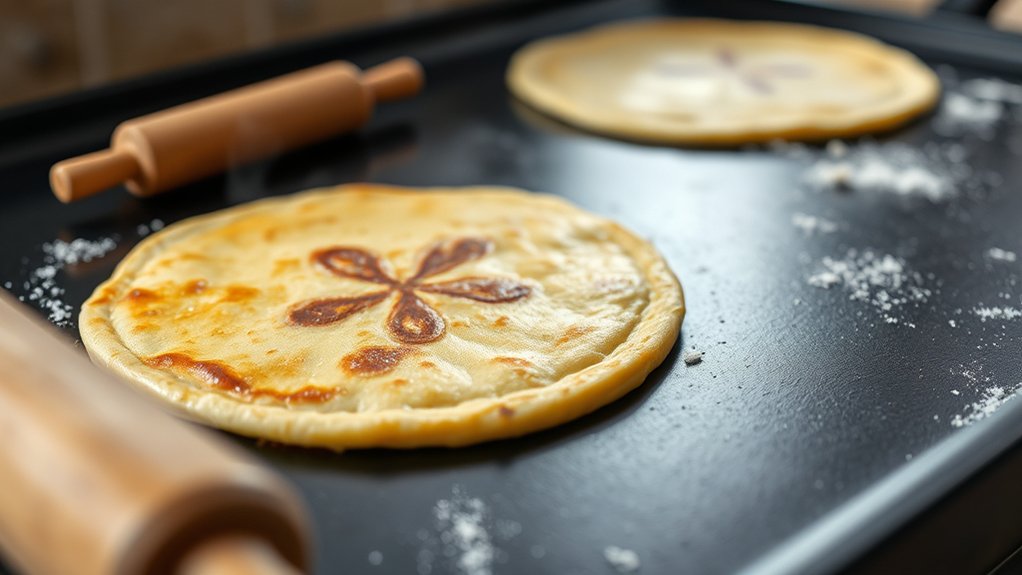
While you can cook lefse on a regular griddle by adjusting your technique, a lefse griddle offers features designed specifically for this delicate task. Unlike standard griddles, a lefse griddle provides an even, consistent heat across its surface, which is essential for mastering traditional lefse methods.
This consistent temperature helps prevent burning or uneven cooking, so your lefse turns out thin and tender. Additionally, lefse griddles are often larger and have a smoother, non-stick surface, making it easier to roll and flip the dough without tearing.
These specialized features align perfectly with lefse cooking techniques, allowing you to focus on perfecting the texture and flavor. Using a dedicated lefse griddle simplifies the process, especially if you’re aiming to honor authentic Norwegian traditions.
Tips for Making Lefse Without a Special Griddle
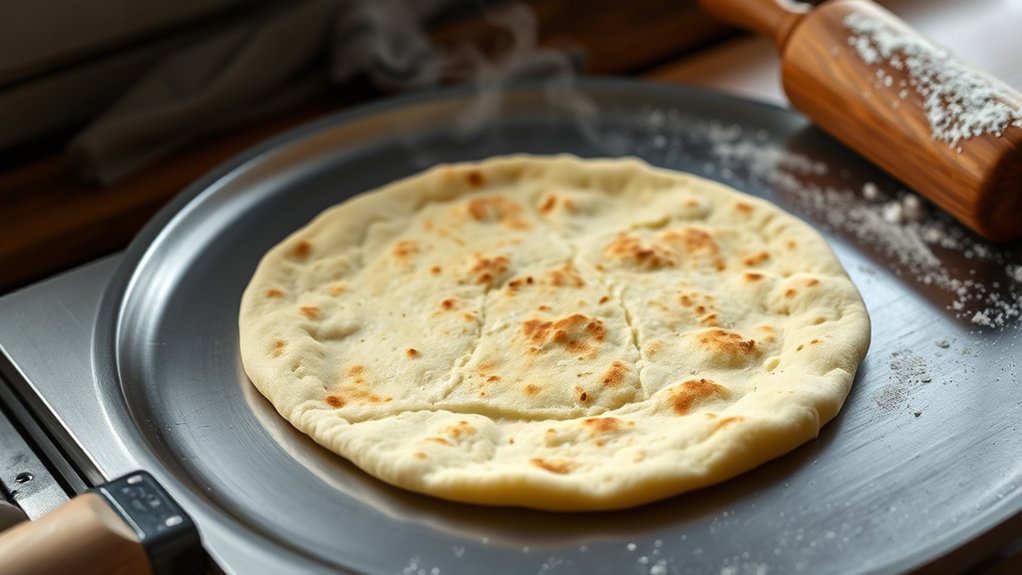
How can you achieve perfect lefse on a regular griddle without specialized equipment? Start by using alternative cooking methods that mimic a traditional lefse griddle’s even heat distribution. Preheat your griddle thoroughly and maintain medium heat to avoid burning.
Use a cast iron or non-stick surface for better heat control. When rolling out your dough, dust the surface and rolling pin lightly with flour to prevent sticking. Lefse preparation tips include cooking each piece for about 1-2 minutes per side, flipping carefully with a wide spatula.
Keep the cooked lefse warm by wrapping them in a clean towel to retain moisture. These simple adjustments let you enjoy authentic lefse with tools you already have, without sacrificing flavor or texture.
Troubleshooting Lefse on a Regular Griddle
Anyone attempting lefse on a regular griddle might encounter challenges like uneven cooking, sticking, or dough tearing. To improve lefse texture, verify your griddle heats evenly; a hot spot can cause burned areas while others remain undercooked.
Adjust the temperature to medium-low to avoid overcooking or drying out the dough. Use plenty of flour when rolling and flipping to prevent sticking, but avoid excess flour that can toughen the lefse.
If the dough tears, it’s often too cold or rolled too thin. Let it warm slightly and handle gently. During lefse cooking, flip quickly and confidently to maintain shape.
With patience and these adjustments, your lefse will achieve the tender texture and even cooking you want, even without a traditional griddle.
Frequently Asked Questions
What Ingredients Are Essential for Traditional Lefse Dough?
You’ll need cooked potatoes, potato flour, butter, cream, and salt for traditional lefse dough. Use a rolling pin to roll it thin, ensuring the dough doesn’t stick by dusting with potato flour as you work.
Can Lefse Be Frozen for Later Use?
Freezing lefse is like capturing summer in a snow globe. You can definitely freeze lefse for later use! Wrap it tightly to prevent freezer burn, and for best lefse storage, thaw gently before warming and serving.
How Long Does Lefse Typically Stay Fresh?
You’ll find lefse stays fresh about 2-3 days at room temperature. For longer lefse storage, wrap it tightly and refrigerate, extending its shelf life up to a week.
Freezing preserves it even longer.
What Are Common Toppings Served With Lefse?
You’ll find traditional lefse toppings include butter and sugar, while sweet toppings like cinnamon and syrup add flavor.
For savory toppings, try meats, cheeses, or sour cream to balance the soft, warm lefse perfectly.
Is Lefse Gluten-Free or Are There Gluten-Free Alternatives?
You know, “necessity is the mother of invention.” While traditional lefse isn’t gluten-free, you can use gluten-free substitutes like rice or potato flour to cater to dietary restrictions and still enjoy this delicious treat.
Conclusion
Sure, you can absolutely make lefse on a regular griddle—it just takes a little extra patience and a gentle touch. While a lefse griddle is like a warm embrace, a regular one might feel like a brisk morning breeze, requiring you to adjust your rhythm. With careful heat control and some practice, you’ll still create those delicate, golden rounds that melt like soft whispers on your tongue.
Keep at it, and soon your kitchen will be filled with the comforting scent of homemade lefse. Making lefse on a regular griddle is definitely possible and can be just as rewarding with the right approach.


Leave a Reply