
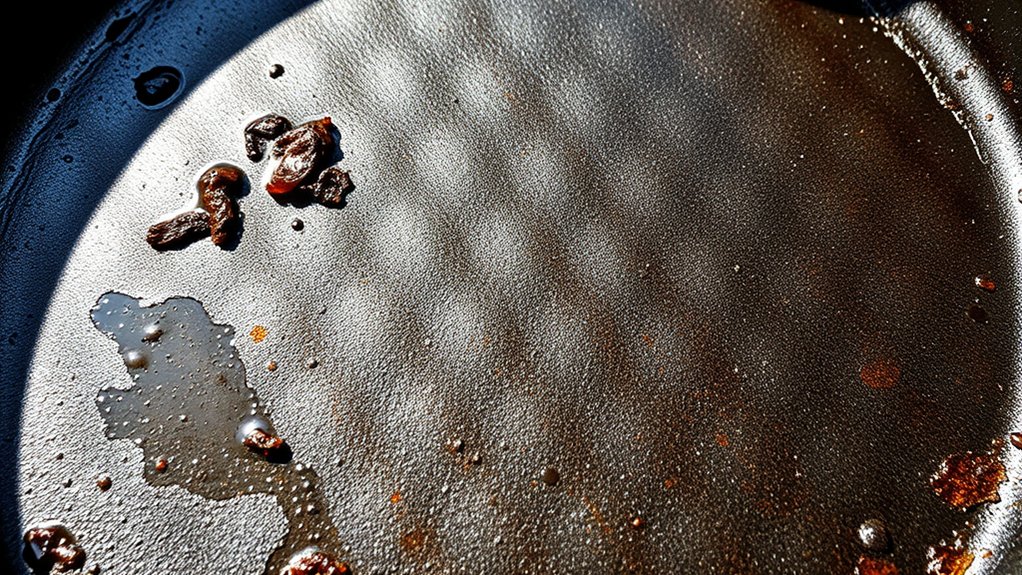
Yes, you can mess up seasoning a griddle if you’re not careful.
Using too much oil or overheating the griddle can create a sticky, uneven surface. This reduces its non-stick ability and makes it prone to rust.
Skipping proper heating steps or using oils with a low smoke point also weakens the protective layer. If your seasoning feels tacky or flakes off, it’s a sign that it’s damaged.
Understanding how to season properly and how to fix common problems can help you maintain an efficient, long-lasting griddle.
Proper care ensures your griddle stays in great condition for years to come.
Key Takeaways
- Yes, overusing oil or applying thick layers can cause sticky, uneven seasoning on a griddle.
- Skipping proper heating prevents oil polymerization, leading to poor seasoning quality.
- Using low smoke point oils or overheating breaks down the seasoning layer and causes stickiness.
- Rushing the seasoning process undermines durability and effectiveness of the griddle’s surface.
- Bad seasoning can be fixed by stripping the layer, cleaning thoroughly, and reapplying thin oil coats correctly.
Why Seasoning Your Griddle Right Makes a Difference
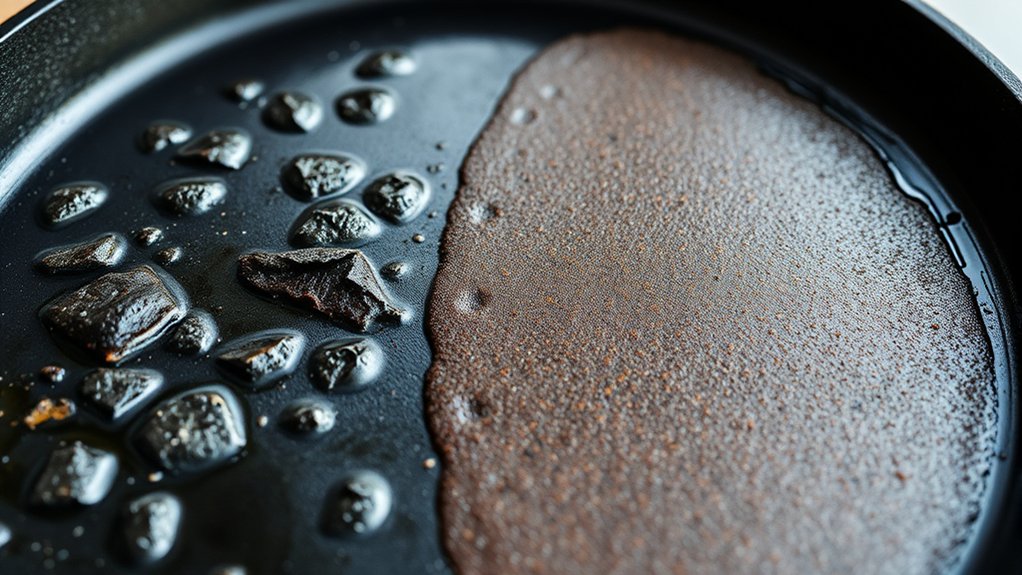
Although it might seem simple, seasoning your griddle correctly is crucial because it creates a natural non-stick surface that protects the metal from rust and enhances cooking performance. You need to understand the importance of seasoning to maintain your griddle’s longevity and efficiency.
Proper seasoning forms a durable, polymerized oil layer that prevents food from sticking and reduces the risk of corrosion. This protective coating also guarantees even heat distribution, which directly impacts griddle performance by allowing consistent cooking temperatures.
Ignoring proper seasoning or doing it incorrectly can lead to uneven cooking, sticking food, and rust development. By appreciating the importance of seasoning, you’ll improve your griddle’s functionality and extend its lifespan, making your cooking experience smoother and more reliable.
How to Season Your Griddle Properly (Step-by-Step Guide)
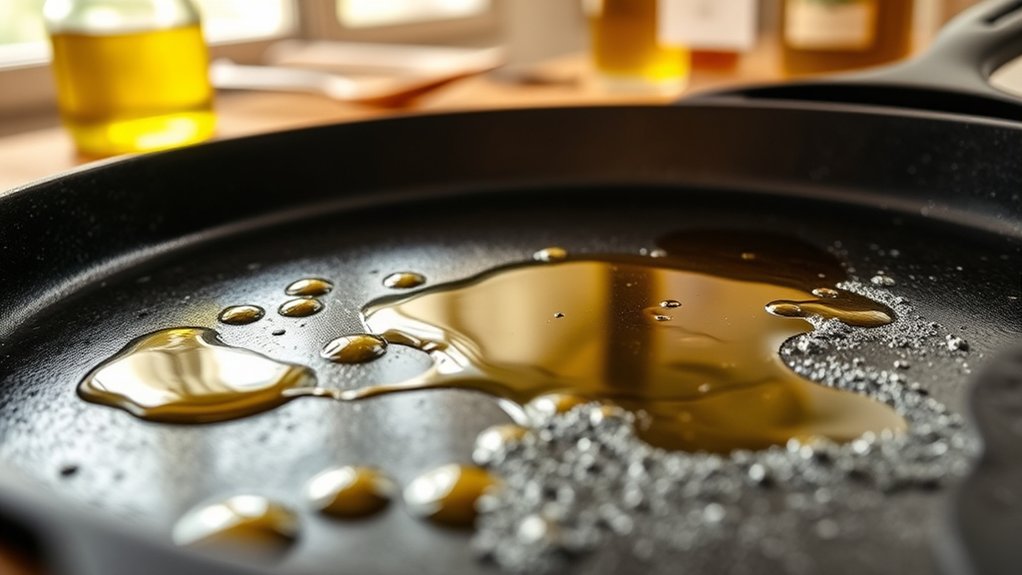
Understanding why proper seasoning matters sets the foundation for getting it right. Start by thoroughly cleaning your griddle surface to remove any residues. Preheat it on medium heat until it’s warm but not smoking.
Apply a thin, even layer of high-smoke-point oil, like flaxseed or canola, using a cloth or paper towel. Let the oil heat until it starts to smoke, then wipe off any excess to avoid sticky buildup. Repeat this oiling and heating cycle two to three times for a strong, durable coating.
Common Seasoning Mistakes That Cause Sticky Surfaces
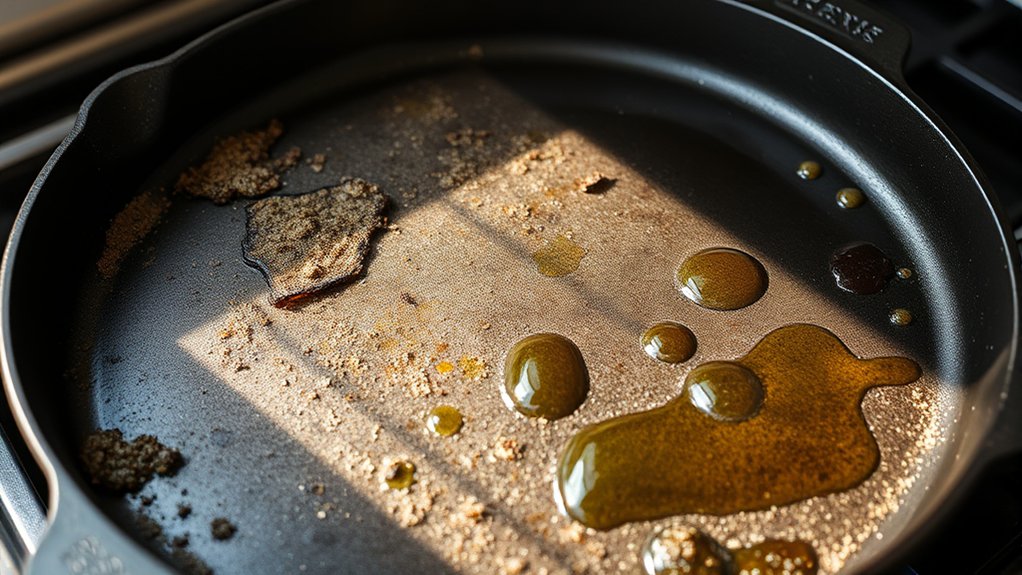
You might be tempted to apply thick layers of oil when seasoning, but overusing oil actually leads to sticky, uneven surfaces.
Skipping adequate heating time prevents the oil from properly polymerizing, which also causes tackiness. Understanding these common mistakes helps you achieve a smooth, non-stick finish on your griddle.
Overusing Oil Layers
When you apply too much oil during seasoning, the excess doesn’t properly polymerize and instead forms sticky, uneven layers on your griddle’s surface. To avoid this, choose oil types with high smoke points, like flaxseed or grapeseed oil, which dry and bond effectively.
Master layering techniques by applying thin, even coats rather than thick globs. After each layer, wipe away excess oil to prevent buildup. Multiple thin layers build a durable seasoning without stickiness, while overusing oil creates a tacky residue that attracts food and dirt.
Inadequate Heating Time
Although applying the right amount of oil is essential, insufficient heating time during seasoning often leads to sticky surfaces on your griddle. When you don’t allow proper griddle heating, the oil won’t polymerize and bond correctly, resulting in poor oil absorption.
This incomplete process leaves a tacky residue rather than a smooth, durable layer. To avoid this, heat your griddle gradually and maintain a consistent temperature long enough for the oil to fully break down and form a solid, non-stick coating. Rushing this step undermines seasoning quality and causes food to stick.
What Happens to Your Griddle Seasoning When You Overheat or Use the Wrong Oil?
If you overheat your griddle or choose the wrong oil, the seasoning can break down and become sticky or flaky. When oil smoke appears, it signals the oil has reached its smoke point, causing a seasoning breakdown.
This breakdown weakens the protective polymerized layer, leaving your griddle vulnerable to rust and uneven cooking surfaces. Using oils with low smoke points increases the risk of overheating, accelerating damage to the seasoning.
Overheated seasoning loses its non-stick properties and may peel off in patches. To maintain ideal seasoning, select oils with high smoke points and avoid excessive heat.
Monitoring oil smoke closely helps prevent seasoning degradation, ensuring your griddle remains durable and efficient for cooking. Understanding this process protects your investment and enhances cooking results.
How to Fix a Griddle With Bad Seasoning
If your griddle’s seasoning looks patchy, sticky, or rusty, you need to address these issues promptly. Start by stripping off the damaged layer using a scraper or abrasive pad to expose clean metal.
Then, carefully reapply a thin, even coat of high-smoke-point oil to rebuild a durable seasoning layer.
Identifying Seasoning Problems
When your griddle’s seasoning looks uneven, sticky, or flakes off, you’re dealing with common signs of bad seasoning. To identify these problems, inspect the surface closely: uneven patches often result from applying too much oil or uneven heat during seasoning.
Sticky residue suggests excess oil wasn’t fully polymerized, while flaking indicates the seasoning layer hasn’t bonded properly. Regular griddle maintenance, like cleaning with minimal soap and drying thoroughly, prevents moisture buildup that undermines seasoning.
Faulty seasoning techniques, such as using inappropriate oils or rushing the curing process, also cause issues. By recognizing these symptoms early, you can adjust your seasoning approach to build a durable, non-stick surface.
Proper identification guarantees you target the root causes without unnecessary stripping or damage, preserving your griddle’s longevity and cooking performance.
Removing Bad Seasoning
Recognizing bad seasoning is only the first step; restoring your griddle’s surface requires carefully removing the flawed layer. Start by heating the griddle slightly to loosen residue. Use a scraper or stiff brush to remove peeling or uneven seasoning.
If rust has formed, focus on removing rust with fine steel wool or a rust eraser, applying moderate pressure without damaging the metal. After mechanical removal, clean the surface thoroughly using hot water and a mild detergent or degreaser; avoid harsh chemicals that can damage the metal.
Rinse well and dry immediately to prevent new rust. These cleaning techniques guarantee you eliminate compromised seasoning and contaminants, preparing your griddle for a fresh start. Precision in this removal phase is essential to maintain the griddle’s integrity and longevity.
Reapplying Proper Seasoning
Although restoring your griddle’s surface might seem intimidating, reapplying proper seasoning is a straightforward process that guarantees long-lasting performance. To fix bad seasoning, focus on reapplying oils using proper techniques.
Start by thoroughly cleaning and drying the griddle. Then, apply a thin, even layer of high-smoke-point oil. Follow these steps:
- Preheat the griddle gradually to open pores for oil absorption
- Use a lint-free cloth or paper towel to evenly spread oil
- Bake the griddle at 400°F for an hour to polymerize the oil
- Let the griddle cool slowly before use or storage
Repeat this cycle 2-3 times to build a durable, non-stick surface. Proper techniques in reapplying oils restore your griddle’s performance and prevent flaking or uneven seasoning.
Tips to Maintain Your Griddle’s Seasoning
Since maintaining your griddle’s seasoning guarantees excellent cooking performance and longevity, you’ll need to clean it properly after each use, avoid harsh detergents, and apply a thin layer of oil while the surface is still warm.
Start griddle maintenance by wiping off food debris with a scraper or cloth, then use hot water and a non-abrasive sponge if necessary. Never soak your griddle or use soap that can strip the seasoning.
After cleaning, dry the surface thoroughly to prevent rust. Apply a small amount of high-smoke-point oil evenly over the griddle to reinforce the seasoning layer.
Follow these seasoning tips consistently to preserve the non-stick surface and make sure your griddle stays in prime condition for years. Regular, methodical care is key to avoiding seasoning damage.
Frequently Asked Questions
Can Seasoning a Griddle Improve Its Cooking Speed?
Yes, seasoning your griddle improves cooking efficiency by creating a smooth, non-stick surface. It enhances heat retention, allowing you to cook food evenly and faster, so you’ll get better results with less energy wasted.
Is It Necessary to Season a Stainless Steel Griddle?
You don’t have to season a stainless steel griddle, but studies show seasoned surfaces reduce sticking by 30%.
Proper stainless steel care, including seasoning benefits, enhances durability and cooking performance, making it a smart step to contemplate.
How Often Should You Re-Season a Griddle?
You should re-season your griddle every few months or after heavy use to maintain its non-stick surface. Establishing a consistent re-seasoning frequency is essential for effective griddle maintenance and prolonging its lifespan.
Can You Use Non-Stick Spray on a Seasoned Griddle?
Think of your seasoned griddle like a well-oiled dance floor. Using non-stick spray disrupts its groove. Instead, rely on traditional non stick alternatives to maintain that perfect cooking surface and keep your griddle’s performance flawless.
Does Seasoning Affect the Flavor of Food Cooked on a Griddle?
Yes, seasoning enhances your griddle’s non-stick surface, preventing food from sticking and contributing to flavor enhancement. Understanding seasoning importance guarantees your food tastes better and cooks evenly, improving your overall cooking experience on the griddle.
Conclusion
Think of seasoning your griddle like painting a wall—you wouldn’t slap on thick, uneven coats and expect a smooth finish. Just like a well-painted wall, a properly seasoned griddle creates a flawless, non-stick surface.
Overheating or using the wrong oil is like using cheap paint—it ruins the finish. Follow the right steps carefully, fix mistakes promptly, and maintain your seasoning regularly.
This way, you can avoid common pitfalls and ensure your griddle stays in top condition. So yes, you can mess up seasoning a griddle, but with the right care, it’s easy to get it just right.

Leave a Reply