
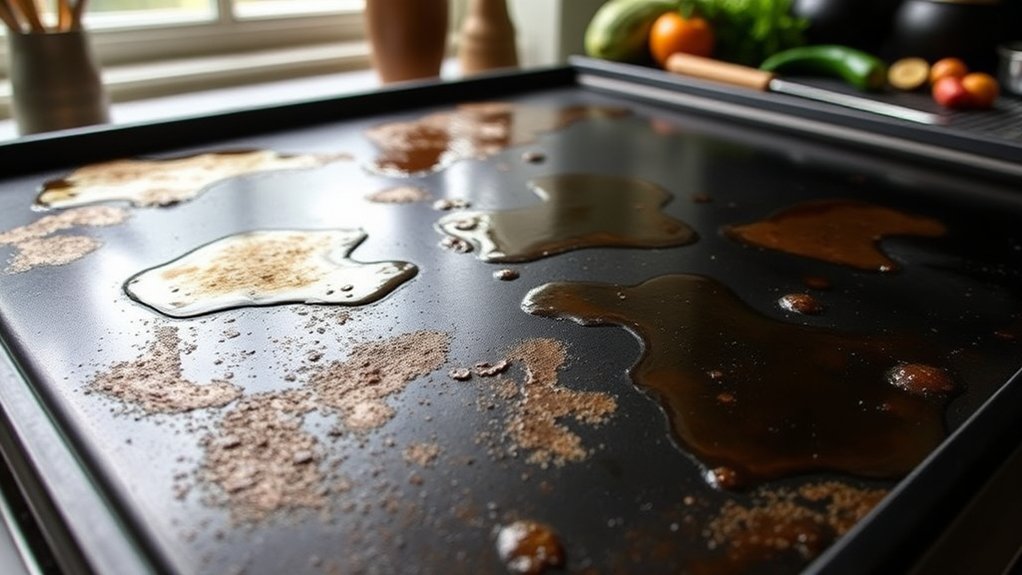
Yes, you can over season your Blackstone griddle by applying too much oil too often, which creates a sticky, uneven surface that hinders proper polymerization and reduces its non-stick performance.
Excess oil pools don’t bond well, causing flaky patches and poor heat distribution. To avoid this, apply thin, even coats of high smoke point oil and season only as needed.
If you want to keep your griddle performing at its best, it’s important to understand how to manage seasoning frequency and maintenance.
Key Takeaways
- Yes, over seasoning a Blackstone griddle causes sticky, flaky, or uneven polymerized oil layers that impair cooking performance.
- Excess oil creates a slippery surface, uneven heat distribution, and carbonized residues, reducing the griddle’s non-stick qualities.
- Seasoning too frequently or using inappropriate oils leads to buildup and flaking, which diminishes the griddle’s durability and cooking quality.
- Proper seasoning involves thin oil layers, wiping off excess, heating to 400-450°F, and limiting frequency to prevent over-seasoning.
- Fix sticky or uneven seasoning by scraping buildup, heating to burn residue, and applying thin, even coats of high smoke point oil.
What Does Over Seasoning a Blackstone Griddle Look Like?
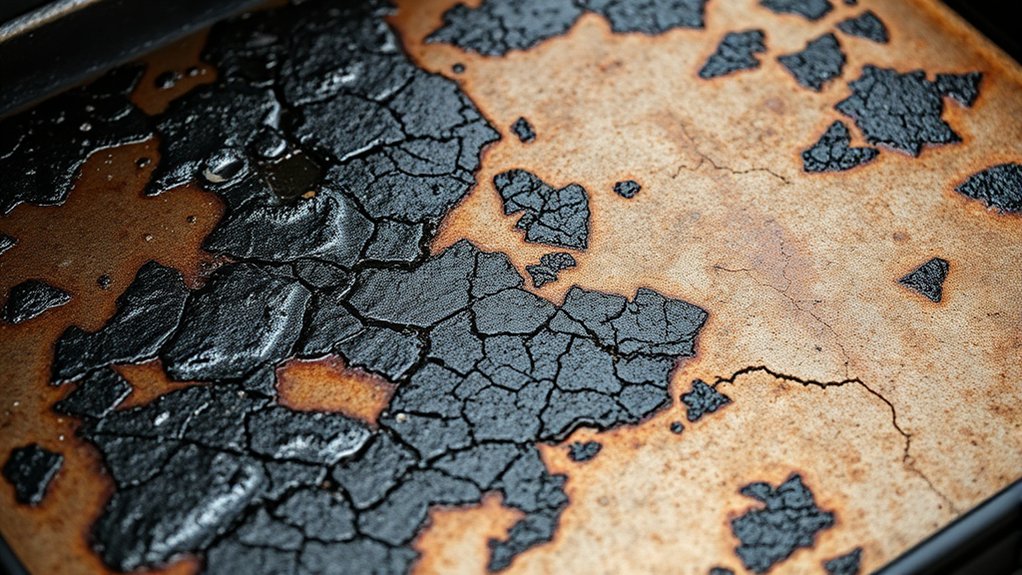
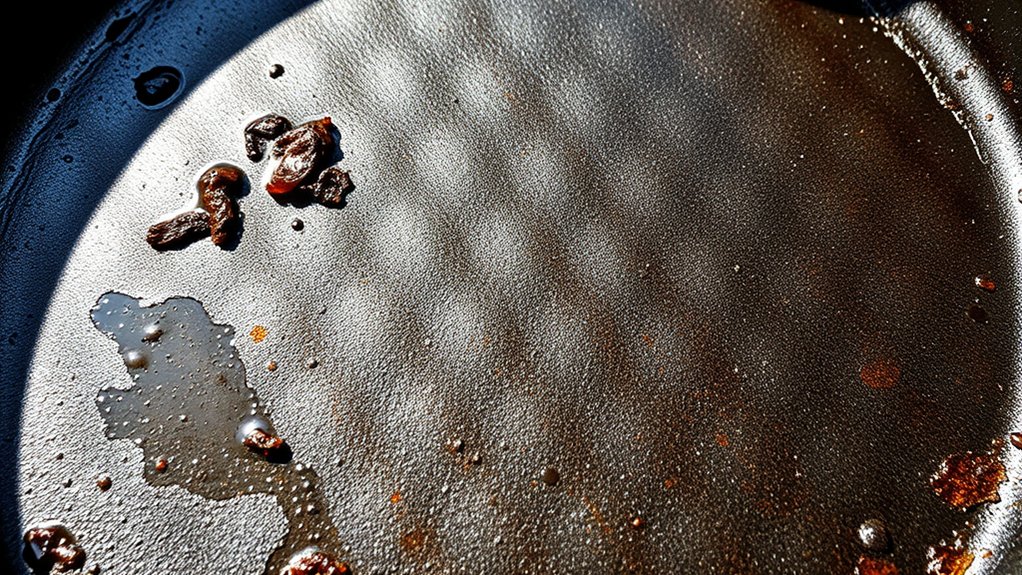
Over seasoning a Blackstone griddle results in a thick, uneven layer of polymerized oil that can appear sticky or flaky. When you apply excessive seasoning techniques, multiple oily layers accumulate, creating a brittle surface prone to cracking and peeling.
Excessive seasoning creates a thick, brittle oil layer that flakes and cracks on your Blackstone griddle surface.
Visually, you’ll notice a patchy finish with inconsistent sheen. Some areas glossy, others dull or rough. Tactilely, the griddle may feel tacky rather than smooth, indicating incomplete polymerization.
This compromised seasoning layer impairs heat distribution and food release, undermining the griddle’s performance. Proper seasoning techniques require thin, even oil coats applied progressively.
Avoiding over seasoning guarantees a durable, uniform patina that enhances cooking efficiency. By recognizing these visual and textural signs, you can maintain peak Blackstone griddle seasoning and avoid detrimental buildup.
How Does Using Too Much Oil Affect Your Blackstone Griddle?
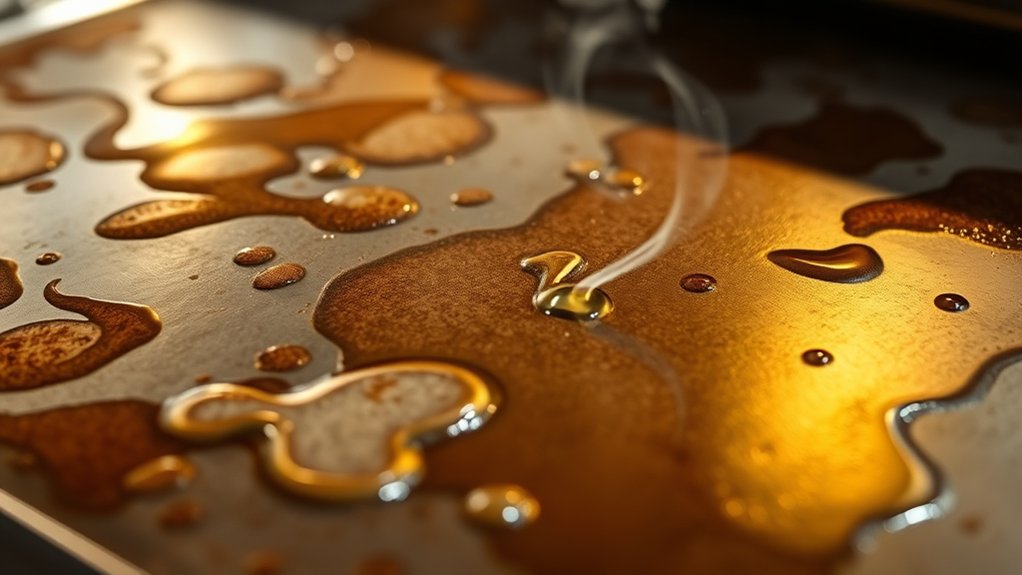
How exactly does using too much oil impact your Blackstone griddle’s performance? Excessive oil hampers ideal oil absorption, which is critical for building a durable seasoning layer. This imbalance can degrade your cooking performance in several ways:
- Uneven Cooking Surface: Too much oil pools and doesn’t polymerize properly, causing sticky or uneven patches that affect heat distribution.
- Smoke and Residue Build-Up: Excess oil burns off inefficiently, generating smoke and leaving behind carbonized residues that compromise flavor and cleanliness.
- Reduced Non-Stick Effectiveness: Surplus oil creates a slippery surface rather than a well-seasoned patina, diminishing your griddle’s natural non-stick qualities.
How Often Should You Season Your Blackstone Griddle?
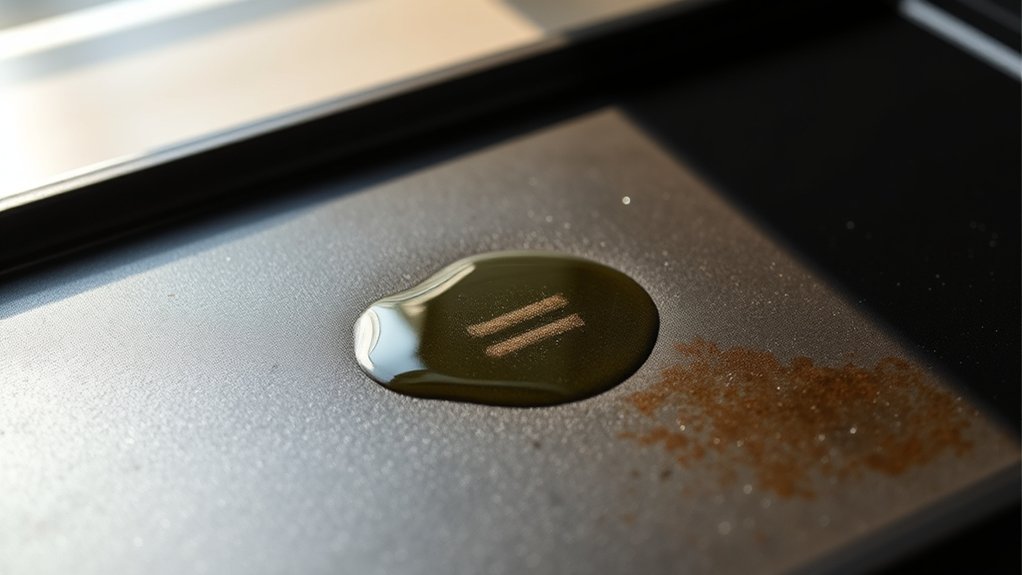
You should season your Blackstone griddle regularly to maintain a protective non-stick surface, typically after every few uses or when you notice food sticking or rust forming.
Pay attention to signs like uneven coloration or a dull finish, which indicate it’s time to re-season. However, applying too many layers can cause a sticky buildup, so balance frequency to avoid over-seasoning.
Frequency Of Seasoning
Regularly seasoning your Blackstone griddle is essential to maintain its non-stick surface and prevent rust. The frequency depends on your usage, oil types, and seasoning techniques. Over-seasoning can build up uneven layers, so balance is key.
Consider these guidelines for seasoning frequency:
- Initial Seasoning: Perform a thorough seasoning using high smoke point oils like flaxseed or grapeseed before first use.
- After Heavy Use: Re-season after cooking greasy or acidic foods that may strip the seasoning layer.
- Routine Maintenance: Lightly season after every 10-15 uses, applying a thin oil layer to reinforce protection without buildup.
Signs To Re-Season
Balancing the frequency of seasoning depends on recognizing clear indicators that your Blackstone griddle needs attention. Key signs of wear include dull spots, rust formation, or food sticking excessively during cooking. These symptoms signal that the protective seasoning layer is compromised and requires restoration.
Regular griddle maintenance involves cleaning the surface thoroughly after each use and inspecting it for these signs. If you notice uneven coloration or a rough texture, it’s time to re-season to maintain ideal performance and prevent corrosion.
Effects Of Over-Seasoning
Although seasoning your Blackstone griddle is essential for maintaining a non-stick surface, applying too many layers can lead to detrimental effects. Over seasoning effects disrupt the seasoning balance, compromising performance and longevity. You need to season just enough to build a durable coating without excess buildup.
- Flaking and Peeling: Excessive layers create brittle, uneven surfaces prone to flaking during cooking.
- Sticky Residue: Over time, surplus seasoning can polymerize improperly, resulting in a tacky, sticky layer that traps food particles.
- Reduced Heat Transfer: Thick seasoning layers act as insulators, diminishing the griddle’s heat responsiveness and causing uneven cooking.
To maintain ideal seasoning balance, re-season only when the surface shows signs of wear or after thorough cleaning, typically every few uses rather than after each cooking session.
How Can You Fix Sticky or Uneven Seasoning on Your Blackstone?
Why does your Blackstone griddle sometimes develop sticky or uneven seasoning? This usually happens when excess oil accumulates and polymerizes improperly, resulting in a sticky residue and uneven surface texture.
To fix this, start by thoroughly heating the griddle to a high temperature to burn off the sticky residue. Next, use a metal scraper to gently remove any uneven buildup without damaging the steel.
After cleaning, apply a thin, even layer of high-smoke-point oil and bake it in, ensuring proper polymerization. Avoid excessive oil application, which causes uneven seasoning layers.
Repeating this process restores a smooth, non-stick surface and prevents future stickiness. Consistent maintenance will keep your Blackstone griddle’s seasoning uniform and functional.
Best Practices for Seasoning Your Blackstone Griddle
When seasoning your Blackstone griddle, you should apply a thin, even layer of high-smoke-point oil to guarantee proper polymerization without creating sticky buildup. Mastering seasoning techniques involves selecting the right oil types and controlling heat precisely.
Follow these best practices:
- Choose oils with high smoke points such as flaxseed, grapeseed, or canola to promote ideal polymerization without residue.
- Heat the griddle gradually to around 400-450°F, allowing the oil to bond evenly to the surface.
- Apply multiple thin coats rather than one thick layer, wiping excess oil each time to prevent uneven seasoning or stickiness.
Adhering to these steps promotes a durable, non-stick patina that enhances cooking performance and longevity.
How to Maintain Your Blackstone Seasoning Without Overdoing It
You need to recognize signs of excess seasoning, like flaking or uneven buildup, to maintain your Blackstone properly. Applying seasoning too frequently can degrade the cooking surface instead of enhancing it.
Stick to a measured schedule based on use and condition to keep your griddle performing at its best without overdoing it.
Signs Of Excess Seasoning
Over-seasoning your Blackstone griddle can create a thick, sticky layer that impairs heat distribution and causes food to stick unevenly. Identifying signs of excess seasoning helps you maintain peak cooking performance without compromising your griddle’s surface.
- Sticky or Tacky Surface: Excess oil accumulates, forming a gummy residue that refuses to polymerize properly, indicating seasoning buildup.
- Uneven Heat Zones: Thick seasoning layers disrupt heat transfer, causing hot and cold spots that affect cooking consistency.
- Flaking or Peeling: When seasoning layers become too thick, they can crack and peel off, leaving bare metal vulnerable to rust.
Recognizing these symptoms allows you to adjust your seasoning routine, preventing degradation and prolonging your Blackstone griddle’s lifespan effectively.
Proper Seasoning Frequency
A balanced seasoning schedule guarantees your Blackstone griddle maintains peak performance without developing problematic buildup. You should season your griddle based on usage frequency: after every 10-15 cooking sessions for regular users, or monthly if usage is light.
Employ proven seasoning techniques, such as applying a thin, even layer of high smoke point oil types like flaxseed, grapeseed, or canola oil. Avoid thick coats, which cause uneven polymerization and sticky residue. Always preheat the griddle before oil application to promote proper bonding.
Over-seasoning results from too frequent oiling or using inappropriate oil types that don’t polymerize efficiently. By adhering to a disciplined seasoning frequency and selecting suitable oil types, you maintain a durable non-stick surface, optimize heat distribution, and extend your griddle’s lifespan without risking excessive buildup or flaking.
Frequently Asked Questions
Can I Use Any Type of Oil to Season My Blackstone Griddle?
You shouldn’t use any oil type for seasoning; opt for high smoke point oils like flaxseed, grapeseed, or canola. Proper seasoning methods guarantee a durable, non-stick surface without polymer breakdown or sticky residue forming on your Blackstone griddle.
Does Seasoning Affect the Cooking Temperature of the Griddle?
Seasoning impacts cooking temperature by creating a non-stick layer that distributes heat evenly. You’ll notice improved temperature stability and reduced hot spots, ensuring consistent cooking performance on your Blackstone griddle with proper seasoning.
How Long Does Each Seasoning Layer Take to Cure Properly?
Each seasoning layer requires about 30 to 60 minutes curing time during the seasoning process.
You’ll want to heat the griddle until the oil polymerizes, ensuring a durable, non-stick surface before applying the next layer.
Can Seasoning Prevent Rust on My Blackstone Griddle?
Yes, seasoning offers essential rust prevention by creating a protective polymerized oil layer. This barrier repels moisture, preserving your Blackstone griddle’s surface.
Understanding seasoning benefits guarantees you maintain its longevity and ideal cooking performance.
Is It Necessary to Season a Blackstone Griddle Before First Use?
Yes, you must season your Blackstone griddle before first use. The importance of seasoning lies in creating a non-stick surface and preventing rust.
Seasoning ensures ideal first use preparation and long-lasting performance from your griddle.
Conclusion
You might think over seasoning your Blackstone griddle will turn it into an indestructible, non-stick fortress, but in reality, too much oil creates a sticky, uneven mess that’s harder to fix than a rocket launch gone wrong. Season just enough to build a durable, slick surface—no more.
Master this balance, and your griddle will perform flawlessly, resisting rust and food sticking without turning into a stubborn, gummy nightmare. Remember, when it comes to your Blackstone griddle, over seasoning can do more harm than good.


Leave a Reply