
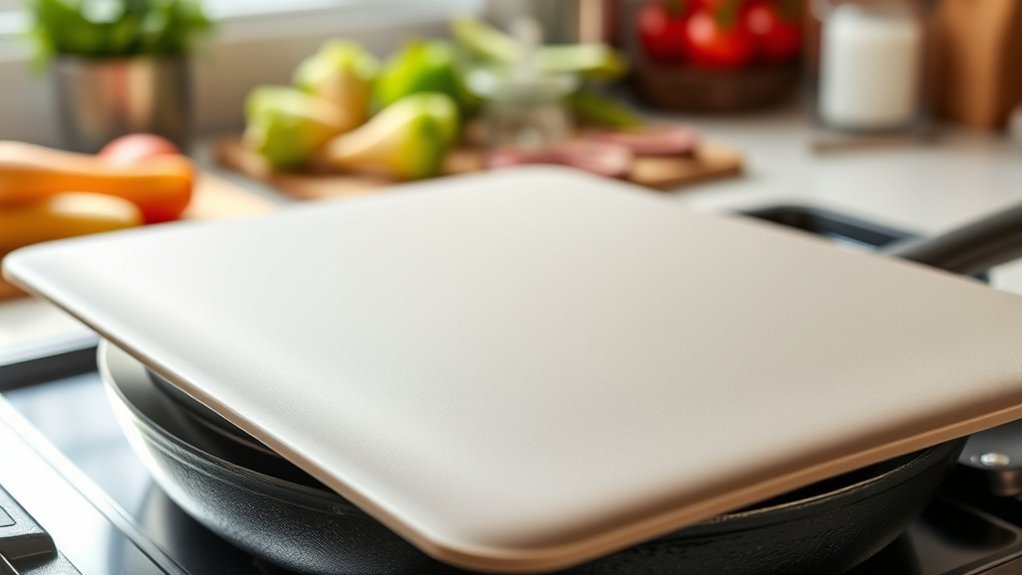
You’ll find that silicone griddle covers do work well to protect your griddle from spills, grease, and debris, cutting down your cleaning time considerably.
Their heat-resistant, non-stick silicone prevents food buildup and resists stains, making cleanup easier and less damaging to your surface.
While they might trap moisture sometimes and may not seal perfectly on every griddle, they’re generally durable and practical.
If you want to understand their benefits, types, and care tips, keep exploring the details ahead.
Key Takeaways
- Silicone griddle covers effectively protect surfaces from spills, grease, and debris during cooking or storage.
- They reduce cleaning time by preventing food residue buildup and grease splatters on the griddle.
- Made from heat-resistant silicone, they tolerate temperatures up to 450°F without damage.
- Covers are durable and non-stick but may trap moisture, causing condensation under the cover.
- Proper placement and regular cleaning ensure maximum protection and prolonged cover lifespan.
What Are Silicone Griddle Covers and How Do They Work?
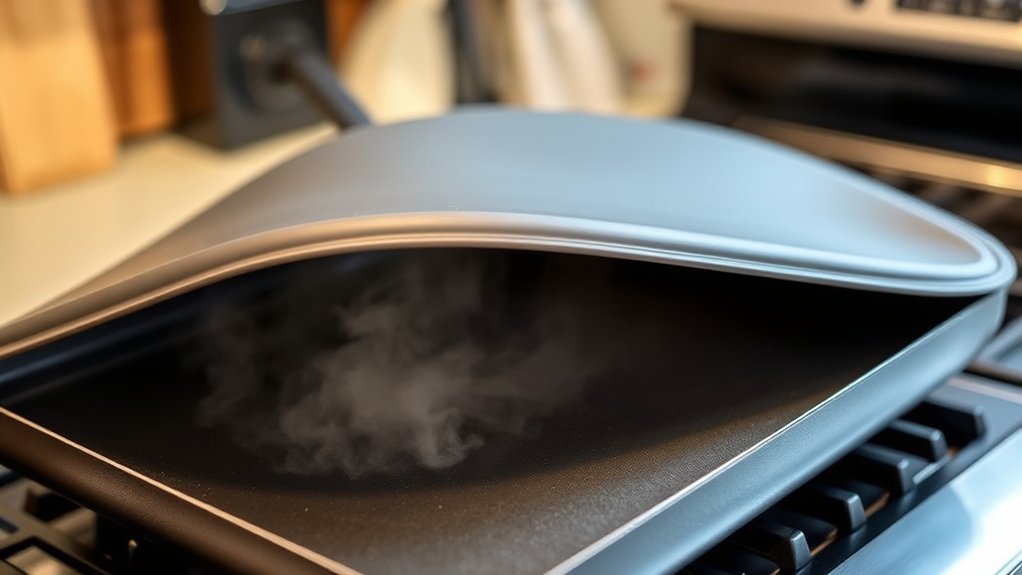
Silicone griddle covers are flexible, heat-resistant mats designed to protect your griddle’s surface from spills, grease, and debris while cooking or storing food. Made from silicone material properties like durability and non-stick texture, these covers provide a practical barrier that helps preserve your griddle’s finish.
Their heat resistance benefits allow you to place them on a warm griddle without damage, making them suitable for use during or immediately after cooking. Silicone’s flexibility lets you easily fit the cover over various griddle sizes and shapes, ensuring extensive protection.
Additionally, these covers resist stains and odors, maintaining cleanliness over time. By understanding how silicone griddle covers function, you can decide if their protective qualities align with your cooking and maintenance needs.
Do Silicone Covers Really Make Griddle Cleaning Easier?
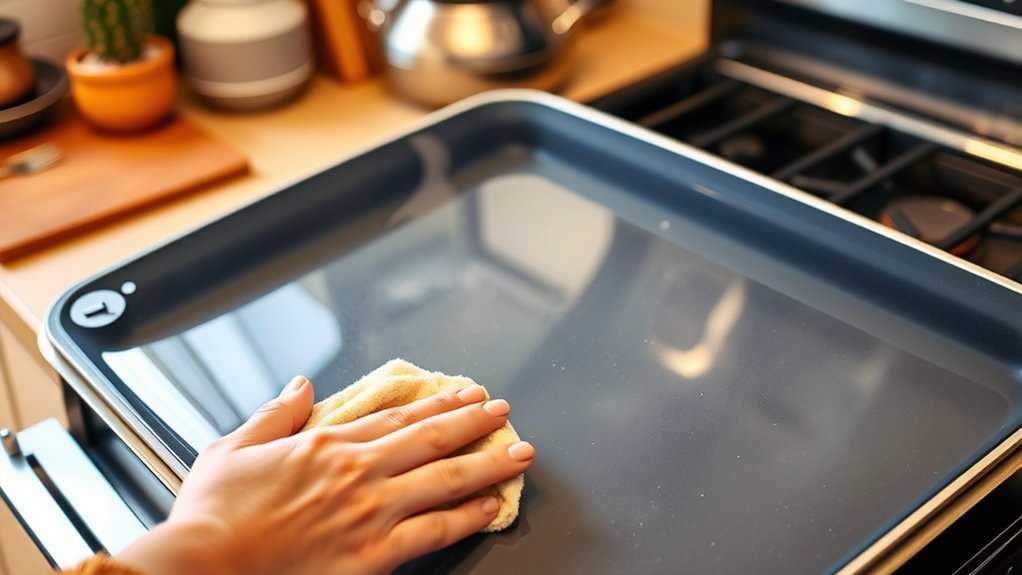
How much easier can you make cleaning your griddle with a protective cover? Silicone covers can enhance griddle efficiency by preventing food residue buildup, which means less scrubbing after cooking.
They also add cooking convenience by acting as a barrier against grease splatters, saving you time and effort. Here’s a simple comparison to visualize their impact:
| Task | Without Silicone Cover | With Silicone Cover |
|---|---|---|
| Grease splatter | Frequent | Minimal |
| Food residue buildup | High | Low |
| Cleaning time | 15-20 minutes | 5-7 minutes |
| Griddle surface damage | Possible | Rare |
Using a silicone cover doesn’t eliminate cleaning but considerably reduces it, letting you focus more on cooking and less on maintenance.
Types of Silicone Griddle Covers and Which Ones Work Best
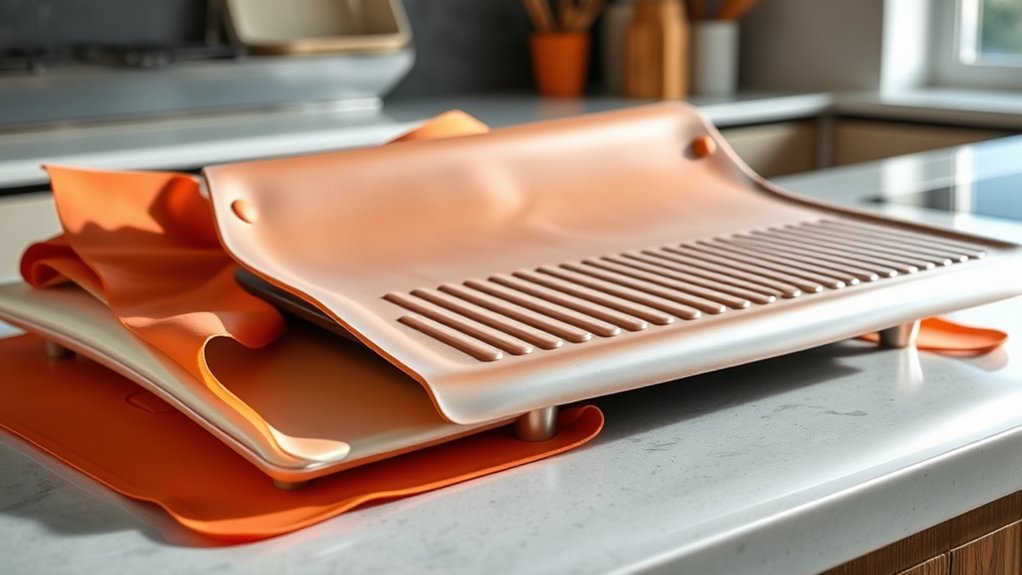
Choosing the right griddle cover can greatly impact your cooking experience and maintenance routine. Silicone griddle covers come in various types, each with distinct features tailored to different needs.
Some covers are designed with a non-stick surface to prevent food residue buildup, making cleanup easier. Others offer reinforced edges or magnetic strips to guarantee a secure fit on your griddle, preventing slips during cooking.
Non-stick surfaces and secure edges keep your silicone griddle cover in place and make cleanup effortless.
You’ll find covers with heat-resistant silicone that tolerate high temperatures, allowing you to cook without constantly removing the cover. Additionally, some types are thicker for added durability, while thinner ones provide more flexibility and ease of storage.
To decide which works best, consider your griddle size, cooking style, and how often you clean. Matching these features to your routine helps you get the most from your silicone cover.
Pros and Cons of Using Silicone Griddle Covers
Once you’ve identified the type of silicone griddle cover that suits your needs, it’s important to weigh the advantages and drawbacks of using one. On the plus side, silicone covers offer excellent heat resistance, often handling temperatures up to 450°F or more, which protects your griddle from damage and extends its lifespan.
Durability factors also work in your favor; high-quality silicone resists cracking, warping, and stains, making it a long-lasting kitchen accessory. However, keep in mind that silicone can sometimes trap moisture, potentially causing condensation buildup if not aired properly.
Additionally, while silicone is flexible, it might not provide a perfectly tight seal on all griddles, which could reduce its effectiveness in preventing dust or debris. Balancing these pros and cons helps you decide if a silicone cover fits your cooking routine.
How to Use and Care for Your Silicone Griddle Cover
To get the most from your silicone griddle cover, you’ll want to place it correctly to guarantee a tight fit without stretching.
Regular cleaning with mild soap and avoiding abrasive tools will keep it in good shape. When not in use, store it flat or rolled loosely to prevent creases and maintain its flexibility.
Proper Placement Techniques
Although silicone griddle covers are designed to be flexible and durable, placing them correctly on your griddle guarantees maximum protection and longevity. Effective placement strategies guarantee the cover fits snugly, preventing debris from entering while allowing proper heat distribution during cooking or storage.
To optimize placement:
Align the cover’s edges precisely with your griddle’s surface to avoid gaps. Smooth out any wrinkles to maintain even heat transfer. Avoid overlapping the cover onto control knobs or handles. Position the cover only when the griddle has cooled to prevent damage.
Following these steps helps maintain your griddle’s condition and enhances the silicone cover’s lifespan without compromising heat distribution or safety.
Cleaning and Maintenance Tips
Proper placement helps keep your silicone griddle cover in good shape, but regular cleaning and maintenance are just as important to guarantee it performs well over time. After each use, wash the cover with warm, soapy water using a soft sponge to remove grease and food residue.
Avoid abrasive scrubbers that can damage the silicone surface. For tougher stains, soak the cover briefly in a baking soda solution before scrubbing gently. Incorporate these cleaning techniques into your routine to prevent buildup and odors.
Additionally, inspect the cover regularly for tears or warping, and avoid exposing it to sharp objects or extreme heat beyond manufacturer recommendations. By following these maintenance routines, you’ll extend the lifespan of your silicone griddle cover and keep it functioning effectively without compromising its flexibility or protective qualities.
Storage Recommendations
One key aspect of prolonging the life of your silicone griddle cover is how you store it when not in use. Proper storage prevents damage and keeps it ready for your next cooking session. For ideal storage, consider these space saving solutions:
Roll or fold the cover gently to avoid creases or tears. Store it in a cool, dry place away from direct sunlight or heat sources.
Use a dedicated drawer or container to keep it clean and dust-free. Avoid placing heavy objects on top to maintain its shape and flexibility.
Are Silicone Griddle Covers Worth It for Everyday Cooking?
How often do you rely on your griddle for everyday meals? If it’s a regular part of your daily cooking, investing in a silicone griddle cover can be a practical choice. These covers protect your griddle’s surface from dust, moisture, and scratches, helping maintain its non-stick quality over time.
As kitchen essentials go, they’re easy to clean, heat-resistant, and flexible enough to fit various griddle sizes. However, if you use your griddle infrequently or store it in a low-traffic area, a cover might be less necessary.
Ultimately, silicone covers offer protection and convenience that can extend your griddle’s lifespan, making them worth considering if you want to keep your cooking equipment in top shape without adding extra maintenance steps.
Frequently Asked Questions
Can Silicone Griddle Covers Withstand High Oven Temperatures?
Yes, you can rely on silicone griddle covers for high temperature resistance due to silicone material durability. They withstand oven heat well, but always check the manufacturer’s max temperature to avoid damage and guarantee safe use.
Are Silicone Griddle Covers Dishwasher Safe?
About 85% of silicone griddle covers are dishwasher safe, thanks to silicone durability. You can confidently clean silicone covers in the dishwasher, making cleaning silicone easy and practical.
Always check the manufacturer’s instructions first.
Do Silicone Griddle Covers Affect Cooking Time or Heat Distribution?
Silicone griddle covers slightly enhance heat retention, which can improve cooking efficiency by maintaining consistent temperature. However, they don’t greatly alter cooking time or heat distribution, so you won’t need to adjust your usual cooking methods.
Can Silicone Covers Be Used on Electric Griddles?
Don’t worry about silicone compatibility; you can safely use silicone covers on electric griddles. Just guarantee the cover fits well and avoid direct contact with heating elements to maintain electric griddle safety and prevent damage.
Are Silicone Griddle Covers Safe for Non-Stick Surfaces?
Yes, silicone griddle covers guarantee non-stick compatibility because their silicone material safety prevents scratching or damage. You can confidently use them to protect your non-stick surfaces without worrying about wear or chemical reactions.
Conclusion
When it comes to silicone griddle covers, they can definitely save you time and effort—“a stitch in time saves nine.” You’ll find they make cleanup easier and protect your griddle from messes, but not all covers are created equal.
Choosing the right type and caring for it properly guarantees you get the most out of your investment.
Ultimately, if you cook often, a silicone griddle cover is a practical addition to your kitchen tools that truly works.

Leave a Reply