
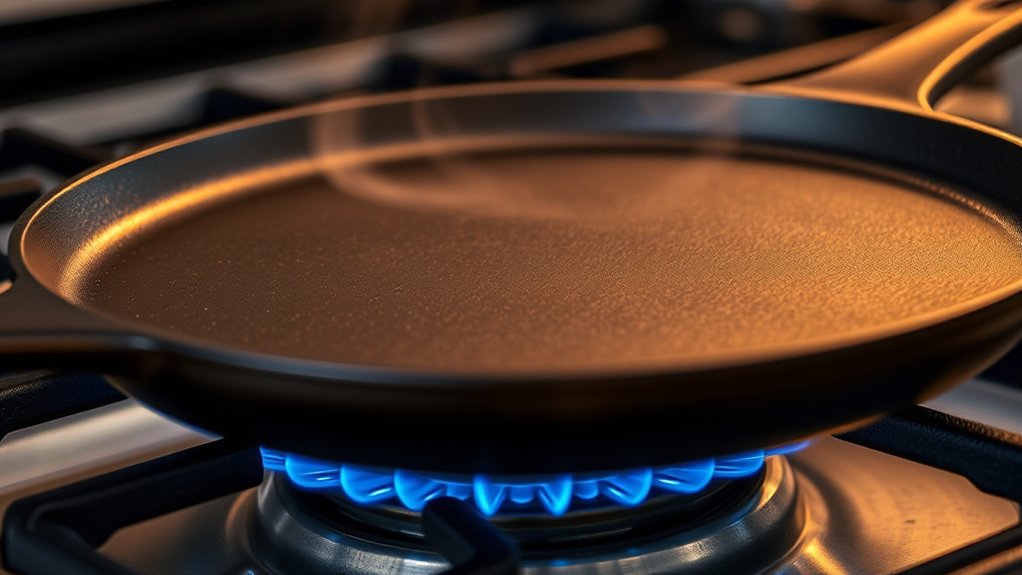
To preheat your griddle properly, start by turning it on to a medium heat setting—typically between 325°F and 450°F depending on what you’ll cook.
Ensuring the griddle is clean and dry before heating is essential for the best results.
Allow the griddle to heat steadily for 10 to 15 minutes. You can check if it’s ready by sprinkling a few drops of water on the surface; if the water sizzles and evaporates quickly, the griddle is properly preheated.
Avoid rushing the process or overheating, as this can damage your griddle.
Keep following to uncover ideal temperatures and common mistakes to watch out for.
Key Takeaways
- Clean and dry the griddle surface before starting the preheat process to ensure even heating.
- For electric griddles, plug in and set desired temperature; for gas, turn burners to medium heat.
- Preheat the griddle for 10 to 15 minutes to allow the surface temperature to stabilize evenly.
- Use water droplets or an infrared thermometer to check if the griddle has reached the proper cooking temperature.
- Avoid placing food on the griddle until it is fully preheated to prevent sticking and uneven cooking.
What’s the Best Temperature to Preheat Your Griddle?
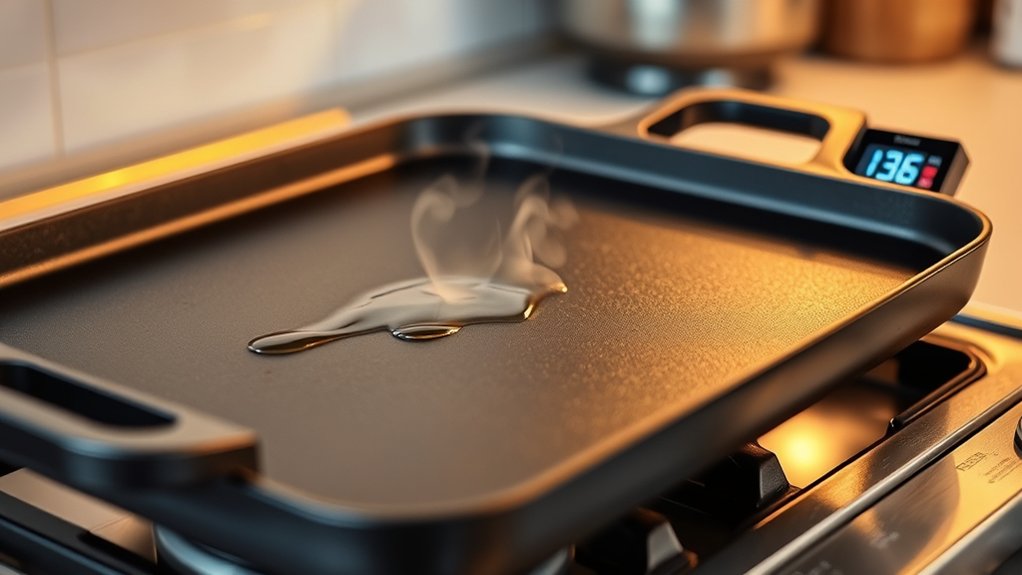
When setting your griddle’s temperature, what you choose depends largely on what you plan to cook. For ideal cooking, different foods require a specific temperature range. For example, pancakes and eggs cook best between 325°F and 375°F, providing even heat without burning.
If you’re grilling meats or vegetables, aim for a higher temperature range of 400°F to 450°F to achieve proper searing and caramelization. Avoid exceeding 500°F, as it can damage the griddle surface and cause uneven cooking.
Always consult your griddle’s manual for recommended temperature settings, as models vary. By selecting the correct temperature range, you guarantee efficient heat distribution and the best texture and flavor in your dishes. This careful approach leads to consistent, high-quality results every time.
How Long Should You Preheat Your Griddle?
Choosing the right temperature sets the stage, but knowing how long to preheat your griddle guarantees it reaches that temperature evenly. Typically, preheating your griddle for 10 to 15 minutes achieves ideal heating.
This duration allows the surface to stabilize, ensuring consistent cooking results. If you rush, uneven heat can cause food to cook improperly. During this time, avoid placing food on the surface to prevent temperature fluctuations.
Regular griddle maintenance, such as cleaning residue and checking burners, supports efficient heating and helps maintain accurate temperature control. By adhering to the recommended preheat time and performing routine upkeep, you maximize your griddle’s performance and longevity, ensuring every cooking session starts with a properly heated surface.
How to Preheat Your Electric or Gas Griddle
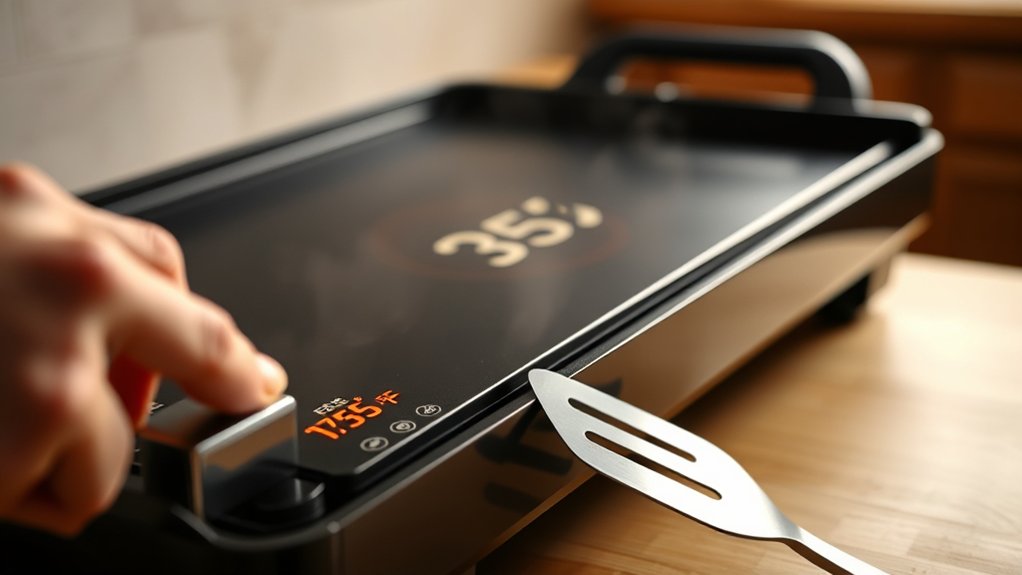
Although electric and gas griddles operate differently, you can preheat both effectively by following a clear sequence of steps. First, verify your griddle is clean and dry to protect its surface, considering the griddle materials like cast iron or stainless steel that affect heat retention.
For electric griddles, plug in and set the temperature control to your desired heat, allowing it to warm evenly. With gas models, turn on the burners to medium heat, adjusting the flame to distribute heat uniformly.
Avoid overheating to preserve your griddle’s surface and optimize cooking techniques. Always give your griddle enough time to reach a stable temperature before you start cooking, verifying even heat distribution across the surface for consistent results.
How to Know When Your Griddle Is Hot Enough
Before you start cooking, you need to confirm that your griddle has reached the right temperature to assure even cooking and prevent food from sticking. To check the griddle temperature, sprinkle a few drops of water onto the cooking surface. If the water sizzles and evaporates within seconds, the griddle is sufficiently hot.
If the water sits and bubbles slowly, it needs more time to heat. Another method is using an infrared thermometer to measure the cooking surface temperature directly; ideal griddle temperatures typically range between 375°F and 400°F for most foods.
Additionally, you can test by placing a small piece of bread or batter on the surface. If it browns evenly within a minute, the griddle is ready. Confirming the correct griddle temperature assures consistent cooking results.
Mistakes to Avoid When Preheating Your Griddle
Knowing when your griddle has reached the right temperature helps you avoid common errors that can affect cooking quality. One frequent mistake is rushing the preheating process; never place food on a cold griddle, as it leads to uneven cooking.
Another error is overheating, which can damage the surface and cause food to stick. To prevent this, monitor the heat carefully and use an infrared thermometer if available.
Overheating can damage your griddle and cause sticking; monitor heat carefully, using an infrared thermometer if possible.
Skipping proper griddle maintenance also causes issues. Residual grease or debris can burn during preheating, affecting flavor and performance. Always clean your griddle thoroughly before heating.
Avoid using high heat initially; instead, start with medium heat and gradually increase. Following these steps helps you achieve consistent cooking results and extends your griddle’s lifespan.
Frequently Asked Questions
Can I Preheat a Griddle Without Electricity or Gas?
You can preheat a griddle without electricity or gas using alternative heating like a wood fire or charcoal.
Make certain your griddle materials, such as cast iron, handle direct heat well for even cooking.
What Materials Are Best for Griddle Construction?
You’ll want cast iron or stainless steel for griddles. Cast iron retains heat evenly, perfect for consistent cooking.
Stainless steel is durable, resists rust, and heats quickly. Both materials offer excellent cooking performance.
How Do I Clean My Griddle After Preheating?
After the griddle’s warm embrace, you’ll gently sweep away lingering whispers of heat with a scraper. Then, perform griddle cleaning using a damp cloth. This post preheating maintenance guarantees a pristine surface for your next culinary creation.
Can I Preheat a Griddle Outdoors in Cold Weather?
Yes, you can preheat a griddle outdoors in cold weather, but be aware cold weather may reduce griddle performance.
To guarantee even heating, allow extra time and monitor the temperature closely before cooking.
Are There Safety Tips for Handling a Hot Griddle?
Nearly 60% of kitchen burns involve hot surfaces. You’ll guarantee griddle handling safety by wearing heat-resistant gloves, using proper utensils, and keeping children away.
Always follow hot surface precautions to avoid accidents and injuries.
Conclusion
Now that you know the ideal temperature and timing, imagine the sizzle as your griddle reaches perfect heat. You’re just moments away from searing that first bite to crispy, golden perfection. But don’t rush—waiting until it’s truly hot guarantees even cooking and great flavor.
Avoid common pitfalls like overheating or skipping preheat time. Master this step, and your griddle’s ready to deliver delicious results every time. Ready to start cooking? Remember, proper griddle preheating is key to unlocking the best flavors and textures in your dishes.

Leave a Reply