
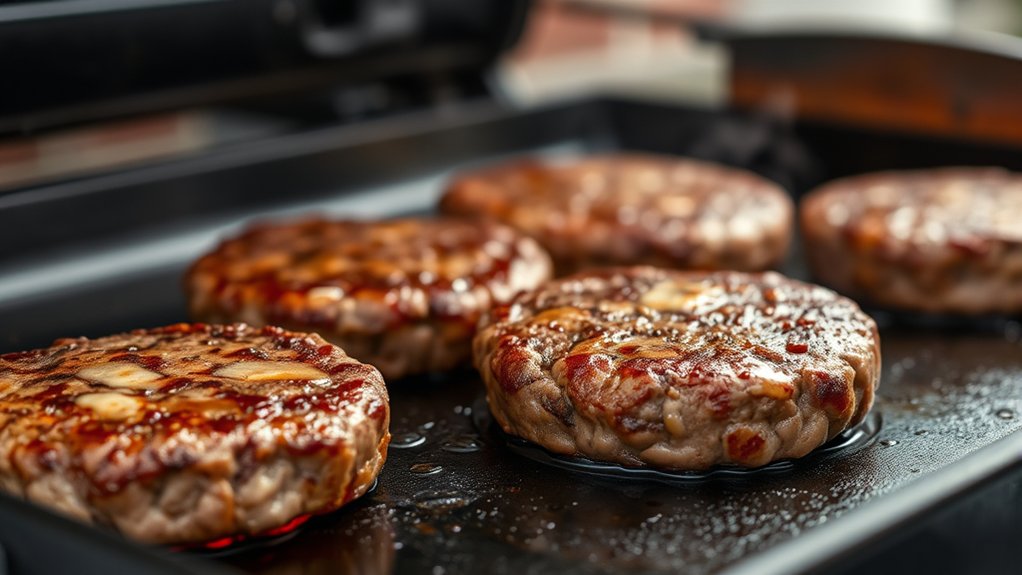
You should cook your burgers on a 400°F griddle for about 4 to 5 minutes per side, depending on thickness.
Cooking burgers on a griddle at 400°F ensures a nice sear and juicy interior. Thicker patties need longer to reach a safe internal temperature of 160°F.
Flip once or twice to form a good crust without drying the meat, and avoid pressing down to keep them juicy.
Using ground beef with 15-20% fat helps maintain moisture.
If you want to master the perfect burger, understanding these details will take your cooking to the next level.
Key Takeaways
- Cook burgers for about 4 to 5 minutes per side on a 400°F griddle for optimal searing and doneness.
- Aim for an internal temperature of 160°F to ensure ground beef is fully cooked and safe to eat.
- Thicker patties require longer cooking times; adjust accordingly to reach desired doneness without drying out.
- Flip burgers once or twice during cooking to develop a good crust and retain moisture.
- Let burgers rest for 3 to 5 minutes after cooking to redistribute juices and enhance flavor.
How Long Should You Cook Burgers at 400°F?
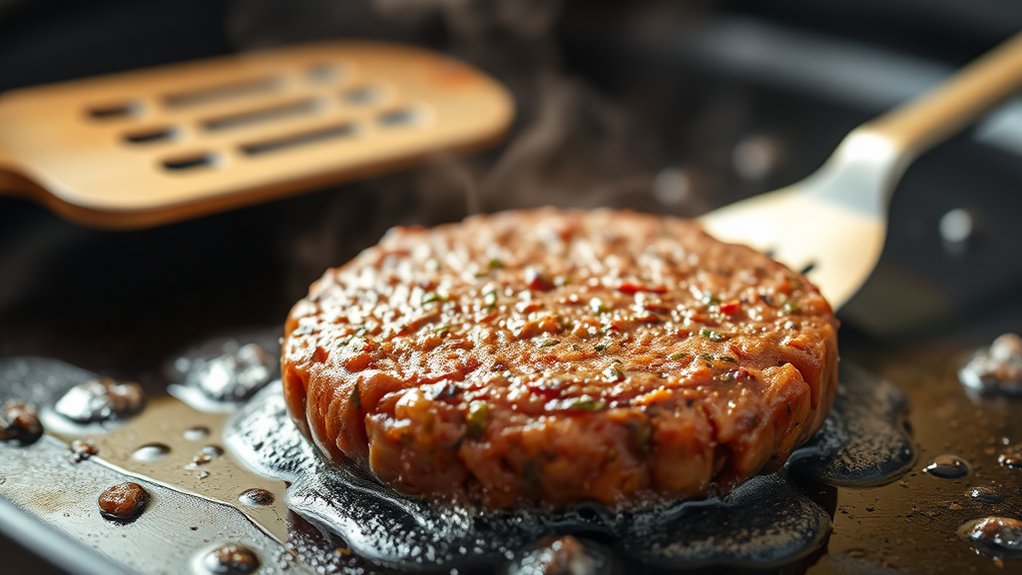
How long should you cook burgers at 400°F to achieve the perfect balance of juiciness and doneness? Generally, you’ll want to cook each side for about 4 to 5 minutes. This timing guarantees the patty cooks evenly without drying out.
Before you start, apply your preferred burger seasoning evenly to enhance flavor. Using proper cooking techniques such as preheating the griddle and avoiding constant flipping helps retain moisture. Pressing down on the patty can squeeze out juices, so avoid it.
Keep an eye on internal temperature: aim for 160°F for ground beef to guarantee safety and best juiciness. Adjust time slightly based on patty size, but sticking to these guidelines will help you master perfectly cooked burgers at 400°F every time.
How Does Burger Thickness and Patty Type Affect Cooking?
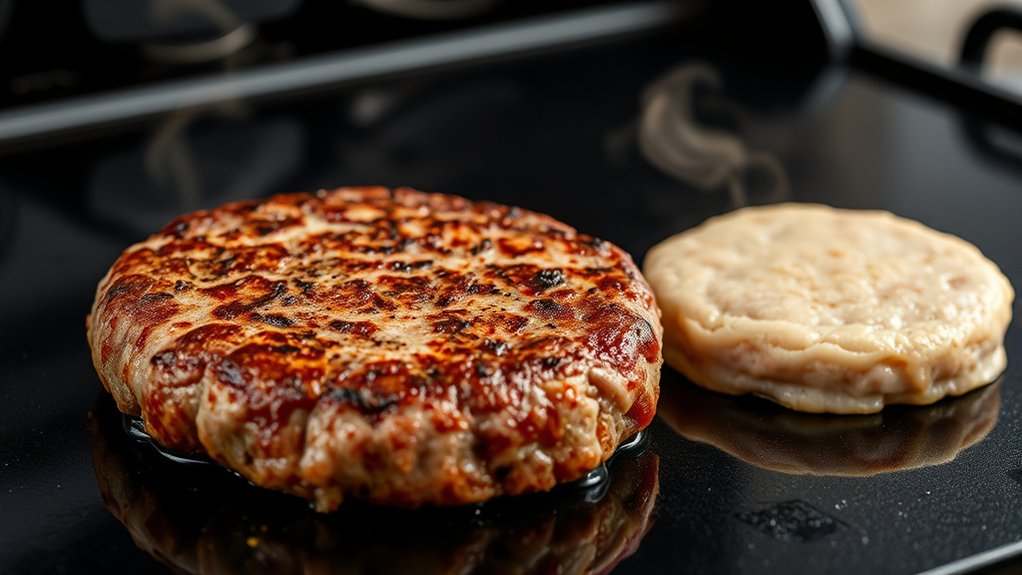
Because burger thickness and patty type directly influence cooking time and heat distribution, you need to adjust your approach accordingly. Thicker patties require longer cooking times to guarantee the center reaches a safe temperature without burning the exterior. Conversely, thinner burgers cook quickly but risk drying out if left too long.
Patty composition also plays a vital role; leaner meats cook faster due to less fat, whereas higher fat content requires careful heat management to avoid flare-ups and uneven cooking. Different cooking methods, like griddling versus grilling, affect heat exposure and moisture retention.
When working with mixed or alternative proteins, such as turkey or plant-based patties, their unique moisture and fat levels mean you must modify cooking times and techniques to achieve the ideal texture and doneness.
Should You Flip Burgers Once or Multiple Times?
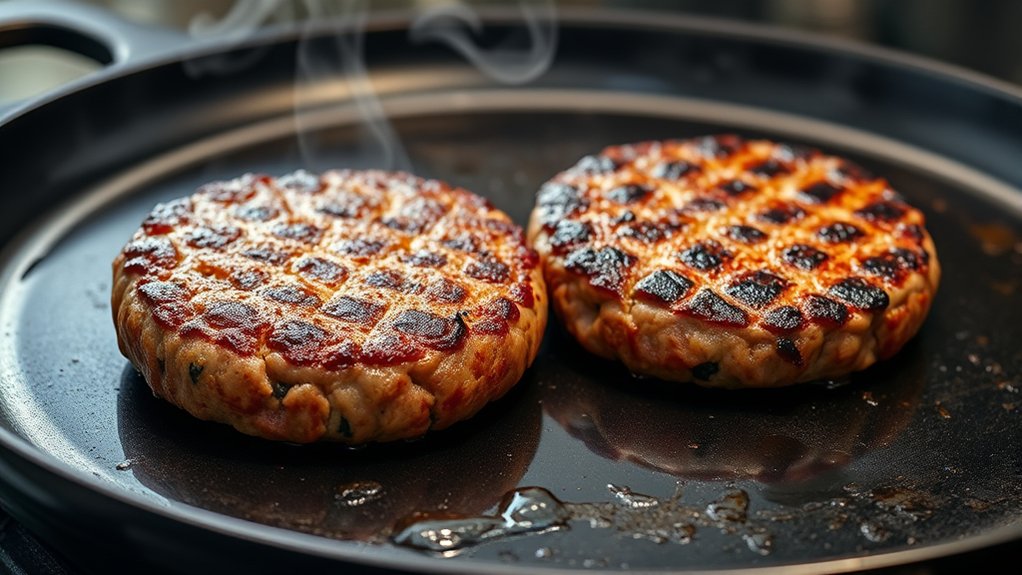
When you cook burgers on a griddle, deciding whether to flip them once or multiple times can greatly affect their texture and juiciness. The flipping frequency is a vital aspect of your cooking technique.
Flipping once allows a good sear to develop on each side, creating a flavorful crust and helping juices stay sealed inside. However, flipping multiple times can promote even cooking and reduce the risk of burning, especially on a 400°F griddle.
That said, excessive flipping may prevent the patty from forming a proper crust and can cause juices to escape, leading to drier burgers. For most cooks, flipping once or twice strikes the best balance between a well-browned exterior and a juicy interior, optimizing texture and flavor.
How Can You Tell When Burgers Are Done?
You can tell your burgers are done by looking for clear visual cues like browned edges and juices running clear. However, the most accurate method is using a meat thermometer to check the internal temperature.
Aim for 160°F to guarantee your burger is safely cooked and juicy.
Visual Cues For Doneness
Although cooking times provide a general guideline, mastering visual cues lets you confidently determine when burgers are perfectly done. Visual indicators reveal key doneness stages without cutting into the patty. Pay attention to these signs:
- Juices: At rare stages, juices run red; as doneness progresses, they shift to clear or slightly pink.
- Color: The outer crust should be deep brown, signaling Maillard reaction development, while the inside color changes from red to pink to brown.
- Texture: Press the burger gently; a rare burger feels soft, medium is springy, and well-done feels firm.
Using A Meat Thermometer
Since visual cues can sometimes be misleading, using a meat thermometer offers the most reliable way to determine burger doneness. Proper meat thermometer usage guarantees you achieve the perfect cook without guessing. Insert the probe into the burger’s center for temperature accuracy. Avoid touching bone or fat.
Aim for these internal temperatures:
| Doneness Level | Internal Temperature (°F) |
|---|---|
| Rare | 120-125 |
| Medium Rare | 130-135 |
| Medium | 140-145 |
| Medium Well | 150-155 |
| Well Done | 160+ |
Using a thermometer prevents undercooking, which risks foodborne illness, and overcooking, which dries out your burger. Trust temperature accuracy over color or texture to serve juicy, safe burgers every time.
Tips for Juicy Burgers on a 400°F Griddle
When cooking burgers on a 400°F griddle, aim for about 3-4 minutes per side to achieve a juicy interior without overcooking. You’ll want to avoid pressing down on the patties to keep the natural juices locked in.
Additionally, letting the burgers rest for a few minutes after cooking helps redistribute moisture for a tender bite.
Optimal Cooking Times
Before you start cooking, remember that maintaining a consistent griddle temperature of 400°F guarantees even heat distribution, which is key for juicy burgers. Precise griddle temperature control helps you master burger cooking techniques, ensuring perfect doneness without drying out the patty.
For ideal cooking times on a 400°F griddle, follow these guidelines:
Cook ¾-inch thick patties for about 3-4 minutes per side for medium doneness. Adjust cooking time by 30 seconds for thicker or thinner patties. Flip burgers only once to maintain crust and moisture.
Maintaining Burger Moisture
Although cooking at the right temperature is essential, you’ll need specific techniques to lock in moisture and keep your burgers juicy on a 400°F griddle. Start by choosing ground beef with 15-20% fat content, as fat aids moisture retention during cooking.
Avoid pressing down on the patties with your spatula, which squeezes out valuable juices. Form a slight indentation in the center of each patty to prevent puffing and promote even cooking.
Flip the burger only once after a few minutes to maintain structural integrity and moisture. After cooking, let the burgers rest briefly to redistribute internal juices.
Finally, select burger toppings that complement moisture retention, like fresh lettuce and tomato, while avoiding overly dry or crispy options that can absorb or draw out moisture from the patty.
Mistakes That Make Your Burgers Dry
If you want juicy burgers, you need to avoid common mistakes that dry them out. One major culprit is overcooking patties; cooking beyond the ideal time squeezes out moisture, leaving your burger dry and tough.
Another frequent error is using low fat meat. Lean blends lack enough fat to keep the patty moist during cooking. Also, pressing down on burgers while cooking pushes out valuable juices.
Watch out for these:
- Overcooking patties past medium doneness
- Choosing low fat meat with less than 15% fat content
- Pressing down on patties with a spatula during cooking
Why Should You Let Burgers Rest After Cooking?
Since the juices inside a burger continue to redistribute after cooking, letting it rest allows those flavors to settle evenly throughout the patty. You’ll notice that resting benefits go beyond mere temperature stabilization; it helps the meat fibers reabsorb moisture, preventing juices from spilling out when you bite in.
This process directly contributes to flavor enhancement, ensuring every mouthful is juicy and well-seasoned. Skipping this step often results in dry, less flavorful burgers because the juices escape immediately upon cutting.
To maximize these resting benefits, set your cooked burgers aside on a warm plate for about 3 to 5 minutes. This brief pause improves texture and taste, making your burger experience more satisfying and balanced. Don’t rush this simple step; it’s key to perfecting your griddle-cooked burgers.
Frequently Asked Questions
What Type of Oil Is Best for Griddle Cooking Burgers?
You’ll want to choose oils with high smoke points, like avocado or canola, for griddle cooking burgers.
Olive oil benefits are great, but its lower smoke point makes it less ideal for high-heat griddling.
Can You Cook Frozen Burgers on a 400°F Griddle?
Yes, you can cook frozen burgers on a 400°F griddle. For burger safety, use cooking tips like flipping frequently and checking internal temperature reaches 160°F to guarantee they’re cooked thoroughly and safely.
How Do You Clean the Griddle After Cooking Burgers?
After cooking, scrape the griddle while it’s warm using a spatula. Use a damp cloth or griddle scraper for cleaning.
Regular cleaning tips include seasoning the surface to prevent rust and guarantee griddle maintenance longevity.
Is It Necessary to Season the Griddle Before Cooking?
You don’t have to season the griddle before every use, but regular seasoning techniques improve griddle maintenance by creating a non-stick surface and preventing rust.
It’s essential for long-term performance and easier cleaning.
What Side Dishes Pair Well With Griddle-Cooked Burgers?
Think of your meal as a symphony. Sides suggestions like crispy fries, coleslaw, and grilled veggies complement burger toppings such as cheddar, pickles, and caramelized onions. Together, they create a perfect harmony that elevates your griddle-cooked burgers.
Conclusion
Cooking burgers at 400°F on a griddle is like painting a perfect sunset—timing and technique blend to create something satisfying. By flipping thoughtfully and watching thickness, you capture juiciness locked inside, much like the sun’s warmth held in fading light.
Letting your burger rest is the final brushstroke, sealing flavors. Master these steps, and you’ll serve up patties that shine with every bite, a true culinary masterpiece on your griddle canvas.
When cooking burgers on a griddle at 400°F, understanding how long to cook them is key to achieving that perfect balance of flavor and juiciness.

Leave a Reply