
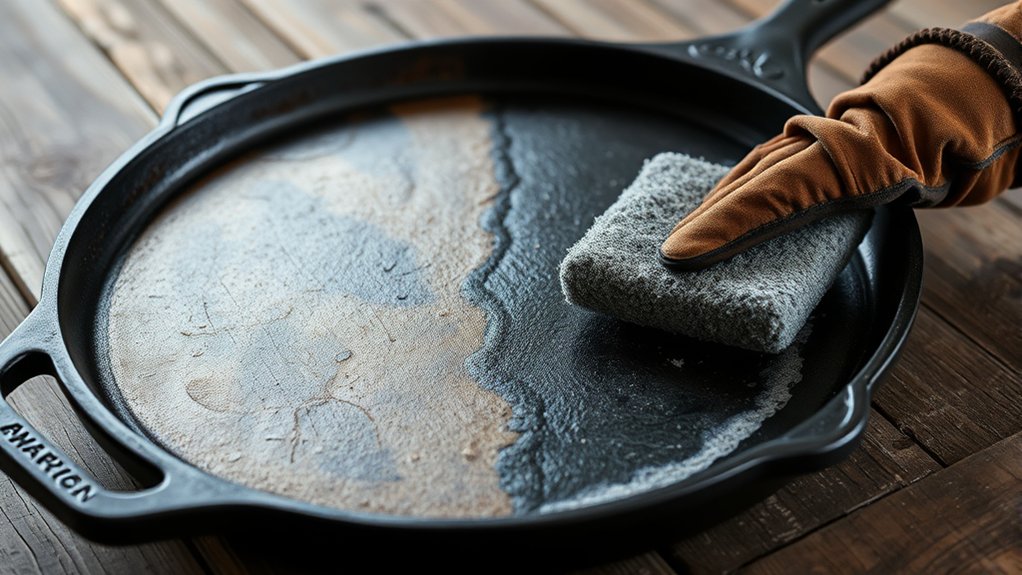
To restore your griddle top, start by inspecting it carefully for any rust, warping, or scratches.
Having the right tools handy is essential; gather a scraper, wire brush, and fine steel wool to aid in the process.
Safely remove rust using mild abrasives along with baking soda or vinegar.
After that, deep clean the surface with a degreaser and hot water, scrubbing gently to avoid causing any damage.
Make sure to dry the griddle thoroughly before moving on.
Then, season the surface by applying a thin layer of high-smoke-point oil and heating it until it starts to smoke.
Keep reading to uncover how to maintain your griddle’s performance long-term.
Key Takeaways
- Inspect the griddle surface for rust, warping, scratches, and uneven areas before starting restoration.
- Use a scraper, wire brush, and fine steel wool to remove rust and stubborn residue safely.
- Deep clean with a commercial degreaser or hot water and mild detergent, then rinse and dry thoroughly.
- Apply a thin layer of high-smoke-point oil and heat the griddle to polymerize and create a protective coating.
- Repeat the oiling and heating process 2-3 times for a durable, non-stick finish and improved cooking performance.
Check Your Griddle’s Condition
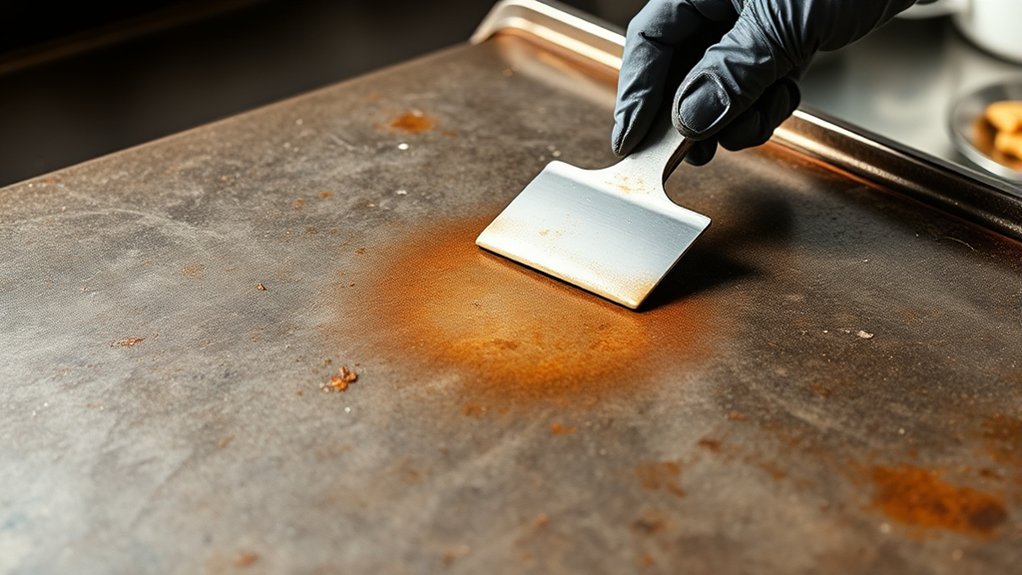
Before you begin restoring your griddle top, carefully inspect its surface for rust, warping, or deep scratches. This surface inspection is a vital first step in griddle maintenance, helping you identify damage that affects cooking performance.
Look for uneven areas that could cause food to cook inconsistently. Rust spots need immediate attention to prevent further corrosion, while warping may require professional assessment.
Deep scratches can trap food particles and grease, leading to hygiene issues. Document these defects so you can address them methodically during restoration.
Accurate surface inspection guarantees you focus your efforts effectively, ultimately extending your griddle’s lifespan and maintaining its heat distribution. Regularly checking your griddle’s condition before each restoration keeps it in prime shape and improves your cooking results.
Tools and Supplies You Need
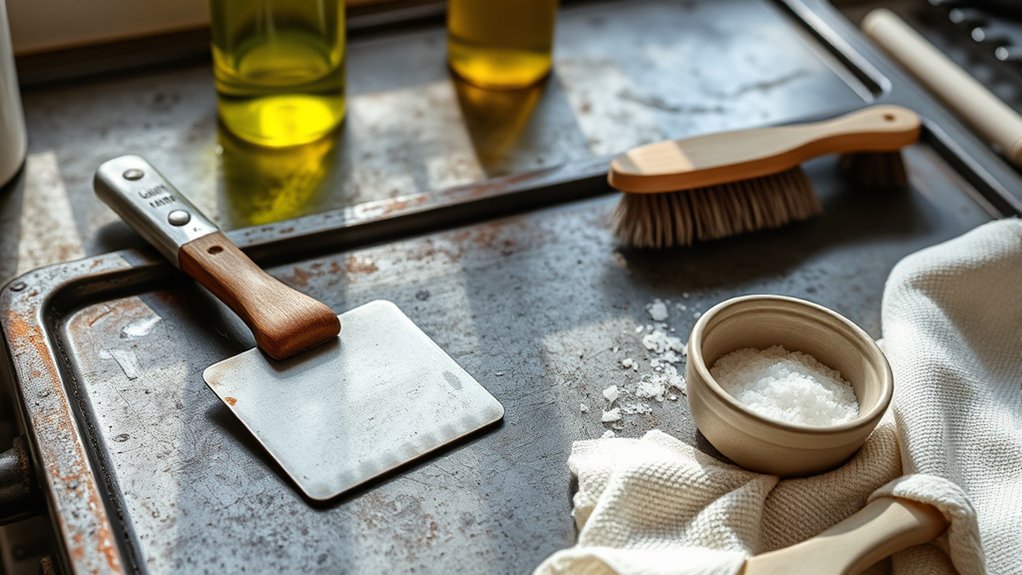
Once you’ve identified the areas that need attention on your griddle top, gather the right tools and supplies to tackle the restoration effectively. Essential griddle maintenance requires a sturdy scraper, a wire brush, and high-quality cleaning supplies like degreasing agents and food-safe oils.
You’ll also need a microfiber cloth to wipe surfaces without scratching them. For rust spots, have some fine steel wool on hand, though you’ll address that specifically later. Don’t forget heat-resistant gloves to protect your hands during cleaning.
A plastic or nylon scrub pad helps remove grime without damaging the surface. Ensuring you have these tools ready before starting will streamline your restoration process, prevent damage, and set the foundation for a thoroughly cleaned and well-maintained griddle top.
How to Safely Remove Rust and Residue
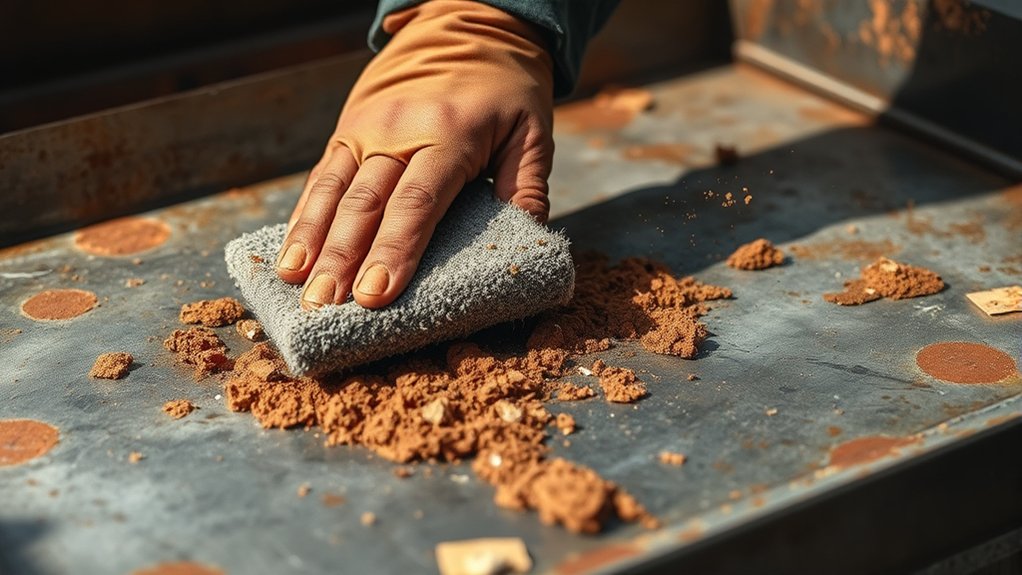
First, carefully inspect your griddle top to spot any rust spots or stubborn residue that need attention. Next, select cleaning tools that won’t damage the surface, such as non-abrasive scrubbers or fine steel wool.
Finally, apply proven removal methods like gentle scrubbing with baking soda paste or using a vinegar soak to eliminate buildup safely and effectively.
Identifying Rust And Residue
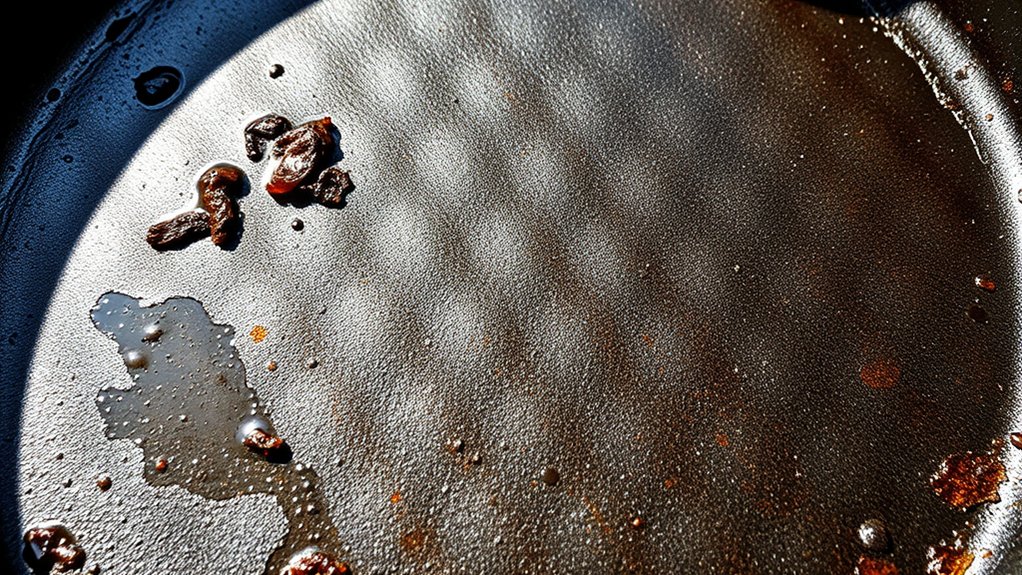
You’ll often find two main types of buildup on your griddle top: rust and residue from cooking. Rust appears as reddish-brown patches, often rough to the touch, signaling oxidation due to moisture exposure.
Residue, on the other hand, is usually darker, sticky, or flaky, resulting from burnt food particles, grease, and oils. Accurate residue identification is essential before cleaning, as some deposits require degreasers while others need scrubbing.
Recognizing rust early allows you to apply effective rust prevention methods, stopping further corrosion. By distinguishing between these buildups clearly, you can tailor your cleaning approach, ensuring the griddle top’s surface is restored properly without damage.
This step sets the foundation for safe, thorough maintenance and prolongs your griddle’s lifespan.
Choosing Safe Cleaning Tools
Selecting the right tools plays an essential role in safely removing rust and residue without damaging your griddle top. Start by choosing safe scrubbers like nylon pads or fine steel wool, which effectively clean without scratching the surface. Avoid harsh abrasives that can gouge or wear down your griddle’s finish.
Pair these with non toxic cleaners, such as vinegar or baking soda solutions, to break down rust and grime gently yet efficiently. These cleaners reduce exposure to harmful chemicals, ensuring your griddle remains safe for cooking after restoration. Always test your chosen tools and cleaners on a small, inconspicuous area first to confirm they won’t harm the metal.
Effective Removal Techniques
Three key steps help you safely remove rust and residue from your griddle top without causing damage. First, apply a mild chemical cleaning agent specifically designed for metal surfaces to loosen rust and stubborn buildup. Avoid harsh chemicals that can degrade the griddle’s seasoning.
Next, use effective scrubbing methods such as a non-abrasive scrub pad or a brass brush to gently remove the loosened residue. Scrub in circular motions to prevent scratches.
Finally, rinse the surface thoroughly with warm water to remove all chemical residues. Dry the griddle completely to prevent new rust formation.
Following these steps guarantees you restore your griddle top safely and efficiently, extending its lifespan and maintaining peak cooking performance.
Deep Clean and Degrease Your Griddle Top
Before applying any restoration techniques, thoroughly deep clean and degrease your griddle top to remove built-up residue and guarantee ideal surface preparation. Use appropriate chemical solutions designed for griddles, ensuring they break down grease without damaging the metal.
Thoroughly deep clean and degrease your griddle top before restoration for optimal surface preparation and lasting results.
Pay attention to cleaning frequency to prevent excessive buildup that complicates restoration.
Focus on these key steps:
- Apply a commercial degreaser or a mixture of hot water and mild detergent.
- Scrub with a non-abrasive pad or brush to avoid scratching the surface.
- Rinse thoroughly with clean water and dry immediately to prevent rust.
Regular deep cleaning extends your griddle’s lifespan and improves cooking performance. Avoid shortcuts, as residual grease will hinder subsequent restoration efforts.
Season Your Griddle Top for a Non-Stick Finish
Once your griddle top is thoroughly cleaned and dried, you’ll want to season it to create a durable, non-stick surface that enhances cooking and protects the metal from rust. Start by applying a thin, even layer of a high-smoke-point non-stick oil, like flaxseed, canola, or grapeseed oil, across the entire surface. Use a lint-free cloth or paper towel for even coverage.
Next, heat the griddle on medium-high until it begins to smoke, allowing the oil to polymerize and bind to the metal. This process, a key griddle seasoning technique, builds a protective patina. Repeat the oiling and heating steps 2-3 times to guarantee a robust non-stick finish.
Avoid excess oil to prevent sticky buildup. Proper seasoning immediately improves your griddle’s performance and longevity.
Maintain Your Restored Griddle for Long-Lasting Use
To keep your griddle performing at its best, you’ll need to clean and season it regularly after each use. Consistent griddle maintenance tips guarantee your restored surface resists rust and maintains its non-stick quality, promoting long lasting care.
Follow these essential steps:
- Wipe the griddle with a warm, damp cloth and mild soap to remove residue.
- Dry thoroughly to prevent moisture buildup that causes rust.
- Apply a thin layer of oil and heat the griddle to maintain seasoning and protect the surface.
Frequently Asked Questions
Can I Restore a Griddle Top Made of Materials Other Than Steel or Cast Iron?
You can restore griddle materials like aluminum or ceramic, but restoration techniques differ from steel or cast iron. Use gentle cleaners and avoid abrasive tools to preserve the surface.
Always follow manufacturer guidelines for best results.
How Often Should I Restore My Griddle Top for Optimal Performance?
Like clockwork, your griddle maintenance frequency should be monthly to guarantee peak griddle performance. Regularly stripping, seasoning, and cleaning prevent buildup, keeping your cooking surface smooth and efficient for every meal you prepare.
Are There Any Food Safety Concerns After Restoring a Griddle Top?
You shouldn’t face food safety issues if you follow proper griddle maintenance after restoring. Always clean thoroughly, season the surface properly, and avoid chemical residues to guarantee your griddle stays safe and ready for cooking.
Can I Use Electric Tools to Speed up the Restoration Process?
You can definitely harness electric tool options to speed up restoration techniques, like using a drill with a wire brush attachment. Just make sure to control speed and pressure to avoid damaging your griddle’s surface.
What Are Common Mistakes to Avoid When Restoring a Griddle Top?
Avoid common pitfalls like skipping thorough cleaning and using harsh chemicals. Don’t rush restoration techniques or neglect seasoning afterward.
You’ll guarantee a durable, non-stick surface by following each step carefully and patiently.
Conclusion
Now that you’ve restored your griddle top, think of it as a blank canvas ready for your culinary masterpieces. By regularly cleaning, seasoning, and maintaining it, you’ll keep that smooth, non-stick surface shining like new.
Treat your griddle like a trusted tool—consistent care prevents rust and buildup from creeping back. With these steps, you’re not just cooking; you’re preserving your griddle’s performance for years of delicious meals ahead.
Remember, the key to longevity is ongoing attention. Proper maintenance is essential to fully restore griddle top quality and ensure it remains a reliable cooking surface.

Leave a Reply