
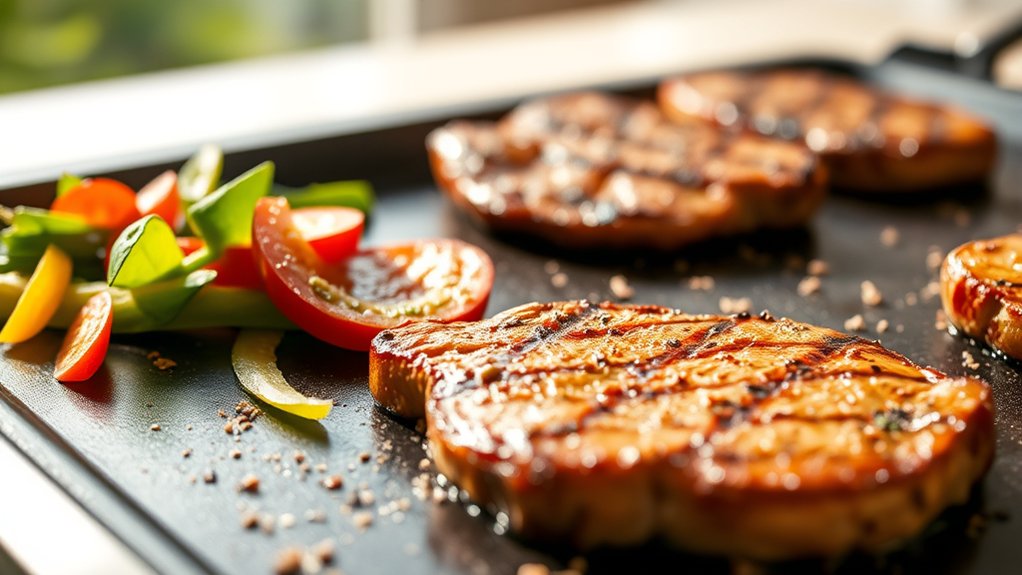
You can trust Blackstone Griddle Seasoning to be gluten free, as it contains no wheat, barley, rye, or related gluten sources.
Its ingredients—sea salt, black pepper, garlic, and onion powders—are selected for purity and undergo strict quality controls to avoid contamination.
While the seasoning is free from major allergens and gluten risks, it’s wise to verify current labeling for cross-contamination info.
If you want to guarantee safe gluten-free use and explore alternatives, further details can guide you.
Key Takeaways
- Blackstone Griddle Seasoning is labeled gluten-free and contains no wheat, barley, rye, or gluten-derived ingredients.
- Its main ingredients are sea salt, black pepper, garlic powder, and onion powder, all gluten-free in their pure form.
- The product undergoes quality control to prevent gluten cross-contamination, ensuring safety for gluten-sensitive individuals.
- Users should verify current packaging for gluten-free certification and any allergen or cross-contamination warnings.
- Contacting Blackstone directly provides the most accurate and updated gluten-free status and manufacturing information.
Is Blackstone Griddle Seasoning Gluten Free?
How can you be certain that Blackstone Griddle Seasoning is safe for a gluten-free diet? To determine this, you must examine the product’s formulation and manufacturing practices.
Blackstone Griddle Seasoning is explicitly labeled gluten-free, indicating it contains no wheat, barley, rye, or derivatives known to trigger gluten sensitivity. The company adheres to strict quality controls to prevent cross-contamination during processing.
Blackstone Griddle Seasoning is clearly labeled gluten-free and made with strict controls to avoid cross-contamination.
For individuals managing gluten sensitivity, selecting seasoning options without gluten is critical to avoid adverse reactions. Blackstone’s transparency in ingredient disclosure and third-party testing enhances confidence in its gluten-free status.
Consequently, you can rely on this seasoning as a safe choice within gluten-free dietary frameworks, provided you verify current labeling and manufacturing updates to confirm ongoing compliance with gluten-free standards.
What’s In Blackstone Griddle Seasoning?
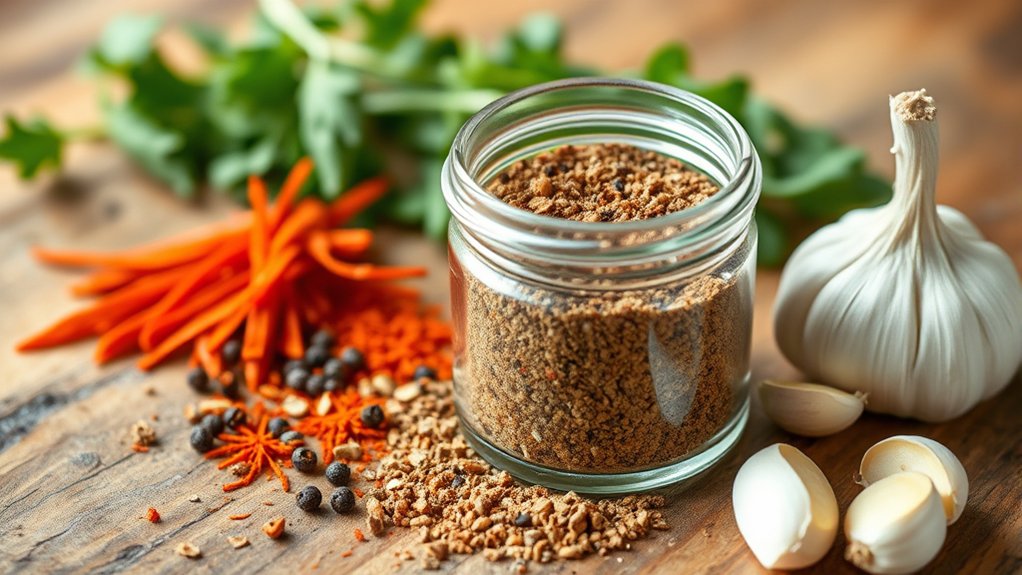
You’ll want to examine the ingredient list of Blackstone Griddle Seasoning to identify any potential gluten sources. Pay close attention to common allergens and cross-contamination risks noted on the label.
This approach guarantees you accurately assess its suitability for a gluten-free diet.
Ingredient Breakdown
Understanding the ingredient composition of Blackstone Griddle Seasoning is essential for evaluating its gluten-free status. You need to examine the specific components and their sourcing to guarantee no gluten-containing elements are present.
Blackstone emphasizes high-quality ingredient sourcing to maximize seasoning benefits, such as flavor enhancement and surface protection.
Key ingredients include:
- Sea salt, providing essential minerals and a natural preservative effect
- Black pepper, for robust flavor and antioxidant properties
- Garlic powder, contributing savory notes and antimicrobial benefits
Each ingredient is selected for purity and efficacy, supporting the seasoning’s functional role without introducing gluten. By focusing on these core elements, you can better assess if this seasoning aligns with gluten-free dietary requirements based on its precise formulation and sourcing standards.
Allergen Information
Although Blackstone Griddle Seasoning contains simple, natural ingredients, it’s important to verify the presence of common allergens to confirm safety for sensitive individuals. The seasoning primarily includes salt, black pepper, garlic, and onion powders, none of which are classified as major allergens under FDA guidelines.
However, if you have specific allergen sensitivities, such as to garlic or onion, you should exercise caution. The product’s labeling does not indicate cross-contamination risks from gluten, dairy, nuts, or soy, but manufacturing practices can vary.
To confirm safety, review the packaging for allergen statements or contact the manufacturer directly. If you find any problematic ingredients or risk of contamination, consider seasoning alternatives specifically formulated for allergen-sensitive consumers, which clearly state absence of gluten and other common allergens, offering you a safer cooking experience.
Can Blackstone Seasoning Contain Gluten or Contamination?
How likely is it that Blackstone seasoning contains gluten or cross-contamination? For individuals with gluten sensitivity, seasoning safety hinges on ingredient purity and manufacturing controls. Blackstone’s seasoning blends typically focus on simple spices and oils, which inherently lack gluten.
However, contamination risks arise mainly from shared equipment or facility environments. Consider these factors for contamination risk assessment:
Contamination risks primarily come from shared equipment or facility environments, so assess manufacturing practices carefully.
- Manufacturing processes: Are they dedicated gluten-free or shared with gluten-containing products?
- Ingredient sourcing: Do suppliers guarantee gluten-free status or test for gluten presence?
- Labeling and certification: Does the product carry gluten-free certification or allergen warnings?
While the base formulation suggests low gluten presence, cross-contamination potential requires scrutiny. You should evaluate these parameters carefully if gluten sensitivity is a concern.
How To Verify Your Blackstone Seasoning Is Gluten Free
To confirm your Blackstone seasoning is gluten free, start by examining the ingredient labels for any gluten-containing components or cross-contamination warnings.
If the information isn’t clear, contact the manufacturer directly to request detailed allergen and production process data. This guarantees you rely on verified evidence rather than assumptions.
Check Ingredient Labels
Since formulations can change without notice, you should always check the ingredient labels on your Blackstone seasoning products to confirm they contain no gluten. Carefully reviewing these labels helps you verify that the ingredients stem from reliable ingredient sourcing and that the product has undergone rigorous gluten testing.
When examining the label, focus on:
- Presence of wheat, barley, rye, or malt derivatives, common gluten sources
- Statements on cross-contamination or shared equipment with gluten-containing products
- Certification or claims related to gluten-free status, supported by gluten testing results
This method guarantees you base your gluten-free decision on current, evidence-based information rather than assumptions. Relying on label data aligns with best practices in food safety and allergen management, minimizing your risk of gluten exposure when using Blackstone seasoning.
Contact Manufacturer Directly
Why rely solely on ingredient labels when you can obtain direct confirmation from the source? To verify if Blackstone griddle seasoning is gluten free, you should initiate manufacturer contact. This approach guarantees you receive accurate, up-to-date information directly from the product’s origin.
Use official customer service channels, such as email or phone, to submit product inquiries specifically about gluten content and cross-contamination risks. Request documentation or certification if available, as this evidence-based information is essential for dietary compliance.
Avoid assumptions based on packaging alone, since formulations can change. By engaging with the manufacturer, you gain clarity on allergen protocols and ingredient sourcing, allowing you to make an informed decision about the seasoning’s suitability for a gluten-free diet. Manufacturer contact remains the most reliable method to confirm product safety.
Gluten-Free Seasoning Alternatives For Your Blackstone Griddle
Although traditional Blackstone griddle seasoning blends may contain gluten, you can confidently use specific gluten-free alternatives that maintain effective seasoning properties. When selecting gluten free marinades or alternative spices, focus on those verified free from wheat, barley, rye, and cross-contaminants.
Here are three reliable options:
Pure sea salt and cracked black pepper: These fundamental seasonings offer a clean, gluten-free base that enhances flavor without risk.
Herb blends with dried rosemary, thyme, and oregano: Choose single-ingredient dried herbs to avoid hidden gluten in premixed blends.
Garlic powder and smoked paprika: These provide depth and smokiness, ensuring your griddle seasoning remains robust and gluten free.
Using these alternatives helps you maintain a safe and flavorful cooking surface for your Blackstone griddle.
How To Season Your Blackstone Without Gluten
Seasoning your Blackstone griddle without gluten requires careful selection of ingredients and precise application techniques to guarantee a safe, durable, and non-stick surface. Start by thoroughly cleaning the griddle, then apply a thin, even layer of high-smoke-point seasoning oils such as avocado or refined coconut oil, which are inherently gluten free.
Avoid oils infused with gluten-containing additives. After oiling, heat the griddle to polymerize the oil, creating a protective layer. Incorporate gluten free spices only if used in subsequent cooking, ensuring they don’t contact the seasoning layer to prevent contamination.
Avoid pre-mixed seasoning blends that may contain gluten. This method maintains the integrity of your seasoning while eliminating gluten exposure risks, supporting both griddle longevity and safe cooking practices.
Tips To Avoid Gluten Contamination While Cooking On Your Griddle
Once you’ve established a gluten-free seasoning layer on your Blackstone griddle, maintaining a contamination-free cooking environment becomes your next priority. Preventing gluten cross contamination involves strict cooking surface precautions to guarantee your food stays safe.
Here’s how you can do it effectively:
- Use dedicated utensils and cookware strictly for gluten-free cooking to avoid residue transfer.
- Thoroughly clean the griddle surface between gluten and gluten-free food preparations using high heat and a scraper to remove any lingering particles.
- Avoid placing gluten-containing ingredients directly on the griddle when cooking gluten-free meals, and consider using a protective barrier like aluminum foil.
Frequently Asked Questions
Can Blackstone Griddle Seasoning Be Used for Other Cooking Surfaces?
You can use Blackstone griddle seasoning on alternative cooking surfaces like cast iron or stainless steel. Its seasoning versatility enhances non-stick properties and flavor, supported by evidence showing effective polymerized oil layers forming on various metals.
How Often Should I Reapply Blackstone Griddle Seasoning?
You should reapply Blackstone griddle seasoning every 1-3 months, depending on usage and wear. Regular seasoning frequency guarantees a durable, non-stick surface.
Follow maintenance tips like cleaning properly and oiling to maximize longevity.
Does Blackstone Griddle Seasoning Affect Food Flavor Significantly?
You won’t find Blackstone griddle seasoning greatly altering your food’s flavor profile; it primarily enhances non-stick properties, allowing your cooking techniques to shine without imparting strong tastes or aromas that could overshadow your dishes.
Is Blackstone Griddle Seasoning Safe for People With Nut Allergies?
You shouldn’t worry about nut allergy concerns with Blackstone griddle seasoning; its ingredients list doesn’t include nuts or derivatives.
Always check the packaging for updates, but current evidence shows it’s safe for those with nut allergies.
Can Blackstone Griddle Seasoning Be Stored Long-Term Without Losing Potency?
Like a fine wine, Blackstone seasoning maintains potency with proper long term storage. Keep it airtight, cool, and dry to preserve flavor and effectiveness, ensuring your griddle seasoning won’t lose its powerful performance over time.
Conclusion
When seasoning your Blackstone griddle, think of gluten as an unexpected crack in a perfectly cast iron pan—unwanted and avoidable.
By carefully checking ingredients and sourcing certified gluten-free seasonings, you can guarantee a safe cooking surface. Always verify labels and prevent cross-contamination during prep to maintain a truly gluten-free environment.
With precise attention and informed choices, you’ll keep your griddle—and meals—free from gluten interference every time. This ensures that your Blackstone griddle seasoning remains gluten free, making it safe for those with gluten sensitivities.



Leave a Reply